Erectile dysfunction and high blood pressure often travel together: men with high blood pressure have roughly 1.8 times the odds of erection problems compared with men whose blood pressure is normal. Raised pressure gradually damages the lining and walls of the small arteries that fill the penis, and some older blood pressure tablets can add to the problem. The good news is that blood pressure can be controlled without giving up your sex life, and most ED treatments are safe alongside blood pressure medicines.
Sources: PubMed — Int J Impot Res 2018 — Wang et al. Relation between hypertension and erectile dysfunction: a meta-analysis of cross-section studies; EAU — Sexual and Reproductive Health Guidelines — Management of erectile dysfunction
- A meta-analysis of 18 studies with 41,943 men found that high blood pressure was linked to about 1.8 times the odds of erectile dysfunction.
- High blood pressure usually causes no symptoms, so an erection problem can be the first clue that your blood pressure, cholesterol or blood sugar needs checking.
- Thiazide diuretics and older beta-blockers are the blood pressure drugs most often blamed for ED, but large trial reviews show smaller effects than many men fear.
- Sildenafil, tadalafil and other PDE5 inhibitors are generally safe with blood pressure medicines. The absolute exception is nitrates (including “poppers”) and nicorandil.
- Never stop a blood pressure tablet on your own because of ED. Talk to your doctor: a switch, a dose change or an ED pill usually solves the problem.
- Erectile dysfunction and high blood pressure: how strong is the link?
- How hypertension damages erections
- Why ED can be an early warning sign for your heart
- Is it the high blood pressure or the tablets?
- The nocebo effect: why expectations matter
- Are ED pills safe with high blood pressure?
- Treating erectile dysfunction and high blood pressure together
- Lifestyle changes that help blood pressure and erections
- When to see a doctor
- FAQs about erectile dysfunction and high blood pressure
Erectile dysfunction and high blood pressure: how strong is the link?

An erection is a blood-flow event. When you are aroused, the arteries of the penis widen, the spongy erectile tissue fills with blood and the outflow veins are compressed. Anything that stiffens, narrows or inflames those arteries makes it harder to get or keep a firm erection. High blood pressure (hypertension) does exactly that over years.
The numbers are consistent. In a 2018 meta-analysis that pooled 18 cross-sectional studies covering 41,943 men and 10,151 cases of ED, hypertension was associated with an odds ratio of 1.84 for erectile dysfunction. In other words, men with high blood pressure were nearly twice as likely to report erection problems, even before treatment is taken into account.
The European Association of Urology (EAU) lists hypertension among the core vascular risk factors for ED, alongside diabetes, abnormal cholesterol, obesity, smoking and lack of exercise. The US National Institute of Diabetes and Digestive and Kidney Diseases (NIDDK) likewise names high blood pressure among the most common conditions that lead to ED. For a wider overview of every cause, see our guide to erectile dysfunction causes; this article focuses on the blood pressure side of the story and on what to do about it with your doctor or through our erectile dysfunction treatment service.
Sources: EAU — Sexual and Reproductive Health Guidelines — Management of erectile dysfunction; NIDDK — Symptoms & Causes of Erectile Dysfunction
How hypertension damages erections
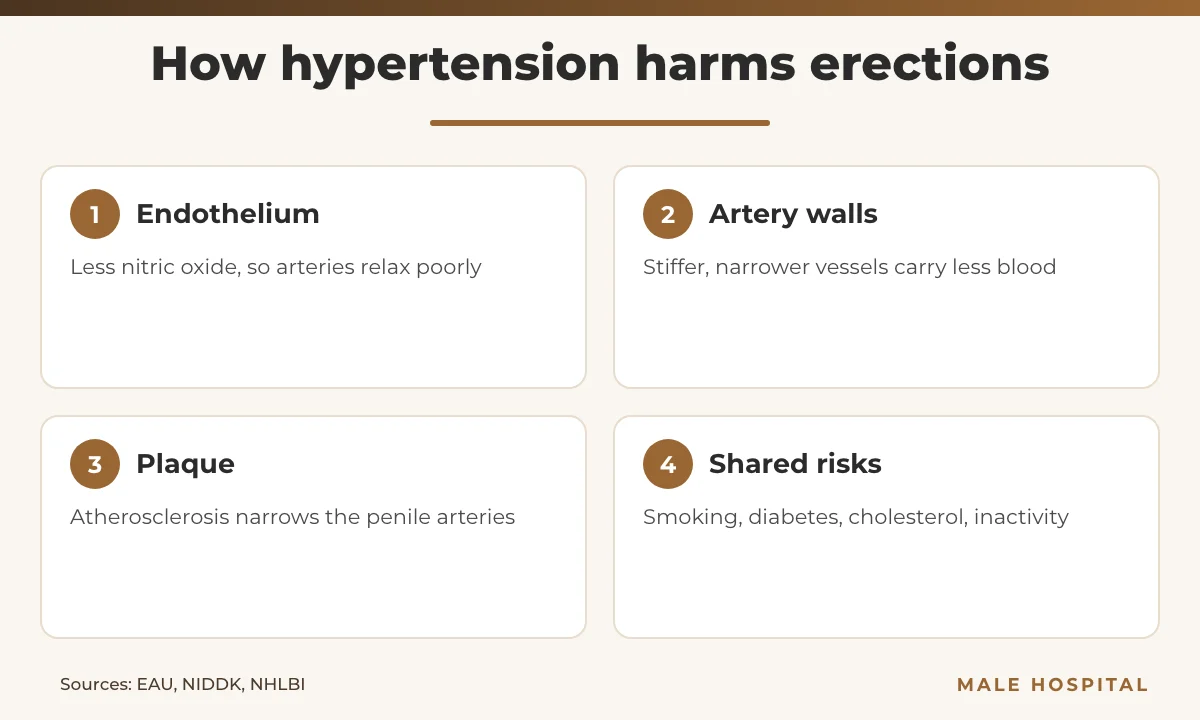
Doctors describe several overlapping mechanisms. None of them happens overnight, which is why ED linked to blood pressure usually creeps in gradually rather than appearing suddenly.
1. The artery lining stops relaxing properly
The inner lining of blood vessels (the endothelium) releases nitric oxide, the chemical signal that tells penile arteries and erectile tissue to relax and fill. Persistently high pressure injures this lining, so less nitric oxide is available and the vessels widen less during arousal. This is the same pathway that ED pills such as sildenafil support, which is why they still work for many men with high blood pressure.
2. Arteries become stiffer and narrower
Over time, high pressure thickens artery walls and makes them less elastic. The penile arteries are small, so even a modest loss of diameter can noticeably reduce blood flow during an erection.
3. Plaque builds up faster
High blood pressure accelerates atherosclerosis, the build-up of fatty plaque inside arteries (shown in the diagram above). The same process that narrows coronary arteries can narrow the arteries supplying the penis.
4. The risk factors cluster
High blood pressure rarely travels alone. Being overweight, smoking, heavy drinking, a high-salt diet and long-term stress all raise blood pressure, and most of them also harm erections directly. The Cleveland Clinic lists hypertension, high cholesterol, atherosclerosis, diabetes and vascular disease side by side as physical causes of ED.
Sources: Cleveland Clinic — Erectile Dysfunction; NHS — High blood pressure (hypertension)
Why ED can be an early warning sign for your heart
High blood pressure is often called silent. The NHS points out that it usually causes no symptoms at all, so many men live with it for years without knowing. A clinic reading of 140/90 mmHg or higher, or 135/85 mmHg or higher on a home monitor, is usually considered high.
Source: NHS — High blood pressure (hypertension)
Erection problems can break that silence. The EAU guidelines state that ED shares common risk factors with cardiovascular disease and that it significantly increases the risk of cardiovascular disease, coronary heart disease and stroke. For that reason, a man who develops ED, particularly gradually and without an obvious psychological trigger, should have his blood pressure, blood sugar and cholesterol checked rather than simply being handed a prescription. We explain this connection in detail in erectile dysfunction and heart disease.
Source: EAU — Sexual and Reproductive Health Guidelines — Management of erectile dysfunction
In practice, a doctor assessing ED will ask about your lifestyle and relationships, and do basic checks such as measuring your blood pressure and examining your genitals. The EAU also recommends blood tests for glucose, lipids and total testosterone to find reversible risk factors. Our article on the erectile dysfunction test walks through each step.
Sources: NHS — Erection problems (erectile dysfunction); EAU — Sexual and Reproductive Health Guidelines — Management of erectile dysfunction
Is it the high blood pressure or the tablets?
This is the question most men ask, and the honest answer is that it is often hard to separate the two. Many men already have some degree of ED before they are ever diagnosed with high blood pressure, simply because the arterial damage started earlier. When they notice the problem after starting a tablet, the tablet gets the blame.
That said, some medicines can genuinely contribute. MedlinePlus, the US National Library of Medicine’s consumer service, states that thiazide diuretics are the most common cause of ED among blood pressure medicines, followed by beta-blockers, while alpha-blockers are less likely to cause the problem. The EAU guidelines also list thiazides and beta-blockers among drug-related causes of ED and note that newer cardiovascular drugs have shown a neutral or even beneficial effect on erectile function.
Sources: MedlinePlus — Drugs that may cause erection problems; EAU — Sexual and Reproductive Health Guidelines — Management of erectile dysfunction
A 2022 network meta-analysis of randomized trials (25 studies, 7,784 patients) is a useful reality check. It found no significant differences in erectile function between the five major drug classes (ACE inhibitors, angiotensin receptor blockers, beta-blockers, calcium channel blockers and thiazides), and none of them significantly changed erectile function compared with placebo. Among beta-blockers, nebivolol performed better than older, non-vasodilating beta-blockers. The authors noted that many of the trials had a high risk of bias, so the debate is not closed.
We compare individual drugs, doses and switching options in a dedicated follow-up article on blood pressure medication and erectile dysfunction.
The nocebo effect: why expectations matter
Expectation plays a surprisingly large role. In an Italian study published in the European Heart Journal, 96 men with newly diagnosed cardiovascular disease and normal erections were given the beta-blocker atenolol. Men who did not know which drug they were taking had a 3.1% rate of ED after three months. Men told the drug name had a 15.6% rate, and men told both the name and that it could cause erection problems had a 31.2% rate.
When the men who developed ED were then given either sildenafil or a placebo, the placebo reversed the problem just as well as sildenafil in all but one man. The lesson is not that drug-related ED is imaginary, but that anxiety about a side effect can produce or amplify it. Knowing this can help you give a new tablet a fair trial and talk openly with your doctor if problems appear.
Are ED pills safe with high blood pressure?
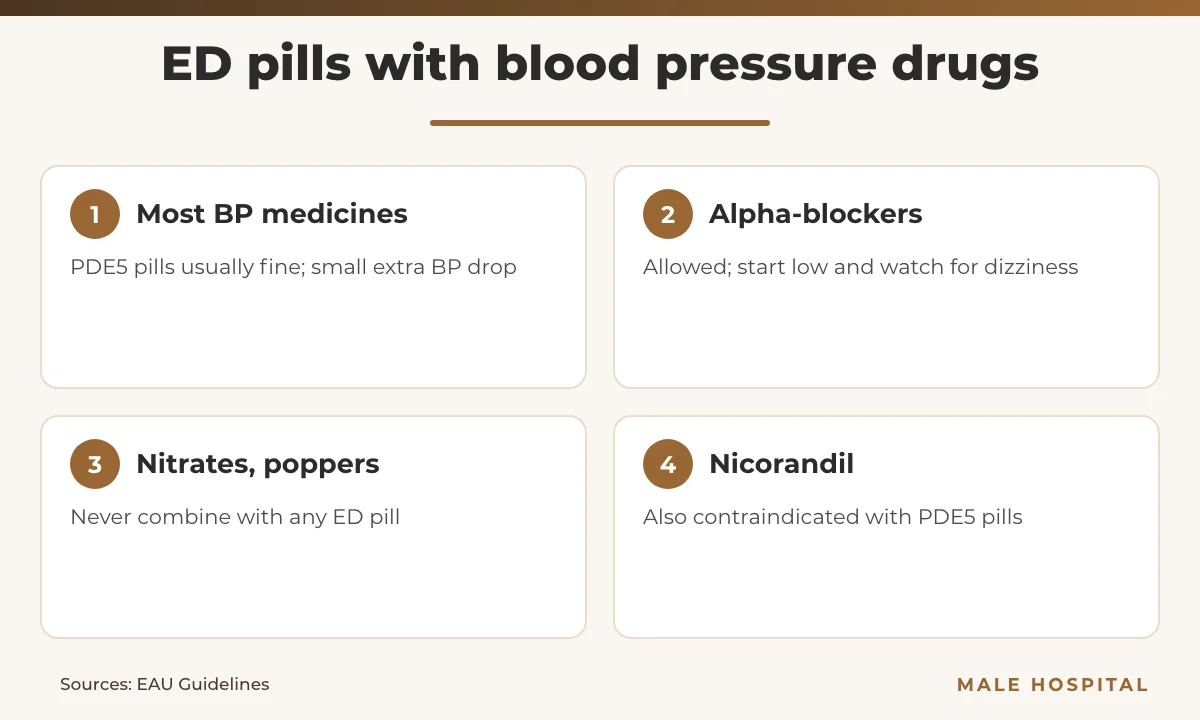
For most men, yes. PDE5 inhibitors (sildenafil, tadalafil, vardenafil and avanafil) are the first-line medical treatment for ED, and controlled high blood pressure is not a reason to avoid them. According to the EAU guidelines, taking a PDE5 inhibitor alongside blood pressure medicines can produce small additional falls in blood pressure that are usually minor, and the side-effect profile of the ED pill is not worsened even in men taking several antihypertensive drugs.
Source: EAU — Sexual and Reproductive Health Guidelines — Management of erectile dysfunction
Alpha-blockers (such as doxazosin, used for blood pressure, or tamsulosin, used for prostate symptoms) need a little more thought because both drug types widen blood vessels. A meta-analysis cited by the EAU found that the combination changes some blood pressure measurements but does not increase adverse events due to low blood pressure, and the guidelines place no current limitation on using them together. Many doctors still start with a lower ED pill dose and advise you to stand up slowly.
Source: EAU — Sexual and Reproductive Health Guidelines — Management of erectile dysfunction
There are two firm exceptions. Any organic nitrate (for example glyceryl trinitrate spray or isosorbide tablets for angina) and recreational amyl nitrite “poppers” are an absolute contraindication with every PDE5 inhibitor, because the combination can cause an unpredictable and dangerous fall in blood pressure. Nicorandil, another angina medicine, is also contraindicated. For practical guidance on side effects such as headache and flushing, see sildenafil side effects.
Source: EAU — Sexual and Reproductive Health Guidelines — Management of erectile dysfunction
| Situation | Can you take an ED pill? | What to watch |
|---|---|---|
| Controlled high blood pressure on ACE inhibitor, ARB, calcium channel blocker or diuretic | Usually yes | Small extra drop in blood pressure; usually minor |
| Beta-blocker | Usually yes | Dizziness if blood pressure runs low |
| Alpha-blocker (doxazosin, tamsulosin) | Yes, per EAU | Start low; stand up slowly |
| Nitrates (GTN spray, isosorbide) or poppers | No | Dangerous, unpredictable fall in blood pressure |
| Nicorandil | No | Contraindicated with PDE5 inhibitors |
| Uncontrolled or very high blood pressure | Treat blood pressure first | Needs medical review before sexual activity is cleared |
Source: EAU — Sexual and Reproductive Health Guidelines — Management of erectile dysfunction
Treating erectile dysfunction and high blood pressure together
The best results come from treating both problems at the same time rather than one at the expense of the other. A typical plan with your doctor looks like this:
- Get the blood pressure controlled. Lifestyle changes and, when needed, medicines. A GP usually prescribes medicine when pressure is very high, when your risk of heart attack or stroke is raised, or when lifestyle changes alone have not been enough.
- Review the tablet list. If ED clearly started with a new drug, your doctor may adjust the dose or switch to another class. Do not stop a blood pressure medicine yourself; uncontrolled high blood pressure is far more dangerous to your arteries, and to your erections, than the tablet.
- Add a PDE5 inhibitor if needed. This is safe for most men on blood pressure treatment, provided no nitrates or nicorandil are involved.
- Move to second-line options when pills fail. Penile injections, a vacuum device or, for severe vascular ED, a penile implant remain available, and blood pressure itself does not rule them out.
Sources: NHS — High blood pressure (hypertension); EAU — Sexual and Reproductive Health Guidelines — Management of erectile dysfunction
Lifestyle changes that help blood pressure and erections
The same habits lower blood pressure and improve erectile function, which makes lifestyle the most efficient treatment you can start today. The EAU considers it established (level 1b evidence) that regular exercise and a lower body mass index can improve erectile function. The NHS recommends losing weight if you are overweight, stopping smoking, eating a healthy diet, exercising daily, reducing stress and staying within 14 units of alcohol a week for men with erection problems.
Sources: EAU — Sexual and Reproductive Health Guidelines — Management of erectile dysfunction; NHS — Erection problems (erectile dysfunction)
How much difference can this make? In a two-year randomized trial in Italy, 110 obese men with ED were assigned either to an intensive programme aimed at losing at least 10% of body weight or to general advice. In the intervention group, physical activity rose from about 48 to 195 minutes a week, and about one third of the men regained normal erectile function scores. The trial excluded men who already had hypertension, so it shows what lifestyle change can do for vascular erectile health rather than proving the exact effect in hypertensive men.
Practical priorities, all of which also lower blood pressure according to the NHS:
- Cut down on salt and processed food.
- Build up to regular aerobic activity most days; our guide to exercises for erectile dysfunction explains what has been tested.
- Stop smoking completely.
- Keep alcohol within recommended limits.
- Lose weight if your BMI or waist size is above the healthy range.
Source: NHS — High blood pressure (hypertension)
When to see a doctor
Book an appointment if erection problems happen often or last more than a few weeks; the NHS notes they can be a sign of a treatable health condition. Ask for a blood pressure check at the same visit, especially if you are 40 or older and have not been checked recently. Seek medical advice promptly if:
- ED started soon after a new blood pressure or heart medicine.
- You have chest pain, breathlessness or unusual tiredness during exertion, including sex.
- You use nitrate spray or tablets and are considering any ED medicine.
- Your home readings are repeatedly 135/85 mmHg or above.
- You have headaches, blurred vision or chest pain with very high readings; call emergency services for chest pain.
Sources: NHS — Erection problems (erectile dysfunction); NHS — High blood pressure (hypertension)
If you would like a confidential assessment of erectile dysfunction and high blood pressure together, our urologist-andrologist can review your medicines and test results before you travel. Message us on WhatsApp for a free initial consultation.
FAQs about erectile dysfunction and high blood pressure
Can high blood pressure cause erectile dysfunction?
Yes. Long-standing hypertension damages the lining of the arteries, makes them stiffer and speeds up plaque formation, all of which reduce blood flow into the penis. A meta-analysis of 18 studies found that men with hypertension had about 1.8 times the odds of ED. The effect builds gradually, so earlier control of blood pressure protects erections better.
Does lowering blood pressure improve erections?
It can, but not always quickly. Control of blood pressure stops further arterial damage, and lifestyle measures that lower pressure, such as exercise and weight loss, have trial evidence for improving erectile function. Existing arterial changes may not fully reverse, which is why many men also use an ED pill while their cardiovascular health improves.
Source: EAU — Sexual and Reproductive Health Guidelines — Management of erectile dysfunction
Which blood pressure medicine is least likely to cause ED?
MedlinePlus states that thiazide diuretics and beta-blockers are the classes most often linked to ED, while alpha-blockers are less likely to cause it. The EAU notes that newer cardiovascular drugs tend to be neutral or even beneficial. A network meta-analysis found nebivolol better than older beta-blockers. Your doctor will choose according to your overall heart risk.
Sources: MedlinePlus — Drugs that may cause erection problems; PubMed — Cardiovasc Drugs Ther 2022 — Farmakis et al. Effects of major antihypertensive drug classes on erectile function: a network meta-analysis
Can I take Viagra if I have high blood pressure?
Most men with controlled hypertension can take sildenafil safely, even alongside several blood pressure medicines; the extra drop in pressure is usually minor. You must not take it with any nitrate medicine, poppers or nicorandil. If your blood pressure is very high or uncontrolled, it should be treated and reviewed before sexual activity and ED pills.
Source: EAU — Sexual and Reproductive Health Guidelines — Management of erectile dysfunction
Is ED a sign of heart disease?
It can be. ED shares risk factors with cardiovascular disease, and the EAU guidelines state that it significantly increases the risk of coronary heart disease and stroke. Gradual-onset ED in a man with hypertension is a good reason to have cholesterol, blood sugar and overall heart risk checked rather than only treating the symptom.
Source: EAU — Sexual and Reproductive Health Guidelines — Management of erectile dysfunction
Should I stop my blood pressure tablet if it causes ED?
No. Stopping blood pressure medicine without medical advice raises the risk of heart attack and stroke and will not protect your erections in the long run. Tell your doctor instead: options include changing the dose, switching to another drug class or adding an ED treatment. Many men find a combination that controls both problems.
Source: NHS — High blood pressure (hypertension)
Can stress about side effects cause ED on blood pressure pills?
Yes, expectation matters. In a study of 96 men starting atenolol, ED rates were 3.1% in men who did not know the drug, but 31.2% in men told it could cause erection problems. Placebo reversed the problem as well as sildenafil in almost all of them. Anxiety is a real, treatable contributor.
Medically reviewed by Assoc. Prof. Dr. Zülfü Sertkaya, urologist and andrologist (FEBU), Istanbul. Last reviewed: November 2026.
This article is for general information and does not replace an individual consultation with a qualified doctor.
- PubMed — Int J Impot Res 2018 — Wang et al. Relation between hypertension and erectile dysfunction: a meta-analysis of cross-section studies
- EAU — Sexual and Reproductive Health Guidelines — Management of erectile dysfunction
- NIDDK — Symptoms & Causes of Erectile Dysfunction
- NHS — High blood pressure (hypertension)
- PubMed — Cardiovasc Drugs Ther 2022 — Farmakis et al. Effects of major antihypertensive drug classes on erectile function: a network meta-analysis
- PubMed — Eur Heart J 2003 — Silvestri et al. Report of erectile dysfunction after therapy with beta-blockers is related to patient knowledge of side effects
- MedlinePlus — Drugs that may cause erection problems
- NHS — Erection problems (erectile dysfunction)
- Cleveland Clinic — Erectile Dysfunction
- PubMed — JAMA 2004 — Esposito et al. Effect of lifestyle changes on erectile dysfunction in obese men: a randomized controlled trial