Erectile dysfunction and heart disease are closely linked because both usually grow out of the same problem: damaged, narrowing arteries. Penile arteries are smaller than the coronary arteries, so erection problems often appear first, typically 2 to 5 years before chest pain or a heart attack. That makes new ED a useful early warning sign and a reason to have your heart risk checked, not just to get a prescription.
Sources: Mayo Clinic Proceedings (PMC) — The Princeton III Consensus recommendations for ED and cardiovascular disease; European Urology (PubMed) — Systematic review of the association between ED and cardiovascular disease
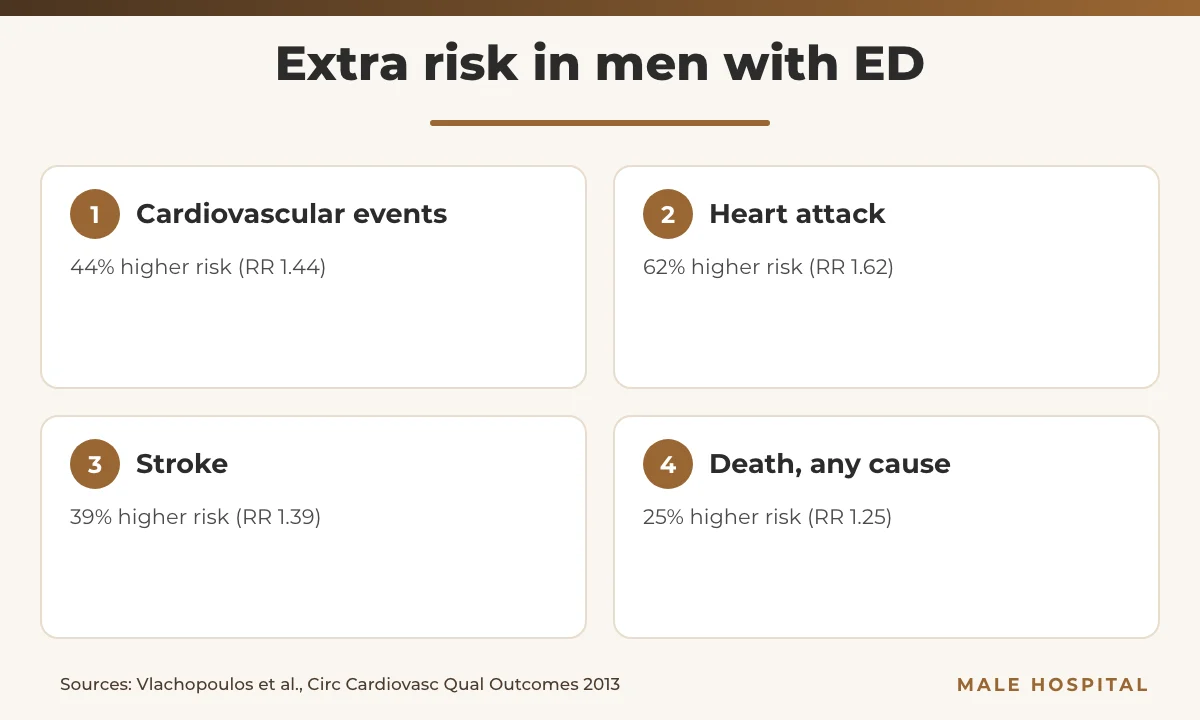
- In a meta-analysis of 14 cohort studies (92,757 men), men with ED had a 44% higher risk of cardiovascular events and a 62% higher risk of heart attack.
- The Princeton III experts describe a window of 2 to 5 years between the onset of ED and a coronary event, so there is time to act.
- The link between ED and heart disease is strongest in younger men: ED is far more predictive of coronary disease at ages 40–49 than in older men.
- Sex is usually about as demanding as brisk walking. Most men with stable heart disease can have sex and use PDE5 inhibitors safely after a doctor’s assessment.
- Never combine sildenafil, tadalafil or similar drugs with nitrates such as nitroglycerin. The combination can cause a dangerous drop in blood pressure.
- Why erectile dysfunction and heart disease are linked
- The artery size hypothesis: why ED comes first
- How much ED raises cardiovascular risk
- Why the warning matters most in younger men
- Cardiovascular evaluation for men with ED
- Is sex safe with heart disease?
- ED pills in heart patients: safety and the nitrate rule
- Treating erectile dysfunction and heart disease together
- When to see a doctor
- FAQs about erectile dysfunction and heart disease
Why erectile dysfunction and heart disease are linked
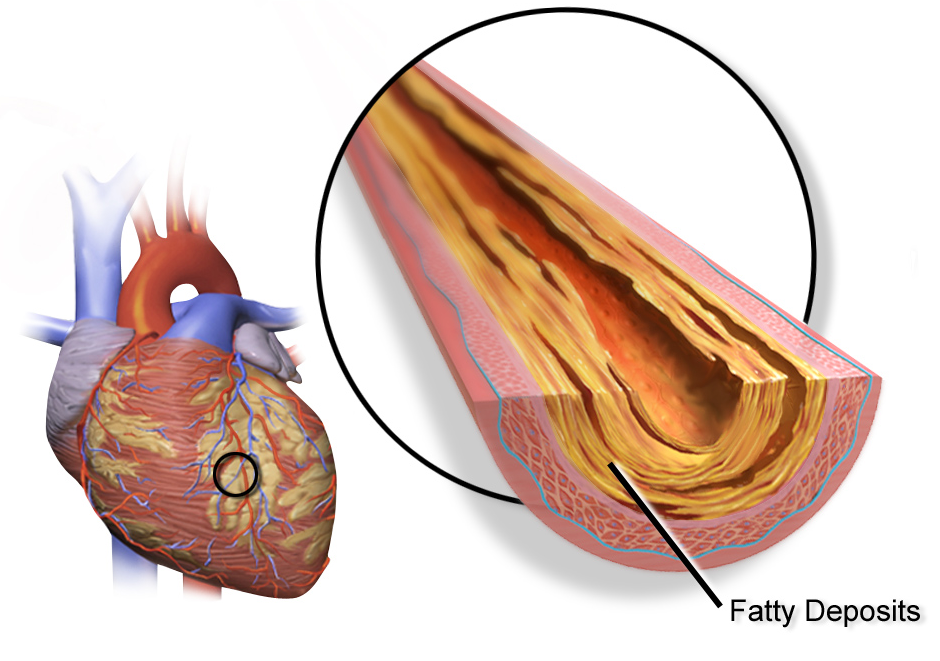
An erection is a blood-flow event, which explains much of its link with heart disease. During arousal, the arteries of the penis widen and the erectile tissue fills with blood. Anything that limits that inflow can cause ED, and conditions that affect blood delivery to the penis are the most common cause of erection problems.
The US National Institute of Diabetes and Digestive and Kidney Diseases (NIDDK) lists heart and blood vessel diseases, including atherosclerosis, high blood pressure and stroke, among the common causes of ED. Cleveland Clinic notes that ED can be the first symptom of an underlying problem such as heart disease.
Sources: NIDDK — Symptoms and causes of erectile dysfunction; Cleveland Clinic — Erectile dysfunction
Shared endothelial dysfunction
The inner lining of every artery, the endothelium, releases nitric oxide, the chemical signal that relaxes blood vessels. Smoking, high blood pressure, high cholesterol, diabetes, inflammation and low androgen levels all damage this lining. The result, called endothelial dysfunction, is the earliest stage of atherosclerosis (hardening and narrowing of the arteries), the process behind most heart disease.
A systematic review in European Urology concluded that the interaction between androgens, chronic inflammation and cardiovascular risk factors drives endothelial dysfunction and atherosclerosis in both the penile and the coronary circulation. Its authors argue that ED and cardiovascular disease should be seen as two manifestations of the same systemic disorder, with ED usually appearing first. If you want the full list of physical and psychological triggers, see our guide to what causes erectile dysfunction.
The same risk factors
Because the mechanism is shared, so are the risk factors. The NHS names high blood pressure, high cholesterol and diabetes as conditions that can cause frequent erection problems. Diabetes deserves special attention because it harms both blood vessels and nerves; we cover it in detail in erectile dysfunction and diabetes. Some heart medicines can also contribute: NIDDK lists blood pressure medicines and diuretics (water pills) among drugs that can cause ED as a side effect.
Sources: NHS — Erection problems (erectile dysfunction); NIDDK — Symptoms and causes of erectile dysfunction
The artery size hypothesis: why ED comes first
If atherosclerosis affects the whole body, why do erection problems usually show up years before symptoms of heart disease? Italian cardiologist Piero Montorsi and colleagues proposed the “artery size hypothesis” to explain this.
Atherosclerosis affects all major vascular beds, but a larger artery can tolerate the same amount of plaque better than a smaller one. Penile arteries are smaller in diameter than coronary arteries, so the same degree of narrowing reduces blood flow to the penis sooner. According to the hypothesis, men with ED will seldom have heart symptoms at the same time, while men with established coronary artery disease will frequently report ED. The authors note that the available clinical evidence appears to support this pattern.
The European Urology review reached a similar conclusion: because penile arteries are smaller, the same level of endothelial dysfunction causes a greater reduction in blood flow to erectile tissue than to the heart. In practical terms, ED can act as an indicator of systemic endothelial dysfunction and of possible future heart disease. The Princeton III Consensus puts the time window between ED onset and a coronary event at 2 to 5 years.
Sources: European Urology (PubMed) — Systematic review of the association between ED and cardiovascular disease; Mayo Clinic Proceedings (PMC) — The Princeton III Consensus recommendations
How much ED raises cardiovascular risk
The connection between erectile dysfunction and heart disease is not a theory based on a few case reports. It has been tested in large long-term studies that followed men without known heart disease for years.
The Prostate Cancer Prevention Trial
A landmark analysis of ED and heart disease in JAMA followed 9,457 men aged 55 or older from the placebo group of the Prostate Cancer Prevention Trial, assessing them every 3 months between 1994 and 2003. After adjusting for age, weight, blood pressure, cholesterol, diabetes, smoking and other factors, men with ED (new or existing) had a 45% higher risk of later cardiovascular events (hazard ratio 1.45). Men who developed new ED during the study had a 25% higher risk. The authors noted that this increase was in the range of the risk linked to current smoking or a family history of heart attack, and concluded that ED should prompt investigation of cardiovascular risk factors.
Source: JAMA (PubMed) — Erectile dysfunction and subsequent cardiovascular disease (Thompson et al., 2005)
Meta-analyses of cohort studies
Two meta-analyses pooled the long-term studies on ED and heart disease. Their results are close to each other, which strengthens confidence in the link.
| Outcome in men with ED | Vlachopoulos 2013 (14 studies, 92,757 men) | Dong 2011 (12 studies, 36,744 men) |
|---|---|---|
| Total cardiovascular events / disease | 44% higher (RR 1.44) | 48% higher (RR 1.48) |
| Heart attack / coronary heart disease | 62% higher for heart attack (RR 1.62) | 46% higher for coronary disease (RR 1.46) |
| Stroke | 39% higher (RR 1.39) | 35% higher (RR 1.35) |
| Death from any cause | 25% higher (RR 1.25) | 19% higher (RR 1.19) |
| Cardiovascular death | RR 1.19, not statistically significant | Not reported separately |
The Dong meta-analysis found similar results when it was limited to studies that controlled for conventional risk factors, suggesting the extra risk is probably independent of smoking, blood pressure and cholesterol. Vlachopoulos and colleagues found the relative risk was higher at younger ages, in intermediate-risk men and when ED was measured with a questionnaire rather than a single question. Remember that relative risk is not absolute risk: most men with ED will not have a heart attack in the next few years, but their odds are measurably higher.
Sources: Circulation: Cardiovascular Quality and Outcomes (PubMed) — Prediction of cardiovascular events and all-cause mortality with ED (Vlachopoulos et al., 2013); Journal of the American College of Cardiology (PubMed) — ED and risk of cardiovascular disease: meta-analysis (Dong et al., 2011)
Why the warning matters most in younger men
The Princeton III panel stated that ED is far more predictive of coronary artery disease in men aged 40 to 49 than in older men. It cited data from Western Australia in which cardiovascular events in men under 40 with ED were more than 7 times the incidence in a reference population. For that reason, the panel considers all men with ED who are older than 30 to be at increased cardiovascular risk.
In older men, ED is common and has many overlapping causes besides heart disease. In a 40-year-old with no obvious explanation, it may be one of the few visible signs of early vascular disease. Psychological causes are still common at younger ages, so a careful assessment matters; read more in our article on erectile dysfunction in young men.
Source: Mayo Clinic Proceedings (PMC) — The Princeton III Consensus recommendations
Cardiovascular evaluation for men with ED
The Princeton Consensus conferences bring together urologists, cardiologists and other specialists. Their third meeting focused on which men with ED and no known heart disease need further cardiac work-up. The European Association of Urology (EAU) guidelines adapt these recommendations, using a 10-year cardiovascular risk score first and then targeted testing.
Basic assessment for every man with ED
- Medical, sexual and medication history, including family history of early heart disease.
- Physical examination with blood pressure, waist circumference and body mass index.
- ED severity measured with a questionnaire such as the IIEF or SHIM.
- Resting ECG, fasting glucose, kidney function (creatinine/eGFR), urine albumin and a lipid panel.
- Morning total testosterone (drawn before 11 am) in men with organic ED.
- A cardiovascular risk estimate; Princeton III used the Framingham Risk Score as a starting point but warned that it may underestimate risk in younger men.
Extra tests for men at intermediate risk
For men whose risk is not clearly low or high, Princeton III lists optional tests to look for hidden atherosclerosis: exercise stress testing, coronary artery calcium scoring, carotid intima-media thickness ultrasound and blood markers such as high-sensitivity C-reactive protein. The EAU guidelines recommend measuring coronary artery calcium scores for men in the borderline to intermediate risk category. According to the European Urology review, men with ED who are at high cardiovascular risk should undergo a detailed cardiologic assessment for heart disease and receive intensive treatment of their risk factors.
Sources: Mayo Clinic Proceedings (PMC) — The Princeton III Consensus recommendations; EAU Guidelines — Management of Erectile Dysfunction; European Urology (PubMed) — Systematic review of the association between ED and cardiovascular disease
Is sex safe with heart disease?
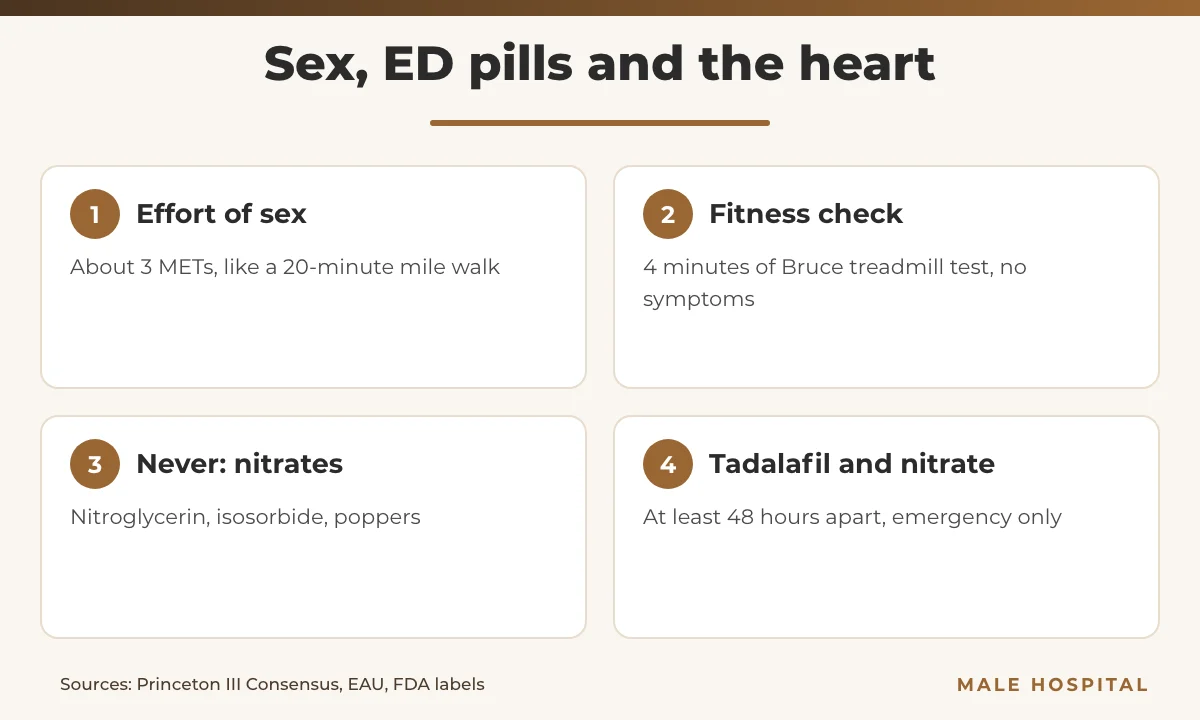
For most men with stable heart disease, yes. According to Princeton III, sexual activity between partners in a long-standing relationship is roughly equivalent to 3 metabolic equivalents (METs), similar to walking 1 mile on level ground in 20 minutes. Completing 4 minutes of the standard Bruce treadmill test (5–6 METs) without symptoms suggests your heart can handle the physical demands of sex.
Sexual activity can briefly raise the chance of a heart attack, but the absolute effect is small. A meta-analysis in JAMA found sexual activity was linked to a higher relative risk of heart attack in the following hours (RR 2.70), yet one extra hour of physical or sexual activity per week added only about 2 to 3 heart attacks per 10,000 person-years. The triggering effect was weaker in people who were regularly physically active.
Sources: Mayo Clinic Proceedings (PMC) — The Princeton III Consensus recommendations; JAMA (PubMed) — Episodic physical and sexual activity and triggering of acute cardiac events (Dahabreh and Paulus, 2011)
Princeton III cardiac risk groups
| Risk group | Examples | What it usually means |
|---|---|---|
| Low | Successful revascularization, controlled high blood pressure without symptoms, mild valve disease, NYHA class I–II heart failure reaching 5 METs without ischemia | Sexual activity and ED treatment can usually proceed |
| Intermediate (indeterminate) | Mild or moderate stable angina, heart attack 2–8 weeks ago without intervention, NYHA class III heart failure, peripheral artery disease, previous stroke or TIA | Further evaluation, often exercise testing, before resuming sex |
| High | Unstable or refractory angina, uncontrolled high blood pressure, NYHA class IV heart failure, heart attack under 2 weeks ago without intervention, high-risk arrhythmias, severe valve disease (especially aortic stenosis) | Defer sexual activity until the heart condition is stabilized by a cardiologist |
Source: Mayo Clinic Proceedings (PMC) — The Princeton III Consensus recommendations
ED pills in heart patients: safety and the nitrate rule
PDE5 inhibitors such as sildenafil (Viagra) and tadalafil (Cialis) are the first-line tablets for ED, and the question for men with heart disease is how to use them safely. The EAU guidelines state that no randomized or open-label studies have shown an increase in heart attack rates with these drugs. Princeton III adds that placebo-controlled trials and post-marketing data have shown no new concerns regarding cardiovascular events.
For men on treatment for heart disease, the EAU notes that the side-effect profile of PDE5 inhibitors is generally not worsened by blood pressure medicines, although small additive drops in blood pressure can occur. There is currently no limitation on using alpha-blockers with PDE5 inhibitors, because a meta-analysis did not find more hypotension-related adverse events.
Sources: EAU Guidelines — Management of Erectile Dysfunction; Mayo Clinic Proceedings (PMC) — The Princeton III Consensus recommendations
The absolute rule: no nitrates
The EAU calls the use of any organic nitrate or nitric oxide donor an absolute contraindication to PDE5 inhibitors, and nicorandil is also contraindicated. Nitrates, often prescribed for angina in heart disease, include nitroglycerin sprays and tablets, isosorbide mononitrate and dinitrate, and amyl nitrite “poppers”. Together with a PDE5 inhibitor they can cause a sudden, severe fall in blood pressure.
The Viagra label states that after taking sildenafil, it is unknown when nitrates, if necessary, can be safely given. The Cialis label says that if a nitrate is judged medically necessary in a life-threatening situation, at least 48 hours should pass after the last tadalafil dose, and even then only under close medical supervision. If you have chest pain and have taken an ED pill, call emergency services and tell the team which drug you took and when.
Sources: EAU Guidelines — Management of Erectile Dysfunction; DailyMed (FDA label) — VIAGRA prescribing information; DailyMed (FDA label) — CIALIS prescribing information
When the labels advise caution or avoidance
The tadalafil label does not recommend the drug for men with a heart attack in the last 90 days, unstable angina or angina during intercourse, NYHA class 2 or greater heart failure in the last 6 months, uncontrolled arrhythmias, low blood pressure (below 90/50 mm Hg), uncontrolled high blood pressure, or a stroke in the last 6 months. The sildenafil label urges caution after a heart attack, stroke or life-threatening arrhythmia in the last 6 months, with resting blood pressure below 90/50 or above 170/110 mm Hg, unstable angina, and left ventricular outflow obstruction such as aortic stenosis. Sildenafil must also never be combined with riociguat. Our guides to sildenafil side effects and Cialis side effects explain the other interactions.
Sources: DailyMed (FDA label) — CIALIS prescribing information; DailyMed (FDA label) — VIAGRA prescribing information
Treating erectile dysfunction and heart disease together
When ED and heart disease occur together, the goal is not only better erections but a healthier cardiovascular system. The EAU strongly recommends starting lifestyle changes and risk-factor treatment before, or at the same time as, ED treatment. Physical activity, especially aerobic exercise, weight loss and treatment of conditions such as high blood pressure can improve sexual function as well as heart health.
Princeton III states that lifestyle changes are likely to reduce cardiovascular risk and improve erectile function in all patients. Its recommended measures are:
- Stopping smoking; in men with coronary heart disease it reduced total mortality by 36% in the evidence the panel reviewed.
- Regular dynamic (aerobic) exercise.
- Losing excess weight and eating a healthy diet.
- Moderate alcohol intake; the NHS advises no more than 14 units a week.
- Controlling blood pressure, cholesterol and blood sugar with your doctor.
Sources: EAU Guidelines — Management of Erectile Dysfunction; Mayo Clinic Proceedings (PMC) — The Princeton III Consensus recommendations; NHS — Erection problems (erectile dysfunction)
If a heart medicine seems to have started your erection problems, do not stop it on your own; ask your doctor whether an alternative is possible. When tablets are unsuitable or ineffective, options such as penile injections, vacuum devices and, as a last line, a penile implant remain available. Each choice should be matched to your cardiac status and any heart disease you have. You can compare the options on our erectile dysfunction treatment page.
When to see a doctor
The NHS advises seeing a doctor if erection problems keep happening, because they can be a sign of a treatable health condition. Occasional problems linked to stress, tiredness or alcohol are usually not a concern. Book a check-up of your heart disease risk, including blood pressure, blood sugar and cholesterol, if:
- You have new or worsening ED, especially if you are under 50.
- You have ED plus smoking, diabetes, high blood pressure, high cholesterol, obesity or a family history of early heart disease.
- You have heart disease and want to start or restart sex or ED medicine.
Call emergency services immediately for chest pain, pressure or tightness, shortness of breath, fainting or a racing irregular heartbeat during or after sex. The Cialis label tells men who develop symptoms at the start of sexual activity to stop and seek immediate medical care, and never to take a nitrate if they have used a PDE5 inhibitor recently.
Sources: NHS — Erection problems (erectile dysfunction); DailyMed (FDA label) — CIALIS prescribing information
If you would like a confidential assessment of your erection problems and a plan that takes your heart health into account, you can message our urologist-andrologist on WhatsApp for a free initial consultation. The cost of any treatment depends on that assessment.
FAQs about erectile dysfunction and heart disease
Can erectile dysfunction be an early sign of heart disease?
Yes. Because penile arteries are narrower than coronary arteries, the same artery damage that leads to heart disease often causes erection problems first. The Princeton III Consensus describes a gap of 2 to 5 years between ED onset and a coronary event, so new ED, especially without an obvious cause, is a good reason to have your cardiovascular risk checked.
Source: Mayo Clinic Proceedings (PMC) — The Princeton III Consensus recommendations
How much does ED increase the risk of a heart attack?
In a 2013 meta-analysis of 14 cohort studies, men with ED had a 62% higher relative risk of heart attack and a 44% higher risk of any cardiovascular event than men without ED. This is a relative increase; the absolute risk for an individual depends on age, blood pressure, cholesterol, smoking and diabetes.
Is Viagra safe if I have heart disease?
For many men with stable heart disease it is, after a doctor confirms you are fit for sexual activity. EAU guidelines report no increase in heart attack rates in trials. It is not safe with nitrates or riociguat, and the label urges caution after a recent heart attack or stroke, with very low or very high blood pressure, or with unstable angina.
Sources: EAU Guidelines — Management of Erectile Dysfunction; DailyMed (FDA label) — VIAGRA prescribing information
How long after Cialis can I take nitroglycerin?
The Cialis label says at least 48 hours should pass after the last tadalafil dose before a nitrate is considered, and only in a life-threatening situation under close medical supervision. For sildenafil, the label says it is unknown when nitrates can be given safely. Always tell emergency staff which ED drug you took and when.
Sources: DailyMed (FDA label) — CIALIS prescribing information; DailyMed (FDA label) — VIAGRA prescribing information
Can sex cause a heart attack?
It can trigger one, but rarely, and most men with stable heart disease can have sex safely. A JAMA meta-analysis found sexual activity raised the short-term relative risk of heart attack, yet one extra hour of sexual or physical activity a week added only 2 to 3 heart attacks per 10,000 person-years. Regular exercise weakened this triggering effect.
Source: JAMA (PubMed) — Episodic physical and sexual activity and acute cardiac events
How do I know if my heart is strong enough for sex?
Princeton III compares typical sex with a long-term partner to about 3 METs, similar to walking a mile on flat ground in 20 minutes. Completing 4 minutes of a standard Bruce treadmill test without symptoms is reassuring. If you get chest pain or breathlessness with mild exertion, see a cardiologist to check for heart disease before resuming sex.
Source: Mayo Clinic Proceedings (PMC) — The Princeton III Consensus recommendations
Can blood pressure medicine cause erectile dysfunction?
It can. NIDDK lists blood pressure medicines and diuretics among drugs that can cause ED as a side effect. Do not stop them yourself, because uncontrolled blood pressure also damages the arteries that supply the penis and raises the risk of heart disease. Ask your doctor whether another medicine or an ED treatment would suit you better.
Source: NIDDK — Symptoms and causes of erectile dysfunction
Does improving heart health improve erections?
Often, yes. The EAU notes that physical activity, especially aerobic exercise, weight loss and treating risk factors such as high blood pressure may improve sexual function, and it strongly recommends starting these changes before or alongside ED treatment. The same steps lower your risk of heart disease.
Source: EAU Guidelines — Management of Erectile Dysfunction
Medically reviewed by Assoc. Prof. Dr. Zülfü Sertkaya, urologist and andrologist (FEBU), Istanbul. Last reviewed: October 2026.
This article is for general information and does not replace an individual consultation with a qualified doctor.
- Mayo Clinic Proceedings (PMC) — The Princeton III Consensus recommendations for the management of erectile dysfunction and cardiovascular disease (Nehra et al., 2012)
- JAMA (PubMed) — Erectile dysfunction and subsequent cardiovascular disease (Thompson et al., 2005)
- Circulation: Cardiovascular Quality and Outcomes (PubMed) — Prediction of cardiovascular events and all-cause mortality with erectile dysfunction: meta-analysis (Vlachopoulos et al., 2013)
- Journal of the American College of Cardiology (PubMed) — Erectile dysfunction and risk of cardiovascular disease: meta-analysis of prospective cohort studies (Dong et al., 2011)
- American Journal of Cardiology (PubMed) — The artery size hypothesis: a macrovascular link between erectile dysfunction and coronary artery disease (Montorsi et al., 2005)
- European Urology (PubMed) — A systematic review of the association between erectile dysfunction and cardiovascular disease (Gandaglia et al., 2014)
- JAMA (PubMed) — Association of episodic physical and sexual activity with triggering of acute cardiac events (Dahabreh and Paulus, 2011)
- EAU — Sexual and Reproductive Health Guidelines — Management of Erectile Dysfunction
- DailyMed (FDA label) — VIAGRA (sildenafil citrate) tablets — prescribing information
- DailyMed (FDA label) — CIALIS (tadalafil) tablets — prescribing information
- NIDDK — Symptoms and causes of erectile dysfunction
- Cleveland Clinic — Erectile dysfunction
- NHS — Erection problems (erectile dysfunction)