Erectile dysfunction and diabetes are closely linked: high blood sugar over many years damages the lining of blood vessels and the nerves that control erections, so more than half of men with diabetes develop erection problems, often 10 to 15 years earlier than men without diabetes. The good news is that diabetic ED is treatable. Better glucose, blood pressure and cholesterol control, ED pills, penile injections and, when needed, a penile implant all have solid evidence in men with diabetes.
Source: NIDDK — Diabetes, Sexual, & Bladder Problems; EAU Guidelines — Management of erectile dysfunction
- A meta-analysis of 145 studies on erectile dysfunction and diabetes found ED in 52.5% of men with diabetes, about 3.5 times the odds seen in men without diabetes.
- Erectile dysfunction and diabetes are linked through damaged blood vessel lining (less nitric oxide), nerve damage (neuropathy), narrowed arteries and, in some men, low testosterone.
- Higher HbA1c is linked to higher ED risk, and a period of intensive glucose control lowered ED rates in one long-term type 1 diabetes trial.
- For erectile dysfunction and diabetes together, PDE5 inhibitors such as sildenafil and tadalafil work in diabetic men, although the response is often weaker than in men without diabetes.
- If pills fail in erectile dysfunction and diabetes, penile injections (over 70% efficacy, including in diabetes) and penile implants (92% or higher patient satisfaction) remain highly effective options.
- How diabetes causes erectile dysfunction
- How common are erectile dysfunction and diabetes together?
- Diagnosis and the heart-health warning sign
- Blood sugar control and erectile function
- Do ED pills work for men with diabetes?
- Injections, vacuum devices and shockwave therapy
- Penile implants for erectile dysfunction and diabetes
- Preventing erectile dysfunction in diabetes
- When to see a doctor
- FAQs about erectile dysfunction and diabetes
How diabetes causes erectile dysfunction
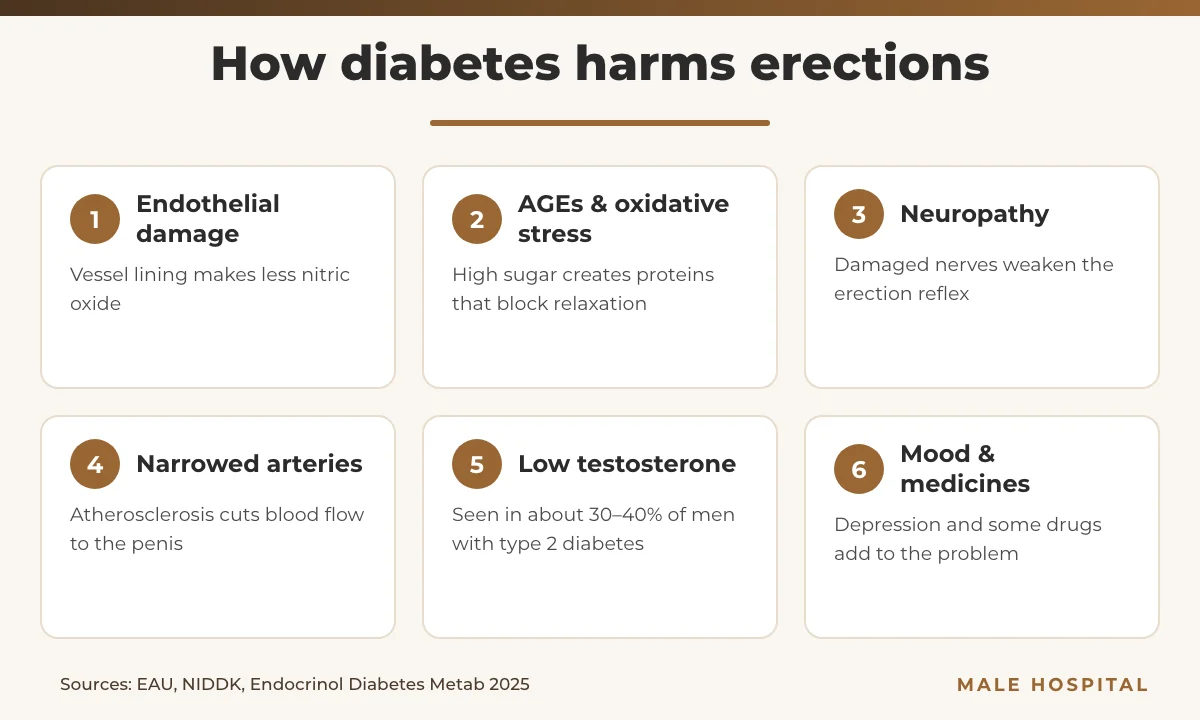
An erection is a blood-flow event controlled by nerves. When a man is aroused, nerves and the inner lining of the penile blood vessels (the endothelium) release nitric oxide. This relaxes the smooth muscle of the erectile tissue so it can fill with blood. Anything that damages the nerves, the endothelium or the arteries can weaken erections, and diabetes can damage all three, which is the core of the link between erectile dysfunction and diabetes.
Researchers describe the link between erectile dysfunction and diabetes as multifactorial: there is no single cause. The main mechanisms are listed below, and in most men several act together.
Source: Cleveland Clinic — Erectile Dysfunction (ED); PubMed — Thorve et al. Diabetes-induced erectile dysfunction (J Diabetes Complications 2011)
1. Endothelial damage and less nitric oxide
A 2025 review calls damage to the endothelium of the erectile tissue “a hallmark of diabetic ED.” In erectile dysfunction and diabetes, chronic high blood sugar increases the formation of advanced glycation end-products (AGEs), sugar-bound proteins that reduce nitric oxide availability and raise oxidative stress. The enzyme that makes nitric oxide in the endothelium is often reduced in men with diabetes, so the “relax and fill” signal is weaker.
2. Nerve damage (diabetic neuropathy)
Diabetes can damage the autonomic nerves that run the erection reflex. This autonomic neuropathy disrupts the parasympathetic signals needed for smooth-muscle relaxation. Neuropathy is one reason some men with erectile dysfunction and diabetes respond less well to ED pills, which need working nerve signals to boost.
3. Narrowed arteries (vascular disease)
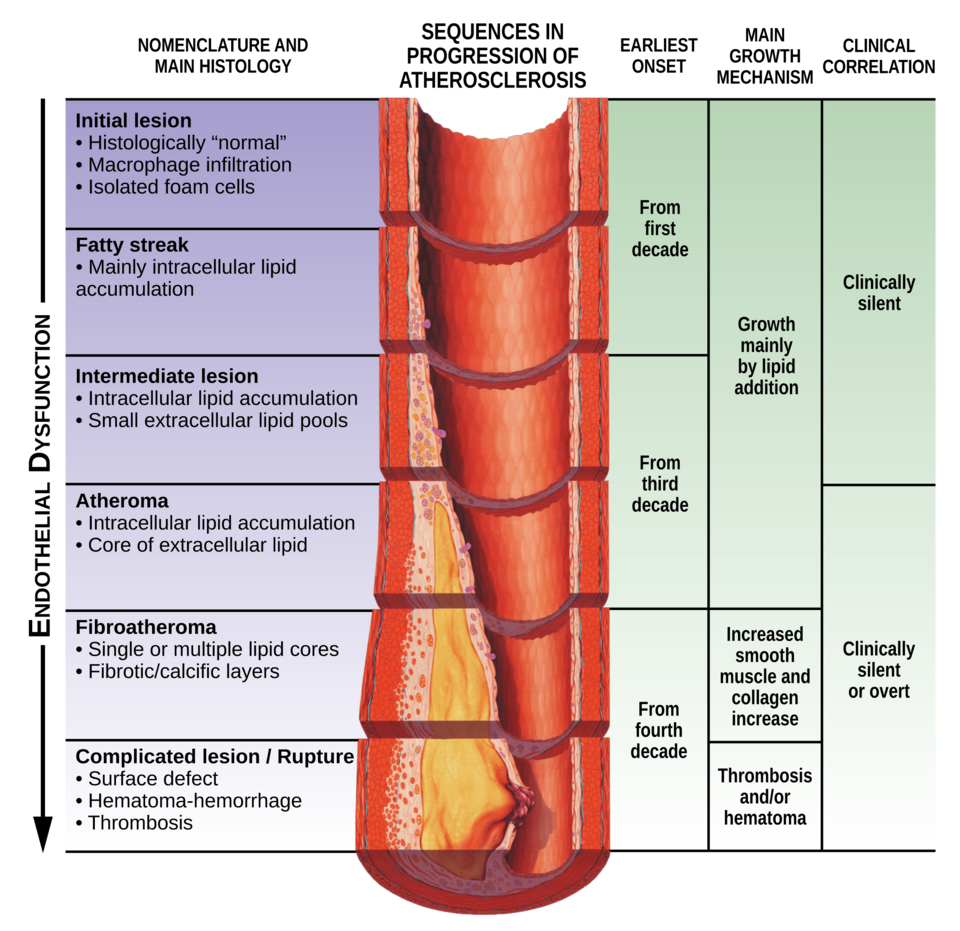
High glucose, together with the high blood pressure and cholesterol that often come with diabetes, speeds up atherosclerosis. Penile arteries are small, so narrowing can show up as ED before it causes symptoms elsewhere.
4. Low testosterone and other factors
Low testosterone (hypogonadism) is common in type 2 diabetes. The same review reports a prevalence of roughly 30–40%. Depression, relationship stress, some blood pressure and mood medicines, smoking and heavy drinking can add to the problem of erectile dysfunction and diabetes. For a full list of other triggers, see our guide to the causes of erectile dysfunction.
Source: PMC — Hostnik et al. Erectile Dysfunction in Diabetes Mellitus: A Comprehensive Narrative Review (Endocrinol Diabetes Metab 2025); NIDDK — Diabetes, Sexual, & Bladder Problems
How common are erectile dysfunction and diabetes together?
Very common: erectile dysfunction and diabetes often occur together. The US National Institute of Diabetes and Digestive and Kidney Diseases (NIDDK) states that more than half of men with diabetes will get ED. Men with diabetes are more than three times as likely to develop it as men without diabetes, and it tends to start 10 to 15 years earlier.
The largest pooled analysis of erectile dysfunction and diabetes to date included 145 studies and 88,577 men. After adjusting for publication bias, it found ED in 52.5% of men with diabetes overall: 37.5% in type 1 and 66.3% in type 2 diabetes. Compared with healthy controls, men with diabetes had about 3.6 times the odds of ED. Because ED can appear early, younger men with diabetes are affected too. Our article on erectile dysfunction in young men covers that age group in detail.
Source: NIDDK — Diabetes, Sexual, & Bladder Problems; PubMed — Kouidrat et al. High prevalence of erectile dysfunction in diabetes (Diabet Med 2017)
Diagnosis and the heart-health warning sign
Erectile dysfunction and diabetes together are more than a bedroom problem. The European Association of Urology (EAU) notes that ED can improve the sensitivity of screening for silent cardiovascular disease in men with or without diabetes. Because penile arteries are small, a new erection problem may be an early clue to artery disease elsewhere, so your doctor may check your heart risk as well.
A typical assessment for erectile dysfunction and diabetes includes:
- A sexual and medical history, including how long you have had diabetes, your medicines and any nerve, eye or kidney complications.
- A physical exam, including blood pressure and the genitals.
- Fasting blood glucose or HbA1c and a lipid profile, if not checked in the past 12 months, as the EAU recommends.
- An early-morning, fasting total testosterone level, because low testosterone is common in diabetes.
- Penile Doppler ultrasound in selected men, for example when a blood-flow cause is suspected or pills have worked poorly.
Our pillar guide to erectile dysfunction explains the full diagnostic work-up step by step.
Source: EAU Guidelines — Management of erectile dysfunction; NIDDK — Diabetes, Sexual, & Bladder Problems
Blood sugar control and erectile function
The EAU guidelines say conditions linked to ED, such as diabetes, should always be well controlled as the first step of any ED treatment. NIDDK adds that good diabetes management may help prevent and treat ED caused by nerve damage and circulation problems.
The strongest long-term data on erectile dysfunction and diabetes come from the Diabetes Control and Complications Trial (DCCT) in type 1 diabetes. About ten years after the trial, 571 men completed a validated ED questionnaire. In men who already had early complications when they joined, those who had received intensive glucose control had much less ED than those on conventional treatment (12.8% vs 30.8%). In men without complications at entry, the difference was not significant (17% vs 20.3%). In both groups, a higher average HbA1c was linked to a higher ED risk, and age, peripheral neuropathy and urinary symptoms were also risk factors.
In practice, for men who already have erectile dysfunction and diabetes, tighter control is not an instant cure for established ED, because nerve and vessel damage builds up over years. It is still the foundation: it may slow further damage and supports every other treatment.
Source: PubMed — Wessells et al. Effect of intensive glycemic therapy on erectile function in men with type 1 diabetes (J Urol 2011); EAU Guidelines — Management of erectile dysfunction
Testosterone in men with diabetes
In men with erectile dysfunction and diabetes, if blood tests confirm low testosterone, treating it may help. NIDDK notes that several studies show that, together with good diabetes management, testosterone therapy can lessen sexual problems, but it may carry serious risks and is not safe for every man. It should only be started after proper testing and a discussion of risks with your doctor.
Source: NIDDK — Diabetes, Sexual, & Bladder Problems
Do ED pills work for men with diabetes?
Yes. Phosphodiesterase type 5 (PDE5) inhibitors, such as sildenafil (Viagra), tadalafil (Cialis), vardenafil and avanafil, are the usual first-line treatment for erectile dysfunction and diabetes. They boost the nitric oxide pathway, so they need sexual stimulation to work.
The evidence specific to erectile dysfunction and diabetes is consistent:
- Cochrane review: eight randomized trials (976 men on a PDE5 inhibitor, 741 controls; 80% with type 2 diabetes). Men taking the drug were 3.8 times more likely to report improved erections, and their erectile function score (IIEF) improved by 6.6 points more than in the control groups.
- Sildenafil trial (JAMA 1999): in 268 men with diabetes, 56% on sildenafil reported improved erections at 12 weeks vs 10% on placebo. 61% had at least one successful intercourse attempt vs 22%.
- Tadalafil trial (Diabetes Care 2002): 10 mg and 20 mg doses improved all main erectile outcomes regardless of baseline HbA1c, and tadalafil did not change HbA1c levels.
- Meta-analysis of 17 trials (2015): the number needed to treat for one extra man to benefit was 2.4 for sildenafil, 2.6 for tadalafil and 4.1 for vardenafil.
Source: PubMed — Vardi & Nini. Phosphodiesterase inhibitors for erectile dysfunction in patients with diabetes mellitus (Cochrane 2007); PubMed — Rendell et al. Sildenafil for ED in men with diabetes (JAMA 1999)
Source: PubMed — Sáenz de Tejada et al. Effects of tadalafil on ED in men with diabetes (Diabetes Care 2002); PubMed — Balhara et al. PDE5 inhibitors for ED in diabetes: meta-analysis (2015)
Why the response can be weaker
Response rates in trials of erectile dysfunction and diabetes are lower than in general ED populations. In the sildenafil diabetes trial, 56% reported improved erections, while the EAU reports 77–84% at 50–100 mg in broader ED groups. Reviews describe reduced responsiveness in some men with diabetes, likely because nerve and endothelial damage leave less nitric oxide for the drug to work with. The EAU finds no proven difference in efficacy between the four PDE5 inhibitors, so the choice depends on timing, side effects and preference. Tadalafil 5 mg once daily is an alternative to on-demand dosing.
Before calling a pill a failure, doctors check that it was used correctly: the right dose, the right timing, enough attempts and sexual stimulation. Side effects in trials of erectile dysfunction and diabetes were the usual ones: headache, flushing, indigestion and nasal congestion. Never combine PDE5 inhibitors with nitrates. The EAU lists this as an absolute contraindication.
Source: EAU Guidelines — Management of erectile dysfunction; PMC — Hostnik et al. Erectile Dysfunction in Diabetes Mellitus (2025)
Injections, vacuum devices and shockwave therapy
When pills do not work well enough for erectile dysfunction and diabetes, or cannot be used, second-line options take over.
Penile injections (intracavernous therapy). A fine needle delivers alprostadil (or a mixed solution) directly into the erectile tissue. This works even when nerve signals are weak, a common situation in erectile dysfunction and diabetes. The EAU reports efficacy above 70%, including in men with diabetes or heart disease. In published series, satisfaction was 87–93.5% in patients and 86–90.3% in partners. Possible problems include penile pain (reported by about half of users, after 11% of injections), prolonged erection (about 1%) and penile scarring (about 2%), and many men stop over time. Alprostadil given into the urethra is also available, but its efficacy is significantly lower than injections.
Vacuum erection devices. A cylinder and pump draw blood into the penis, and a ring at the base holds it. The EAU cites efficacy of up to 90% for erections good enough for intercourse, with satisfaction ranging from 27% to 94%.
Low-intensity shockwave therapy. The EAU suggests it for mild vasculogenic ED and notes that results in men with type 2 diabetes may be better when it is combined with a vacuum device. Evidence specific to erectile dysfunction and diabetes is still limited. Read more in our guide to shockwave therapy for erectile dysfunction.
Source: EAU Guidelines — Management of erectile dysfunction; PMC — Hostnik et al. Erectile Dysfunction in Diabetes Mellitus (2025)
| Treatment | Line | Evidence in or relevant to diabetes | Key points |
|---|---|---|---|
| Glucose, BP, lipid control + lifestyle | Foundation | Higher HbA1c linked to higher ED risk (DCCT) | First step of every ED plan |
| PDE5 inhibitors (sildenafil, tadalafil, etc.) | First | 3.8× more likely to improve vs control (Cochrane) | Never with nitrates; check correct use |
| Penile injections (alprostadil) | Second | Efficacy above 70%, including diabetes (EAU) | Pain, rare priapism, scarring |
| Vacuum erection device | Second | Up to 90% efficacy in general ED (EAU) | No drugs; satisfaction varies |
| Penile implant | Third | 92% or higher patient satisfaction (EAU); diabetes raises infection risk | Permanent mechanical solution |
Source: EAU Guidelines — Management of erectile dysfunction; PubMed — Vardi & Nini (Cochrane 2007)
Penile implants for erectile dysfunction and diabetes
For men whose ED does not respond to pills or injections, or who prefer a lasting solution, a penile prosthesis (penile implant) is the third-line option. The three-piece inflatable implant is the most commonly placed device. It is fully hidden inside the body and inflated with a small pump when an erection is wanted. The EAU reports some of the highest satisfaction rates of any ED treatment: 92% or more in patients and 91–95% in partners.
With erectile dysfunction and diabetes, safety needs extra attention. The EAU states that diabetes is a risk factor for implant infection, and that serious complications are more common in men with significant vascular impairment, such as diabetes. In an older prospective study of 389 men, infection occurred in 8.7% of diabetic men vs 4.0% of non-diabetic men. In that study, HbA1c level did not predict which men got infected, and the EAU notes that no randomized trial has set an ideal HbA1c threshold before surgery. The EAU notes that antibiotic-impregnated implants may lower the infection rate to 1–2%, and surgeons also aim for the best possible glucose control before surgery.
Source: EAU Guidelines — Management of erectile dysfunction; PubMed — Wilson et al. Penile prosthesis infection and glycosylated hemoglobin (J Urol 1998)
Preventing erectile dysfunction in diabetes
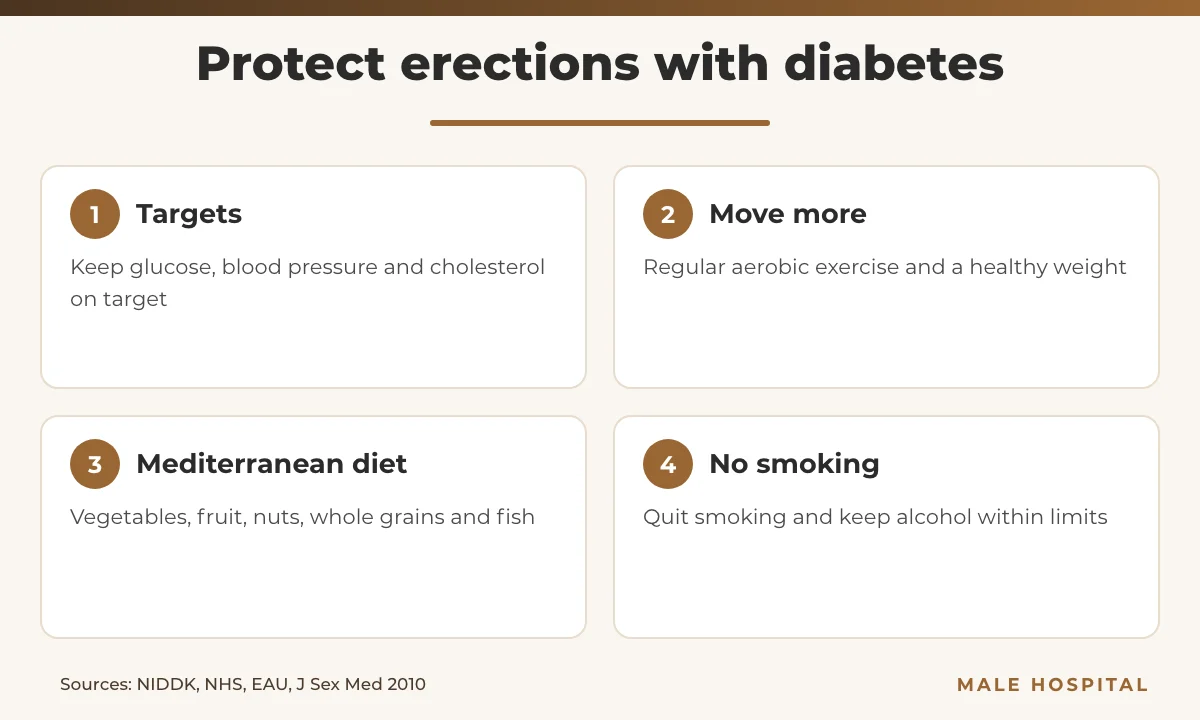
You cannot change how long you have had diabetes, but many risk factors linking erectile dysfunction and diabetes are within reach. NIDDK advises keeping blood glucose, blood pressure and cholesterol close to target, being physically active, keeping a healthy weight, quitting smoking and getting help for emotional problems. The NHS adds limiting alcohol to 14 units a week or less and keeping long cycling sessions under about 3 hours a week.
Diet matters too for erectile dysfunction and diabetes. In a review of dietary studies, men with type 2 diabetes who followed a Mediterranean-style diet most closely had the lowest rates of ED. That diet is high in vegetables, fruit, nuts, whole grains and fish and low in red and processed meat. The EAU notes that physical activity, especially aerobic exercise, may improve sexual function.
Source: NHS — Erection problems (erectile dysfunction); PubMed — Esposito et al. Dietary factors, Mediterranean diet and erectile dysfunction (J Sex Med 2010)
When to see a doctor
See a doctor if erection problems keep happening. In erectile dysfunction and diabetes, the erection problems can point to nerve or blood vessel damage that deserves attention in its own right. Seek care promptly if you notice:
- ED together with chest pain, shortness of breath on exertion or leg pain when walking, which can suggest artery disease.
- New numbness, tingling or burning in the feet, or bladder problems, which can suggest neuropathy.
- Low sex drive, tiredness or loss of body hair, which can suggest low testosterone.
- An erection lasting more than 3 to 4 hours, for example after an ED injection. This is an emergency (priapism) and needs hospital treatment.
- Fever, redness, swelling or pain around a penile implant.
Source: NHS — Erection problems (erectile dysfunction); NHS — Priapism (painful erections)
If you live with erectile dysfunction and diabetes, you can have a confidential consultation with our urologist-andrologist about every erectile dysfunction treatment option, from tablets to implants. Message us on WhatsApp for a free first assessment.
FAQs about erectile dysfunction and diabetes
Can diabetic erectile dysfunction be reversed?
Sometimes it improves, especially when it is caught early and blood sugar, blood pressure, weight and smoking are tackled. Long-standing nerve and blood vessel damage may not fully recover, but erections can still be restored with treatment. Pills, injections and implants all work in men with diabetes, so almost every man with erectile dysfunction and diabetes has an effective option.
Source: NIDDK — Diabetes, Sexual, & Bladder Problems
Is Viagra safe for men with diabetes?
For most men, yes. In a 12-week trial of 268 men with diabetes, sildenafil was well tolerated, and heart-related side effects were similar to placebo (3% vs 5%). The common side effects were headache, indigestion and congestion. It must never be taken with nitrate medicines, and your doctor should check your heart health first.
Source: PubMed — Rendell et al. (JAMA 1999)
Which ED pill works best for diabetics?
No PDE5 inhibitor has been proven more effective than the others, according to the EAU. In a meta-analysis on erectile dysfunction and diabetes, sildenafil and tadalafil showed the lowest numbers needed to treat (2.4 and 2.6), but the trials were not head-to-head. Tadalafil can also be taken as a low 5 mg daily dose. The choice depends on your routine, side effects and other medicines.
Source: PubMed — Balhara et al. (2015)
Does type 1 or type 2 diabetes cause more ED?
In the largest meta-analysis, ED affected 37.5% of men with type 1 diabetes and 66.3% of men with type 2 diabetes. Men with type 2 diabetes are usually older and more likely to have high blood pressure, obesity and artery disease, which all add to ED risk. Duration and control of diabetes matter in both types.
Source: PubMed — Kouidrat et al. (Diabet Med 2017)
Can metformin or insulin cause erectile dysfunction?
In erectile dysfunction and diabetes, the disease itself, not good glucose treatment, is the main driver of ED. In the DCCT, men who had received intensive insulin therapy had less ED years later than those on conventional care if they already had early complications. Some blood pressure or mood medicines can affect erections, so ask your doctor before stopping any medicine.
Source: PubMed — Wessells et al. (J Urol 2011)
Can men with diabetes get a penile implant?
Yes. Having erectile dysfunction and diabetes is not a reason to refuse an implant, but it raises the risk of infection, so surgeons aim for good glucose control and use antibiotic protection. One study found infection in 8.7% of diabetic vs 4.0% of non-diabetic men, and HbA1c alone did not predict infection. Satisfaction after implants is among the highest of any ED treatment.
Source: PubMed — Wilson et al. (J Urol 1998)
Is ED an early sign of diabetes?
It can be: erectile dysfunction and diabetes are often found together. Diabetes is one of the conditions that often lie behind frequent erection problems, which is why the EAU recommends checking fasting glucose or HbA1c in men with ED if this has not been done in the past year. A new erection problem is a good reason for a general health check, including blood sugar and cholesterol.
Source: EAU Guidelines — Management of erectile dysfunction
Medically reviewed by Assoc. Prof. Dr. Zülfü Sertkaya, urologist and andrologist (FEBU), Istanbul. Last reviewed: October 2026.
This article is for general information and does not replace an individual consultation with a qualified doctor.
- NIDDK — Diabetes, Sexual, & Bladder Problems
- EAU — Sexual and Reproductive Health Guidelines — Management of erectile dysfunction
- Cleveland Clinic — Erectile Dysfunction (ED): Causes, Diagnosis & Treatment
- NHS — Erection problems (erectile dysfunction)
- NHS — Priapism (painful erections)
- PMC — Endocrinol Diabetes Metab 2025 — Hostnik et al. Erectile Dysfunction in Diabetes Mellitus: A Comprehensive Narrative Review
- PubMed — Diabet Med 2017 — Kouidrat et al. High prevalence of erectile dysfunction in diabetes: a systematic review and meta-analysis of 145 studies
- PubMed — J Urol 2011 — Wessells et al. Effect of intensive glycemic therapy on erectile function in men with type 1 diabetes
- PubMed — Cochrane Database Syst Rev 2007 — Vardi & Nini. Phosphodiesterase inhibitors for erectile dysfunction in patients with diabetes mellitus
- PubMed — JAMA 1999 — Rendell et al. Sildenafil for treatment of erectile dysfunction in men with diabetes
- PubMed — Diabetes Care 2002 — Sáenz de Tejada et al. Effects of tadalafil on erectile dysfunction in men with diabetes
- PubMed — Indian J Endocrinol Metab 2015 — Balhara et al. PDE5 inhibitors for erectile dysfunction in patients with diabetes mellitus: meta-analysis
- PubMed — J Urol 1998 — Wilson et al. Quantifying risk of penile prosthesis infection with elevated glycosylated hemoglobin
- PubMed — J Diabetes Complications 2011 — Thorve et al. Diabetes-induced erectile dysfunction: epidemiology, pathophysiology and management
- PubMed — J Sex Med 2010 — Esposito et al. Dietary factors, Mediterranean diet and erectile dysfunction