Erectile dysfunction causes are usually physical: narrowed or stiff blood vessels, diabetes, nerve damage, hormone problems and medicine side effects account for most cases, while anxiety, depression and relationship stress cause or worsen many others. In practice, most men have a mix of several causes. Finding them matters, because some, such as heart disease and diabetes, need treatment in their own right.
Source: NIDDK — Symptoms & Causes of Erectile Dysfunction; EAU Guidelines — Management of erectile dysfunction
- The most common physical cause is reduced blood flow from atherosclerosis, often driven by high blood pressure, high cholesterol, diabetes and smoking.
- Nerve damage (multiple sclerosis, spinal cord injury, Parkinson’s disease, pelvic surgery or radiotherapy), hormone problems and many common medicines can also cause ED.
- Anxiety, depression and relationship problems can cause ED on their own, and they frequently develop on top of a physical cause.
- Normal morning or night-time erections point toward a psychological cause, but they are a clue, not a diagnosis.
- New ED can be an early warning sign of heart disease, so it deserves a medical check-up.
- Erectile dysfunction causes at a glance
- Vascular and metabolic erectile dysfunction causes
- Neurological causes: when nerve signals fail
- Hormonal causes: testosterone, thyroid and prolactin
- Medications that can cause ED
- Lifestyle erectile dysfunction causes
- Psychological and relationship causes
- Peyronie’s disease, other penile problems and age
- Psychological or physical? How doctors tell the difference
- When to see a doctor
- FAQs about erectile dysfunction causes
Erectile dysfunction causes at a glance
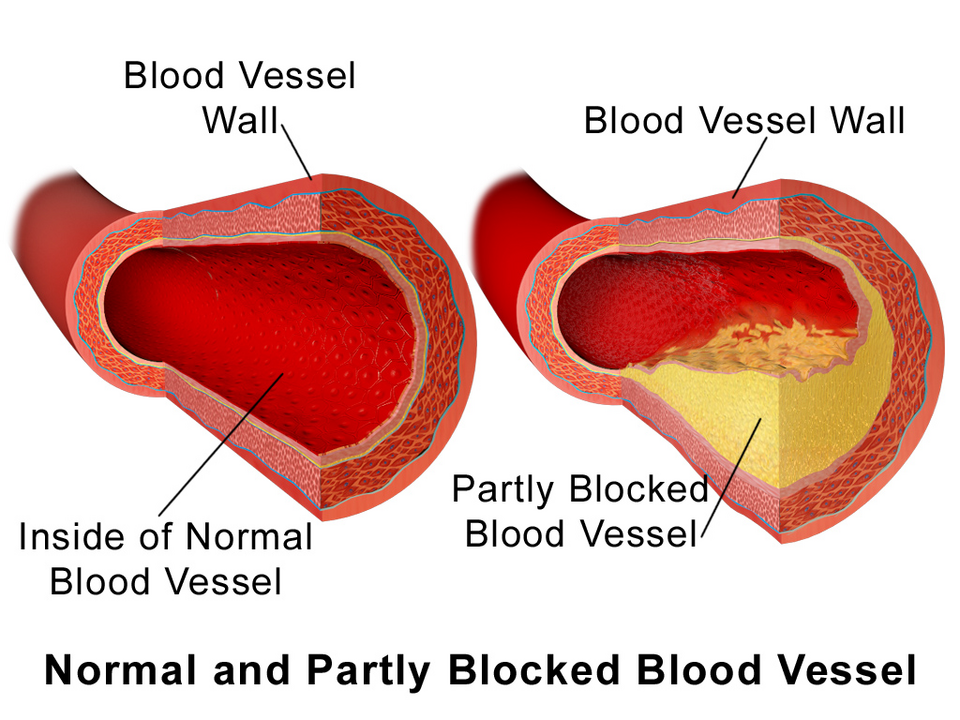
An erection is a blood-flow event controlled by the brain, nerves and hormones: arousal signals relax the smooth muscle in the penis, blood rushes in and is trapped. A problem at any step can stop an erection from forming or lasting.
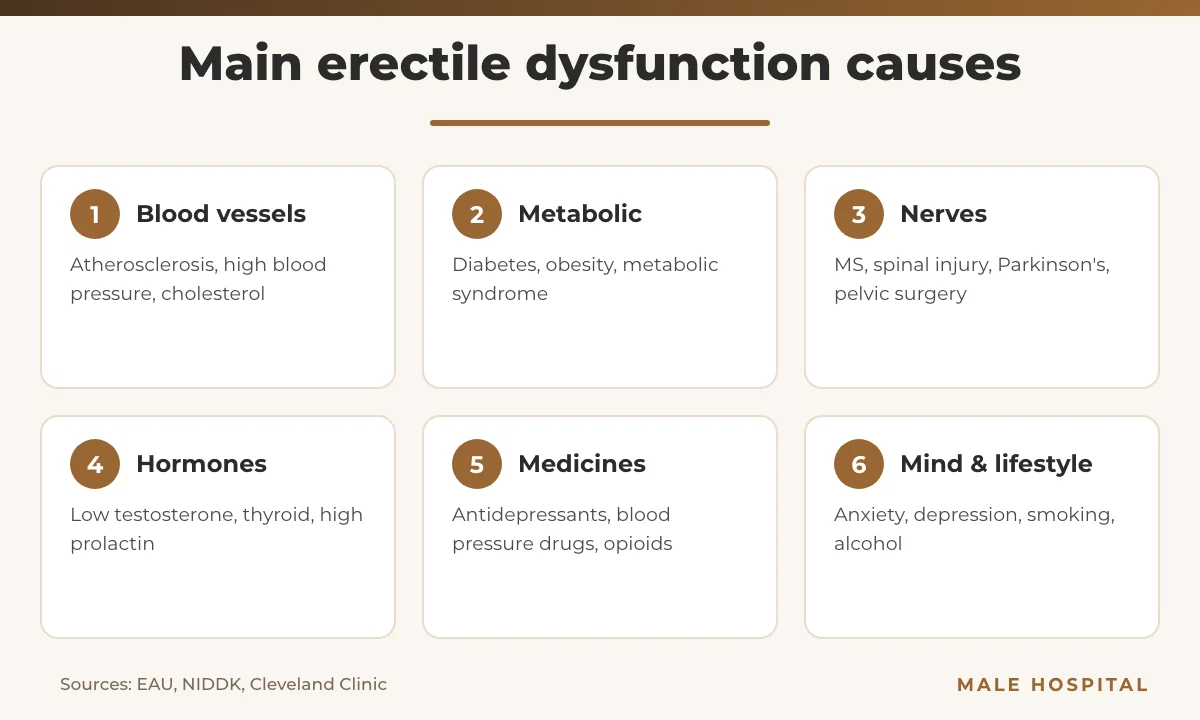
The European Association of Urology (EAU) groups the causes of ED as vasculogenic (blood vessels), neurogenic (nerves), anatomical, hormonal, drug-induced and psychogenic, and notes that several of these pathways often exist together. Doctors also sort ED more simply into organic (physical), psychogenic and mixed types, and most cases are mixed.
Source: EAU Guidelines — Management of erectile dysfunction; Cleveland Clinic — Erectile Dysfunction (ED)
The table below summarizes the main erectile dysfunction causes covered in this guide. For the bigger picture, including how ED is diagnosed and treated, see our complete guide to erectile dysfunction.
| Cause group | Examples | How it affects erections |
|---|---|---|
| Vascular | Atherosclerosis, high blood pressure, high cholesterol | Less blood reaches the penis; damaged vessel lining |
| Metabolic | Diabetes, obesity, metabolic syndrome | Damages blood vessels and nerves; can lower testosterone |
| Neurological | Multiple sclerosis, spinal cord injury, Parkinson’s disease, stroke, pelvic surgery or radiotherapy | Nerve signals to the penis are interrupted |
| Hormonal | Low testosterone, thyroid imbalance, high prolactin | Lower desire and weaker erections |
| Medications | Antidepressants, blood pressure drugs, diuretics, antiandrogens, sedatives, opioids | Side effects on nerves, blood flow or hormones |
| Lifestyle | Smoking, heavy drinking, recreational drugs, inactivity, sleep apnea | Speeds up vessel damage and worsens other risk factors |
| Psychological | Performance anxiety, depression, stress, relationship problems | The brain’s arousal signals are blocked |
| Anatomical | Peyronie’s disease, penile fracture | Scar tissue or injury affects the erectile chambers |
Sources: NIDDK — Symptoms & Causes of Erectile Dysfunction; EAU Guidelines — Management of erectile dysfunction; Cleveland Clinic — Erectile Dysfunction (ED)
Vascular and metabolic erectile dysfunction causes
Conditions that reduce blood flow to the penis are the most common cause of ED. The same vessel damage affects arteries elsewhere in the body, which is why new ED is sometimes the first sign of a wider circulation problem.
Source: Cleveland Clinic — Erectile Dysfunction (ED)
Atherosclerosis
Atherosclerosis is the build-up of fatty plaque inside artery walls. According to the MSD Manual, atherosclerosis of the cavernous arteries of the penis is the most common vascular cause of ED, and it is closely linked to smoking, diabetes and damage to the inner lining of blood vessels (endothelial dysfunction).
The link with heart disease is well documented. In a study of 9,457 men aged 55 and older from the Prostate Cancer Prevention Trial, men who developed ED had a 25% higher risk of later cardiovascular events after adjustment for other factors, a risk the authors compared with current smoking or a family history of heart attack. A major review describes ED as a harbinger of coronary heart disease, especially in men younger than 55.
Sources: MSD Manual Professional — Erectile Dysfunction; PubMed — Thompson et al., JAMA 2005; PMC — Yafi et al., Nat Rev Dis Primers 2016
High blood pressure
Men with hypertension have a higher risk of vasculogenic ED. The problem is not the pressure itself but what years of raised pressure do to the arteries: their walls become thicker and less elastic, so they cannot widen properly when an erection needs extra blood.
High cholesterol
Abnormal blood fats (dyslipidemia) feed atherosclerosis and narrow the arteries. In the review by Yafi and colleagues, dyslipidemia was associated with an odds ratio of 1.83 for ED, and the Massachusetts Male Aging Study found that higher HDL (“good”) cholesterol was linked to a lower probability of ED.
Sources: PMC — Yafi et al., Nat Rev Dis Primers 2016; PubMed — Feldman et al., Massachusetts Male Aging Study, J Urol 1994
Diabetes
Diabetes is one of the strongest erectile dysfunction causes because it attacks several parts of the erection mechanism at once. It damages small nerves (peripheral neuropathy), narrows large arteries, impairs the lining of the small arterioles in the penis and is associated with low testosterone. Sexual function can be affected in type 1 diabetes, type 2 diabetes and even prediabetes; Yafi and colleagues report an odds ratio of 2.57 for diabetes.
Obesity and metabolic syndrome
Obesity and metabolic syndrome, a cluster of a large waist, raised blood pressure, high blood sugar and abnormal blood fats, are both associated with a higher risk of ED. The link with belly fat may hold even after accounting for related diseases and low testosterone. Cleveland Clinic lists a body mass index (BMI) over 25 among the risk factors, and the EAU places metabolic syndrome among the hormonal causes of ED.
Sources: PMC — Yafi et al., Nat Rev Dis Primers 2016; Cleveland Clinic — Erectile Dysfunction (ED); EAU Guidelines — Management of erectile dysfunction
Other contributors include chronic kidney disease, chronic obstructive pulmonary disease (COPD) and faulty penile vein valves that let blood drain away too quickly (venous leak).
Sources: NIDDK — Symptoms & Causes of Erectile Dysfunction; Cleveland Clinic — Erectile Dysfunction (ED)
Neurological causes: when nerve signals fail
Anything that damages the nerve pathway from the brain and spinal cord to the penis can cause neurogenic ED. Conditions named by the NIDDK, Cleveland Clinic and the EAU include:
- Multiple sclerosis (MS), which damages nerve fibers in the brain and spinal cord
- Spinal cord injury and spinal stenosis
- Parkinson’s disease, listed by the EAU among degenerative nerve disorders
- Stroke and epilepsy
- Diabetic neuropathy, nerve damage caused by diabetes
Sources: NIDDK — Symptoms & Causes of Erectile Dysfunction; Cleveland Clinic — Erectile Dysfunction (ED); EAU Guidelines — Management of erectile dysfunction
Pelvic surgery and radiotherapy
The cavernous nerves that control erections run very close to the prostate, bladder and rectum. Radical pelvic surgery, such as radical prostatectomy for prostate cancer, is the most common medically caused (iatrogenic) form of ED. Erectile function typically drops after surgery and may improve gradually as the nerves recover from surgical trauma. Radiotherapy to the pelvis can also damage nerves and blood vessels, and pelvic injuries can cause ED as well.
Sources: PMC — Yafi et al., Nat Rev Dis Primers 2016; EAU Guidelines — Management of erectile dysfunction
Hormonal causes: testosterone, thyroid and prolactin
Low testosterone
Testosterone deficiency (hypogonadism) mainly lowers sex drive, and it can also weaken erections. However, the MSD Manual points out that erections often do not fully return when testosterone is brought back to normal, because most affected men also have blood vessel or nerve problems. Our guide to low testosterone symptoms explains the other signs to watch for.
Thyroid problems
Both the NIDDK and Cleveland Clinic list thyroid imbalance as a possible cause, and the EAU names hyperthyroidism (an overactive thyroid) among the hormonal causes. The overall contribution of thyroid disease to ED in the population is thought to be small, so thyroid tests are usually reserved for men with symptoms that suggest a thyroid problem.
High prolactin
Prolactin is a pituitary hormone. After testosterone, it is the hormone most commonly found to be abnormal in men with sexual dysfunction. High prolactin (hyperprolactinemia) suppresses the hormones that tell the testes to make testosterone, which can lead to low testosterone. Doctors may check prolactin in selected men, because a prolactin-secreting pituitary tumor needs its own treatment.
Sources: MSD Manual Professional — Erectile Dysfunction; PMC — Yafi et al., Nat Rev Dis Primers 2016; EAU Guidelines — Management of erectile dysfunction
Medications that can cause ED
Many commonly prescribed medicines list erection problems as a possible side effect. The NIDDK names these classes:
- Antidepressants
- Appetite suppressants
- Antihistamines (medicines for allergies or heartburn)
- Blood pressure medicines and diuretics (water pills)
- Chemotherapy and hormone medicines
- Some pain relievers, such as nonsteroidal anti-inflammatory drugs (NSAIDs), codeine and oxycodone
- Sedatives
- Ulcer medicines
MedlinePlus adds digoxin and sleeping pills, the EAU lists antipsychotics and antiandrogens (prostate cancer hormone treatments), and Yafi and colleagues name thiazide diuretics, beta-blockers and spironolactone as the blood pressure drugs most often implicated. The NHS notes that your doctor may be able to switch you to a different medicine if one is causing ED.
Important: never stop or change a prescribed medicine on your own. Talk to your doctor first, because stopping some drugs suddenly can be dangerous.
Sources: NIDDK — Symptoms & Causes of Erectile Dysfunction; MedlinePlus — Erection problems; PMC — Yafi et al., Nat Rev Dis Primers 2016; NHS — Erection problems
Lifestyle erectile dysfunction causes
Lifestyle erectile dysfunction causes matter because you can change them, and they drive many of the vascular problems above.
Smoking
Cigarette smoking raises the risk of ED (odds ratio about 1.4 in the review by Yafi and colleagues), and stopping can reduce that risk. In the Massachusetts Male Aging Study, smoking was linked to a greater probability of complete ED in men who also had heart disease or high blood pressure.
Alcohol
Drinking too much is a classic reason for a one-off failed erection, and long-term heavy drinking can cause lasting harm. The NHS advises not drinking more than 14 units of alcohol a week, and MedlinePlus suggests limiting alcohol to no more than 2 drinks a day.
Recreational drugs
The NIDDK lists recreational or illegal drug use as a cause, and Cleveland Clinic names nicotine, cocaine, marijuana and opioids among substances that can lead to ED.
Sources: PMC — Yafi et al., Nat Rev Dis Primers 2016; PubMed — Feldman et al., Massachusetts Male Aging Study, J Urol 1994; NHS — Erection problems; MedlinePlus — Erection problems; Cleveland Clinic — Erectile Dysfunction (ED)
Physical inactivity
Not getting enough exercise is listed as a risk factor by both the NIDDK and Cleveland Clinic. Moderate, more frequent physical activity is associated with a lower risk of ED.
Obstructive sleep apnea
In obstructive sleep apnea, the airway repeatedly collapses during sleep. The EAU lists it among conditions that affect erections through mixed pathways, and a Cochrane review notes that sleep apnea and ED occur together far more often than chance would predict. Whether treating sleep apnea with CPAP improves erections is still uncertain: the same review rated the evidence as very low certainty and found that sildenafil may improve erectile function slightly more than CPAP.
Sources: NIDDK — Symptoms & Causes of Erectile Dysfunction; PMC — Yafi et al., Nat Rev Dis Primers 2016; EAU Guidelines — Management of erectile dysfunction; PubMed — Barbosa et al., Cochrane review 2021
Psychological and relationship causes
The brain starts the erection process, so emotions can switch it off. Psychological factors should be considered in every man with ED, whatever the physical findings. Common psychological erectile dysfunction causes include:
- Performance anxiety: worry about “failing” again, which can turn one bad night into a repeating cycle
- Depression: the link runs both ways, as depression can cause ED and ED can deepen low mood
- Stress from work, money or health worries
- Low self-esteem, low confidence or negative body image
- Relationship problems, such as poor communication, anger or conflict with a partner
- Feeling isolated or lonely, or fear of intercourse
The EAU describes two patterns of psychogenic ED: generalized, and situational, where problems are tied to a particular partner, to performance pressure or to distress. MedlinePlus notes that emotional causes are more common in younger men. Many men with a physical cause also develop anxiety about sex afterward.
Sources: MSD Manual Professional — Erectile Dysfunction; PMC — Yafi et al., Nat Rev Dis Primers 2016; NIDDK — Symptoms & Causes of Erectile Dysfunction; EAU Guidelines — Management of erectile dysfunction; MedlinePlus — Erection problems
Peyronie’s disease, other penile problems and age
Peyronie’s disease
Peyronie’s disease causes scar tissue (plaque) to form inside the penis, leading to curvature, pain or shortening. Both the NIDDK and the EAU list it as a cause of ED. Our guide to Peyronie’s disease explains the condition and its treatment in detail.
Other structural problems
The EAU also lists hypospadias, phimosis and penile cancer as anatomical causes. Cleveland Clinic adds penile fracture and pelvic injuries, and the NIDDK mentions an enlarged prostate among male reproductive problems linked with ED.
Sources: NIDDK — Symptoms & Causes of Erectile Dysfunction; EAU Guidelines — Management of erectile dysfunction; Cleveland Clinic — Erectile Dysfunction (ED)
Age
Age is the factor most strongly associated with ED. In the Massachusetts Male Aging Study of men aged 40 to 70, 52% had some degree of ED, and complete ED tripled from 5% to 15% across that age range. Cleveland Clinic lists being 40 or older as a risk factor.
Age is not the whole story: older men are more likely to have heart disease, high blood pressure or diabetes, and the same study concluded that ED may be partly due to modifiable factors rather than aging alone.
Sources: PubMed — Feldman et al., Massachusetts Male Aging Study, J Urol 1994; Cleveland Clinic — Erectile Dysfunction (ED)
Psychological or physical? How doctors tell the difference
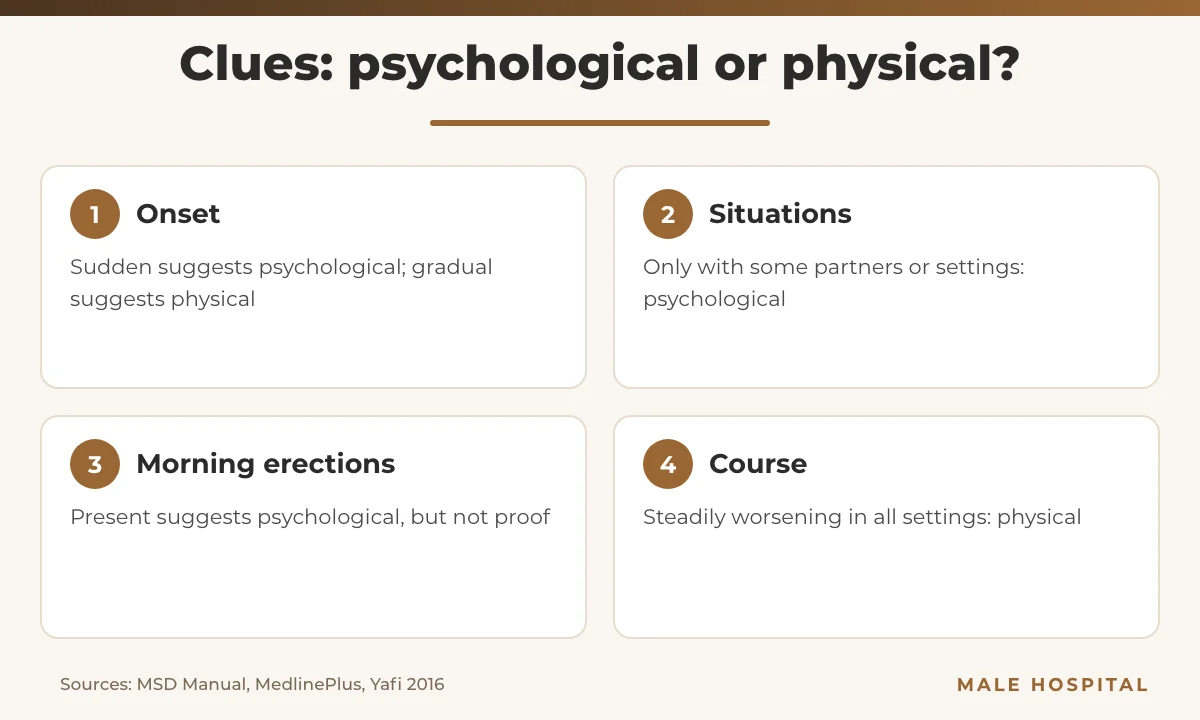
The history often gives useful clues. A psychological cause is more likely when ED starts suddenly in a young, healthy man, when it only happens in certain situations or with a certain partner, or when it comes and goes and improves on its own. A physical cause is more likely when ED begins gradually, gets steadily worse and happens in every situation.
Sources: MSD Manual Professional — Erectile Dysfunction; PMC — Yafi et al., Nat Rev Dis Primers 2016
What morning erections can (and cannot) tell you
Healthy men usually have several erections during sleep. MedlinePlus says most men have 3 to 5 night-time erections lasting about 30 minutes, and that if you get erections during sleep or in the morning, the cause is likely not physical. The MSD Manual similarly notes that men with psychogenic ED usually have normal night-time erections and erections on waking, whereas men with physical ED often do not.
Treat this as a clue only. The NHS points out that, depending on the cause, some men can still get an erection at other times, such as on waking, and the EAU guideline asks doctors to record morning erections without treating them as proof either way. Physical and psychological causes frequently coexist, and a man with early blood vessel disease may still wake with erections.
Sources: MedlinePlus — Erection problems; MSD Manual Professional — Erectile Dysfunction; NHS — Erection problems; EAU Guidelines — Management of erectile dysfunction
Tests doctors may use
Blood tests look for hidden diabetes, high cholesterol and hormone problems such as low testosterone, with prolactin and thyroid tests in selected men. When the cause is unclear, a nocturnal penile tumescence and rigidity (NPTR) test can record erections during sleep. Men with psychogenic ED usually have normal results. A penile Doppler ultrasound can assess blood flow when a vascular cause is suspected.
Sources: EAU Guidelines — Management of erectile dysfunction; MSD Manual Professional — Erectile Dysfunction; Cleveland Clinic — Erectile Dysfunction (ED)
When to see a doctor
An occasional failed erection is common and is usually caused by stress, tiredness or alcohol. See a doctor if erection problems keep happening, and especially if:
- ED started recently and you have heart disease risk factors such as high blood pressure, high cholesterol, diabetes, smoking or a family history of heart disease
- You also have chest pain, shortness of breath on exertion or leg pain when walking (seek urgent care for chest pain)
- You notice a new bend, lump or pain in the penis
- ED began after starting a new medicine, after pelvic surgery or radiotherapy, or after an injury
- You also have low sex drive or unusual tiredness, which can point to a hormone problem such as low testosterone
Because new ED caused by vessel disease can be the first sign of cardiovascular disease, it should prompt a check of your heart health, not just a prescription.
Sources: NHS — Erection problems; MSD Manual Professional — Erectile Dysfunction; PubMed — Thompson et al., JAMA 2005
If you would like to find out what is behind your symptoms, you can arrange a confidential consultation with our urologist-andrologist Assoc. Prof. Dr. Zülfü Sertkaya by sending us a message on WhatsApp, and read more about our erectile dysfunction treatment options.
FAQs about erectile dysfunction causes
What is the most common cause of erectile dysfunction?
Reduced blood flow to the penis is the most common cause. It usually results from atherosclerosis, the build-up of plaque in the arteries, which is driven by high blood pressure, high cholesterol, diabetes, smoking and inactivity. These are the same risk factors that cause heart disease, which is why ED and cardiovascular disease often appear together.
Source: Cleveland Clinic — Erectile Dysfunction (ED)
Can erectile dysfunction be caused by stress alone?
Yes. Stress, anxiety and depression can interfere with the brain signals that start an erection, and performance anxiety can keep the problem going. Psychological ED is more common in younger men and is often situational. Still, a doctor should rule out physical causes, because the two frequently occur together.
Source: MedlinePlus — Erection problems
If I still get morning erections, is my ED psychological?
It makes a psychological cause more likely, but it does not prove it. Normal night-time and morning erections show that the nerves and blood vessels can work, yet early physical problems and mixed causes are common. A doctor can put this clue together with your history, examination and blood tests to reach a clearer answer.
Source: MSD Manual Professional — Erectile Dysfunction
Which medications most often cause ED?
Antidepressants, some blood pressure medicines (especially thiazide diuretics and beta-blockers), antiandrogen hormone treatments, sedatives, opioid pain relievers and some ulcer and allergy medicines are common culprits. If you suspect a medicine, ask your doctor about alternatives rather than stopping it yourself; a different medicine can often be used instead.
Source: NIDDK — Symptoms & Causes of Erectile Dysfunction
Can low testosterone cause erectile dysfunction?
It can contribute, mainly by lowering sex drive, and it often coexists with diabetes and obesity. However, low testosterone is rarely the only cause. Many men with low testosterone also have blood vessel or nerve problems, so correcting testosterone alone may not fully restore erections. A blood test is needed to confirm it.
Source: MSD Manual Professional — Erectile Dysfunction
Is erectile dysfunction a sign of heart disease?
It can be. In a large study of men aged 55 and older, developing ED was linked to a higher risk of later cardiovascular events, in the same range as the extra risk from current smoking. The authors concluded that ED should prompt investigation of cardiovascular risk factors.
Source: PubMed — Thompson et al., JAMA 2005
Does drinking alcohol cause erectile dysfunction?
Heavy drinking on a single night commonly causes a temporary erection problem. Long-term heavy drinking can have lasting effects on health, including liver damage. The NHS recommends drinking no more than 14 units a week, which also helps protect erections over time.
Source: NHS — Erection problems
Can young men get erectile dysfunction from physical causes?
Yes. Although psychological causes are more common in younger men, physical erectile dysfunction causes such as diabetes, spinal injury, multiple sclerosis, Peyronie’s disease, medications and recreational drugs can affect men of any age. Lifelong ED that has been present since first sexual experiences is usually psychological or anatomical.
Source: MSD Manual Professional — Erectile Dysfunction
Medically reviewed by Assoc. Prof. Dr. Zülfü Sertkaya, urologist and andrologist (FEBU), Istanbul. Last reviewed: October 2026.
This article is for general information and does not replace an individual consultation with a qualified doctor.
- NIDDK — Symptoms & Causes of Erectile Dysfunction
- EAU — Sexual and Reproductive Health Guidelines — Management of erectile dysfunction
- Cleveland Clinic — Erectile Dysfunction (ED)
- NHS — Erection problems (erectile dysfunction)
- MedlinePlus — Erection problems (Medical Encyclopedia)
- MSD Manual Professional — Erectile Dysfunction
- Nature Reviews Disease Primers (PMC) — Yafi et al. Erectile dysfunction (2016)
- PubMed — J Urol 1994 — Feldman et al. Impotence and its medical and psychosocial correlates: Massachusetts Male Aging Study
- PubMed — JAMA 2005 — Thompson et al. Erectile dysfunction and subsequent cardiovascular disease
- PubMed — Cochrane Database Syst Rev 2021 — Barbosa et al. Non-invasive positive airway pressure therapy for improving erectile dysfunction in men with obstructive sleep apnoea