Exercises for erectile dysfunction come in two proven forms: regular aerobic exercise of moderate to vigorous intensity, which improves blood-vessel health, and pelvic floor (Kegel) training, which strengthens the muscles that help keep blood in the penis during an erection. Randomized trials show a modest but real improvement in erectile function, usually after 2 to 6 months, and exercise works best alongside, not instead of, a medical check. For the wider picture of lifestyle measures, see our guide to natural remedies for erectile dysfunction, and for medical options our erectile dysfunction treatment page.
Source: J Sex Med 2023 — Khera et al. Effect of aerobic exercise on erectile function: meta-analysis; EAU Guidelines — Management of erectile dysfunction
- Aerobic exercise has the strongest evidence: in a 2023 meta-analysis of 11 randomized trials it raised erectile function scores by about 2.8 points, and more in men with severe ED.
- A practical target for exercises for erectile dysfunction, taken from a systematic review, is about 40 minutes of moderate-to-vigorous aerobic activity, 4 times a week, kept up for around 6 months.
- Pelvic floor exercises for erectile dysfunction taught by a physiotherapist helped in a small randomized trial, but the evidence is weaker and mixed; European guidelines call the approach promising.
- Exercises for erectile dysfunction can be added to ED tablets: in a small trial, men who exercised while taking a PDE5 inhibitor did better than men on the tablet alone.
- ED can be an early sign of heart disease, so men who are inactive or have heart risk factors should get checked before starting vigorous training.
- How exercises for erectile dysfunction work
- Aerobic exercise: the best-supported option
- Pelvic floor exercises for erectile dysfunction, step by step
- Which exercises for erectile dysfunction work best? The evidence compared
- A sample weekly routine
- Strength training, cycling and other activities
- Combining exercise with ED treatment
- Safety tips and common mistakes
- When to see a doctor
- FAQs about exercises for erectile dysfunction
How exercises for erectile dysfunction work
A firm erection needs two things: enough blood flowing in, and as little as possible flowing out. Nitric oxide released by the lining of the blood vessels is the main signal that opens the penile arteries. Aging, inactivity and an unhealthy lifestyle reduce nitric oxide production, which is one reason why erectile dysfunction (ED) is so closely linked with heart and blood-vessel disease.
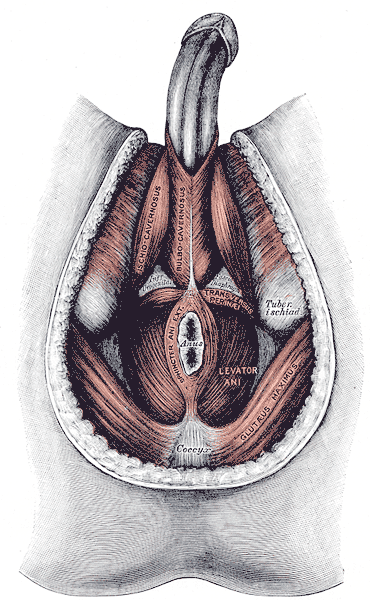
The second part of the system is muscular. As the penis fills, the engorged tissue presses on the veins that drain it. The pelvic floor muscles at the base of the penis then add pressure from outside, raising the pressure inside the erectile chambers enough to reach full rigidity. These muscles can lose tone and bulk with age, which is what pelvic floor exercises for erectile dysfunction target.
Source: J Sex Med 2014 — Meldrum et al. Erectile hydraulics: maximizing inflow while minimizing outflow
That gives exercises for erectile dysfunction two targets. Aerobic exercise works on the “inflow” side: the US National Institute of Diabetes and Digestive and Kidney Diseases (NIDDK) notes that physical activity increases blood flow through the body, including the penis, and helps keep weight healthy. Pelvic floor training works on the “outflow” side by strengthening the muscles that compress the base of the penis.
The European Association of Urology (EAU) lists lack of regular physical exercise and obesity among the vascular causes of ED and states that lifestyle change, including regular exercise and lower body weight, can improve erectile function. Its guideline gives a strong recommendation to start lifestyle changes, such as exercises for erectile dysfunction, before, or at the same time as, any ED treatment. If you are still unsure what is behind your symptoms, our article on erectile dysfunction causes explains the main physical and psychological factors.
Source: NIDDK — Treatment for Erectile Dysfunction; EAU Guidelines — Management of erectile dysfunction
Aerobic exercise: the best-supported option
Aerobic (cardio) exercise is any activity that keeps large muscle groups moving and raises your heart rate for a sustained period: brisk walking, jogging, swimming, cycling or rowing. Three independent reviews of randomized trials of exercises for erectile dysfunction point the same way.
- 2017, British Journal of Sports Medicine: 7 trials with 478 men with ED. Aerobic, pelvic or combined exercise improved the erectile function score by an average of about 3.9 points. The benefit was clearest for aerobic exercise of moderate to vigorous intensity, but the trials had a moderate to high risk of bias because participants knew which group they were in.
- 2023, Journal of Sexual Medicine: 11 randomized trials of aerobic exercise alone. Erectile function (IIEF-EF, scored 6–30) improved by 2.8 points on average compared with non-exercising controls. The gain was larger when ED was worse: 2.3 points for mild, 3.3 for moderate and 4.9 for severe ED.
- 2024, Andrology: 7 trials in men not taking ED tablets. Physical activity overall helped, and aerobic training alone showed a clear benefit, while pelvic floor training and combined aerobic plus resistance programs did not reach statistical significance in this analysis.
Source: Br J Sports Med 2017 — Silva et al. Physical activity and exercise for erectile dysfunction: meta-analysis; J Sex Med 2023 — Khera et al. Effect of aerobic exercise on erectile function; Andrology 2024 — Chen et al. Effect of different physical activities on erectile dysfunction
How much aerobic exercise is enough?
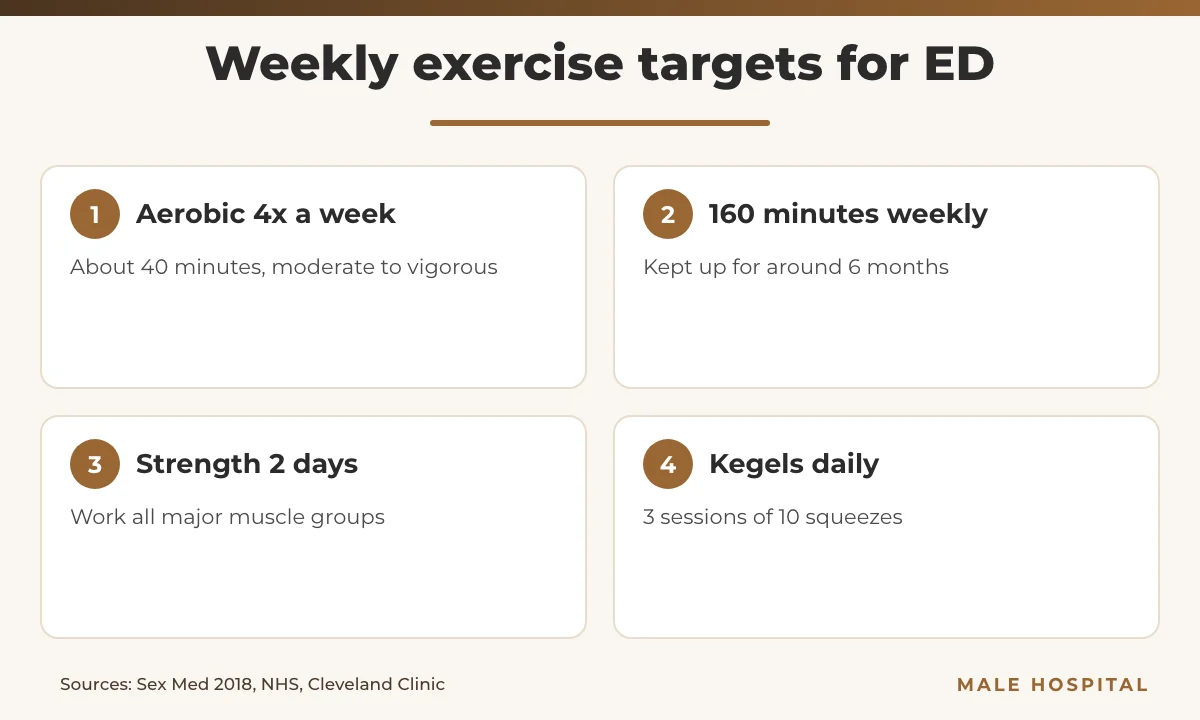
A 2018 systematic review of exercises for erectile dysfunction, written specifically to set a “dose” for men whose ED is linked to inactivity, obesity, high blood pressure, metabolic syndrome or heart disease recommended supervised training of 40 minutes of moderate-to-vigorous aerobic exercise, 4 times a week. About 160 minutes a week for 6 months was associated with fewer erectile problems.
That dose of exercises for erectile dysfunction is slightly more than the general minimum for adults. The World Health Organization (WHO) and the NHS advise at least 150 minutes of moderate-intensity activity a week, or 75 minutes of vigorous activity, plus muscle-strengthening work on at least 2 days. WHO estimates that about 31% of adults worldwide are physically inactive.
Source: Sex Med 2018 — Gerbild et al. Physical Activity to Improve Erectile Function: A Systematic Review; WHO — Physical activity fact sheet; NHS — Physical activity guidelines for adults aged 19 to 64
How hard should it feel?
The NHS “talk test” is a simple guide. At moderate intensity you can still talk but not sing; brisk walking, water aerobics and easy cycling are typical examples. At vigorous intensity you cannot say more than a few words without pausing for breath, as with running, fast swimming or riding a bike fast or uphill. Most trials of exercises for erectile dysfunction used moderate-to-vigorous effort, so aim for sessions where talking takes some effort.
Source: NHS — Physical activity guidelines for adults aged 19 to 64
Pelvic floor exercises for erectile dysfunction, step by step
The pelvic floor is a sling of muscles between the pubic bone and the tailbone. Two of them, the ischiocavernosus and the bulbospongiosus (bulbocavernosus), wrap around the base of the penis and help maintain rigidity by compressing the veins that drain it. Cleveland Clinic notes that in men these muscles help control blood flow to the penis as well as bladder and bowel control.
Source: Cleveland Clinic — Kegel Exercises for Men: Benefits & How To Do Them; J Sex Med 2014 — Meldrum et al. Erectile hydraulics
How to do Kegels correctly
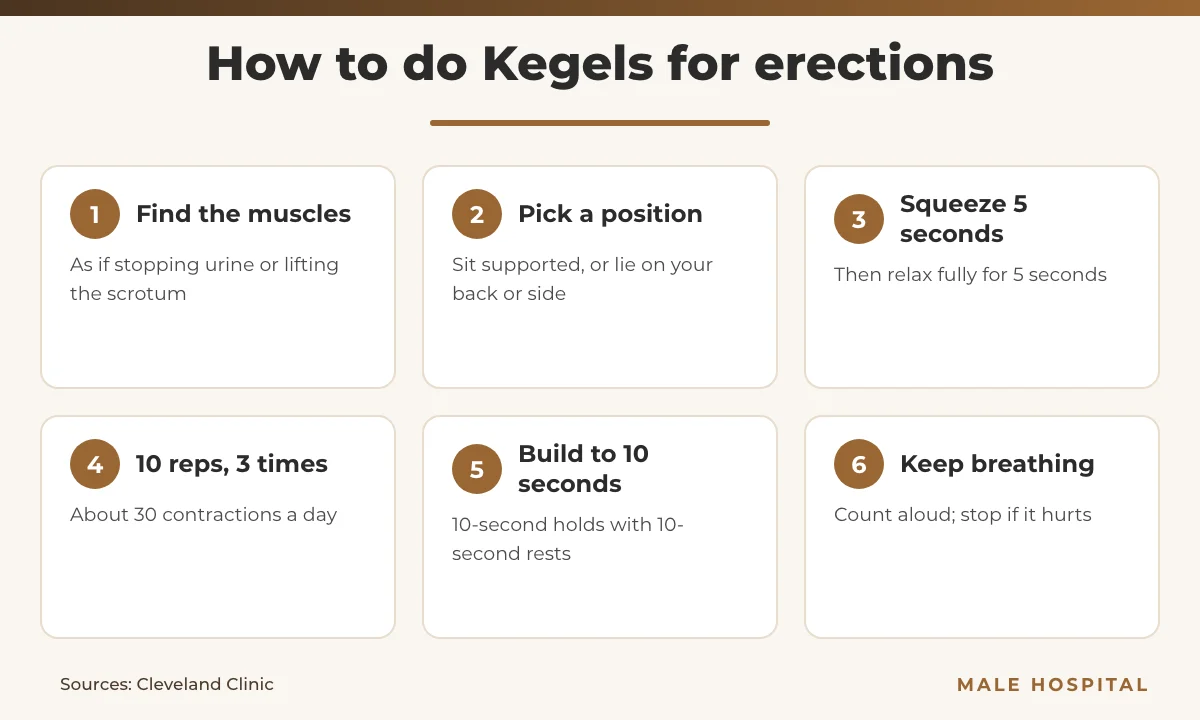
- Find the right muscles. Imagine stopping the flow of urine or holding in gas, or lift the scrotum upward toward the body. Your buttocks and inner thighs should stay relaxed.
- Get into position. Begin sitting with your feet flat and your back supported, or lying on your back or side.
- Squeeze and release. Tighten for about 5 seconds, then relax fully for about 5 seconds.
- Repeat. Do 10 repetitions per session, 3 sessions a day (30 in total).
- Progress slowly. Work up to 10-second holds with 10-second rests.
- Keep breathing. Count out loud so you do not hold your breath.
Most people notice changes after about 6 to 8 weeks of regular practice. Pain in the lower back, abdomen or head suggests you are using the wrong muscles or holding your breath. Doing too many Kegels can increase muscle tension and make symptoms worse, so more is not always better; stop and get advice if exercises for erectile dysfunction hurt. Never do Kegels while a urinary (Foley) catheter is in place.
Source: Cleveland Clinic — Kegel Exercises for Men: Benefits & How To Do Them
What the pelvic floor trials show
The best-known trial of pelvic floor exercises for erectile dysfunction, published in BJU International in 2005, randomized 55 men with ED of at least 6 months to physiotherapist-taught pelvic floor exercises with biofeedback and lifestyle advice, or lifestyle advice alone. The exercise group did significantly better at 3 months, and after 6 months a blinded assessor judged that 40% of men had regained normal erectile function. The same program also cleared after-dribble (post-micturition dribble) in most men who had it.
The wider evidence on pelvic floor exercises for erectile dysfunction is less consistent. A 2022 narrative review concluded that pelvic floor training is simple, safe and non-invasive and works best when guided by a physical therapist who also checks for overactive, tense muscles. The EAU describes pelvic floor training with biofeedback as “a promising alternative” to drug treatment but asks for larger, well-designed trials.
Source: BJU Int 2005 — Dorey et al. Pelvic floor exercises for erectile dysfunction; Urol Nurs 2004 — Dorey et al. Pelvic floor exercises for post-micturition dribble in men with ED; Sex Med Rev 2022 — Yaacov et al. Pelvic floor rehabilitation in males with sexual dysfunction
Which exercises for erectile dysfunction work best? The evidence compared
The table below summarizes what the main reviews and guidelines say about the main exercises for erectile dysfunction. “IIEF” is the International Index of Erectile Function, the standard questionnaire used to score erections in research.
| Exercise type | Main evidence | What it showed | Strength of evidence |
|---|---|---|---|
| Aerobic (walking, running, cycling, swimming) | Meta-analysis of 11 randomized trials (2023) | About +2.8 IIEF-EF points; up to +4.9 in severe ED | Moderate; the most consistent |
| Pelvic floor training with biofeedback | Randomized trial of 55 men (2005); reviews | 40% regained normal function at 6 months in one trial | Limited; mixed in meta-analysis |
| Aerobic plus resistance | Subgroup of a 2024 meta-analysis | Trend to benefit, not statistically significant | Low; few trials |
| Lifestyle programs (exercise and/or diet) | 16 randomized trials, 1,477 men (2026) | Modest but significant improvement; no clear best modality | Moderate (GRADE) |
| Exercise added to a PDE5 inhibitor | Randomized pilot trial of 60 men (2010) | Better erectile function than the tablet alone after 3 months | Low; small, open-label |
Source: J Sex Med 2023 — Khera et al.; Andrology 2024 — Chen et al.; J Sex Med 2026 — Li et al. Efficacy of lifestyle interventions in treating erectile dysfunction; J Sex Med 2010 — Maio et al. Physical activity and PDE5 inhibitors in ED
The honest summary: aerobic training has the most reliable evidence, while pelvic floor training is reasonable, low-risk and worth trying, ideally with professional guidance. A 2026 meta-analysis of 16 lifestyle trials found no single exercise type that clearly beat the others, so the best program of exercises for erectile dysfunction is the one you will actually keep doing.
Source: J Sex Med 2026 — Li et al. Efficacy of lifestyle interventions in treating erectile dysfunction
A sample weekly routine
There is no single official program of exercises for erectile dysfunction, but the targets used in the research can be combined into a simple week. Treat this as an example to adapt with your doctor, not a prescription, and build up gradually if you are currently inactive.
- Aerobic sessions, 4 days a week: about 40 minutes at a “can talk, cannot sing” effort or harder, such as brisk walking on an incline, jogging, swimming or an exercise bike.
- Strength work, 2 days a week: exercises for the major muscle groups (legs, hips, back, abdomen, chest, shoulders and arms), in line with general adult guidelines.
- Pelvic floor training, every day: 3 sessions of 10 squeezes, progressing from 5-second to 10-second holds.
- Less sitting: break up long periods of sitting or lying down with some movement.
- Stay with it: the reviewed trials of exercises for erectile dysfunction ran for 8 weeks to 2 years, and the 2018 dose review points to about 6 months of regular training.
Source: Sex Med 2018 — Gerbild et al.; NHS — Physical activity guidelines for adults aged 19 to 64; Cleveland Clinic — Kegel Exercises for Men; Br J Sports Med 2017 — Silva et al.
Supervision seems to help with exercises for erectile dysfunction. The dose recommendation above was for supervised training, and the strongest pelvic floor results came from programs taught by a physiotherapist with biofeedback, which shows you on a screen whether you are contracting the right muscles. If you can, start with a few sessions with a trainer or a pelvic health physiotherapist.
Source: Sex Med 2018 — Gerbild et al.; BJU Int 2005 — Dorey et al.
Strength training, cycling and other activities
Weightlifting and resistance training
Strength training is part of every adult activity guideline and helps with weight, blood sugar and fitness, but as one of the exercises for erectile dysfunction it has been studied far less than aerobic exercise. In the 2024 Andrology meta-analysis, programs that combined aerobic and resistance training showed a trend toward benefit that was not statistically significant, mainly because there were few trials. Keep lifting if you enjoy it, but make sure cardio is the core of your plan.
Source: Andrology 2024 — Chen et al.; WHO — Physical activity fact sheet
Cycling
Cycling is good aerobic exercise, but long hours in the saddle put pressure on the perineum. The NHS advises men with erection problems who cycle more than 3 hours a week to stop cycling for a while. If you ride a lot, consider mixing in other exercises for erectile dysfunction such as walking, running, swimming or rowing.
Daily habits that support training
Exercises for erectile dysfunction work best as part of a bigger change. The NHS also recommends stopping smoking, keeping alcohol within 14 units a week and reducing stress and anxiety. Our article on smoking and erectile dysfunction explains why quitting matters for blood flow.
Source: NHS — Erectile dysfunction (impotence)
Combining exercise with ED treatment
Exercises for erectile dysfunction do not have to wait until other options fail. The EAU recommends starting lifestyle changes before or alongside ED treatment. In a 2010 randomized pilot study of 60 men, one group took a PDE5 inhibitor (the drug class that includes sildenafil and tadalafil) alone, while the other added regular physical activity, averaging 3.4 hours a week. After 3 months, the exercising group had better scores for erectile function, sexual desire and intercourse satisfaction.
A 2014 review also stressed that tablets and pelvic floor training work on different parts of erectile “hydraulics” (blood inflow versus outflow), so they complement rather than compete with each other. If your erections remain unsatisfactory despite exercises for erectile dysfunction, effective medical options include tablets, shockwave therapy, injections and, for severe cases, a penile prosthesis.
Source: J Sex Med 2010 — Maio et al.; J Sex Med 2014 — Meldrum et al.; EAU Guidelines — Management of erectile dysfunction
After prostate surgery
Pelvic floor training is often offered after radical prostatectomy, mainly for urine control but also for erections. Here the evidence is uncertain: a 2026 systematic review of 12 randomized trials found benefits in four, a favorable signal in one and no significant difference in seven. It concluded that pelvic floor training may help as part of a wider rehabilitation program, but more research is needed. Our guide to erectile dysfunction after prostatectomy covers the full recovery plan.
Source: World J Urol 2026 — Akdagcik et al. Pelvic floor muscle training for erectile function after radical prostatectomy; J Sex Med 2020 — Wong et al. Pelvic floor muscle training for ED after prostatectomy
Safety tips and common mistakes
Check your heart first
ED and heart disease share the same root problem in the blood vessels. An international consensus panel (the Princeton III Consensus) noted that ED often occurs alongside silent coronary artery disease, with a window of about 2 to 5 years between the start of ED and a heart event. The same panel recommends regular dynamic exercise, weight loss, a healthy diet and stopping smoking, and says exercise tolerance should be established in men starting ED therapy.
In practice, if you have chest pain, breathlessness, known heart disease, diabetes or have been inactive for years, see a doctor before you start vigorous exercises for erectile dysfunction, and build up slowly. Read more in erectile dysfunction and heart disease.
Source: Mayo Clin Proc 2012 — Nehra et al. The Princeton III Consensus Recommendations
Common mistakes
- Expecting results in days: pelvic floor changes take around 6 to 8 weeks, and aerobic exercises for erectile dysfunction ran for months in trials.
- Squeezing the wrong muscles: tightening the buttocks or inner thighs instead of the pelvic floor.
- Overtraining the pelvic floor: too many contractions can raise muscle tension; a tense, overactive pelvic floor needs relaxation work rather than more squeezing.
- Stopping too soon: Cleveland Clinic notes the routine may need to continue long term, so make it a habit.
Source: Cleveland Clinic — Kegel Exercises for Men; Sex Med Rev 2022 — Yaacov et al.
When to see a doctor
The NHS advises seeing a doctor if erection problems keep happening, because they can be a sign of a treatable health condition. Exercises for erectile dysfunction are a good start, but they should not delay an assessment. Get checked promptly if:
- ED started suddenly, or you also have chest pain, shortness of breath or palpitations during exertion.
- You have diabetes, high blood pressure, high cholesterol or a family history of early heart disease.
- You have low sex drive, fatigue or loss of muscle, which can point to a hormone problem.
- There is pain, a new curve or a lump in the penis.
- Your erections have not improved after about 3 months of regular exercises for erectile dysfunction.
A simple erectile dysfunction test workup, including blood tests and sometimes an ultrasound, can identify the cause and guide treatment.
Source: NHS — Erectile dysfunction (impotence); Mayo Clin Proc 2012 — Princeton III Consensus
If you would like a personal plan of exercises for erectile dysfunction, you can arrange a confidential consultation with our urologist-andrologist through WhatsApp. We can check the cause of your symptoms and combine exercise with the right erectile dysfunction treatment.
FAQs about exercises for erectile dysfunction
Can exercise cure erectile dysfunction?
Exercise can improve erections, and some men regain normal function, especially when ED is linked to inactivity, excess weight or blood-vessel risk factors. Trials of exercises for erectile dysfunction show an average gain of about 3 points on the erectile function score, which is meaningful but modest. It does not fix every cause, such as nerve damage or severe vascular disease, so a medical assessment is still important.
Source: Br J Sports Med 2017 — Silva et al.; J Sex Med 2023 — Khera et al.
How long do exercises for erectile dysfunction take to work?
Pelvic floor exercises usually take about 6 to 8 weeks before changes are noticed. For aerobic training, a systematic review linked about 160 minutes a week kept up for 6 months with fewer erectile problems. Trials ranged from 8 weeks to 2 years. Expect gradual change from exercises for erectile dysfunction rather than an overnight effect, and keep going once you improve.
Source: Cleveland Clinic — Kegel Exercises for Men; Sex Med 2018 — Gerbild et al.
What is the best exercise for erectile dysfunction?
Among exercises for erectile dysfunction, moderate-to-vigorous aerobic exercise has the most consistent evidence. Brisk walking, jogging, swimming and rowing all count. A 2024 meta-analysis found a clear benefit for aerobic training alone, while results for other types were less certain. Many men combine cardio with daily pelvic floor training, which is low-risk and may add extra support for rigidity.
Source: Andrology 2024 — Chen et al.
Are Kegel exercises good for erectile dysfunction?
They can help. In a randomized trial, physiotherapist-taught pelvic floor exercises with biofeedback clearly improved erectile function, and 40% of men had normal function after 6 months. However, pooled analyses are mixed and European urology guidelines call the approach promising rather than proven. Learning the correct technique from a professional improves your chances with exercises for erectile dysfunction.
Source: BJU Int 2005 — Dorey et al.; EAU Guidelines — Management of erectile dysfunction
Can you do too many Kegels?
Yes. Cleveland Clinic warns that doing too many Kegel exercises can increase muscle tension and make symptoms worse. A standard routine is 10 contractions, 3 times a day. If exercises for erectile dysfunction cause pelvic, back or abdominal pain, stop and see a healthcare provider or pelvic health physiotherapist, who may teach relaxation techniques instead of more strengthening.
Source: Cleveland Clinic — Kegel Exercises for Men
Does cycling cause erectile dysfunction?
Moderate cycling is good aerobic exercise. The concern is long hours in the saddle: the NHS suggests that men with erection problems who cycle more than 3 hours a week take a break from cycling for a while. Swapping some rides for walking, running or swimming keeps the cardio benefit without the saddle pressure.
Source: NHS — Erectile dysfunction (impotence)
Should I exercise if I already take Viagra or Cialis?
Generally yes, if your doctor agrees it is safe for your heart. In a small randomized trial, men who added about 3.4 hours of weekly physical activity to a PDE5 inhibitor had better erectile function and satisfaction scores after 3 months than men taking the tablet alone. European guidelines also recommend lifestyle change, including exercises for erectile dysfunction, alongside ED treatment.
Source: J Sex Med 2010 — Maio et al.
Do pelvic floor exercises help after prostate surgery?
They may. Pelvic floor training is widely used after radical prostatectomy, but a 2026 review of 12 randomized trials found improved erections in only some of them, with most showing no clear difference. It is reasonable as part of a broader rehabilitation plan that may also include medicines, but it should not be relied on alone.
Source: World J Urol 2026 — Akdagcik et al.
Medically reviewed by Assoc. Prof. Dr. Zülfü Sertkaya, urologist and andrologist (FEBU), Istanbul. Last reviewed: November 2026.
This article is for general information and does not replace an individual consultation with a qualified doctor.
- EAU — Sexual and Reproductive Health Guidelines — Management of erectile dysfunction
- NIDDK — Treatment for Erectile Dysfunction
- NHS — Erectile dysfunction (impotence)
- NHS — Physical activity guidelines for adults aged 19 to 64
- WHO — Physical activity — fact sheet
- Cleveland Clinic — Kegel Exercises for Men: Benefits & How To Do Them
- PMC — Mayo Clin Proc 2012 — Nehra et al. The Princeton III Consensus Recommendations for the Management of Erectile Dysfunction and Cardiovascular Disease
- PubMed — J Sex Med 2023 — Khera et al. Effect of aerobic exercise on erectile function: systematic review and meta-analysis of randomized controlled trials
- PubMed — Br J Sports Med 2017 — Silva et al. Physical activity and exercise for erectile dysfunction: systematic review and meta-analysis
- PubMed — Sex Med 2018 — Gerbild et al. Physical Activity to Improve Erectile Function: A Systematic Review of Intervention Studies
- PubMed — Andrology 2024 — Chen et al. Effect of different physical activities on erectile dysfunction in adult men not receiving PDE5 inhibitors
- PubMed — J Sex Med 2026 — Li et al. Efficacy of lifestyle interventions in treating erectile dysfunction: a systematic review and meta-analysis
- PubMed — BJU Int 2005 — Dorey et al. Pelvic floor exercises for erectile dysfunction
- PubMed — Urol Nurs 2004 — Dorey et al. Pelvic floor exercises for treating post-micturition dribble in men with erectile dysfunction
- PubMed — Sex Med Rev 2022 — Yaacov et al. The Effect of Pelvic Floor Rehabilitation on Males with Sexual Dysfunction: A Narrative Review
- PubMed — J Sex Med 2014 — Meldrum et al. Erectile hydraulics: maximizing inflow while minimizing outflow
- PubMed — J Sex Med 2010 — Maio et al. Physical activity and PDE5 inhibitors in the treatment of erectile dysfunction: a randomized controlled study
- PubMed — World J Urol 2026 — Akdagcik et al. Pelvic floor muscle training for erectile function after radical prostatectomy: systematic review of RCTs
- PubMed — J Sex Med 2020 — Wong et al. A Systematic Review of Pelvic Floor Muscle Training for Erectile Dysfunction After Prostatectomy