Male menopause is a popular name, not a medical diagnosis: men do not go through a sudden hormonal shutdown like women do at menopause. Testosterone falls slowly with age, and only a minority of men develop true low testosterone, called late-onset hypogonadism (LOH), which doctors diagnose from typical symptoms plus repeatedly low morning blood tests. Many midlife symptoms blamed on male menopause actually come from stress, depression, poor sleep, weight gain or alcohol.
Source: NHS — The “male menopause”; EAU — Sexual and Reproductive Health Guidelines: Male Hypogonadism
- The NHS calls the term unhelpful, because testosterone does not drop suddenly in men; it falls by roughly 1% a year from around age 30–40.
- The medical condition behind the label is late-onset hypogonadism: persistent specific symptoms plus low testosterone confirmed on at least two morning tests.
- Symptomatic hypogonadism affects about 2.1–5.7% of men aged 40–79, and is far more likely with obesity, type 2 diabetes and chronic illness than with age alone.
- Reduced sex drive, weaker morning erections and erectile dysfunction are the symptoms most closely linked to low testosterone; tiredness and low mood are much less specific.
- Weight loss and lifestyle change come first; testosterone therapy is only for confirmed deficiency, and guidelines advise against using it in men with normal levels.
- What is male menopause (andropause)?
- Andropause vs female menopause
- What really happens to testosterone with age
- Male menopause symptoms
- Midlife changes that are not hormonal
- How doctors test for late-onset hypogonadism
- Male menopause treatment: lifestyle first, testosterone when proven
- When to see a doctor
- FAQs about male menopause
What is male menopause (andropause)?
“Male menopause” and “andropause” are terms used in the media and in advertising to describe a cluster of midlife complaints in men: lower sex drive, erection problems, tiredness, low mood, loss of muscle and weight gain around the middle. The phrase suggests that men, like women, reach a point where their sex hormones switch off. That is not what happens.
The NHS describes “male menopause” as an unhelpful term because it implies a sudden drop in testosterone in middle age, which is not true. Testosterone does fall as men get older, but slowly and steadily, and that gradual fall on its own is unlikely to cause problems for most men.
The NHS adds that true hormone deficiency in later life is an uncommon and specific medical condition rather than a normal part of ageing, and that it is more likely in men who are obese or have type 2 diabetes.
Source: NHS — The “male menopause”
What doctors recognize instead is late-onset hypogonadism (LOH), also called adult-onset testosterone deficiency. The European Association of Urology (EAU) states that LOH must, by definition, include both persistent specific symptoms and biochemical evidence of testosterone deficiency. Cleveland Clinic classifies LOH as a type of secondary hypogonadism, meaning the shortfall comes mainly from reduced signaling by the brain rather than from damaged testicles.
Source: EAU — Sexual and Reproductive Health Guidelines: Male Hypogonadism; Cleveland Clinic — Low Testosterone (Male Hypogonadism)
So the honest answer to “is male menopause real?” is: the slow hormonal change is real, the sudden “menopause” is not, and a genuine hormone disorder affects only some men and must be proven with tests.
Andropause vs female menopause
Comparing the two conditions side by side shows why most specialists avoid the term. In women, menopause is a defined biological event: the ovaries make less estrogen and progesterone during the transition, periods stop, and menopause is confirmed after 12 months without a period. The most common age is between 45 and 55, and after menopause pregnancy is no longer possible.
Source: MedlinePlus — Menopause
Men have no equivalent end point. MedlinePlus explains that, unlike women, men do not go through a major, rapid change in fertility as they age. The testes keep producing sperm, although the rate slows, and age alone does not predict whether a man can father a child. Erections may take longer and be less firm, but this is described as a general slowing rather than a complete loss of function.
Source: MedlinePlus — Aging changes in the male reproductive system
| Feature | Female menopause | Andropause (late-onset hypogonadism) |
|---|---|---|
| Who is affected | Every woman who reaches midlife | A minority of men; about 2.1–5.7% of men aged 40–79 have symptomatic hypogonadism |
| Speed of hormone change | Over a transition of several years, ending in menopause | Slow decline, roughly 1% a year from around age 30–40 |
| Clear end point | Yes: 12 months without a period | No; diagnosis needs symptoms plus repeated low blood tests |
| Fertility | Ends after menopause | Sperm production continues but slows; age does not predict fertility |
| Main hormones involved | Estrogen and progesterone fall | Total and free testosterone fall gradually |
| Strongest driver | Ovarian ageing | Obesity, type 2 diabetes and chronic illness more than age alone |
Source: MedlinePlus — Menopause; MedlinePlus — Aging changes in the male reproductive system; EAU — Sexual and Reproductive Health Guidelines: Male Hypogonadism
What really happens to testosterone with age
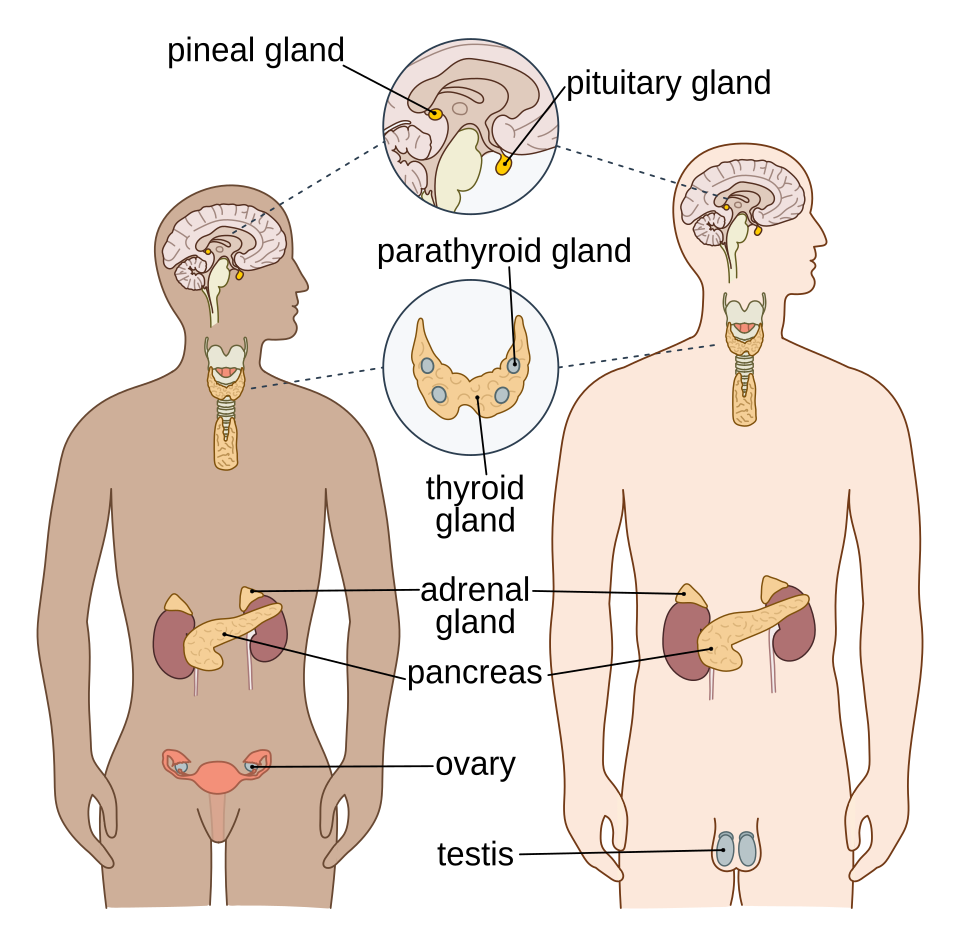
Testosterone is made mainly in the testicles under the control of two hormones from the pituitary gland, luteinizing hormone (LH) and follicle-stimulating hormone (FSH). With age, MedlinePlus notes, testosterone usually decreases gradually, while LH and FSH are among the hormones that may rise as people get older.
Source: MedlinePlus — Aging changes in hormone production
How fast is the fall? The NHS and Cleveland Clinic both describe a decline of about 1% a year, starting from around age 30–40 (Cleveland Clinic says the late 30s). The European Male Ageing Study (EMAS), quoted in the EAU guideline, measured a decrease of about 0.4% per year in total testosterone and 1.3% per year in free testosterone, the fraction not bound to proteins in the blood. Because the decline is small each year, most older men stay within the normal range; our guide to normal testosterone levels by age shows the typical values for each decade.
Source: NHS — The “male menopause”; Cleveland Clinic — Low Testosterone (Male Hypogonadism); EAU — Sexual and Reproductive Health Guidelines: Male Hypogonadism
Health matters more than birthdays
The EAU notes that symptomatic hypogonadism is much more common in men with obesity, type 2 diabetes, metabolic syndrome, cardiovascular disease, chronic lung disease, kidney disease and cancer. When no structural problem of the testicles or pituitary is found and the deficiency is mainly linked to these conditions, it is called functional hypogonadism, and it may improve when the underlying condition improves. In practice, a 55-year-old man who is fit and lean is far less likely to have low testosterone than a 40-year-old with obesity and poorly controlled diabetes.
Source: EAU — Sexual and Reproductive Health Guidelines: Male Hypogonadism
Male menopause symptoms
The symptoms people attribute to male menopause usually appear in the late 40s to early 50s. The NHS lists depression, loss of sex drive, erectile dysfunction, mood swings and irritability, loss of muscle mass and reduced ability to exercise, fat gain around the belly or breast tissue enlargement (gynecomastia), lack of energy, difficulty sleeping or tiredness, and poor concentration and short-term memory.
Source: NHS — The “male menopause”
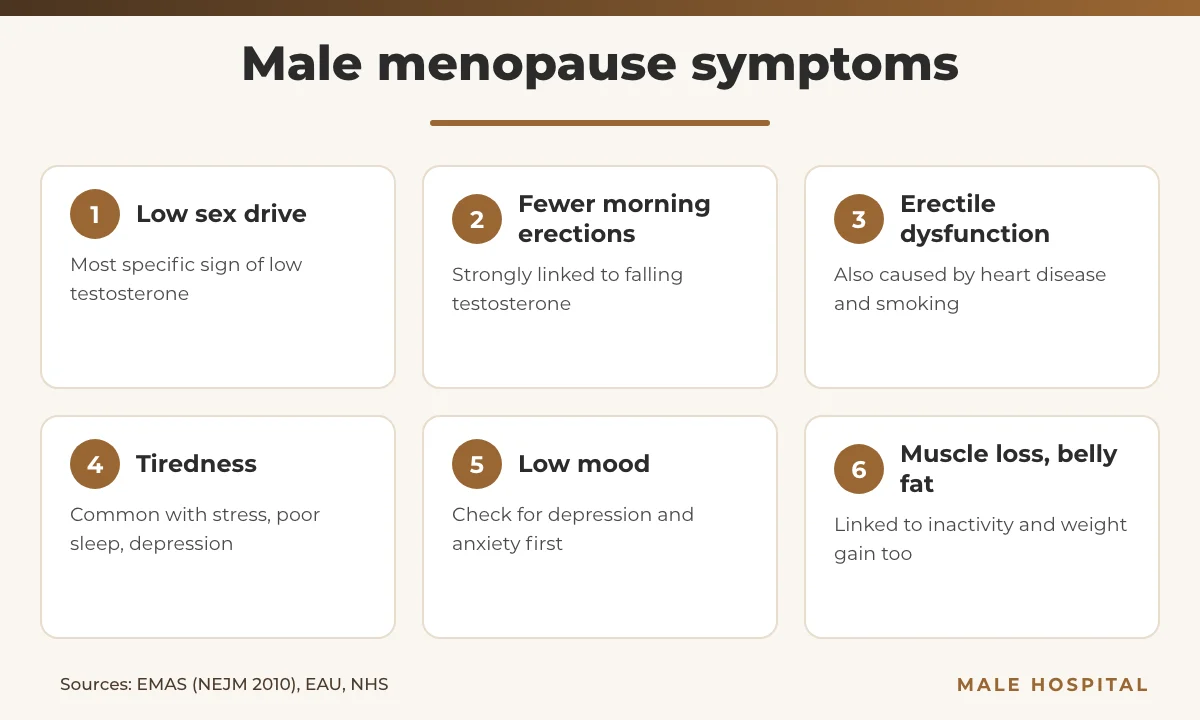
These symptoms are not equally meaningful. In EMAS, which studied 3,369 men aged 40–79 at eight European centers, poor morning erections, low sexual desire, erectile dysfunction, inability to do vigorous activity, depression and fatigue were all related to testosterone levels. However, only the three sexual symptoms had a true syndrome-like link with falling testosterone. The researchers proposed that LOH be identified by at least three sexual symptoms together with total testosterone below 11 nmol/L (3.2 ng/mL) and free testosterone below 220 pmol/L.
The EAU guideline agrees that sexual symptoms are the most specific symptoms of LOH. Fatigue, low mood, poor concentration and sleep problems are common in men with normal hormones too. For a sign-by-sign breakdown, including physical signs such as reduced body hair and shrinking testicles, see our article on low testosterone symptoms.
Source: EAU — Sexual and Reproductive Health Guidelines: Male Hypogonadism
Midlife changes that are not hormonal
Because the symptoms of male menopause overlap with so many other conditions, a good doctor looks for these causes first. The American Urological Association (AUA) stresses that symptoms linked to low testosterone are nonspecific and can reflect other conditions, such as chronic fatigue, chronic stress or depression.
Source: AUA — Evaluation and Management of Testosterone Deficiency
The NHS points to three main groups of non-hormonal causes in midlife men:
- Lifestyle factors: lack of sleep, a poor diet, lack of exercise, drinking too much alcohol, smoking and low self-esteem.
- Psychological factors: stress, depression and anxiety, often triggered by work or relationship problems, divorce, money worries or caring for ageing parents.
- A “midlife crisis”: worries about what has been achieved so far in work or personal life can lead to depression, which itself lowers sex drive and energy.
Physical health problems matter too. The NHS notes that erectile dysfunction in this age group can be caused by smoking or heart problems, as well as by psychological factors. MedlinePlus adds that a lower sex drive in older men can come from psychological or social factors, illness or medicines, not only from lower testosterone. And the prostate commonly enlarges with age: benign prostatic hyperplasia affects about half of men and can cause urinary symptoms that disturb sleep.
Source: NHS — The “male menopause”; MedlinePlus — Aging changes in the male reproductive system
How doctors test for late-onset hypogonadism
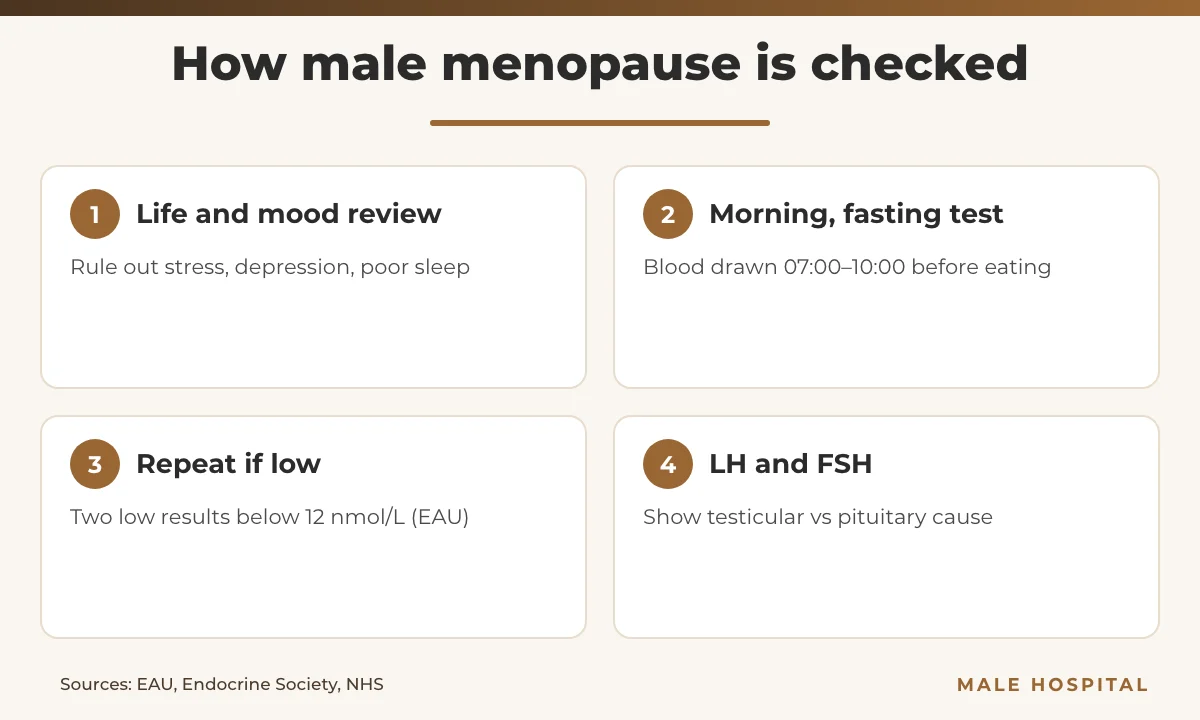
There is no single blood test for andropause. Doctors check for late-onset hypogonadism with a combination of history, examination and carefully timed blood tests. The Endocrine Society recommends diagnosing hypogonadism only in men who have symptoms and signs of testosterone deficiency together with unequivocally and consistently low total testosterone, and it recommends against routine screening of men in the general population.
Source: Endocrine Society — Testosterone Therapy for Hypogonadism Guideline
What the work-up usually includes
- A conversation about your life: the NHS says a doctor will ask about work and personal life to see whether stress, anxiety or depression could explain the symptoms.
- Morning, fasting blood tests: the EAU advises taking blood between 07:00 and 10:00 after fasting, and repeating total testosterone on at least two separate occasions when it is below 12 nmol/L (3.5 ng/mL).
- Free testosterone when needed: the EAU considers about 220 pmol/L a reliable threshold for free testosterone, which helps when total testosterone is borderline.
- LH and FSH: the Endocrine Society recommends measuring these to tell testicular (primary) from pituitary or hypothalamic (secondary) causes.
Source: NHS — The “male menopause”; EAU — Sexual and Reproductive Health Guidelines: Male Hypogonadism; Endocrine Society — Testosterone Therapy for Hypogonadism Guideline
In the United States, Cleveland Clinic uses a cut-off of about 300 ng/dL for low total testosterone in adults. Whatever the threshold, the AUA states that a man is a candidate for testosterone therapy only when he has both low levels and related symptoms or signs.
Source: Cleveland Clinic — Low Testosterone (Male Hypogonadism); AUA — Evaluation and Management of Testosterone Deficiency
Male menopause treatment: lifestyle first, testosterone when proven
Treatment depends on what the work-up finds. For most men with these symptoms but normal testosterone, the answer is to treat the real cause, whether that is depression, poor sleep, weight gain, alcohol or erectile dysfunction. For men with confirmed late-onset hypogonadism, guidelines still put lifestyle change first.
Lifestyle and mental health
The NHS recommends regular exercise and relaxation, and notes that medication or talking therapies such as cognitive behavioral therapy (CBT) can help when stress, anxiety or depression is behind the symptoms. The EAU states that weight loss and lifestyle changes should be the first approach for all men with hypogonadism who are overweight or obese. Practical, evidence-based steps are covered in our guide on how to increase testosterone naturally.
Source: NHS — The “male menopause”; EAU — Sexual and Reproductive Health Guidelines: Male Hypogonadism
Testosterone therapy for proven deficiency
If a specialist confirms testosterone deficiency, the NHS says testosterone replacement, given as injections or gel, may be offered to relieve symptoms. The EAU is clear about the limits: do not use testosterone therapy in men with normal (eugonadal) levels. The Endocrine Society likewise advises against prescribing testosterone to all men aged 65 or older with low levels; instead, treatment should be individualized after discussing risks and benefits with men who have consistent symptoms and clearly low levels.
Source: NHS — The “male menopause”; EAU — Sexual and Reproductive Health Guidelines: Male Hypogonadism; Endocrine Society — Testosterone Therapy for Hypogonadism Guideline
What can older men realistically expect? In the Testosterone Trials, 790 men aged 65 or older with total testosterone below 275 ng/dL and symptoms received testosterone gel or placebo for one year. Testosterone produced a moderate benefit in sexual function and some benefit in mood and depressive symptoms, but no benefit in vitality (energy) and no significant gain in walking distance in the dedicated physical function trial.
Source: N Engl J Med (PubMed) — Effects of Testosterone Treatment in Older Men (Testosterone Trials, 2016)
On safety, the TRAVERSE trial enrolled 5,246 men aged 45–80 with symptoms of hypogonadism, two fasting testosterone levels below 300 ng/dL and existing heart disease or high cardiovascular risk. Major heart events occurred in 7.0% of men on testosterone gel and 7.3% on placebo, meeting the test for noninferiority. However, atrial fibrillation, acute kidney injury and pulmonary embolism were more common in the testosterone group.
Source: N Engl J Med (PubMed) — Cardiovascular Safety of Testosterone-Replacement Therapy (TRAVERSE, 2023)
| Approach | Who it suits | Key points |
|---|---|---|
| Lifestyle change and weight loss | All men, first step for overweight or obese men with low testosterone | Can raise testosterone in functional hypogonadism and improves overall health |
| Talking therapy or antidepressants | Men whose symptoms come from stress, anxiety or depression | CBT or medication can help |
| Erectile dysfunction treatment | Men whose main problem is erections, with or without low testosterone | Needs its own assessment, as smoking and heart problems are common causes |
| Testosterone therapy | Only men with symptoms plus confirmed low levels | Not for men with normal levels or men who want to father a child; needs regular monitoring |
Source: EAU — Sexual and Reproductive Health Guidelines: Male Hypogonadism; Endocrine Society — Testosterone Therapy for Hypogonadism Guideline
Who should not take testosterone
The EAU lists untreated breast or prostate cancer, a hematocrit of 54% or higher and uncontrolled heart failure as absolute contraindications, and states that testosterone therapy is contraindicated in men who want to have children. The Endocrine Society also advises against it in men with untreated severe sleep apnea, severe urinary symptoms, a recent heart attack or stroke, or thrombophilia. Once treatment starts, the EAU recommends checking testosterone and hematocrit at three, six and 12 months. Forms, dosing and long-term follow-up are explained in our guide to testosterone replacement therapy.
Source: EAU — Sexual and Reproductive Health Guidelines: Male Hypogonadism; Endocrine Society — Testosterone Therapy for Hypogonadism Guideline
When to see a doctor
Feeling older is not, on its own, a reason to start hormones, but some symptoms deserve a proper medical assessment. See a doctor if you notice:
- Erectile dysfunction, a loss of morning erections or a marked drop in sex drive that lasts several weeks.
- Low mood, loss of interest or hopelessness, especially if you have thoughts of harming yourself; this needs urgent help.
- Breast swelling or tenderness, shrinking testicles or loss of body hair.
- Unexplained loss of muscle strength or new problems with concentration and memory.
- Any of these symptoms if you have obesity, type 2 diabetes, heart disease, or have used anabolic steroids or opioids.
Source: NHS — The “male menopause”; Cleveland Clinic — Low Testosterone (Male Hypogonadism)
If midlife changes are affecting your sex life, you can arrange a confidential consultation with our urologist-andrologist via WhatsApp; when erections are the main concern, our erectile dysfunction treatment page explains the options.
FAQs about male menopause
Is male menopause real?
Not in the way female menopause is. Men do not have a sudden hormonal shutdown, and the NHS calls the term unhelpful. What is real is a slow fall in testosterone of about 1% a year, and a less common condition called late-onset hypogonadism, which is diagnosed only when specific symptoms occur together with repeatedly low morning testosterone tests.
Source: NHS — The “male menopause”; EAU — Sexual and Reproductive Health Guidelines: Male Hypogonadism
At what age does male menopause start?
There is no fixed age because there is no single event. Testosterone starts to fall slowly from around age 30–40, and the symptoms people call andropause most often appear in the late 40s to early 50s. Obesity, type 2 diabetes and chronic illness make true testosterone deficiency far more likely at any age.
Source: NHS — The “male menopause”; EAU — Sexual and Reproductive Health Guidelines: Male Hypogonadism
How long does male menopause last?
Because the age-related fall in testosterone is gradual and lifelong, there is no defined end. Symptoms caused by stress, depression, poor sleep or weight gain can improve when those causes are treated. Functional hypogonadism linked to obesity or diabetes may partly reverse with weight loss, while organic hypogonadism usually needs ongoing treatment.
Source: EAU — Sexual and Reproductive Health Guidelines: Male Hypogonadism
What is the difference between andropause and low testosterone?
Andropause is an informal name for midlife changes in men. Low testosterone, or hypogonadism, is a medical diagnosis that requires symptoms plus consistently low blood levels. Late-onset hypogonadism is the specific form that appears in adulthood; many men with “andropause” symptoms turn out to have normal testosterone and a different cause.
Source: EAU — Sexual and Reproductive Health Guidelines: Male Hypogonadism; AUA — Evaluation and Management of Testosterone Deficiency
Can male menopause cause erectile dysfunction?
Low testosterone can contribute, and erectile dysfunction is one of the three sexual symptoms most closely linked to it. But erection problems in midlife often come from smoking, heart problems, stress or anxiety, so a full assessment matters before blaming hormones.
Source: N Engl J Med (PubMed) — Identification of late-onset hypogonadism in middle-aged and elderly men (EMAS, 2010); NHS — The “male menopause”
Can older men still father children?
Yes. Men do not have a sudden loss of fertility with age. The testes continue to produce sperm, although more slowly, and age alone does not predict fertility. Testosterone therapy itself is contraindicated in men who want children, so fertility plans must be discussed before any hormone treatment.
Source: MedlinePlus — Aging changes in the male reproductive system; EAU — Sexual and Reproductive Health Guidelines: Male Hypogonadism
Is testosterone therapy safe for older men?
In the TRAVERSE trial of men aged 45–80 with high heart risk, testosterone gel did not increase major heart events compared with placebo, but atrial fibrillation, acute kidney injury and pulmonary embolism were more common. Therapy is only for confirmed deficiency, should be individualized, and needs regular checks of hematocrit and prostate health.
Source: N Engl J Med (PubMed) — Cardiovascular Safety of Testosterone-Replacement Therapy (TRAVERSE, 2023); Endocrine Society — Testosterone Therapy for Hypogonadism Guideline
Do testosterone boosters help andropause symptoms?
Over-the-counter testosterone boosters are not among the treatments recommended in guidelines on late-onset hypogonadism. The approaches they support are weight loss and lifestyle change, help for stress or depression, and prescription testosterone only for men with proven deficiency. A doctor can check your levels before you spend money on supplements.
Source: EAU — Sexual and Reproductive Health Guidelines: Male Hypogonadism; Endocrine Society — Testosterone Therapy for Hypogonadism Guideline
Medically reviewed by Assoc. Prof. Dr. Zülfü Sertkaya, urologist and andrologist (FEBU), Istanbul. Last reviewed: November 2026.
This article is for general information and does not replace an individual consultation with a qualified doctor.
- NHS — The "male menopause"
- EAU — Sexual and Reproductive Health Guidelines: Male Hypogonadism
- AUA — Evaluation and Management of Testosterone Deficiency
- Endocrine Society — Testosterone Therapy for Hypogonadism Guideline
- MedlinePlus — Aging changes in the male reproductive system
- MedlinePlus — Aging changes in hormone production
- MedlinePlus — Menopause
- Cleveland Clinic — Low Testosterone (Male Hypogonadism)
- N Engl J Med (PubMed) — Identification of late-onset hypogonadism in middle-aged and elderly men (EMAS, 2010)
- N Engl J Med (PubMed) — Effects of Testosterone Treatment in Older Men (Testosterone Trials, 2016)
- N Engl J Med (PubMed) — Cardiovascular Safety of Testosterone-Replacement Therapy (TRAVERSE, 2023)