How to increase testosterone naturally comes down to a short list of measures backed by research: lose excess body fat, sleep enough, stay physically active, drink less alcohol and review medicines that suppress hormones. These steps work best in men whose testosterone is low because of lifestyle and weight (functional hypogonadism), and the gains are usually modest. They do not fix testicular or pituitary disease, so a man with symptoms should have a proper diagnosis first, as explained in our guide to low testosterone causes and treatment.
Source: EAU — Sexual and Reproductive Health Guidelines: Male Hypogonadism; Endocrine Society — Testosterone Therapy for Hypogonadism Guideline
- Weight loss is the best-supported natural way to increase testosterone: in a meta-analysis of 24 studies, the more weight men lost, the more their testosterone rose.
- Sleep matters if you want to increase testosterone: one week of 5-hour nights lowered daytime testosterone by about 10–15% in healthy young men.
- Regular chronic drinking is linked to lower total and free testosterone and higher estradiol.
- Vitamin D helped increase testosterone in one trial of deficient, overweight men, but not in a later trial of healthy men with normal testosterone.
- Most “testosterone booster” supplements lack evidence for their claims to increase testosterone, and some bodybuilding products have been found to contain hidden steroids.
- How testosterone is made and what lowers it
- How to increase testosterone naturally: the evidence at a glance
- Lose excess weight: the strongest natural lever
- Sleep and stress
- Exercise and physical activity
- Alcohol, opioids and anabolic steroids
- Vitamin D: the nuance
- Do testosterone booster supplements work?
- When to see a doctor
- FAQs about how to increase testosterone naturally
How testosterone is made and what lowers it
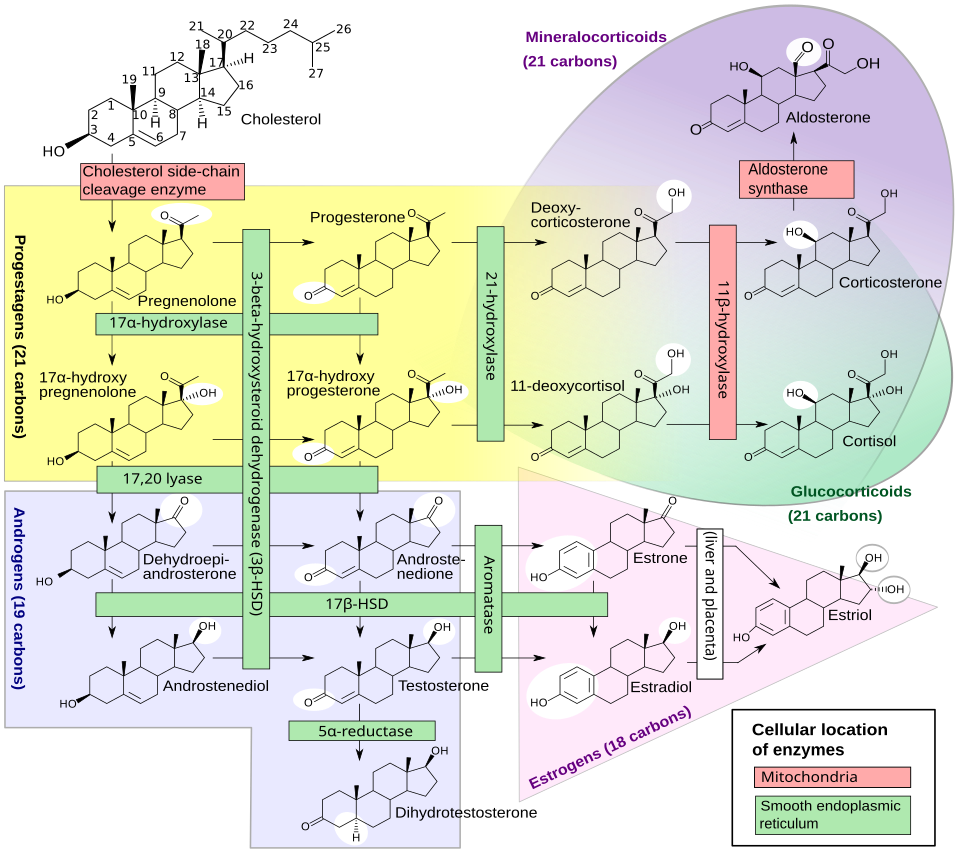
Testosterone is a steroid hormone made from cholesterol, mainly in the testicles. Its release is controlled by the brain: the hypothalamus and pituitary send signals (LH and FSH) that tell the testicles how much to produce. Levels follow a daily rhythm and are highest in the morning, which is why blood tests are taken early in the day.
Testosterone falls slowly with age, from the 40s onward. In adult men, obesity, type 2 diabetes and chronic illness are common reasons for lower levels. The European Association of Urology (EAU) describes obesity as the major driver of “functional” hypogonadism, a form of low testosterone that is potentially reversible because the hormone system itself is intact, so lifestyle change can increase testosterone.
Source: Cleveland Clinic — Testosterone: What It Is, Function and Levels; EAU — Male Hypogonadism
Other causes are not lifestyle-related and will not respond to the natural ways to increase testosterone in this article. They include damage to the testicles from injury, infection, radiation or surgery; genetic conditions such as Klinefelter syndrome; iron overload (hemochromatosis); pituitary tumors; and medicines such as opioids. This is why lifestyle change should follow, not replace, a medical assessment when symptoms are clear. Typical symptoms are covered in our article on low testosterone symptoms.
Source: MedlinePlus — Hypogonadism
How to increase testosterone naturally: the evidence at a glance
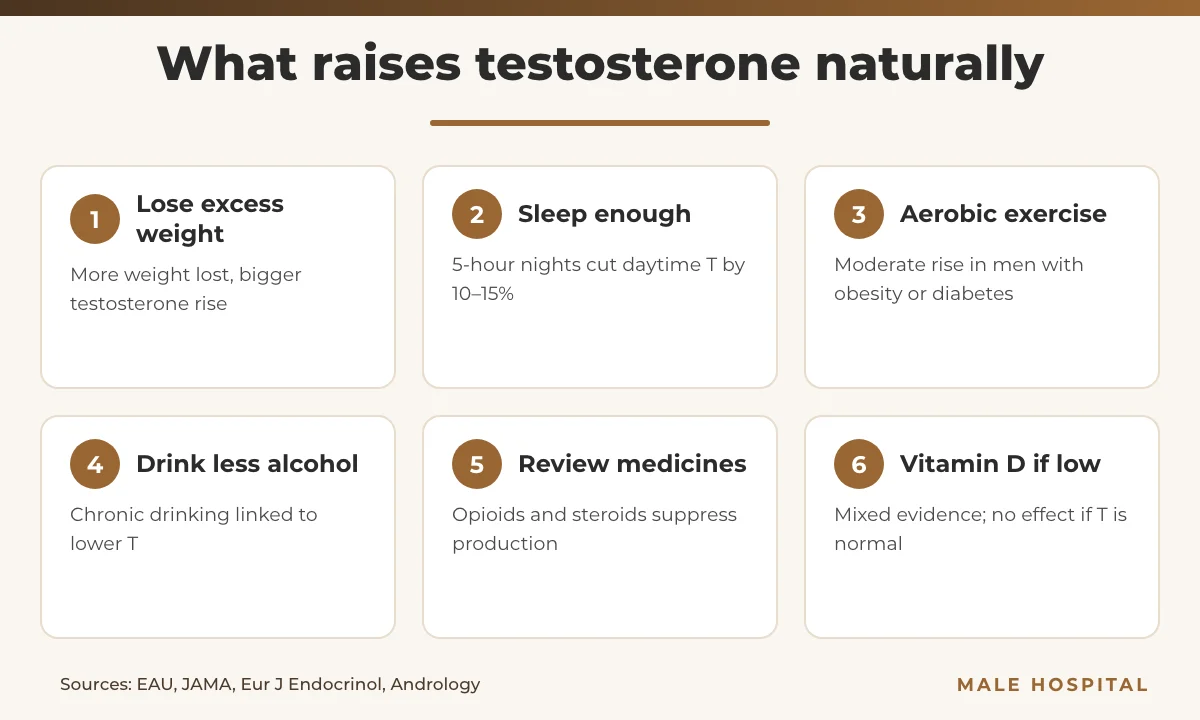
Not every popular tip to increase testosterone has the same level of proof. The table below ranks the most common advice by the strength of the research behind it and by who is most likely to benefit.
| Measure | What the evidence shows | Who benefits most |
|---|---|---|
| Weight loss | Consistent rise in total testosterone; bigger loss gives bigger rise (meta-analysis of 24 studies) | Men with obesity, especially younger men without diabetes |
| Enough sleep | Sleep restriction to 5 hours cut daytime testosterone by 10–15% in one week (small study) | Men sleeping too little, shift workers |
| Aerobic exercise | Moderate rise in men with obesity or type 2 diabetes (7 small studies) | Inactive men with excess weight |
| Less alcohol | Chronic drinking linked to lower total and free testosterone (21 studies) | Regular drinkers |
| Vitamin D | Mixed: rise in one trial of deficient men, no effect in men with normal testosterone | Possibly men with proven deficiency |
| “T booster” supplements | About a quarter of ingredients have any data showing a rise; some show a fall | Not recommended |
Sources: Eur J Endocrinol (PubMed) — Body weight loss reverts obesity-associated hypogonadotropic hypogonadism; World J Mens Health (PubMed) — “Testosterone boosting” supplements composition and claims
One honest caveat applies to everything below: according to the EAU, the amount by which diet and exercise increase testosterone is usually small, around 1–2 nmol/L. That can be enough to move a borderline result into the normal range and to improve how a man feels, but it rarely corrects severe deficiency.
Source: EAU — Male Hypogonadism
Lose excess weight: the strongest natural lever
If you want to know how to increase testosterone naturally and you carry excess weight, start here. Obesity is linked to higher estradiol and weaker brain signals (LH and FSH) to the testicles, and weight loss tends to reverse both. The EAU guideline gives a strong recommendation to improve lifestyle and reduce weight before starting testosterone therapy, and states that a low-calorie diet can reverse obesity-associated secondary hypogonadism.
Source: EAU — Male Hypogonadism
What the numbers show
A 2013 meta-analysis pooled 24 studies of diet or bariatric surgery in men to see whether weight loss can increase testosterone. Both raised total testosterone significantly: on average by about 2.9 nmol/L with a low-calorie diet and about 8.7 nmol/L after bariatric surgery. Weight loss also lowered estradiol and raised LH and FSH. The amount of weight lost was the best predictor of the testosterone rise, and the gains were larger in younger men, men without diabetes and men with more severe obesity.
Keeping the weight off
The hard part of using weight loss to increase testosterone is maintenance. The EAU notes that 60–86% of lost weight is regained within three years, so the hormone benefit depends on changes you can sustain. Very rapid, extreme weight loss is not the goal either: MedlinePlus lists rapid, significant weight loss, including after bariatric surgery, among the causes of central hypogonadism. Steady loss with a balanced, lower-calorie diet and regular activity is the safer route.
The EAU also advises against using testosterone therapy as a weight-loss tool. In trials, adding testosterone to lifestyle change improved waist size and fat mass more than lifestyle change alone, but did not significantly reduce body weight.
Source: EAU — Male Hypogonadism; MedlinePlus — Hypogonadism
Sleep and stress
Protect your sleep
The EAU guideline notes that the daily testosterone rhythm is driven mainly by sleep. A small study published in JAMA tested this directly. Ten healthy men with an average age of 24 spent eight nights in a laboratory with only 5 hours in bed. Their average sleep fell from almost 9 hours to under 5 hours, and daytime testosterone dropped by 10–15%, with the largest fall in the evening.
The authors pointed out that normal aging lowers testosterone by about 1–2% a year, so one week of short sleep had a larger effect than several years of aging. The study was small and short, but the practical message for men who want to increase testosterone is clear: regular, sufficient sleep is part of keeping hormone levels healthy. Shift workers should also have their blood test after an adequate sleep period, otherwise the result may look falsely low.
Source: JAMA (PMC) — Effect of 1 week of sleep restriction on testosterone levels in young healthy men; EAU — Male Hypogonadism
Sleep apnea: treat it, but keep expectations realistic
Obstructive sleep apnea is common in men with obesity and often appears alongside low testosterone. However, a meta-analysis of 12 studies with 388 patients found that CPAP treatment did not significantly change total testosterone. CPAP still treats the apnea itself, but weight loss is the more promising way to increase testosterone.
Stress, mood and self-esteem
The NHS lists lack of sleep, poor diet, lack of exercise, drinking too much alcohol, smoking and low self-esteem as lifestyle factors behind the symptoms often blamed on a “male menopause”. Stress, anxiety and depression can themselves cause low sex drive, erection problems and mood swings, which overlap with the symptoms of low testosterone.
There is little direct evidence that stress management alone can increase testosterone. Its value is different: it treats a common cause of the same symptoms. The NHS notes that talking therapy such as CBT can help, and that exercise and relaxation can also help. If your testosterone is normal but you still feel exhausted and uninterested in sex, this is often the right place to look.
Source: NHS — The “male menopause”
Exercise and physical activity
Exercise helps increase testosterone mostly through its effect on body fat and insulin resistance. The EAU states that physical activity can produce effects similar to a low-calorie diet, and that the benefit is linked to how long the exercise program is kept up and to the weight lost.
A 2024 systematic review looked specifically at aerobic training, such as brisk walking, cycling or running, in people with obesity or type 2 diabetes. Across seven small studies (62 men), aerobic exercise helped moderately increase testosterone in men, without a significant change in sex hormone-binding globulin. The authors noted the low number of studies, so the size of the benefit is uncertain.
Source: Sports Med Open (PubMed) — Aerobic exercise training and testosterone in obesity or type 2 diabetes (2024); EAU — Male Hypogonadism
In practice, the best exercise plan to increase testosterone is one you will keep: regular aerobic activity combined with strength work for muscle and bone, built up gradually. Men with heart disease, diabetes complications or chest symptoms on exertion should check with their doctor first. This matters for sexual health too, because low testosterone and common causes of erectile dysfunction such as obesity and diabetes often travel together.
Alcohol, opioids and anabolic steroids
Alcohol
A 2024 meta-analysis of 21 studies (30 trials, 10,199 men) found that alcohol consumption was linked to significantly lower total and free testosterone and higher estradiol. The effect was seen in healthy men with chronic, regular consumption rather than after a single drinking episode. The EAU guideline also lists alcohol misuse and cirrhosis among causes of testicular failure. Cutting back is one of the simplest measures a man can take to increase testosterone.
Source: Andrology (PubMed) — Chronic alcohol consumption influences the gonadal axis in men (2024); EAU — Male Hypogonadism
Opioids and other medicines
MedlinePlus lists opiates among the medicines that can switch off the brain’s signals to the testicles. If you take opioid painkillers long term and have symptoms of low testosterone, ask the prescriber whether a change could help increase testosterone. Never stop or reduce a prescribed medicine on your own.
Anabolic steroids
Taking anabolic steroids or testosterone without medical need suppresses the body’s own production. MedlinePlus lists stopping anabolic steroids as a cause of central hypogonadism, and the FDA lists testicular shrinkage and sexual dysfunction among serious reactions to products containing steroids. A man who has used them should get medical advice rather than stop abruptly, because withdrawal can be dangerous.
Source: MedlinePlus — Hypogonadism; FDA — Caution: Bodybuilding Products Can Be Risky
Vitamin D: the nuance
Vitamin D is often sold as a natural way to increase testosterone. The evidence is mixed, and it seems to depend on who takes it.
- A positive trial: in an Austrian trial of overweight men in a weight-loss program, all with vitamin D deficiency and testosterone at the low end of normal, 54 men completed one year of either 3,332 IU of vitamin D daily or placebo. Total testosterone rose from 10.7 to 13.4 nmol/L in the vitamin D group, with no change on placebo.
- A negative trial: a later randomized trial in 98 healthy men with normal testosterone and low-normal vitamin D gave 20,000 IU per week for 12 weeks. It found no effect on total testosterone.
- The overall picture: a systematic review concluded that low vitamin D is associated with hypogonadism, but the evidence is not enough to prove that it causes it.
Sources: Horm Metab Res (PubMed) — Effect of vitamin D supplementation on testosterone levels in men (2011); J Clin Endocrinol Metab (PubMed) — Vitamin D and testosterone in healthy men: a randomized controlled trial (2017); Endocr Connect (PubMed) — Vitamin D, PCOS and androgens in men: a systematic review (2018)
A sensible approach is to correct a proven deficiency because it is good for bone and general health, and to see any testosterone gain as a possible bonus rather than a treatment. Taking high doses when your vitamin D is already normal has not been shown to increase testosterone.
Do testosterone booster supplements work?
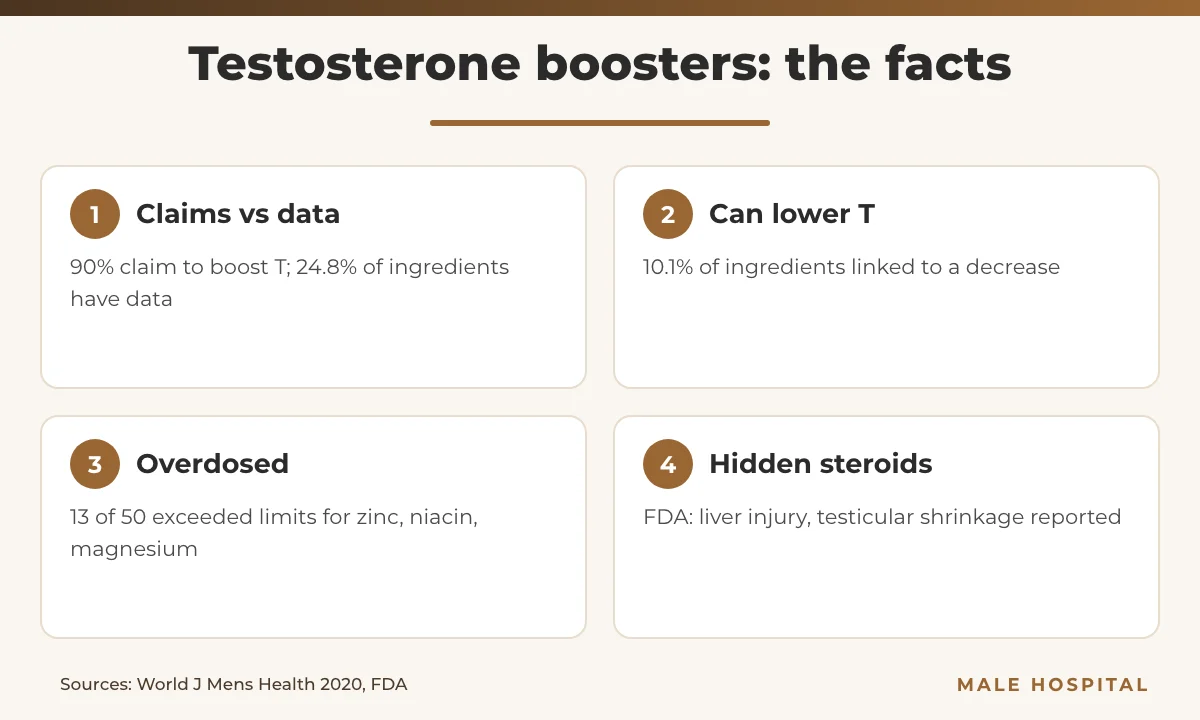
Over-the-counter “T boosters” are marketed heavily, yet the research does not support most of their claims. A study of 50 popular products found that 90% claimed to boost testosterone. Of their 109 different ingredients, only 24.8% had published data showing they increase testosterone, 10.1% had data showing a decrease, and 61.5% had no data at all. Many contained very high doses of vitamins, and 13 products exceeded the upper intake limit for zinc, niacin or magnesium.
Herbal ingredients
A few botanicals, such as ashwagandha, tongkat ali and fenugreek, have shown some promise, but studies are often small or use proprietary extracts. In one 8-week placebo-controlled trial in 57 overweight men aged 40–70, an ashwagandha extract raised salivary testosterone by 14.7% more than placebo, yet it made no significant difference to fatigue, vigor or sexual well-being. Operation Supplement Safety, a US military health resource, concludes there is no scientific evidence that any combination of these ingredients can effectively increase testosterone, and notes a few reports of liver injury and other adverse events.
Sources: Am J Mens Health (PubMed) — Hormonal and vitality effects of ashwagandha in aging, overweight males (2019); Operation Supplement Safety — Testosterone boosters: are they safe and effective?
FDA warnings about hidden ingredients
The FDA does not review dietary supplements for safety and effectiveness before they are sold. It has warned that some bodybuilding products marketed as hormone products or steroid alternatives illegally contain steroids or steroid-like substances. Reported harms include serious liver injury, severe acne, hair loss, mood changes, aggression, sexual dysfunction and testicular shrinkage, as well as kidney damage, heart attack, stroke and blood clots. Sexual-enhancement products have also been found to contain undeclared prescription drugs such as sildenafil and tadalafil.
Seek urgent care if you take such a product and develop nausea, weakness, fever, abdominal or chest pain, shortness of breath, yellow skin or eyes, or dark urine. In the US, problems can be reported to the FDA MedWatch program.
Source: FDA — Caution: Bodybuilding Products Can Be Risky; Operation Supplement Safety — Testosterone boosters
When to see a doctor
Trying to increase testosterone through lifestyle change is a good first step for many men, but it should not delay a diagnosis. Guidelines recommend diagnosing testosterone deficiency only when a man has symptoms and consistently low levels on repeated morning, fasting blood tests. Routine screening of men without symptoms is not recommended. The NHS also stresses that late-onset hypogonadism is an uncommon medical condition and not a normal part of aging.
Source: Endocrine Society — Testosterone Therapy for Hypogonadism Guideline; NHS — The “male menopause”
See a doctor promptly if you notice any of the following:
- Low sex drive, erection problems, loss of muscle or breast enlargement that persist for weeks.
- Headaches, vision changes or milky discharge from the nipples, which can point to a pituitary problem.
- Small or shrinking testicles, or a history of testicular injury, infection, radiation or surgery.
- Difficulty conceiving with your partner.
- Past or current use of anabolic steroids, testosterone or opioid painkillers.
- Symptoms that continue despite several months of trying to increase testosterone with weight loss, better sleep and less alcohol.
Source: MedlinePlus — Hypogonadism
If deficiency is confirmed, testosterone replacement therapy may be an option, alongside continued lifestyle change to increase testosterone. Guidelines advise against testosterone therapy for men who want to father a child in the near term; other hormone treatments are used instead, as explained in our guide to male infertility.
Source: Endocrine Society — Testosterone Therapy for Hypogonadism Guideline
If you would like your symptoms and blood tests reviewed, you can arrange a confidential consultation with our urologist-andrologist Assoc. Prof. Dr. Zülfü Sertkaya through WhatsApp. He can help you decide whether lifestyle change alone is enough to increase testosterone or whether further tests or treatment are needed.
FAQs about how to increase testosterone naturally
What is the fastest way to increase testosterone naturally?
There is no fast, reliable shortcut to increase testosterone. For men with excess weight, losing weight gives the most consistent rise, and the more weight is lost, the greater the gain. Fixing short sleep can help within weeks, since one week of restricted sleep lowered testosterone noticeably. Supplements promising quick results are mostly unproven and sometimes unsafe.
Source: Eur J Endocrinol (PubMed) — Weight loss and hypogonadism meta-analysis
How much can lifestyle changes raise testosterone?
Usually modestly. The EAU guideline states that diet and exercise increase testosterone by about 1–2 nmol/L, while bariatric surgery produces larger increases in men with severe obesity. That may be enough to bring a borderline level into the normal range, but it rarely corrects marked deficiency caused by testicular or pituitary disease.
Source: EAU — Male Hypogonadism
Does lack of sleep lower testosterone?
Yes, at least in the short term. In a JAMA study, ten healthy young men limited to 5 hours in bed for a week had 10–15% lower daytime testosterone. Testosterone production is closely linked to sleep, so regular, sufficient sleep supports normal levels and is a simple way to increase testosterone when sleep has been short. Larger and longer studies are still needed to confirm the size of the effect.
Source: JAMA (PMC) — Sleep restriction and testosterone
Does drinking alcohol reduce testosterone?
Regular drinking does appear to. A meta-analysis of more than 10,000 men found chronic alcohol consumption was linked to lower total and free testosterone and higher estradiol. The effect was seen with ongoing consumption, not after a single episode. Heavy, long-term misuse can also damage the liver and testicles directly, so drinking less is a sensible way to increase testosterone.
Source: Andrology (PubMed) — Alcohol and the gonadal axis meta-analysis
Should I take vitamin D to boost testosterone?
Only if a blood test shows you are deficient, and mainly for your bones and general health. One trial in deficient, overweight men found vitamin D could increase testosterone, but a later trial in healthy men with normal testosterone found no effect. Reviews conclude the evidence is not strong enough to call vitamin D a testosterone treatment.
Source: J Clin Endocrinol Metab (PubMed) — Vitamin D and testosterone RCT
Are testosterone boosters safe?
Not necessarily. Most have no good evidence that they increase testosterone, some contain ingredients linked to lower testosterone, and some exceed safe intake limits for zinc, niacin or magnesium. The FDA has warned that certain products marketed as hormone or steroid alternatives contain hidden steroids that can cause liver injury and other serious harm. Talk to a doctor before using one.
Source: FDA — Caution: Bodybuilding Products Can Be Risky
Can I raise testosterone naturally if I have Klinefelter syndrome or a pituitary problem?
Lifestyle measures help general health, but they cannot restore hormone production when the testicles or pituitary gland are damaged. These forms of hypogonadism need a specialist assessment and, usually, medical treatment. That is why a man with clear symptoms should have the cause of low testosterone identified before relying on natural methods to increase testosterone.
Source: MedlinePlus — Hypogonadism
Should every man over 50 get his testosterone checked?
No. The Endocrine Society recommends against routine screening of men in the general population. Testing makes sense when there are symptoms or signs that suggest deficiency, and it should be done in the morning, fasting, and repeated to confirm a low result. Age alone is not a reason to start treatment.
Source: Endocrine Society — Testosterone Therapy for Hypogonadism Guideline
Medically reviewed by Assoc. Prof. Dr. Zülfü Sertkaya, urologist and andrologist (FEBU), Istanbul. Last reviewed: November 2026.
This article is for general information and does not replace an individual consultation with a qualified doctor.
- EAU — Sexual and Reproductive Health Guidelines: Male Hypogonadism
- Endocrine Society — Testosterone Therapy for Hypogonadism Guideline
- Cleveland Clinic — Testosterone: What It Is, Function and Levels
- MedlinePlus — Hypogonadism
- NHS — The "male menopause"
- FDA — Caution: Bodybuilding Products Can Be Risky
- Operation Supplement Safety — Testosterone boosters: are they safe and effective?
- JAMA (PMC) — Effect of 1 week of sleep restriction on testosterone levels in young healthy men (2011)
- Eur J Endocrinol (PubMed) — Body weight loss reverts obesity-associated hypogonadotropic hypogonadism (2013)
- Sports Med Open (PubMed) — Aerobic exercise training and testosterone in obesity or type 2 diabetes (2024)
- Andrology (PubMed) — Chronic alcohol consumption influences the gonadal axis in men (2024)
- Front Endocrinol (PubMed) — Effects of CPAP on testosterone levels in obstructive sleep apnea (2019)
- Horm Metab Res (PubMed) — Effect of vitamin D supplementation on testosterone levels in men (2011)
- J Clin Endocrinol Metab (PubMed) — Vitamin D and testosterone in healthy men: a randomized controlled trial (2017)
- Endocr Connect (PubMed) — Vitamin D, PCOS and androgens in men: a systematic review (2018)
- World J Mens Health (PubMed) — "Testosterone boosting" supplements composition and claims are not supported by the academic literature (2020)
- Am J Mens Health (PubMed) — Hormonal and vitality effects of ashwagandha in aging, overweight males (2019)