Varicocele surgery closes off the swollen veins above the testicle so blood drains through healthy veins instead. The three main options are microsurgical varicocelectomy through a small groin cut, laparoscopic (keyhole) ligation, and embolization by an interventional radiologist. Microsurgery has the lowest recurrence and hydrocele rates, embolization has the quickest return to normal life, and all three improve semen quality in suitable men. If you first need to know whether you need treatment at all, start with our complete guide to varicocele causes, grades and when repair is advised.
Sources: EAU — Sexual and Reproductive Health Guidelines (male infertility chapter, varicocele); Cleveland Clinic — Varicocelectomy: Purpose, Procedure, Risks & Recovery
- The EAU guideline calls microsurgical varicocelectomy the most effective technique, with fewer complications and lower recurrence, although no large randomized trials compare all methods head to head.
- In a 2024 meta-analysis of trials, laparoscopy was about 21 minutes faster than microsurgery but carried a clearly higher risk of hydrocele and recurrence, with no difference in spontaneous pregnancy.
- Embolization needs no incision, is done under sedation in about an hour, and most men resume normal activities within 24 hours; it works less well on the right side.
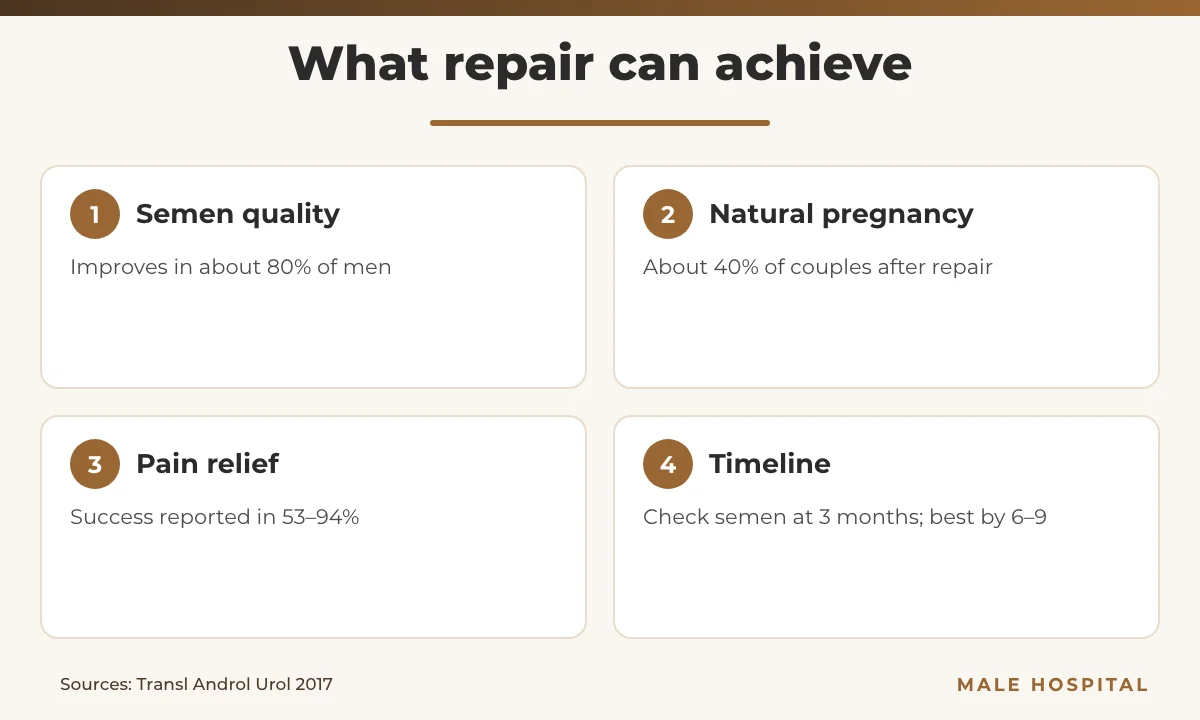
- After varicocele surgery, semen parameters improve in about 80% of men and roughly 40% of couples achieve a natural pregnancy; best results can take 6–9 months.
- Most men go home the same day, return to desk work within a few days, and avoid sex for one week and heavy lifting for two weeks.
- What varicocele surgery involves
- Microsurgical varicocelectomy step by step
- Laparoscopic varicocele surgery
- Varicocele embolization: the non-surgical option
- Varicocele surgery vs embolization compared
- Varicocele surgery outcomes: sperm, pregnancy, pain and testosterone
- Recovery after varicocele surgery
- Risks and complications of each technique
- When to see a doctor
- FAQs about varicocele surgery
What varicocele surgery involves
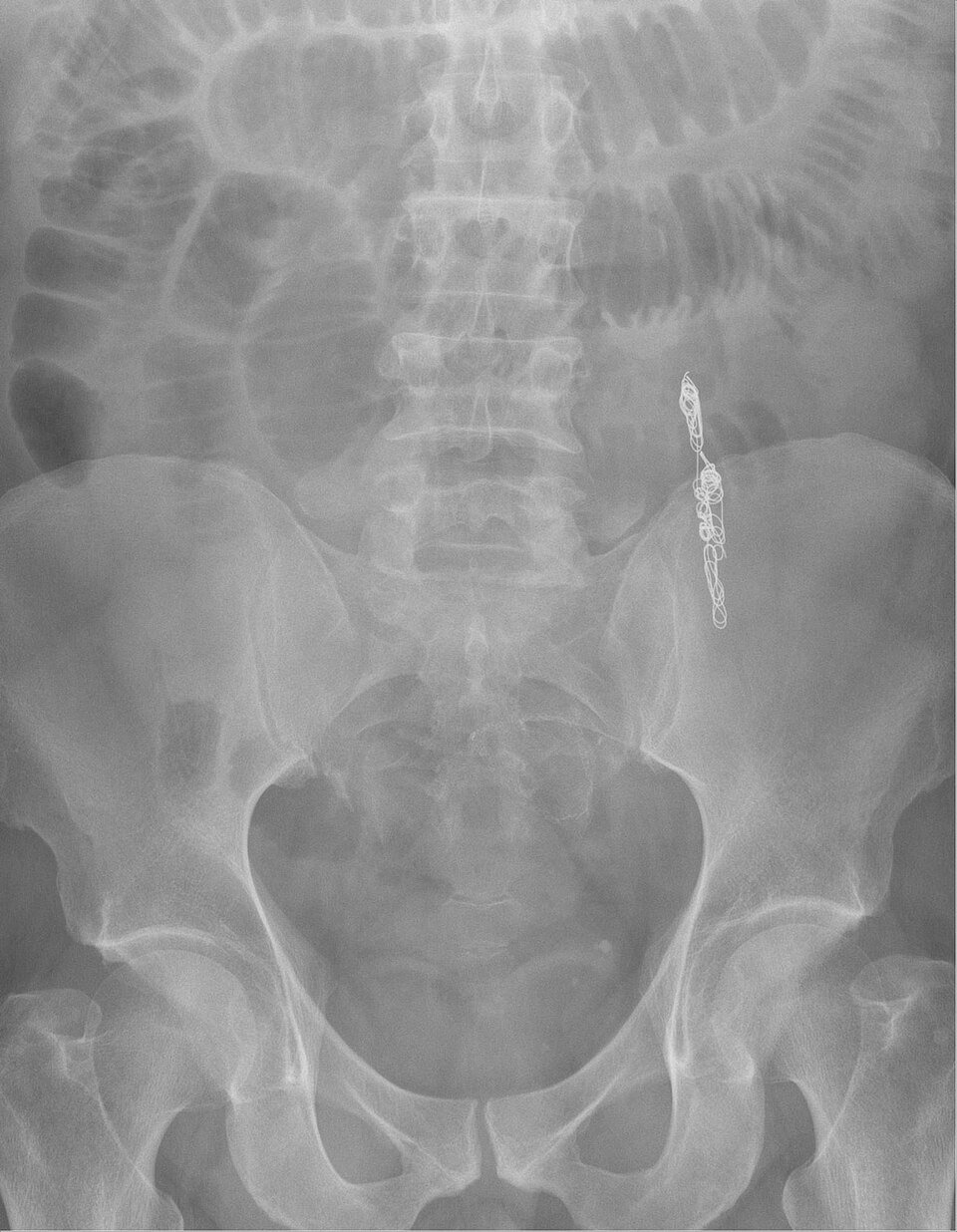
Every repair works on the same principle. The surgeon or radiologist cuts and seals, clips, or blocks the faulty veins of the pampiniform plexus, and blood from the testicle then returns through other healthy veins in the scrotum. Medicines cannot close a varicocele, so varicocele surgery or embolization is the only effective treatment when one is needed.
Source: Cleveland Clinic — Varicocelectomy: Purpose, Procedure, Risks & Recovery
The available approaches to varicocele surgery fall into three groups:
- Open surgery: inguinal ligation through the groin, and the older retroperitoneal “high ligation” performed from behind the lining of the abdomen.
- Minimally invasive surgery: microsurgical varicocelectomy using an operating microscope, and laparoscopic varicocelectomy using a camera. Robot-assisted repair also exists and has a success rate similar to the microscopic technique.
- Radiological treatment: embolization or sclerotherapy, in which a catheter is threaded into the vein from the neck or groin.
Sources: Cleveland Clinic — Varicocelectomy: Purpose, Procedure, Risks & Recovery; EAU — Sexual and Reproductive Health Guidelines (male infertility chapter, varicocele)
Microsurgical varicocelectomy step by step
Cleveland Clinic describes microsurgical varicocelectomy as the gold-standard and most common approach, and the EAU guideline states it is the most effective varicocelectomy technique, with fewer complications and lower recurrence rates. Its advantage over other varicocele surgery comes from magnification: the surgeon can see and spare the tiny arteries and lymph vessels that are easily damaged without a microscope.
Sources: Cleveland Clinic — Varicocelectomy: Purpose, Procedure, Risks & Recovery; EAU — Sexual and Reproductive Health Guidelines (male infertility chapter, varicocele)
The incision
For microsurgical varicocele surgery, most microsurgeons use a subinguinal incision of about 1.5–3 cm, placed in the skin creases just below the external opening of the groin canal. An inguinal incision of about 2–3.5 cm, slightly higher, is preferred in adolescents, in thin men with a tight canal opening, when a varicocele has come back after a subinguinal repair, or when a hernia is repaired at the same time.
Source: Asian Journal of Andrology (PMC) — Mehta & Goldstein 2013 — Microsurgical varicocelectomy: a review
Working under the microscope
During varicocele surgery, the spermatic cord is lifted into the wound and opened under an operating microscope at roughly 6 to 25 times magnification. To find the testicular artery, the surgeon may bathe the cord in papaverine (a drug that widens arteries) and use a tiny Doppler probe that “hears” arterial blood flow. Some teams ask the anesthetist to keep systolic blood pressure above 100 mmHg so the artery keeps pulsing visibly.
Sources: Asian Journal of Andrology (PMC) — Mehta & Goldstein 2013 — Microsurgical varicocelectomy: a review; Translational Andrology and Urology (PMC) — Tatem & Brannigan 2017 — The role of microsurgical varicocelectomy in treating male infertility
Each dilated vein is then tied twice and divided, while the testicular artery or arteries, lymphatic channels, the vas deferens and nearby nerves are preserved. In varicocele surgery, sparing the lymphatics is the main reason fluid collections around the testicle (hydrocele) are so rare after this method. Some surgeons also bring the testicle up into the wound to tie small collateral veins, although the need for this step is debated.
Source: Asian Journal of Andrology (PMC) — Mehta & Goldstein 2013 — Microsurgical varicocelectomy: a review
Because of this meticulous work, the operation is longer than other methods, usually one to three hours, and both sides take about twice as long. This varicocele surgery is normally done under general anesthesia as a day-case procedure.
Source: Cleveland Clinic — Varicocelectomy: Purpose, Procedure, Risks & Recovery
Laparoscopic varicocele surgery
In laparoscopic varicocele surgery, the surgeon makes a few tiny cuts in the lower abdomen and inserts a thin camera (laparoscope), watching the image on a screen while the veins are cut and sealed. It is done under general anesthesia and typically takes 30–40 minutes. Cleveland Clinic notes that this approach is less common today because of a higher chance of recurrence and a higher risk of injury.
Source: Cleveland Clinic — Varicocelectomy: Purpose, Procedure, Risks & Recovery
The best summary of this varicocele surgery trade-off is a 2024 meta-analysis comparing laparoscopic and microsurgical varicocelectomy. Laparoscopy was on average about 21 minutes shorter, but men had a higher risk of hydrocele (relative risk 3.30) and of recurrence (relative risk 6.98). Spontaneous pregnancy within 12 months did not differ significantly between the two groups. The authors concluded that laparoscopy is inferior to microsurgery for efficacy and safety, while noting that most included trials were of low quality.
Varicocele embolization: the non-surgical option
Embolization is an alternative to varicocele surgery, performed by an interventional radiologist rather than a surgeon. After the skin is numbed, a thin catheter is passed into a vein in the neck (jugular) or groin (femoral) and guided under X-ray to the faulty testicular vein. Tiny stainless steel or platinum coils, or liquid agents, are then released to block it. The procedure is usually completed within an hour under moderate intravenous sedation, without a breathing tube.
Source: RadiologyInfo.org (RSNA/ACR) — Varicocele Embolization
Radiologists often combine coils with a sclerosing foam (“sclero-embolization”), and some also use glue or vascular plugs. In a systematic review cited by interventional radiologists, mean technical success was 92% for both coils alone and coils plus sclerosant, with recurrence of about 9%. Results are much better on the left: one series reported a failure rate of 2.3% on the left compared with 19.3% on the right, because the right vein is harder to reach.
RadiologyInfo reports a success rate of about 90%, comparable to more invasive varicocele surgery, with varicoceles returning in roughly 5% to 10% of patients. In fewer than 5% of men the catheter cannot be positioned well enough to block the vein, and surgery is then needed. Healthdirect notes that embolization is usually done under local anesthetic and most men recover within a few days.
Sources: RadiologyInfo.org (RSNA/ACR) — Varicocele Embolization; Healthdirect Australia — Varicocele
Varicocele surgery vs embolization compared
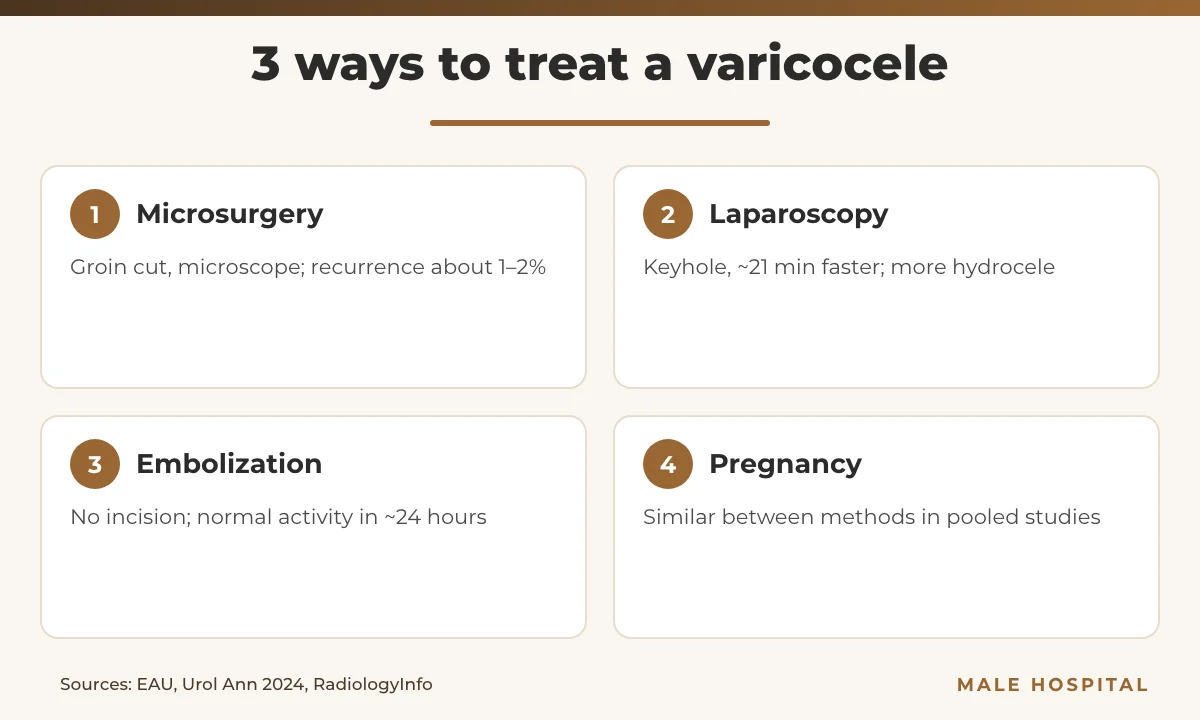
No large randomized trial has compared all varicocele surgery methods against each other, so choices rely on meta-analyses and expert guidance. The table summarizes the practical differences reported in the sources cited below it.
| Microsurgical (subinguinal/inguinal) | Laparoscopic | Embolization | |
|---|---|---|---|
| Who performs it | Urologist / andrologist with microsurgical training | Urologist (keyhole surgery) | Interventional radiologist |
| Access | Small cut low in the groin (about 1.5–3.5 cm) | A few tiny cuts in the lower abdomen | Needle puncture in a neck or groin vein |
| Anesthesia | Usually general | General | Local anesthetic plus moderate sedation |
| Typical duration | 1–3 hours | 30–40 minutes | Usually within 1 hour |
| Back to routine activity | A few days (work or school) | A few days | Within about 24 hours |
| Recurrence | About 1–2% with proper technique | Higher than microsurgery in pooled trials | About 5–10%; catheter cannot reach the vein in under 5% |
| Hydrocele | About 0–1% | Higher than microsurgery in pooled trials | About 10% (EAU summary table) |
| Main drawback | Longer operation; needs microscope and training | Higher hydrocele and recurrence risk | X-ray exposure; harder on the right side |
Sources: Cleveland Clinic — Varicocelectomy: Purpose, Procedure, Risks & Recovery; Asian Journal of Andrology (PMC) — Mehta & Goldstein 2013 — Microsurgical varicocelectomy: a review; Translational Andrology and Urology (PMC) — Tatem & Brannigan 2017 — The role of microsurgical varicocelectomy in treating male infertility; Urology Annals (PMC) — Warli et al. 2024 — Laparoscopic vs microsurgical varicocelectomy: systematic review and meta-analysis; RadiologyInfo.org (RSNA/ACR) — Varicocele Embolization; Seminars in Interventional Radiology (PMC) — Torkian et al. 2022 — Varicocele Embolization: Interventional Radiologist’s Perspective; EAU — Sexual and Reproductive Health Guidelines (male infertility chapter, varicocele)
What the comparative evidence says
A network meta-analysis of 35 studies found that subinguinal microsurgery, inguinal microsurgery, inguinal open surgery and laparoscopy all improved pregnancy odds compared with no treatment, with no significant difference between these four. Inguinal and subinguinal microsurgery, however, had the lowest odds of overall complications and recurrence, which is why the authors called them the optimal surgical approach. The AUA/ASRM guideline, citing the same meta-analysis, warns that the confidence intervals overlap widely.
Sources: Asian Journal of Andrology (PMC) — Wang et al. 2015 — Inguinal and subinguinal micro-varicocelectomy, the optimal surgical management of varicocele: a meta-analysis; AUA/ASRM — Diagnosis and Treatment of Infertility in Men: AUA/ASRM Guideline Part II
For embolization, a meta-analysis summarized by interventional radiologists found fewer adverse events than with varicocele surgery (relative risk 0.63), with no significant difference in recurrence or pregnancy. Urology reviews, by contrast, describe embolization as having a higher failure rate than microsurgery and use it mainly as a second-line option.
Sources: Seminars in Interventional Radiology (PMC) — Torkian et al. 2022 — Varicocele Embolization: Interventional Radiologist’s Perspective; Translational Andrology and Urology (PMC) — Tatem & Brannigan 2017 — The role of microsurgical varicocelectomy in treating male infertility
Which technique suits whom?
- Infertile man with a palpable left varicocele: microsurgical subinguinal repair is the usual first choice in andrology centers because of its low recurrence and hydrocele rates.
- Man who wants the fastest return to work and to avoid an incision: left-sided embolization is a reasonable option, accepting a somewhat higher chance of recurrence and a small X-ray dose.
- Varicocele that came back after surgery: both repeat surgery and embolization succeed in more than 90% of recurrent cases.
- Right-sided varicocele: embolization fails more often on the right, so surgery is often preferred.
Sources: Translational Andrology and Urology (PMC) — Tatem & Brannigan 2017 — The role of microsurgical varicocelectomy in treating male infertility; Seminars in Interventional Radiology (PMC) — Torkian et al. 2022 — Varicocele Embolization: Interventional Radiologist’s Perspective
Varicocele surgery outcomes: sperm, pregnancy, pain and testosterone
Semen quality
In appropriately selected infertile men, varicocele surgery improves semen parameters in about 80% of patients. Improvement is usually seen by around three months, with little further change after that in some series, while other authors note that optimal parameters may take six to nine months. That is why a repeat semen analysis is typically ordered every three months after surgery. The EAU also reports that repair can improve sperm DNA integrity, with greater benefit in men whose DNA fragmentation was high to begin with.
Sources: Translational Andrology and Urology (PMC) — Tatem & Brannigan 2017 — The role of microsurgical varicocelectomy in treating male infertility; Asian Journal of Andrology (PMC) — Mehta & Goldstein 2013 — Microsurgical varicocelectomy: a review; EAU — Sexual and Reproductive Health Guidelines (male infertility chapter, varicocele)
Pregnancy
About 40% of couples ultimately achieve a spontaneous pregnancy after varicocele surgery, and Cleveland Clinic summarizes this as about 3 in 10 men being able to get their partner pregnant. For couples who still need IVF, a meta-analysis of 870 IVF cycles found that couples were more than twice as likely to have a live birth if the man had his varicocele repaired first. The AUA/ASRM guideline points out that choosing repair delays assisted reproduction by at least six months, which matters when the female partner is older.
Sources: Translational Andrology and Urology (PMC) — Tatem & Brannigan 2017 — The role of microsurgical varicocelectomy in treating male infertility; Cleveland Clinic — Varicocelectomy: Purpose, Procedure, Risks & Recovery; AUA/ASRM — Diagnosis and Treatment of Infertility in Men: AUA/ASRM Guideline Part II
Men with no sperm in the ejaculate
In non-obstructive azoospermia, varicocele surgery brings sperm back into the ejaculate in roughly 40% of men in one review, but the live birth rate was only about 6%. The AUA/ASRM guideline reports that only 9.6% of men had enough sperm after repair to avoid surgical sperm retrieval, and states that there are no high-quality data supporting repair in this group. The same review notes that going straight to micro-TESE sperm retrieval may be more cost-effective for many of these men.
Sources: Translational Andrology and Urology (PMC) — Tatem & Brannigan 2017 — The role of microsurgical varicocelectomy in treating male infertility; AUA/ASRM — Diagnosis and Treatment of Infertility in Men: AUA/ASRM Guideline Part II
Pain and testosterone
For a dull, dragging scrotal ache that persists despite supportive underwear and simple painkillers, reported success rates of varicocele surgery range from 53% to 94%, and Cleveland Clinic states that about 8 in 10 people have less pain. For other causes of scrotal pain, see our guide to testicular pain. In a meta-analysis, serum testosterone rose by an average of 97.48 ng/dL after repair, but treating low testosterone with varicocelectomy is still considered an emerging indication rather than standard care.
Sources: Translational Andrology and Urology (PMC) — Tatem & Brannigan 2017 — The role of microsurgical varicocelectomy in treating male infertility; Cleveland Clinic — Varicocelectomy: Purpose, Procedure, Risks & Recovery
Recovery after varicocele surgery
Recovery is short for all methods of varicocele surgery, but it differs in detail. Most men go home a few hours after surgery, and someone should drive them and help for the first day or two. Embolization patients stay in the recovery room until the sedation wears off and can usually resume normal activities within 24 hours.
Sources: Cleveland Clinic — Varicocelectomy: Purpose, Procedure, Risks & Recovery; RadiologyInfo.org (RSNA/ACR) — Varicocele Embolization
| Time after the procedure | Surgery (microsurgical or laparoscopic) | Embolization |
|---|---|---|
| Same day | Home a few hours later; someone must drive you | Home after recovery from sedation |
| First 24–48 hours | Rest at home; pain relief your doctor approves | Normal daily activities usually allowed after 24 hours |
| Week 1 | Back to desk work or school within a few days; no sex or masturbation for at least 1 week | Mild scrotal discomfort can last up to a week |
| Weeks 2–4 | No lifting over about 10 lb (4.5 kg) for at least 2 weeks; bruising fades in 3–4 weeks | Avoid heavy lifting for 2 weeks |
| Weeks 6–8 | Groin tenderness up to 6 weeks; swelling can take 6–8 weeks to settle | Follow-up scrotal ultrasound at about 1 month |
| Months 3–9 | Semen analysis every 3 months; best results may take 6–9 months | Semen improvement may take 3–6 months; ultrasound at about 6 months |
Sources: Cleveland Clinic — Varicocelectomy: Purpose, Procedure, Risks & Recovery; RadiologyInfo.org (RSNA/ACR) — Varicocele Embolization; Seminars in Interventional Radiology (PMC) — Torkian et al. 2022 — Varicocele Embolization: Interventional Radiologist’s Perspective; Translational Andrology and Urology (PMC) — Tatem & Brannigan 2017 — The role of microsurgical varicocelectomy in treating male infertility
In the first week after varicocele surgery, take pain relief only as your doctor advises; anti-inflammatory drugs (NSAIDs) help many men, but not everyone can take them. Healthdirect notes that after inguinal ligation many men are fully recovered after about one week, while Cleveland Clinic says most people make a full recovery within six weeks.
Sources: Cleveland Clinic — Varicocelectomy: Purpose, Procedure, Risks & Recovery; Healthdirect Australia — Varicocele
Risks and complications of each technique
Varicocele surgery is generally safe, but every method has trade-offs. General surgical risks include bleeding or a blood collection (hematoma), wound infection, bruising, scarring and testicular tenderness. More specific risks are hydrocele, injury to the testicular artery and, rarely, loss of testicular function or a recurrent varicocele.
Source: Cleveland Clinic — Varicocelectomy: Purpose, Procedure, Risks & Recovery
- Microsurgery: with proper technique, recurrence is about 1–2% and hydrocele about 0–1%; testicular artery injury occurs in fewer than 1% of cases.
- Laparoscopy: higher pooled risks of hydrocele and recurrence than microsurgery, plus the risks of general anesthesia and abdominal access.
- Embolization: infection needing antibiotics in fewer than 1 in 1,000 cases; other risks include vessel damage, bruising, coil or agent lodging in the wrong place, inflammation of the vein (phlebitis), epididymitis, lower back pain, a rare contrast allergy and a small radiation dose.
Sources: Translational Andrology and Urology (PMC) — Tatem & Brannigan 2017 — The role of microsurgical varicocelectomy in treating male infertility; Urology Annals (PMC) — Warli et al. 2024 — Laparoscopic vs microsurgical varicocelectomy: systematic review and meta-analysis; RadiologyInfo.org (RSNA/ACR) — Varicocele Embolization
Interventional radiologists also list rare serious events after embolization, such as migration of the embolic material, clotting in the left kidney vein, and painful clotting of the pampiniform plexus. For comparison of overall recurrence and hydrocele rates across all techniques, the EAU guideline table is summarized in our varicocele overview.
Sources: Seminars in Interventional Radiology (PMC) — Torkian et al. 2022 — Varicocele Embolization: Interventional Radiologist’s Perspective; EAU — Sexual and Reproductive Health Guidelines (male infertility chapter, varicocele)
If you are considering varicocele surgery, you can get a confidential assessment of your varicocele, semen results and the most suitable technique from our urologist-andrologist, Assoc. Prof. Dr. Zülfü Sertkaya, whose clinical focus includes male infertility. Send us your reports on WhatsApp for a free first consultation; the cost depends on your assessment and the chosen technique.
When to see a doctor
After varicocele surgery or embolization, contact your doctor promptly if you have:
- heavy bleeding from an incision or discolored, foul-smelling drainage;
- a fever of 100 °F (38 °C) or higher, chills or headache;
- skin separating at the stitches;
- pain that is getting worse instead of better, or rapidly increasing scrotal swelling;
- a soft swelling around the testicle that appears weeks later (possible hydrocele) or the return of enlarged veins.
Sources: Cleveland Clinic — Varicocelectomy: Purpose, Procedure, Risks & Recovery; RadiologyInfo.org (RSNA/ACR) — Varicocele Embolization
FAQs about varicocele surgery
Is varicocele surgery worth it?
For an infertile man with a palpable varicocele and abnormal semen, usually yes: semen improves in about 80% of men and roughly 40% of couples conceive naturally afterward. It is not worthwhile for varicoceles found only on ultrasound or for men with normal semen, and the benefit should be weighed against a partner’s age, since results take months to appear.
Sources: Translational Andrology and Urology (PMC) — Tatem & Brannigan 2017 — The role of microsurgical varicocelectomy in treating male infertility; AUA/ASRM — Diagnosis and Treatment of Infertility in Men: AUA/ASRM Guideline Part II; EAU — Sexual and Reproductive Health Guidelines (male infertility chapter, varicocele)
Which is better, microsurgery or embolization?
Microsurgical varicocele surgery has the lowest recurrence and hydrocele rates and works on both sides, so many andrologists prefer it for fertility. Embolization avoids an incision and allows a faster return to normal activity, but it fails more often on the right side and involves X-rays. Pregnancy outcomes appear similar in pooled studies.
Sources: EAU — Sexual and Reproductive Health Guidelines (male infertility chapter, varicocele); Seminars in Interventional Radiology (PMC) — Torkian et al. 2022 — Varicocele Embolization: Interventional Radiologist’s Perspective
How long after varicocele surgery does sperm count improve?
Changes are usually measurable around three months after varicocele surgery, which is why the first follow-up semen analysis is generally done at that point. Some men keep improving, and the best parameters may not be reached until six to nine months. Couples are therefore advised to keep trying naturally during this period unless their doctor recommends otherwise.
Sources: Asian Journal of Andrology (PMC) — Mehta & Goldstein 2013 — Microsurgical varicocelectomy: a review; Translational Andrology and Urology (PMC) — Tatem & Brannigan 2017 — The role of microsurgical varicocelectomy in treating male infertility
When can I have sex after a varicocelectomy?
Cleveland Clinic advises avoiding intercourse and masturbation for at least one week after surgery, because pressure on the stitches can slow healing. Heavy lifting over about 10 pounds should be avoided for at least two weeks. After embolization, normal activity usually resumes within 24 hours, but follow your own doctor’s instructions.
Source: Cleveland Clinic — Varicocelectomy: Purpose, Procedure, Risks & Recovery
Can a varicocele come back after surgery?
Yes. Recurrence after varicocele surgery is about 1–2% with careful microsurgery, higher after laparoscopy, and roughly 5–10% after embolization. A recurrent varicocele can be treated again with repeat microsurgery or embolization, and both have reported success rates above 90% in this situation.
Sources: Translational Andrology and Urology (PMC) — Tatem & Brannigan 2017 — The role of microsurgical varicocelectomy in treating male infertility; RadiologyInfo.org (RSNA/ACR) — Varicocele Embolization
Is varicocele surgery painful?
The procedure itself is done under general anesthesia or sedation, so you should not feel pain during it. Afterward, groin tenderness, bruising and mild scrotal swelling are common and are managed with rest and pain relief approved by your doctor. Tenderness can last up to six weeks after surgery, and discomfort after embolization usually settles within a week.
Sources: Cleveland Clinic — Varicocelectomy: Purpose, Procedure, Risks & Recovery; RadiologyInfo.org (RSNA/ACR) — Varicocele Embolization
Can varicocele surgery increase testosterone?
It can. A meta-analysis found that serum testosterone rose by an average of about 97 ng/dL after varicocele surgery, and the EAU says men with a clinical varicocele and low testosterone may benefit. However, the evidence is limited, so repair is not a standard alternative to testosterone therapy and should be discussed case by case.
Sources: Translational Andrology and Urology (PMC) — Tatem & Brannigan 2017 — The role of microsurgical varicocelectomy in treating male infertility; EAU — Sexual and Reproductive Health Guidelines (male infertility chapter, varicocele)
Medically reviewed by Assoc. Prof. Dr. Zülfü Sertkaya, urologist and andrologist (FEBU), Istanbul. Last reviewed: November 2026.
This article is for general information and does not replace an individual consultation with a qualified doctor.
- EAU — Sexual and Reproductive Health Guidelines (male infertility chapter, varicocele)
- AUA/ASRM — Diagnosis and Treatment of Infertility in Men: AUA/ASRM Guideline Part II
- Cleveland Clinic — Varicocelectomy: Purpose, Procedure, Risks & Recovery
- RadiologyInfo.org (RSNA/ACR) — Varicocele Embolization
- Healthdirect Australia — Varicocele
- Asian Journal of Andrology (PMC) — Mehta & Goldstein 2013 — Microsurgical varicocelectomy: a review
- Translational Andrology and Urology (PMC) — Tatem & Brannigan 2017 — The role of microsurgical varicocelectomy in treating male infertility
- Asian Journal of Andrology (PMC) — Wang et al. 2015 — Inguinal and subinguinal micro-varicocelectomy, the optimal surgical management of varicocele: a meta-analysis
- Urology Annals (PMC) — Warli et al. 2024 — Laparoscopic vs microsurgical varicocelectomy: systematic review and meta-analysis
- Seminars in Interventional Radiology (PMC) — Torkian et al. 2022 — Varicocele Embolization: Interventional Radiologist's Perspective