Testosterone and erectile dysfunction are linked, but low testosterone is only one of many possible causes of erection problems, and most men with ED have normal hormone levels. Guidelines advise checking a fasting morning testosterone level in every man with ED: if it is truly low, testosterone therapy can improve libido and milder erection problems, but it is not an erection pill and does nothing for men whose levels are normal. For the full range of options, see our erectile dysfunction treatment page.
Source: EAU — Management of Erectile Dysfunction; EAU — Male Hypogonadism
- Testosterone and erectile dysfunction are linked because the hormone acts on the nerves, smooth muscle and blood-vessel lining of the penis and drives sexual desire, so a real deficiency can weaken erections.
- For testosterone and erectile dysfunction, European guidelines recommend a fasting early-morning total testosterone test as part of every ED work-up; a low result must be confirmed on a second morning sample.
- In men with confirmed low testosterone and erectile dysfunction, treatment improves erectile function modestly, most clearly when levels are very low and ED is mild.
- Large trials of testosterone and erectile dysfunction show the hormone reliably boosts desire and sexual activity, but its effect on erections is smaller and less consistent, and adding it to well-dosed sildenafil did not help in one key trial.
- Testosterone is not used in men with normal levels or in men who want to father a child, because it suppresses sperm production.
- How testosterone and erectile dysfunction are connected
- Signs your erection problem may be hormonal
- Testing testosterone in men with erectile dysfunction
- Does testosterone therapy improve erections? What the trials show
- Testosterone plus PDE5 inhibitors: when to combine
- When testosterone is the wrong treatment for ED
- Weight, diabetes and other shared causes
- When to see a doctor
- FAQs about testosterone and erectile dysfunction
How testosterone and erectile dysfunction are connected
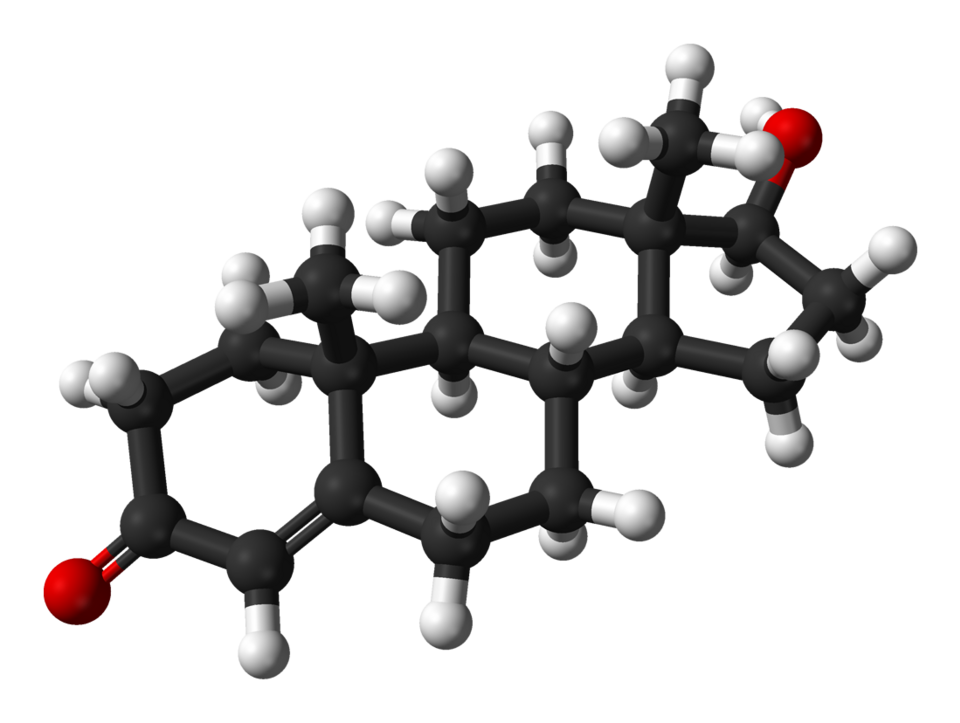
To understand testosterone and erectile dysfunction, note that an erection depends on healthy blood vessels, intact nerves, relaxed smooth muscle inside the penis and a working brain signal of desire. Testosterone influences almost every step of that chain. A systematic review in European Urology described it as modulating the pelvic nerves, the smooth muscle and the endothelial cells (the inner lining of the blood vessels) of the erectile tissue, and as timing erections to match sexual desire.
That is why low testosterone (male hypogonadism) often shows up first as reduced sex drive, fewer spontaneous or morning erections and erections that are less reliable. The same review of testosterone and erectile dysfunction noted a significant overlap between hypogonadism and ED in population studies, which is why the two conditions are often found together.
Why the link is not one-to-one
Overlap between testosterone and erectile dysfunction does not mean low testosterone is usually the cause. The EAU guidelines list hormonal causes, including hypogonadism of any type, alongside vascular, neurological, anatomical, drug-related and psychological causes, and in many men several of these act together. The US National Institute of Diabetes and Digestive and Kidney Diseases (NIDDK) likewise lists hormone issues such as low testosterone and thyroid imbalance as only one group of causes next to heart and blood-vessel disease, diabetes, kidney disease, obesity, smoking, heavy drinking and inactivity.
In practice, most erection problems are driven by blood-vessel health, and a man can have perfectly normal testosterone and still have significant ED. When doctors assess testosterone and erectile dysfunction together, they therefore look for these other causes at the same time.
Source: EAU — Management of Erectile Dysfunction; NIDDK — Symptoms & Causes of Erectile Dysfunction
Signs your erection problem may be hormonal
With testosterone and erectile dysfunction, no single symptom proves that low testosterone is behind ED, but some patterns make it more likely. Cleveland Clinic describes sexual symptoms as the most specific signs of low testosterone: low libido, trouble getting or keeping an erection and loss of morning or spontaneous erections.
Signs that point more strongly toward true hypogonadism include:
- Clearly reduced interest in sex, not only weaker erections
- Fewer morning or spontaneous erections
- Loss of body hair in the armpits or pubic area
- Smaller or softer testicles
- Hot flashes
- Low or absent sperm count
When weighing testosterone and erectile dysfunction, less specific symptoms such as low mood, more body fat and reduced strength overlap with many other conditions. For a full checklist, read our article on low testosterone symptoms.
Source: Cleveland Clinic — Low Testosterone (Male Hypogonadism)
A clue in the pattern of ED
In testosterone and erectile dysfunction, men whose ED came with a clear drop in desire, or whose erections are fine with medication but who rarely feel like having sex, are the group in whom a hormone cause is most worth looking for. By contrast, ED that started gradually in a man with high blood pressure, diabetes or smoking, with normal desire, is more often vascular. Both patterns still deserve a blood test, because guidelines do not rely on symptoms or questionnaires alone: the EAU advises against using self-reported questionnaires to screen for low testosterone.
Source: EAU — Male Hypogonadism
Testing testosterone in men with erectile dysfunction
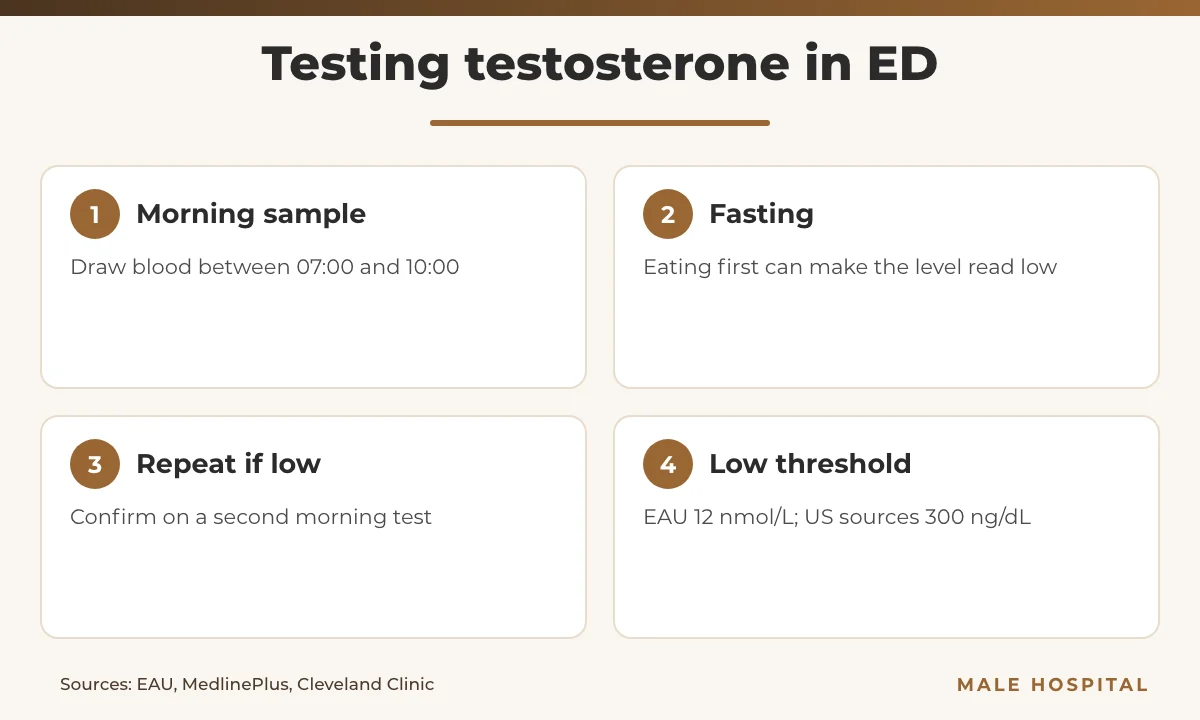
On testosterone and erectile dysfunction, the EAU guideline on ED gives a strong recommendation to check laboratory tests, including glucose, lipids and total testosterone, to find and treat reversible risk factors. It specifies that hormonal testing should use an early-morning total testosterone sample taken in the fasting state. This is one of the standard steps described in our erectile dysfunction test guide.
Source: EAU — Management of Erectile Dysfunction
How to get a reliable result
- Timing: testosterone is highest in the morning. The EAU recommends sampling between 07:00 and 10:00, and MedlinePlus also describes a 7 to 10 a.m. draw.
- Fasting: the EAU recommends a fasting sample, because eating can lower the reading and lead to a false diagnosis.
- Repeat: a level below the threshold should be repeated on at least one more occasion before any treatment is started.
- Total vs free: total testosterone is the standard first test; free testosterone (the unbound fraction) is measured less often and helps in borderline cases.
- Cause: luteinizing hormone (LH) and prolactin help show whether the problem lies in the testicles or the pituitary gland. The EAU recommends measuring prolactin when low desire comes with secondary hypogonadism.
Source: EAU — Male Hypogonadism; MedlinePlus — Testosterone Levels Test
What counts as “low”?
When assessing testosterone and erectile dysfunction, the EAU uses a total testosterone of 12 nmol/L (3.5 ng/mL) as a reliable threshold for diagnosing late-onset hypogonadism. US sources usually quote 300 ng/dL; Cleveland Clinic states that levels below 300 ng/dL are considered low in adults. The Endocrine Society stresses that the diagnosis needs both symptoms and unequivocally, consistently low levels, never a single number on its own. Levels also fall gradually with age, roughly 1% a year from the late 30s according to Cleveland Clinic, which is why our article on normal testosterone levels by age explains how to read a result in context.
Source: EAU — Male Hypogonadism; Endocrine Society — Testosterone Therapy for Hypogonadism Guideline
Does testosterone therapy improve erections? What the trials show
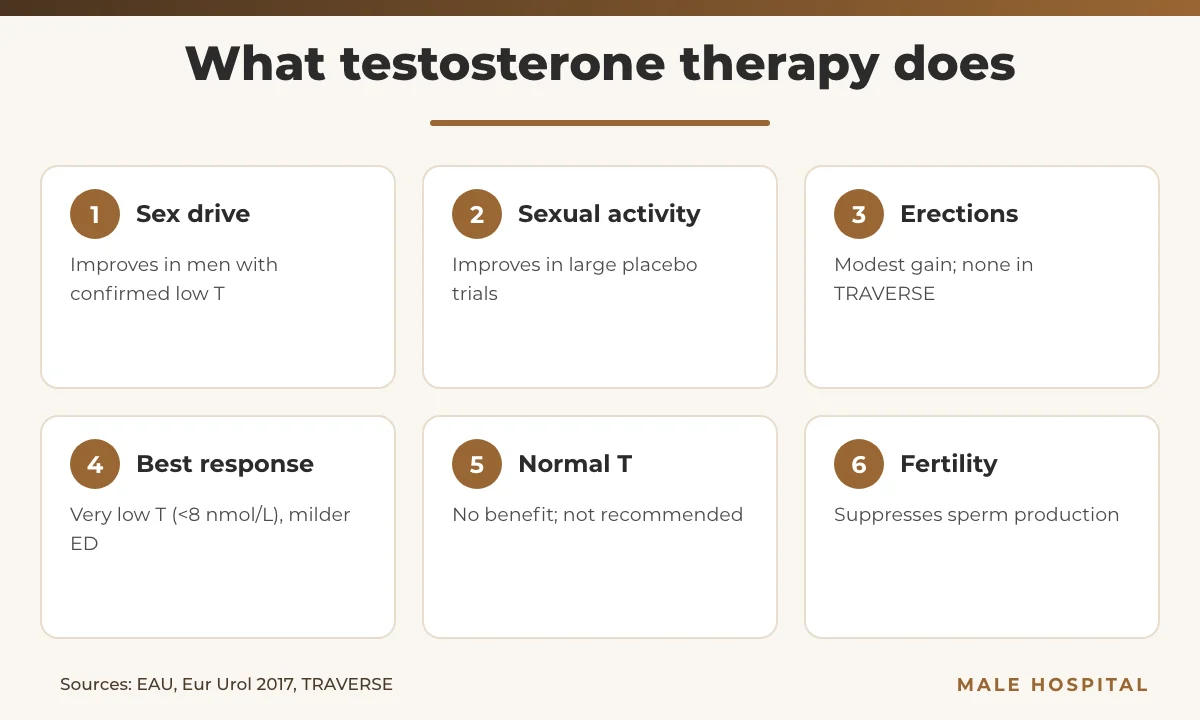
For testosterone and erectile dysfunction, the honest answer is: yes, modestly, in men who are truly deficient, and much less than most men expect. Sexual desire and activity respond more clearly than erection hardness.
Meta-analyses
A 2017 meta-analysis in European Urology pooled 14 placebo-controlled trials of testosterone and erectile dysfunction outcomes with 2,298 men. Testosterone treatment improved the erectile function score of the International Index of Erectile Function (IIEF) by an average of 2.31 points compared with placebo. The gain was larger in men with severe deficiency (total testosterone below 8 nmol/L) than in men with milder deficiency (below 12 nmol/L), and it was smaller in men with diabetes or obesity. The authors concluded that testosterone alone may be reasonable for hypogonadal men with milder ED, while men with more severe ED are more likely to need a PDE5 inhibitor as well.
An earlier 2014 meta-analysis of 41 trials on testosterone and erectile dysfunction reached a similar conclusion for men who are clearly hypogonadal, but found that the benefit is uncertain in men who are not, and noted that many studies mixed men with low and normal levels.
Source: Eur Urol (PubMed) — Meta-analysis of testosterone therapy on sexual function based on IIEF scores (Corona et al., 2017); J Sex Med (PubMed) — Testosterone supplementation and sexual function: a meta-analysis (Corona et al., 2014)
Large randomized trials
In the US Testosterone Trials, a key study of testosterone and erectile dysfunction, 790 men aged 65 or older with testosterone below 275 ng/dL and symptoms received testosterone gel or placebo for a year. Testosterone increased sexual activity, sexual desire and erectile function, a benefit the investigators called moderate. A follow-up analysis found that improvements in desire and activity tracked the rise in hormone levels, but erectile function did not.
The TRAVERSE Sexual Function Study, another test of testosterone and erectile dysfunction, followed 1,161 middle-aged and older men with low testosterone and low libido for up to two years. Testosterone gel improved sexual activity, desire and hypogonadal symptoms compared with placebo, but did not improve erectile function.
Source: N Engl J Med (PubMed) — Effects of Testosterone Treatment in Older Men (2016); J Clin Endocrinol Metab (PubMed) — Testosterone Treatment and Sexual Function in Older Men (2016); J Clin Endocrinol Metab (PubMed) — TRAVERSE Sexual Function Study (Pencina et al., 2024)
| Study | Who was studied | Desire / activity | Erections |
|---|---|---|---|
| Corona meta-analysis, 2017 | 14 placebo-controlled trials, 2,298 men | Improved | Improved (+2.31 IIEF points); larger if testosterone below 8 nmol/L |
| Testosterone Trials, 2016 | 790 men aged 65+, testosterone below 275 ng/dL | Improved | Improved, moderate effect |
| TRAVERSE sexual function study, 2024 | 1,161 men aged 45–80 with low libido | Improved | No improvement vs placebo |
| Spitzer trial, 2012 | 140 men aged 40–70 already on optimized sildenafil | No added benefit | No added benefit vs placebo |
Sources: Eur Urol (PubMed) — Corona et al., 2017; N Engl J Med (PubMed) — Testosterone Trials, 2016; J Clin Endocrinol Metab (PubMed) — TRAVERSE, 2024; Ann Intern Med (PubMed) — Spitzer et al., 2012
What the guidelines conclude
The EAU summarizes the evidence on testosterone and erectile dysfunction as showing that testosterone therapy can improve milder forms of ED and libido in men with hypogonadism, with the benefit linked to bringing levels back to normal. It gives a strong recommendation to use testosterone as first-line treatment in hypogonadal men with mild ED. It also notes that trials in men with type 2 diabetes improved desire and satisfaction but not erectile function, a point covered further in our article on erectile dysfunction and diabetes.
Source: EAU — Male Hypogonadism
Testosterone plus PDE5 inhibitors: when to combine
Many men with testosterone and erectile dysfunction concerns ask whether adding testosterone helps when PDE5 inhibitor tablets such as sildenafil or tadalafil are not enough.
The evidence is mixed. In a randomized, double-blind trial in Annals of Internal Medicine, 140 men aged 40 to 70 with low testosterone and erectile dysfunction first had their sildenafil dose optimized. Sildenafil alone produced a large improvement. Adding testosterone gel for 14 weeks gave no further benefit over placebo gel, including in men with the lowest baseline levels and in men who had responded poorly to sildenafil.
Other studies of testosterone and erectile dysfunction, summarized by the EAU, suggest that hypogonadal men who do not respond to PDE5 inhibitors may respond better after testosterone is started. The EAU therefore makes a weak recommendation to combine a PDE5 inhibitor with testosterone therapy in more severe ED in men with confirmed hypogonadism, while noting that the specific benefit of the combination is unclear. Before adding anything, the EAU also stresses checking how the tablets are being taken, because incorrect use and inadequate information are the main reasons PDE5 inhibitors seem not to work.
Source: EAU — Male Hypogonadism; EAU — Management of Erectile Dysfunction
When testosterone is the wrong treatment for ED
Guidelines on testosterone and erectile dysfunction are clear that testosterone is the wrong choice in several situations, whatever the marketing suggests.
- Normal testosterone levels: the EAU gives a strong recommendation not to use testosterone therapy in men with normal levels. Extra testosterone will not fix a vascular, nerve or psychological cause of ED.
- Wanting children: testosterone suppresses sperm production. The EAU and the Endocrine Society both advise against it in men who are planning to father a child. Cleveland Clinic lists clomiphene citrate as an option in men with low testosterone who want children.
- Certain cancers and blood problems: locally advanced or metastatic prostate cancer, male breast cancer and a haematocrit (red blood cell level) of 54% or higher are absolute contraindications in the EAU guideline.
- Other conditions: the Endocrine Society also advises against it in men with a palpable prostate nodule, a PSA above 4 ng/mL without further evaluation, untreated severe sleep apnea, severe urinary symptoms, uncontrolled heart failure, a recent heart attack or stroke, or thrombophilia.
- Older age alone: the Endocrine Society suggests against routinely prescribing testosterone to all men aged 65 or older; treatment is decided individually.
Source: EAU — Male Hypogonadism; Endocrine Society — Testosterone Therapy for Hypogonadism Guideline; Cleveland Clinic — Low Testosterone
For men with testosterone and erectile dysfunction who do qualify, forms, monitoring and safety are covered in our guide to testosterone replacement therapy; the EAU advises adjusting or stopping treatment if haematocrit rises above 54%.
Source: EAU — Male Hypogonadism
Weight, diabetes and other shared causes
Low testosterone and ED often share the same root causes, which is one reason testosterone and erectile dysfunction so often appear together. Cleveland Clinic notes that most men with symptoms of low testosterone do not have a disease of the pituitary gland or testicles; they usually have obesity or diabetes. These conditions also damage blood vessels and nerves, so they can cause ED directly as well as by lowering hormone levels.
Some medicines matter too. Opioid painkillers and medicines for opioid dependence can cause secondary hypogonadism. Rarer causes include pituitary disorders and genetic conditions such as Klinefelter syndrome.
Source: Cleveland Clinic — Low Testosterone (Male Hypogonadism)
Lifestyle comes first
For testosterone and erectile dysfunction, the EAU gives a strong recommendation that men with hypogonadism who are overweight improve their lifestyle and lose weight, and says this should be the first approach. It is honest about the size of the effect: diet and exercise typically raise testosterone only slightly, by about 1–2 nmol/L. The EAU also advises against using testosterone as a tool for weight loss or to improve cardiometabolic health.
Even when the hormone change is small, losing weight, exercising, stopping smoking, limiting alcohol and controlling blood sugar protect the blood vessels erections depend on. Cleveland Clinic describes healthy eating and physical activity as the first treatments for low testosterone, with testosterone therapy considered if this is not enough after six to 12 months or if symptoms are severe.
Source: EAU — Male Hypogonadism; NIDDK — Symptoms & Causes of Erectile Dysfunction; Cleveland Clinic — Low Testosterone
When to see a doctor
Occasional erection problems are common and usually not a concern. See a doctor if ED keeps happening, especially if you suspect a link between testosterone and erectile dysfunction, and do not start testosterone from a gym, website or friend without proper testing. Seek medical advice sooner if you notice:
- ED together with a marked loss of sex drive, fewer morning erections or shrinking testicles
- ED alongside chest pain, shortness of breath on exertion, or known diabetes, high blood pressure or high cholesterol, since ED can be an early sign of blood-vessel disease
- Difficulty conceiving with a partner, especially if you have used testosterone or anabolic steroids
- On testosterone treatment: a high red blood cell count (haematocrit) or other abnormal results on your monitoring blood tests
When testosterone and erectile dysfunction are both in question, a combined assessment of hormones, metabolic health and blood flow is the most reliable way to find out whether testosterone plays any part in your ED.
Source: EAU — Management of Erectile Dysfunction; Cleveland Clinic — Low Testosterone
If you would like to know whether your erection problem has a hormonal cause, you can arrange a confidential consultation with our urologist-andrologist, Assoc. Prof. Dr. Zülfü Sertkaya, via WhatsApp. He can review your blood tests and explain every erectile dysfunction treatment option, with or without testosterone.
FAQs about testosterone and erectile dysfunction
Can low testosterone cause erectile dysfunction?
Yes, it can contribute. Testosterone supports the nerves, smooth muscle and blood-vessel lining of the penis and drives sexual desire, so a true deficiency can weaken erections and reduce interest in sex. However, low testosterone is only one of many causes, and most ED is linked to blood-vessel health, diabetes, medicines or psychological factors rather than hormones alone.
Source: Eur Urol (PubMed) — Isidori et al., 2014; NIDDK — Symptoms & Causes of ED
Will testosterone therapy cure my ED?
Usually not on its own. In men with confirmed deficiency, pooled trials show a modest improvement in erection scores, larger when levels are very low and ED is mild. The two-year TRAVERSE study found better desire and sexual activity but no improvement in erectile function. Many men with low testosterone and erectile dysfunction still need a PDE5 inhibitor or another treatment.
Source: Eur Urol (PubMed) — Corona et al., 2017; J Clin Endocrinol Metab (PubMed) — TRAVERSE, 2024
Should every man with ED have his testosterone checked?
European guidelines on testosterone and erectile dysfunction say yes. The EAU strongly recommends laboratory tests, including total testosterone, glucose and lipids, as part of the ED assessment to identify reversible risk factors. The sample should be taken early in the morning while fasting, and a low result should be repeated before any diagnosis of hypogonadism is made.
Source: EAU — Management of Erectile Dysfunction
What testosterone level is considered too low?
The EAU uses a total testosterone of 12 nmol/L (3.5 ng/mL) as a reliable threshold for late-onset hypogonadism, while US sources commonly use 300 ng/dL. In testosterone and erectile dysfunction, a number below the cut-off is not enough on its own: the diagnosis also needs matching symptoms and a second low morning result, and doctors look for the underlying cause.
Source: EAU — Male Hypogonadism; Cleveland Clinic — Low Testosterone
Can I take testosterone and Viagra together?
In testosterone and erectile dysfunction care, sildenafil (Viagra) and testosterone can be prescribed together, and the EAU suggests this combination for more severe ED in men with proven hypogonadism. Evidence of added benefit is mixed: one randomized trial found that adding testosterone gel to optimized sildenafil did not improve erections more than placebo. Both medicines should be prescribed and monitored by a doctor.
Source: EAU — Male Hypogonadism; Ann Intern Med (PubMed) — Spitzer et al., 2012
Does testosterone help ED if my levels are normal?
No. On testosterone and erectile dysfunction, the EAU gives a strong recommendation against testosterone therapy in men with normal levels, and meta-analyses show the benefit for sexual function is uncertain in men who are not clearly deficient. Taking extra testosterone in that situation adds risks, including suppressed sperm production and a higher red blood cell count, without fixing the actual cause of ED.
Source: EAU — Male Hypogonadism; J Sex Med (PubMed) — Corona et al., 2014
Why is a morning blood test needed?
When checking testosterone and erectile dysfunction, timing matters: testosterone follows a daily rhythm and is usually highest in the morning, so MedlinePlus describes drawing blood between about 7 and 10 a.m. The EAU also recommends a fasting sample, because food can lower the result. Testing later in the day or after a meal may make a normal level look low and lead to unnecessary treatment.
Source: MedlinePlus — Testosterone Levels Test; EAU — Male Hypogonadism
Can losing weight raise testosterone and improve erections?
It can help with testosterone and erectile dysfunction. The EAU recommends weight loss and lifestyle change as the first step for overweight men with low testosterone, though the hormone rise is usually small, about 1–2 nmol/L. Because obesity and diabetes also harm the blood vessels needed for erections, weight loss, exercise and better blood-sugar control can benefit erections beyond the change in hormone levels.
Source: EAU — Male Hypogonadism; NIDDK — Symptoms & Causes of ED
Medically reviewed by Assoc. Prof. Dr. Zülfü Sertkaya, urologist and andrologist (FEBU), Istanbul. Last reviewed: November 2026.
This article is for general information and does not replace an individual consultation with a qualified doctor.
- EAU — Sexual and Reproductive Health Guidelines: Management of Erectile Dysfunction
- EAU — Sexual and Reproductive Health Guidelines: Male Hypogonadism
- Eur Urol (PubMed) — A critical analysis of the role of testosterone in erectile function: a systematic review (Isidori et al., 2014)
- Eur Urol (PubMed) — Meta-analysis of Results of Testosterone Therapy on Sexual Function Based on IIEF Scores (Corona et al., 2017)
- J Sex Med (PubMed) — Testosterone supplementation and sexual function: a meta-analysis study (Corona et al., 2014)
- N Engl J Med (PubMed) — Effects of Testosterone Treatment in Older Men (Testosterone Trials, 2016)
- J Clin Endocrinol Metab (PubMed) — Testosterone Treatment and Sexual Function in Older Men With Low Testosterone Levels (2016)
- J Clin Endocrinol Metab (PubMed) — Effect of TRT on Sexual Function and Hypogonadal Symptoms (TRAVERSE, 2024)
- Ann Intern Med (PubMed) — Effect of testosterone replacement on response to sildenafil citrate in men with ED (2012)
- Cleveland Clinic — Low Testosterone (Male Hypogonadism)
- MedlinePlus — Testosterone Levels Test
- NIDDK — Symptoms & Causes of Erectile Dysfunction
- Endocrine Society — Testosterone Therapy for Hypogonadism Guideline