
Varicocele Treatment: 4 Proven Options and the Best Choice
Varicocele treatment is needed only in specific situations: an infertile man with a varicocele that can be felt and abnormal semen results, a dull scrotal ache that does not settle with simple measures, or a teenage testicle that stops growing. When treatment is indicated, the options are microsurgical subinguinal varicocelectomy, laparoscopic surgery or embolization by a radiologist, and many men with a small, painless varicocele and normal semen simply need observation.
Sources: EAU — Male Infertility Guidelines; AUA/ASRM — Infertility in Men Guideline
- EAU and AUA/ASRM guidelines support varicocele treatment for infertile men with a palpable varicocele and abnormal semen, and advise against repairing varicoceles seen only on ultrasound.
- In adolescents, the EAU recommends offering surgery when the testicle on the varicocele side stays more than 2 mL or 20% smaller on two visits six months apart.
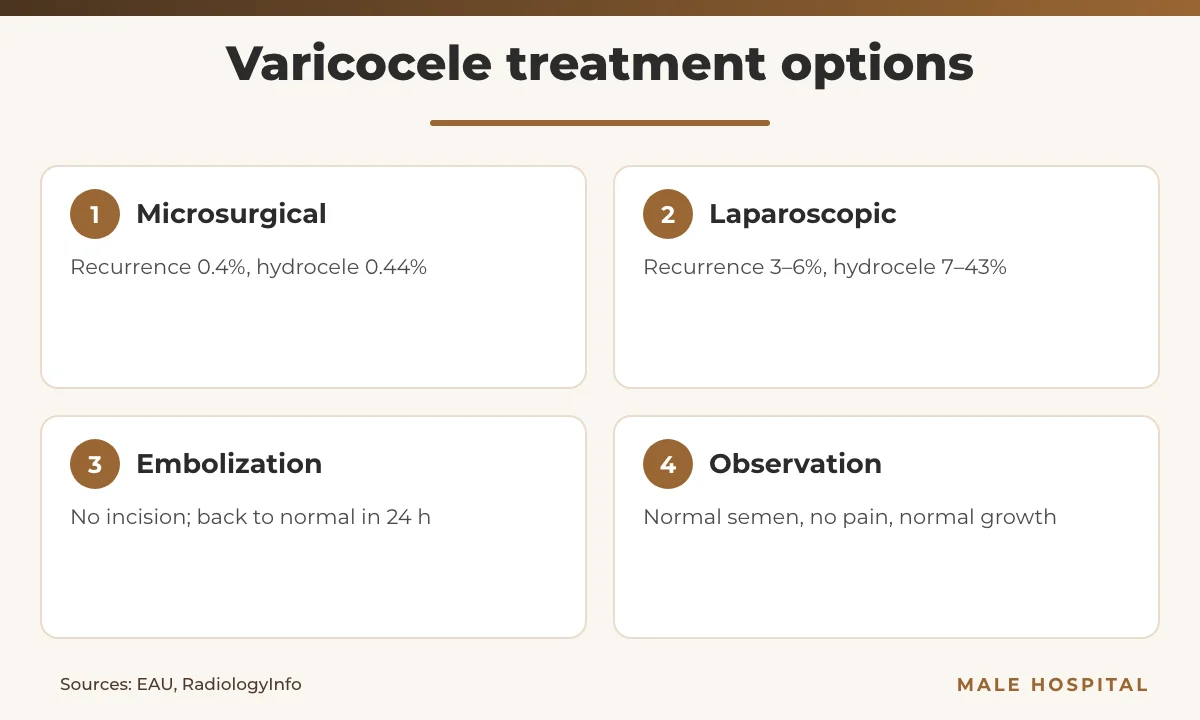
- Microsurgical inguinal or subinguinal repair has the lowest recurrence (0.4%) and hydrocele (0.44%) rates in the EAU guideline table.
- After repair, semen improves in about 80% of men and about 40% of couples conceive naturally, but results take three to nine months.
- Embolization avoids an incision and most men resume normal activity within 24 hours, with recurrence in about 5–10%.
Send us your semen analysis and ultrasound report for a confidential, personalised plan from our urologist-andrologist.
- What is varicocele treatment?
- When is varicocele treatment recommended?
- Who is a good candidate for varicocele treatment?
- Varicocele treatment options compared
- Microsurgical varicocele treatment step by step
- Recovery after varicocele treatment
- Risks of varicocele treatment: recurrence and hydrocele
- Results and realistic expectations
- Varicocele treatment with Dr. Zülfü Sertkaya in Istanbul
- How to start
- When to see a doctor
- FAQs about varicocele treatment
What is varicocele treatment?
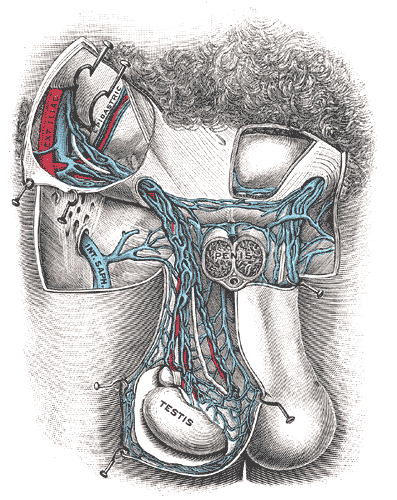
A varicocele is a widening and twisting of the pampiniform plexus, the network of veins that drains each testicle, in the same way varicose veins form in the leg. It affects about 15% to 20% of men, usually on the left side, and most men who have one are fertile and have no symptoms. You can read more about grades, causes and diagnosis in our complete varicocele guide.
Sources: PMC — Microsurgical varicocelectomy for infertility (2017); MedlinePlus (NIH) — Varicocele
Varicocele treatment means closing off the faulty veins so blood from the testicle drains through healthy veins instead. Medicines cannot close a varicocele. The effective options are therefore surgery (cutting and tying the veins) or embolization (blocking them from inside with coils or a sclerosing agent). For low-grade cases without fertility problems or pain, varicocele treatment may simply mean supportive underwear, cold packs and monitoring.
Sources: Cleveland Clinic — Varicocelectomy; Cleveland Clinic — Varicocele
When is varicocele treatment recommended?
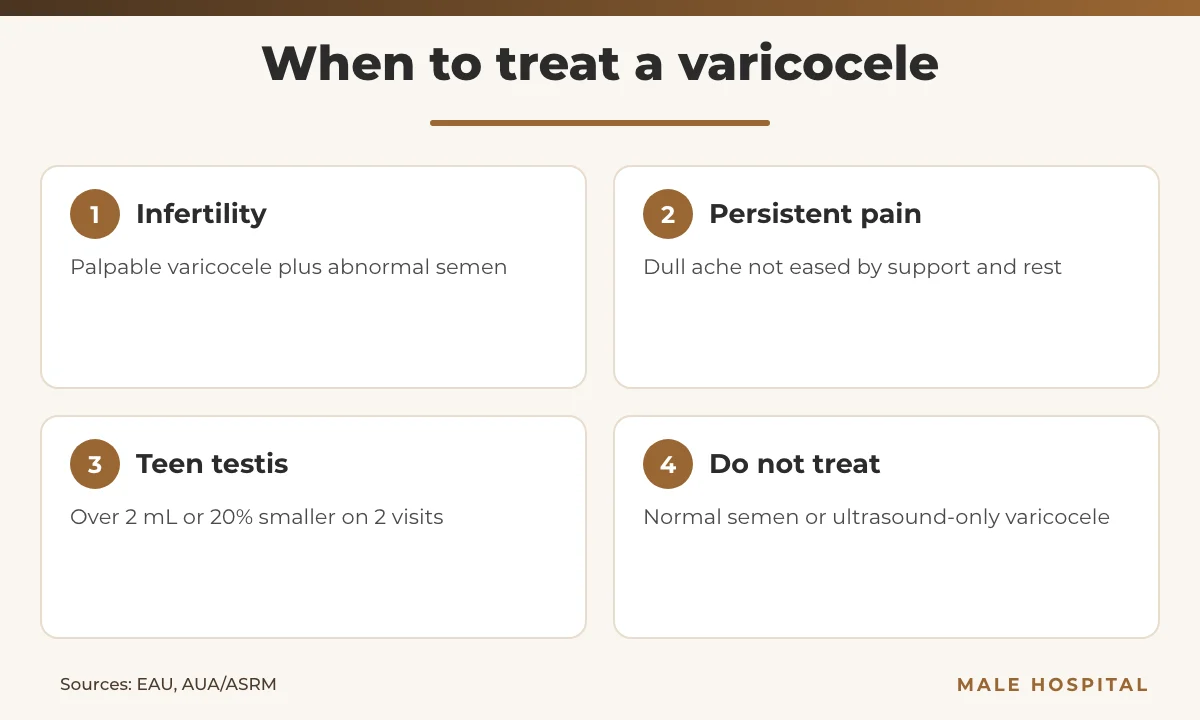
The most important question is not which technique to choose but whether to treat at all. Guidelines are clear that a varicocele on its own is not a reason for surgery. The three accepted reasons for varicocele treatment are infertility with abnormal semen, persistent pain, and poor testicular growth in a teenager.
Sources: EAU — Male Infertility Guidelines; Cleveland Clinic — Varicocele
Infertility with abnormal semen (adults)
The European Association of Urology (EAU) gives a strong recommendation to treat infertile men who have a clinical (palpable) varicocele, abnormal semen parameters and otherwise unexplained infertility, when the female partner has good ovarian reserve. The AUA/ASRM guideline says surgical varicocelectomy should be considered in men trying to conceive who have a palpable varicocele, infertility and abnormal semen, except for men with no sperm at all (azoospermia).
Sources: EAU — Male Infertility Guidelines; AUA/ASRM — Infertility in Men Guideline
Both guidelines advise strongly against varicocele treatment in infertile men with normal semen and in men with a subclinical varicocele, which is seen only on ultrasound and cannot be felt. For men with non-obstructive azoospermia, the AUA/ASRM guideline says couples should be told there is no definitive evidence that repair before assisted reproduction helps. Our male infertility treatment page explains the full fertility work-up and alternatives.
Sources: EAU — Male Infertility Guidelines; AUA/ASRM — Infertility in Men Guideline
Scrotal pain
Only about 2% to 10% of men with a varicocele report pain, usually a dull, dragging ache that worsens after standing. A period of conservative care comes first: snug underwear or a jockstrap, a cold pack wrapped in a towel for no more than 15 minutes, and anti-inflammatory painkillers if your doctor agrees. Surgery is considered when the ache persists. The EAU does not issue a formal recommendation on repair for pain but reports pain resolution in 48–90% of patients after varicocelectomy.
Sources: PMC — Varicocele and testicular pain (2019); Cleveland Clinic — Varicocele; EAU — Male Infertility Guidelines
Adolescents with a smaller testicle
In teenagers, the aim of varicocele treatment is to protect future testicular function. The EAU strongly recommends offering surgery when a varicocele is associated with a persistently smaller testicle, defined as a size difference of more than 2 mL or 20%, confirmed on two visits six months apart. Most boys with a varicocele father children normally later in life, so watchful follow-up is common.
Source: EAU — Male Infertility Guidelines
Who is a good candidate for varicocele treatment?
A good candidate for varicocele treatment has a varicocele that is clearly linked to a problem that repair can improve. Typical examples include:
- a man whose couple has not conceived after a year, with a varicocele felt on examination and low count, poor motility or abnormal shape on semen analysis;
- a man with high sperm DNA fragmentation and a clinical varicocele (the EAU reports a mean fall of 7.23% after varicocelectomy, with greater benefit when fragmentation was 20% or more);
- a man with a persistent ache that has not improved with supportive measures;
- a teenager with a testicle that remains smaller on repeated measurements.
Sources: EAU — Male Infertility Guidelines; PMC — Varicocele and testicular pain (2019)
Varicocele treatment is usually not advised for men with normal semen, a subclinical varicocele or no symptoms. Timing also matters: the AUA/ASRM guideline notes that repair delays assisted reproduction such as IVF by at least six months, which can matter when the female partner is older. In that case the couple may prefer to discuss IVF or ICSI first.
Source: AUA/ASRM — Infertility in Men Guideline
Testosterone is a separate question. A meta-analysis found that testosterone rose by an average of 97.48 ng/dL after repair, but this indication is not yet standard of care. Men whose main problem is low testosterone should read about low testosterone treatment options as well.
Source: PMC — Microsurgical varicocelectomy for infertility (2017)
Varicocele treatment options compared
Every varicocele treatment technique blocks the same faulty veins, but they differ in where and how this is done, which changes the recurrence and hydrocele risk. No large randomized trial has compared all options head to head, so choices rely on guideline summaries and meta-analyses.
Sources: EAU — Male Infertility Guidelines; PMC — Microsurgical varicocelectomy for infertility (2017)
Microsurgical subinguinal varicocelectomy
The surgeon makes a small cut (about 1.5–3 cm) low in the groin, lifts the spermatic cord and opens it under an operating microscope. Each enlarged vein is tied and divided while the testicular artery, the lymph vessels and the vas deferens are preserved. Sparing the lymphatics is why fluid around the testicle (hydrocele) is so rare after this approach. The EAU calls microsurgical repair the most effective varicocelectomy technique, with fewer complications and lower recurrence, although it requires specialist microsurgical training.
Sources: PMC — Microsurgical varicocelectomy review (2013); EAU — Male Infertility Guidelines
Laparoscopic varicocelectomy
Keyhole surgery ties the veins higher up, inside the abdomen, through a few tiny cuts under general anesthesia. It is quicker, but in a 2024 meta-analysis laparoscopy carried a higher risk of hydrocele (relative risk 3.30) and recurrence (relative risk 6.98) than microsurgery, with no significant difference in spontaneous pregnancy. The EAU table lists recurrence of 3–6% and hydrocele of 7–43% for laparoscopy.
Sources: PMC — Laparoscopic vs microsurgical meta-analysis (2024); EAU — Male Infertility Guidelines
Percutaneous embolization
Embolization is the non-surgical varicocele treatment. An interventional radiologist passes a thin catheter through a vein in the neck or groin, guided by X-ray, and blocks the faulty testicular vein with tiny coils or a sclerosing agent. There is no groin incision, sedation is usually enough, and the procedure normally takes less than an hour. RadiologyInfo reports about a 90% success rate, recurrence in roughly 5–10% of men, and a return to normal activities within 24 hours. Right-sided varicoceles are technically harder to embolize.
Sources: RadiologyInfo — Varicocele Embolization; PMC — Varicocele embolization (2016)
Observation and supportive care
Observation is the right choice for many men: those with normal semen, no pain and no testicular shrinkage, and boys whose testicles are growing normally. Supportive underwear, avoiding activities that cause discomfort and short cold-pack sessions can ease mild aching. Regular review lets the doctor check whether the varicocele, testicular size or semen results change over time.
Sources: Cleveland Clinic — Varicocele; EAU — Male Infertility Guidelines
| Option | Recurrence | Hydrocele | Anesthesia | Best suited to |
|---|---|---|---|---|
| Microsurgical subinguinal or inguinal | 0.4% | 0.44% | General or local | Infertile men, either side, adolescents |
| Laparoscopic | 3–6% | 7–43% | General | Selected cases where microsurgery is not available |
| Inguinal (no microscope) | 2.6–13% | 7.3% | General | Largely replaced by microsurgery |
| Retrograde embolization | 3–11% | 10% | Local plus sedation | Left-sided or recurrent varicocele, men avoiding an incision |
| Observation | Not applicable | None | None | Normal semen, no pain, normal testicular growth |
Sources: EAU — Male Infertility Guidelines; RadiologyInfo — Varicocele Embolization
Which varicocele treatment leads to the most pregnancies? In a meta-analysis cited by the AUA/ASRM guideline, pregnancy rates were 42% after subinguinal microsurgery, 35–37% after other surgical approaches and an assumed 17% without treatment. The guideline warns that confidence intervals overlap and some studies were non-randomized, so no technique is proven superior for pregnancy.
Source: AUA/ASRM — Infertility in Men Guideline
Microsurgical varicocele treatment step by step
- Assessment: examination standing and lying down, scrotal Doppler ultrasound when needed, semen analysis and hormone tests such as FSH and testosterone.
- Anesthesia: usually general anesthesia as a day case; the subinguinal approach can often be done under local anesthesia.
- Incision: a short cut in the skin crease below the groin canal.
- Microscopic dissection: the cord is opened under magnification; a tiny Doppler probe may be used to locate the testicular artery.
- Ligation: each dilated vein is tied twice and divided; artery, lymphatics and vas are spared.
- Closure: dissolvable stitches; most men go home a few hours later with a scrotal support.
Sources: PMC — Microsurgical varicocelectomy review (2013); Cleveland Clinic — Varicocelectomy; PMC — Varicocele: to treat or not (2023); Cleveland Clinic — Varicocele
The operation usually takes one to three hours, longer than other methods, and both sides take roughly twice as long.
Source: Cleveland Clinic — Varicocelectomy
Recovery after varicocele treatment
Recovery after varicocele treatment is short for every option, but it differs in detail, as the timeline below shows.
| Time | Surgery | Embolization |
|---|---|---|
| Day 0–2 | Home the same day; rest, ice packs in the first 24 hours, approved pain relief | Home after sedation wears off; normal activity usually within 24 hours |
| Week 1 | Desk work or school within a few days; no sex or masturbation for at least one week | Mild scrotal discomfort can last up to a week |
| Weeks 2–6 | No lifting over about 10 lb (4.5 kg) for two weeks; most men fully recovered within six weeks | Avoid heavy lifting and contact sports for 5–7 days |
| Months 3–9 | Semen analysis about every three months; best results may take six to nine months | |
Sources: Cleveland Clinic — Varicocelectomy; RadiologyInfo — Varicocele Embolization; PMC — Varicocele embolization (2016); Healthdirect — Varicocele; PMC — Microsurgical varicocelectomy for infertility (2017)
Risks of varicocele treatment: recurrence and hydrocele
Varicocele treatment is generally safe, but every option has trade-offs. General risks include bleeding or a blood collection (hematoma), wound infection, bruising and testicular tenderness. Rarely, injury to the testicular artery can lead to testicular shrinkage; with microsurgery this occurs in fewer than 1% of cases.
Sources: Cleveland Clinic — Varicocelectomy; PMC — Microsurgical varicocelectomy for infertility (2017)
Recurrence
A varicocele can persist or come back after varicocele treatment if small veins are missed. In the EAU table, recurrence is 0.4% after microsurgical repair, 3–6% after laparoscopy, 3–11% after retrograde embolization and 15–29% after old-style open retroperitoneal high ligation. A recurrent varicocele can be treated again with repeat surgery or embolization, and both reportedly succeed in more than 90% of cases.
Sources: EAU — Male Infertility Guidelines; PMC — Microsurgical varicocelectomy for infertility (2017)
Hydrocele
A hydrocele is a fluid collection around the testicle that develops when lymph vessels are tied by mistake. It is the most common complication after non-microsurgical varicocele treatment: about 7% with older methods compared with 0–1% when an operating microscope is used. The EAU notes that hydrocele is more common after surgical ligation, while inflammation of the testicle and epididymis is more common after radiological techniques. A hydrocele that grows or causes discomfort can be repaired; see our hydrocele surgery page.
Sources: PMC — Microsurgical varicocelectomy for infertility (2017); EAU — Male Infertility Guidelines
Embolization-specific risks
Infection needing antibiotics occurs in fewer than 1 in 1,000 embolizations. Other risks include bruising at the puncture site, coils or agent lodging in the wrong place, inflammation of the vein (phlebitis), epididymitis, lower back pain, a rare contrast allergy and a small radiation dose.
Source: RadiologyInfo — Varicocele Embolization
Results and realistic expectations
In carefully selected infertile men, semen parameters improve in about 80% after varicocele treatment, and about 40% of couples achieve a natural pregnancy. The EAU found repair was associated with higher pregnancy rates than observation in men with abnormal semen (odds ratio 1.29). For couples who still need IVF, a meta-analysis of 870 cycles found a live birth was more than twice as likely if the man’s varicocele had been repaired first.
Sources: PMC — Microsurgical varicocelectomy for infertility (2017); EAU — Male Infertility Guidelines
Results are not immediate. Sperm take about three months to develop, so the first follow-up semen test is usually at three months, and the best numbers may take six to nine months. Varicocele treatment does not guarantee a pregnancy, and the partner’s age and fertility always shape the plan. For pain, reported success ranges from 53% to 94%, and about 80% of men have less pain after surgery.
Sources: PMC — Microsurgical varicocelectomy for infertility (2017); PMC — Varicocele and testicular pain (2019)
In men with non-obstructive azoospermia, sperm returned to the ejaculate in about 40% after repair in one review, but the live birth rate was only around 6%. Many of these men are better served by going straight to sperm retrieval surgery such as micro-TESE with ICSI.
Sources: PMC — Microsurgical varicocelectomy for infertility (2017); AUA/ASRM — Infertility in Men Guideline
Varicocele treatment with Dr. Zülfü Sertkaya in Istanbul
Assoc. Prof. Dr. Zülfü Sertkaya is a urologist and andrologist in Istanbul and a Fellow of the European Board of Urology (FEBU, 2017). He has been a urology specialist since 2014, became Associate Professor of Urology in 2020, and male infertility is one of his main areas of focus, with research on micro-TESE, hormones and semen. He is a member of the EAU, ESSM, ISSM, the Turkish Urological Association and the Turkish Society of Andrology.
For men travelling for varicocele treatment, our team provides reception and transport, translation, trip planning, hotel accommodation, medical consultation and aftercare follow-up. Pricing for varicocele treatment is given after a free assessment, because it depends on whether one or both sides are treated and on the technique chosen.
How to start
Start with a free, confidential WhatsApp consultation. Share your history (how long you have been trying to conceive, any pain, previous varicocele treatment), your semen analysis, hormone results and any scrotal ultrasound report. Dr. Sertkaya’s team will reply with a personalised plan explaining whether you need repair, which technique suits you, or whether observation or another fertility route makes more sense.
When to see a doctor
See a doctor if you notice a new lump or swelling in the scrotum, a dull ache that does not go away, a testicle that is shrinking, or if you and your partner have not conceived after a year of trying. Teenage boys with enlarged scrotal veins should be followed to check that both testicles grow normally.
Sources: Healthdirect — Varicocele; Cleveland Clinic — Varicocele
Seek prompt assessment if a varicocele appears suddenly in an older man or only on the right side, because it can rarely be caused by a kidney or abdominal tumor. After any varicocele treatment procedure, contact your doctor for fever of 38 °C (100 °F) or higher, heavy bleeding, worsening pain or rapidly increasing swelling.
Sources: MedlinePlus (NIH) — Varicocele; PMC — Varicocele embolization (2016); Cleveland Clinic — Varicocelectomy
Ready to find out whether repair would help you? Message us and receive a personalised plan from Dr. Sertkaya’s team.
Related men’s health guides
- Varicocele: Causes, Grades, Fertility and 3 Treatments
- Varicocele Surgery: 3 Techniques, Results and Recovery
- Low Sperm Count: WHO 2021 Limits, 6 Causes and Treatments
- Testicular Pain: 9 Causes and When It’s an Emergency
- Male Infertility: Causes, Tests and 6 Proven Treatments
- Sperm Motility: Normal Values, 7 Causes and How to Improve
FAQs about varicocele treatment
Can a varicocele be treated without surgery?
Yes, in two ways. Embolization blocks the faulty vein from inside through a catheter, with no groin incision and recovery within about a day. For men who do not need repair, supportive underwear, cold packs and pain relievers can ease mild aching. No tablet or exercise closes a varicocele, so if repair is needed, it is surgery or embolization.
Sources: RadiologyInfo — Varicocele Embolization; Cleveland Clinic — Varicocele
What is the best varicocele treatment for fertility?
Microsurgical subinguinal or inguinal varicocelectomy has the lowest recurrence and hydrocele rates in the EAU guideline, which is why many andrologists prefer it for fertility. Pregnancy rates appear broadly similar across surgical techniques in meta-analyses, and embolization remains a reasonable option for left-sided or recurrent varicoceles.
Sources: EAU — Male Infertility Guidelines; AUA/ASRM — Infertility in Men Guideline
Should a varicocele with normal semen be treated?
Not for fertility reasons. The EAU strongly advises against treating infertile men who have normal semen analysis or a subclinical varicocele found only on ultrasound. Treatment can still be considered for persistent pain or, in teenagers, for a testicle that stays smaller than the other on repeated checks.
Source: EAU — Male Infertility Guidelines
How long after varicocele treatment does sperm improve?
Improvement is gradual. Doctors usually repeat the semen analysis about every three months, and the best results may take six to nine months. Because of this delay, couples with an older female partner sometimes prefer to discuss IVF or ICSI before or instead of repair.
Sources: PMC — Microsurgical varicocelectomy for infertility (2017); AUA/ASRM — Infertility in Men Guideline
Can a varicocele come back after varicocele treatment?
Yes. In the EAU table, recurrence is about 0.4% after microsurgical repair, 3–6% after laparoscopy and 3–11% after embolization. A recurrence can be treated again with repeat microsurgery or embolization, with reported success above 90% in that situation.
Sources: EAU — Male Infertility Guidelines; PMC — Microsurgical varicocelectomy for infertility (2017)
Is hydrocele common after varicocele surgery?
It depends on the technique. Hydrocele occurs in about 0.44% after microsurgical repair, because the lymph vessels are preserved, compared with 7–43% after laparoscopic repair in the EAU table. Most small hydroceles cause no trouble; larger ones can be drained or repaired.
Source: EAU — Male Infertility Guidelines
Does varicocele treatment help testicular pain?
For a dull, dragging ache that persists despite supportive measures, surgery relieves pain in most men; reviews report complete resolution in roughly 53% to 90% of cases depending on the study. Other causes of scrotal pain should be ruled out first, because not every ache comes from the varicocele.
Source: PMC — Varicocele and testicular pain (2019)
When can I go back to work after varicocele treatment?
After surgery most men return to desk work within a few days, avoid sex for at least one week and avoid lifting more than about 10 lb for at least two weeks. After embolization, normal activities usually resume within 24 hours, with heavy lifting avoided for 5–7 days.
Sources: Cleveland Clinic — Varicocelectomy; PMC — Varicocele embolization (2016)
Does varicocele treatment raise testosterone?
It may raise it modestly, with larger gains reported by the EAU in men who were hypogonadal before surgery. The evidence is limited, so repair is not a standard treatment for low testosterone on its own.
Sources: PMC — Microsurgical varicocelectomy for infertility (2017); EAU — Male Infertility Guidelines
Do teenagers with a varicocele need surgery?
Most do not. The EAU recommends offering surgery to adolescents whose testicle on the affected side stays more than 2 mL or 20% smaller on two visits six months apart. Otherwise, regular examination and testicular measurements are usually enough, as most boys father children normally later.
Source: EAU — Male Infertility Guidelines
Medically reviewed by Assoc. Prof. Dr. Zülfü Sertkaya, urologist and andrologist (FEBU), Istanbul. Last reviewed: October 2026.
This article is for general information and does not replace an individual consultation with a qualified doctor.
- EAU — Male Infertility Guidelines
- AUA/ASRM — Infertility in Men Guideline
- PubMed Central (NIH) — Microsurgical varicocelectomy for infertility (2017)
- MedlinePlus (NIH) — Varicocele
- Cleveland Clinic — Varicocelectomy
- Cleveland Clinic — Varicocele
- PubMed Central (NIH) — Varicocele and testicular pain (2019)
- PubMed Central (NIH) — Microsurgical varicocelectomy review (2013)
- PubMed Central (NIH) — Laparoscopic vs microsurgical meta-analysis (2024)
- RadiologyInfo — Varicocele Embolization
- PubMed Central (NIH) — Varicocele embolization (2016)
- PubMed Central (NIH) — Varicocele: to treat or not (2023)
- Healthdirect — Varicocele