Epididymitis is inflammation of the epididymis, the coiled tube on the back of each testicle that stores and carries sperm, and it is usually caused by a bacterial infection. In men under 35 the usual culprits are sexually transmitted infections such as chlamydia and gonorrhea; in older men it is more often a urinary infection with gut bacteria such as E. coli. It is treated with antibiotics, but because it can look like testicular torsion, any sudden, severe testicle pain is an emergency until a doctor proves otherwise. For a broader look at all the reasons a testicle can hurt, see our guide to testicular pain.
Sources: NHS — Condition guide; CDC — STI Treatment Guidelines 2021
- Acute epididymitis causes one-sided scrotal pain, swelling and warmth that usually builds over several days, sometimes with fever, burning urination or penile discharge.
- Testicular torsion (a twisted spermatic cord) is the most important condition to rule out: it needs surgery quickly, ideally within about 6 hours of the pain starting.
- Sudden, severe testicle pain means going to an emergency department at once, not waiting for a clinic appointment.
- Antibiotics are chosen by likely cause (sexually transmitted vs. urinary bacteria) following CDC, BASHH or EAU guidelines, and sexual partners may also need testing and treatment.
- Most men improve within days of starting treatment, but swelling can take up to about 3 months to settle completely.
- What is epididymitis?
- Epididymitis causes by age and risk
- Epididymitis symptoms
- Epididymitis vs. testicular torsion
- When to see a doctor: emergency signs
- How epididymitis is diagnosed
- Epididymitis treatment: what the guidelines recommend
- Recovery, complications and fertility
- Sex, partners and preventing epididymitis
- FAQs about epididymitis
What is epididymitis?
The epididymis sits like a cap along the back of each testicle. Sperm made in the testicle mature and are stored there before they move into the vas deferens. When this tube becomes inflamed, the result is epididymitis. If the inflammation spreads into the testicle itself, doctors call it epididymo-orchitis; published series report that epididymitis and orchitis occur together in roughly half of cases (47–58%).
Doctors describe the condition by how long it lasts. Acute epididymitis lasts less than six weeks and is marked by pain and swelling. Chronic epididymitis means pain, usually with little or no swelling, that persists for more than three months. The EAU guideline also recognizes a recurrent form, where episodes keep returning.
It is common. The European Association of Urology (EAU) puts the incidence at 25 to 65 cases per 10,000 adult men each year, and an American Family Physician review estimated about 600,000 cases a year in the United States, mostly in men aged 18 to 35.
Sources: American Family Physician — Trojian et al. 2009; EAU Guidelines — Urological Infections; Cureus (PMC) — Bonner et al. 2021
Epididymitis causes by age and risk
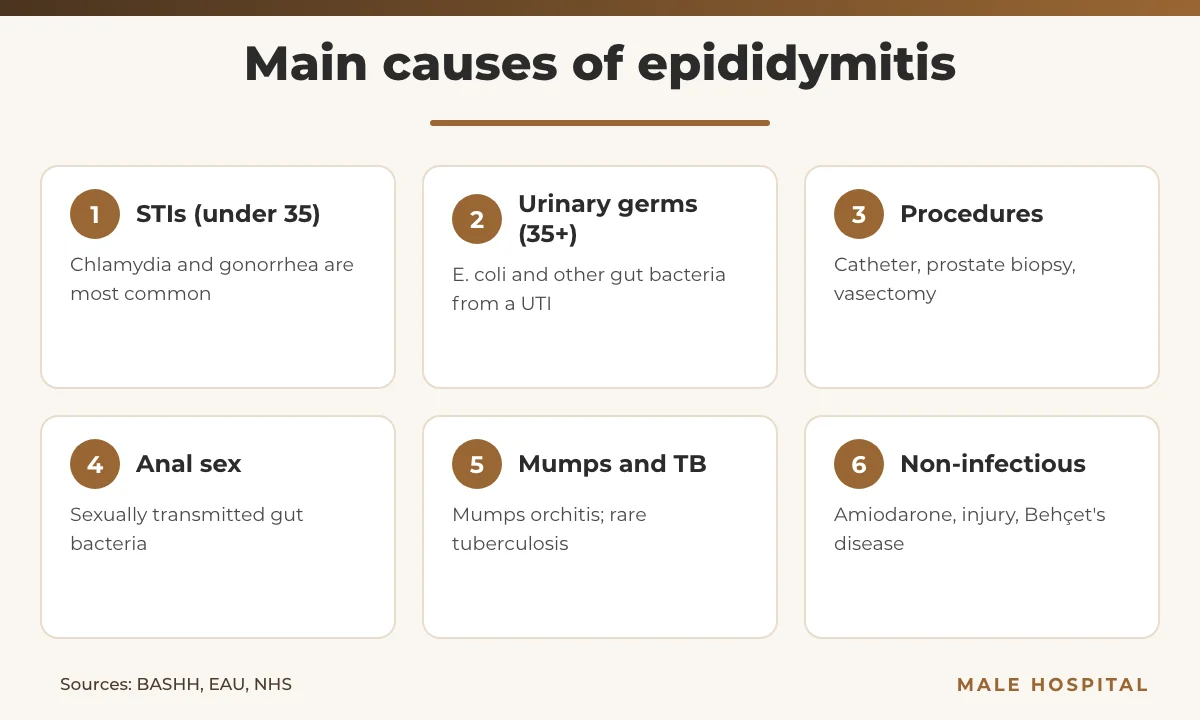
Most cases start when bacteria travel backward from the urethra or the bladder into the epididymis. Which germ is responsible depends strongly on age and sexual history, and this is exactly why doctors ask detailed questions before choosing an antibiotic.
Sexually transmitted infections (mostly under 35)
In younger, sexually active men the most common causes are Chlamydia trachomatis and Neisseria gonorrhoeae. These cases often come with urethritis (inflammation of the urethra) and discharge, although urethral symptoms can be absent. Mycoplasma genitalium has been found in some cases, but its role is not yet proven. Men who have insertive anal sex can also develop epididymitis from sexually transmitted gut bacteria.
Urinary bacteria (mostly over 35)
In older men, gram-negative gut bacteria such as E. coli that cause urinary tract infections are the usual cause. Risk rises with an enlarged prostate, a neurogenic bladder, a urinary catheter, or recent instrumentation such as a prostate biopsy, cystoscopy or vasectomy. The age line is not strict: a negative sexual history does not rule out an STI, and there is real crossover between the two groups.
Less common causes
- Mumps: suspect it when both sides are affected, after a viral illness or swollen salivary glands; testicular swelling may appear 7–10 days after the parotid swelling.
- Tuberculosis: rare, usually slower and sometimes painless, more likely in men from high-prevalence countries, with a past history of TB or a weakened immune system. It has also been reported after BCG bladder treatment.
- Non-infectious causes: the heart medicine amiodarone, groin injury, Behçet’s disease (12–19% of men with Behçet’s develop epididymo-orchitis) and some vasculitis conditions.
A prostate infection can also spread to the epididymis; our article on prostatitis explains that condition in detail.
Sources: BASHH — UK National Guideline for the Management of Epididymo-orchitis 2020; EAU Guidelines — Urological Infections; Cleveland Clinic — Health Library
Epididymitis symptoms
The typical picture is pain on one side of the scrotum that builds over hours to several days, often felt at the back of the testicle where the epididymis lies. The scrotum may become swollen, warm, red and very tender to touch.
- Pain in one (sometimes both) testicles, which can spread to the groin
- A swollen, tender, warm scrotum; a firm, tender lump behind the testicle
- Fluid collecting around the testicle (a reactive hydrocele) that feels like extra swelling
- Discharge from the penis or burning when urinating, especially with an STI cause
- Urinary frequency or urgency, fever and chills, especially with a urinary cause
- Occasionally blood in semen
Blood in the ejaculate has many causes besides infection; our guide to blood in semen covers when it matters.
Sources: NHS — Condition guide; Cleveland Clinic — Health Library; EAU Guidelines — Urological Infections
Epididymitis vs. testicular torsion
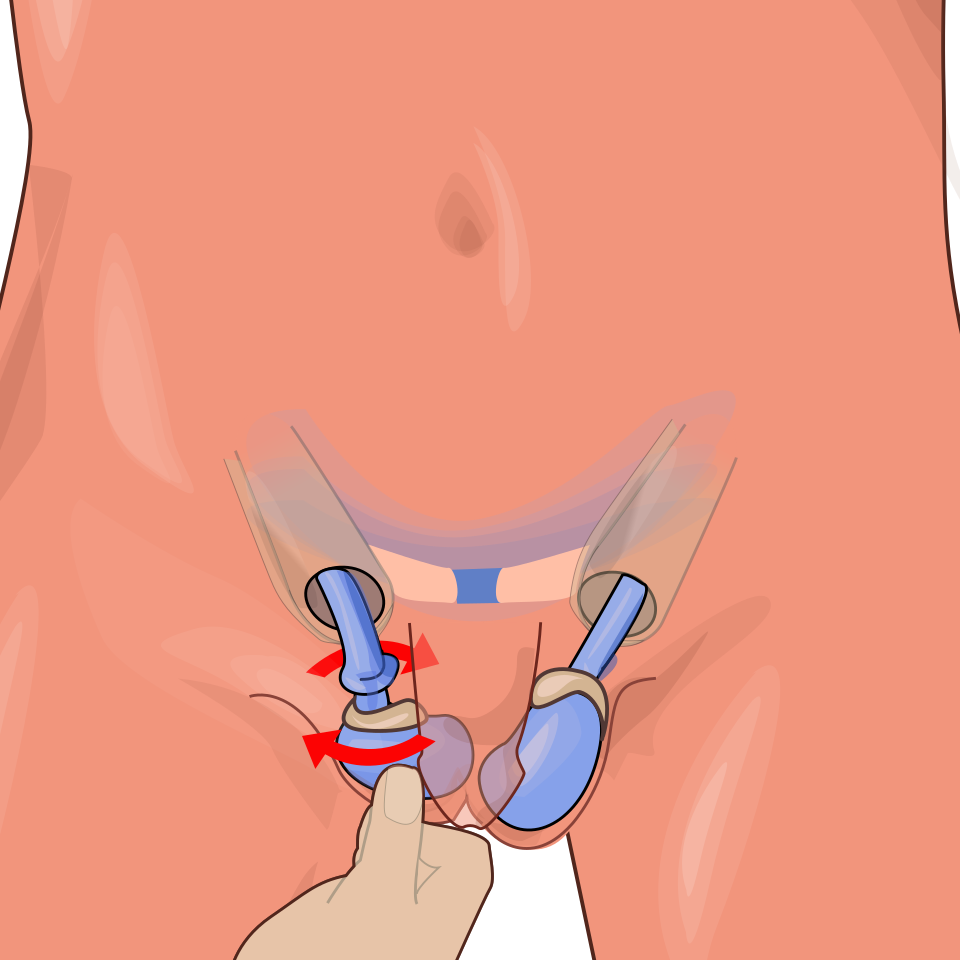
Testicular torsion happens when the testicle rotates and twists its spermatic cord, cutting off its own blood supply. All three major guidelines (CDC, BASHH and EAU) stress that it must be considered first in a painful, swollen testicle, especially in boys and young men. BASHH notes that the testicle generally needs to be saved within about 6 hours, and that the chance of success falls as time passes. Every missed torsion can mean losing the testicle.
Torsion is most common in newborns and around puberty, but it can happen at any age, including in adult men. The pain is typically sudden and severe, may spread to the groin or lower abdomen, and often comes with nausea and vomiting. Some men recall similar episodes in the past that settled on their own, which can be a sign of intermittent torsion.
| Feature | Epididymitis | Testicular torsion |
|---|---|---|
| Onset | Usually gradual, over hours to days | Usually sudden, within hours; often severe |
| Typical age | Any age; most often 14–35 | Newborns and around puberty, but possible at any age |
| Where it hurts most | Behind the testicle (epididymis) | The testicle itself, often more tender than the epididymis |
| Position of the testicle | Normal | Often high-riding and lying horizontally |
| Cremasteric reflex | Usually present | Almost always absent |
| Other symptoms | Fever, burning urine, discharge | Nausea and vomiting; urinary symptoms are rare |
| What happens next | Tests and antibiotics | Emergency urology review and surgical exploration |
No single sign is fully reliable. Relief of pain when the testicle is lifted (Prehn’s sign) is often quoted but is not dependable. Doppler ultrasound helps, but BASHH warns it can miss torsion depending on the operator, and advises that a man with clinically suspected torsion should go straight to surgical exploration rather than wait for a scan. The CDC adds that a normal ultrasound does not rule out epididymitis either. The rule is simple: if there is any doubt, torsion is assumed until proven otherwise.
Sources: BASHH — UK National Guideline for the Management of Epididymo-orchitis 2020; American Family Physician — Trojian et al. 2009; CDC — STI Treatment Guidelines 2021
When to see a doctor: emergency signs
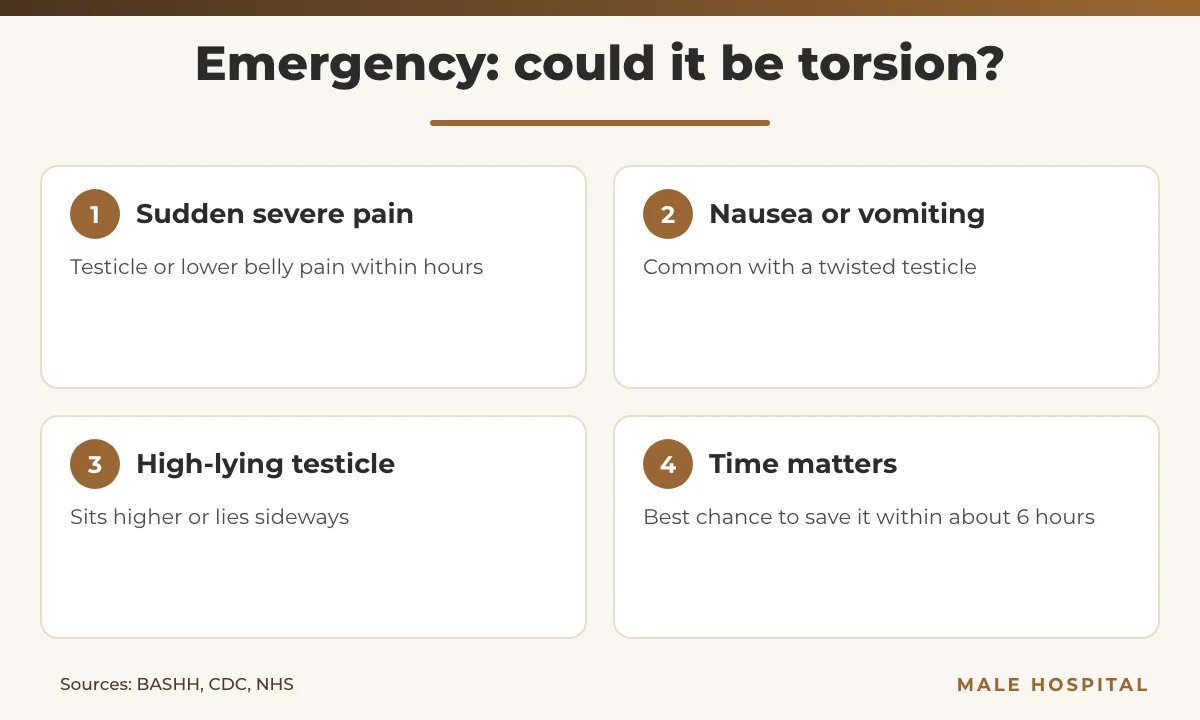
Go to an emergency department or call an ambulance immediately if testicle or lower abdominal pain starts suddenly and is severe, especially with nausea or vomiting, or if one testicle sits higher than usual. Do not drive yourself, and do not wait to see whether it settles. The CDC advises immediate referral to a urologist for sudden, severe one-sided pain or whenever the diagnosis is uncertain.
Seek same-day medical care if you have testicular pain and swelling that has built up over a day or two, particularly with fever, burning urination or discharge from the penis. Epididymitis should be treated promptly to relieve pain and prevent complications.
Hospital admission may be needed for severe pain, high fever, a suspected testicular abscess or signs of illness throughout the body. The CDC notes that older age, diabetes, fever and a raised C-reactive protein (an inflammation marker) can point to more severe disease.
Go back to your doctor if you are not improving within 72 hours of starting antibiotics, or if a lump or swelling remains after treatment. Persistent swelling needs checking for other causes, including an abscess, loss of blood supply to the testicle or a testicular tumor.
Sources: NHS — Condition guide; CDC — STI Treatment Guidelines 2021; EAU Guidelines — Urological Infections
How epididymitis is diagnosed
Diagnosis starts with a careful history (onset, sexual partners, urinary symptoms, recent procedures, medicines) and an examination of the scrotum, groin and urethra. A firm, tender swelling that begins at the lower pole of the testicle and spreads along the epididymis is the classic finding.
Urine and swab tests
- Evidence of inflammation: the CDC recommends at least one point-of-care test, such as a positive leukocyte esterase dipstick on first-void urine, 10 or more white cells per high-power field in spun first-void urine, or a urethral stain showing white cells.
- NAAT for chlamydia and gonorrhea: a nucleic acid amplification test on first-void urine (the preferred specimen in men) or a urethral swab.
- Midstream urine culture: to identify urinary bacteria and their antibiotic sensitivities.
- Other STI tests: the CDC recommends HIV and syphilis testing for all men with acute epididymitis; BASHH advises screening for other STIs and considering a Mycoplasma genitalium test.
Imaging and special tests
Color Doppler ultrasound can show an enlarged epididymis with increased blood flow and can detect complications such as an abscess, a reactive hydrocele or infarction of the testicle. It does not replace surgery when torsion is suspected clinically. Three early-morning urine samples are used when tuberculosis is suspected, and mumps or brucella blood tests when the history points that way.
When urinary bacteria are confirmed, BASHH recommends a urology assessment for structural problems or obstruction of the urinary tract, usually including kidney imaging and a flexible cystoscopy.
Sources: CDC — STI Treatment Guidelines 2021; BASHH — Epididymo-orchitis Guideline 2020; EAU Guidelines — Urological Infections
Epididymitis treatment: what the guidelines recommend
Antibiotics are started on the day of the visit, before the lab results are back, and the choice is based on the most likely cause. Once a germ is identified, the treatment is adjusted. The table below summarizes the published regimens from the US CDC (2021), the British Association for Sexual Health and HIV (BASHH, 2020) and the EAU. It is for information only: the right drug, dose and duration must be prescribed by a doctor who knows your history, allergies and local resistance patterns.
| Likely cause | CDC 2021 | BASHH 2020 | EAU |
|---|---|---|---|
| Chlamydia or gonorrhea likely | Ceftriaxone 500 mg IM once (1 g if ≥150 kg) + doxycycline 100 mg twice daily for 10 days | Ceftriaxone 1 g IM once + doxycycline 100 mg twice daily for 10–14 days | Ceftriaxone 1 g IM or IV once + doxycycline 200 mg first dose, then 100 mg twice daily for 10–14 days |
| Non-gonococcal STI (gonorrhea ruled out) | — | Doxycycline 100 mg twice daily for 10–14 days, or ofloxacin 200 mg twice daily for 14 days | Levofloxacin 500 mg daily, or doxycycline + trimethoprim-sulfamethoxazole, for 10–14 days |
| STI and gut bacteria (insertive anal sex) | Ceftriaxone 500 mg IM once + levofloxacin 500 mg daily for 10 days | Ceftriaxone 1 g IM once + ofloxacin 200 mg twice daily for 10 days | In young, sexually active men, cover both chlamydia and gut bacteria |
| Gut (urinary) bacteria only | Levofloxacin 500 mg daily for 10 days | Ofloxacin 200 mg twice daily for 14 days, or levofloxacin 500 mg daily for 10 days; co-amoxiclav if quinolones unsuitable | A fluoroquinolone (e.g., levofloxacin 500 mg daily) or trimethoprim-sulfamethoxazole for 10–14 days |
Fluoroquinolones such as ofloxacin and levofloxacin carry warnings about tendon, muscle, joint and nerve side effects. BASHH considers epididymitis a strong enough reason to use them but advises discussing the risks, stopping at the first sign of such side effects, and using caution in older adults and people taking corticosteroids. The EAU stresses that fluoroquinolones should not be used to treat gonorrhea.
Comfort measures
Rest, painkillers such as ibuprofen or paracetamol (acetaminophen), cold packs wrapped in a cloth, and supportive underwear or scrotal elevation all help. Corticosteroids have not been shown to help. Men with severe infection or signs of sepsis are treated in hospital with intravenous antibiotics and fluids, and an abscess may need surgical drainage.
Sources: CDC — STI Treatment Guidelines 2021; BASHH — Epididymo-orchitis Guideline 2020; EAU Guidelines — Urological Infections; NHS — Condition guide
Recovery, complications and fertility
Most men feel better within a few days of starting antibiotics, and it is important to finish the whole course. Swelling and tenderness fade more slowly: BASHH reports that swelling has fully resolved in more than 80% of men by 3 months. Guidelines suggest reviewing culture results at 48–72 hours, reassessing the diagnosis if there is no improvement after 3 days, and a follow-up at about 2 weeks. Men who had gonorrhea need a test of cure.
Possible complications
- Reactive hydrocele: fluid around the testicle; see our article on hydrocele.
- Abscess or infarction: pus collection or loss of blood supply to the testicle, which is rare and more common with urinary-bacteria infections.
- Chronic pain: discomfort that can come and go for weeks or months after the infection.
- Sepsis: spread of infection into the bloodstream in severe cases.
Does epididymitis affect fertility?
The link between epididymitis and fertility is not well understood, and infertility is considered a rare outcome. The EAU notes that semen quality may drop during an episode but recovers after treatment. Mumps orchitis is different: it can shrink the testicle in 30–50% of affected men, and fertility can be reduced when both sides are involved. If you are trying for a baby and have had epididymitis, our guide to male infertility explains the tests worth considering.
Sources: BASHH — Epididymo-orchitis Guideline 2020; EAU Guidelines — Urological Infections; Cleveland Clinic — Health Library; American Family Physician — Trojian et al. 2009
Sex, partners and preventing epididymitis
If an STI is confirmed or suspected, avoid sex until you and your partner have both finished treatment and follow-up; the NHS advises waiting until 7 days after treatment ends for chlamydia or gonorrhea. Partners need testing and treatment even if they feel well. The CDC asks men to refer all partners from the 60 days before symptoms began (or the most recent partner if longer ago), while BASHH suggests a look-back based on its chlamydia and gonorrhea guidance. Follow your clinic’s advice on partner notification.
Practical prevention includes using condoms, getting urinary or urethral symptoms treated early, and staying up to date with vaccines, including mumps vaccination.
Sources: CDC — STI Treatment Guidelines 2021; NHS — Condition guide; EAU Guidelines — Urological Infections; Cleveland Clinic — Health Library
If you have ongoing scrotal pain, recurring episodes or worries about fertility after an infection, you can arrange a confidential consultation with our urologist-andrologist Assoc. Prof. Dr. Zülfü Sertkaya via WhatsApp. Sudden, severe testicle pain, however, should always go straight to the nearest emergency department.
FAQs about epididymitis
Is epididymitis always an STI?
No. In men under 35 it is most often caused by chlamydia or gonorrhea, but in older men urinary bacteria such as E. coli are the usual cause, often linked to prostate enlargement, catheters or recent procedures. Mumps, tuberculosis, injury and the drug amiodarone are less common causes. Because the groups overlap, doctors usually test for STIs regardless of age.
Source: NHS — Condition guide
How long does epididymitis last with treatment?
Pain usually starts to ease within a few days of antibiotics, and treatment courses typically last 10 to 14 days. Swelling takes longer: BASHH reports that it has fully gone in more than 80% of men by three months. If symptoms are not improving after three days, the diagnosis and antibiotics should be reviewed.
Source: BASHH — Epididymo-orchitis Guideline 2020
How can I tell epididymitis from testicular torsion at home?
You cannot do it safely at home. Torsion tends to start suddenly with severe pain, nausea and a high-riding testicle, while epididymitis usually builds over days with fever or urinary symptoms, but these patterns overlap. Any sudden, severe testicle pain needs emergency assessment, because a twisted testicle may be lost within hours.
Source: American Family Physician — Trojian et al. 2009
Should my partner be treated too?
Yes, if your epididymitis is confirmed or suspected to be caused by chlamydia or gonorrhea. The CDC recommends that partners from the 60 days before your symptoms started are evaluated, tested and treated, and BASHH advises avoiding sex until both of you have completed treatment and follow-up, to prevent passing the infection back and forth.
Sources: CDC — STI Treatment Guidelines 2021; BASHH — Epididymo-orchitis Guideline 2020
Can epididymitis cause infertility?
It is uncommon. Semen quality may be reduced during an episode, but the EAU notes that it recovers after treatment. The risk is higher with mumps orchitis affecting both testicles, or after complications such as an abscess. Men with fertility concerns after epididymitis can have a semen analysis to check sperm count and quality.
Source: EAU Guidelines — Urological Infections
What is chronic epididymitis?
Chronic epididymitis means pain in the scrotum or testicle, usually without much swelling, that lasts more than three months. Symptoms often come and go and tend to be milder than in acute infection. Lasting pain or swelling needs a specialist assessment, because the CDC lists other causes to exclude, including an abscess, testicular infarction, a tumor, tuberculosis and fungal infection.
Sources: American Family Physician — Trojian et al. 2009; CDC — STI Treatment Guidelines 2021; Cleveland Clinic — Health Library
Who is most likely to get epididymitis?
It can happen at any age but is most common between 14 and 35, mainly in sexually active men. In an emergency department study of 256 men diagnosed with epididymitis or orchitis, the median age was 35. Older men with prostate enlargement, catheters or recent urinary procedures are another higher-risk group.
Sources: Cleveland Clinic — Health Library; Cureus (PMC) — Bonner et al. 2021
Medically reviewed by Assoc. Prof. Dr. Zülfü Sertkaya, urologist and andrologist (FEBU), Istanbul. Last reviewed: November 2026.
This article is for general information and does not replace an individual consultation with a qualified doctor.
- CDC — Epididymitis — STI Treatment Guidelines, 2021
- BASHH — UK National Guideline for the Management of Epididymo-orchitis, 2020 (Chirwa et al., Int J STD AIDS 2021)
- EAU Guidelines — Urological Infections — Acute Infective Epididymitis
- NHS — Epididymitis
- Cleveland Clinic — Epididymitis: Causes, Symptoms, Diagnosis & Treatment
- American Family Physician (AAFP) — Trojian et al. 2009 — Epididymitis and Orchitis: An Overview
- Cureus (PMC) — Bonner et al. 2021 — A Descriptive Analysis of Men Diagnosed With Epididymitis, Orchitis, or Both in the Emergency Department