How to last longer in bed comes down to a few methods with real evidence: learning arousal control with the stop-start or squeeze technique, training the pelvic floor muscles, reducing penile sensitivity with a condom or a lidocaine-prilocaine spray, easing performance anxiety, and treating erectile dysfunction if it is present. Most men already last longer than they think; stopwatch studies put the typical time from penetration to ejaculation at around five to six minutes. If you regularly finish within about a minute and it causes distress, that may be premature ejaculation, which a doctor can treat.
Sources: EAU — Guidelines on Sexual and Reproductive Health: Disorders of Ejaculation; PubMed — A multinational population survey of intravaginal ejaculation latency time (Waldinger et al., 2005)
- In large stopwatch studies of ordinary couples, the median time from penetration to ejaculation was 5.4 to 6.0 minutes, with a very wide normal range.
- Stop-start and squeeze techniques teach you to recognize and lower arousal; they need weeks of practice and work best combined with education, mindfulness or medicine.
- Supervised pelvic floor training helped most men with lifelong premature ejaculation gain control in small, uncontrolled studies.
- A lidocaine-prilocaine spray applied 5 minutes before sex is a first-line, guideline-backed option for lifelong premature ejaculation.
- “Last longer” supplements can contain hidden prescription drugs; the FDA has found sildenafil, tadalafil and unapproved dapoxetine in such products.
- How long should sex last? What the stopwatch studies show
- Stop-start and squeeze: how to last longer in bed with practice
- Pelvic floor training for ejaculation control
- Condoms and numbing sprays to last longer in bed
- Performance anxiety and talking with your partner
- Treat erectile dysfunction first if you have it
- Which ways to last longer in bed work best?
- Myths and risky “last longer” supplements
- When it is premature ejaculation: when to see a doctor
- FAQs about lasting longer in bed
How long should sex last? What the stopwatch studies show
Before learning how to last longer in bed, it helps to know what “normal” looks like. Researchers measure the intravaginal ejaculation latency time (IELT): the time from penetration to ejaculation, ideally timed with a stopwatch or a blinded timer at home.
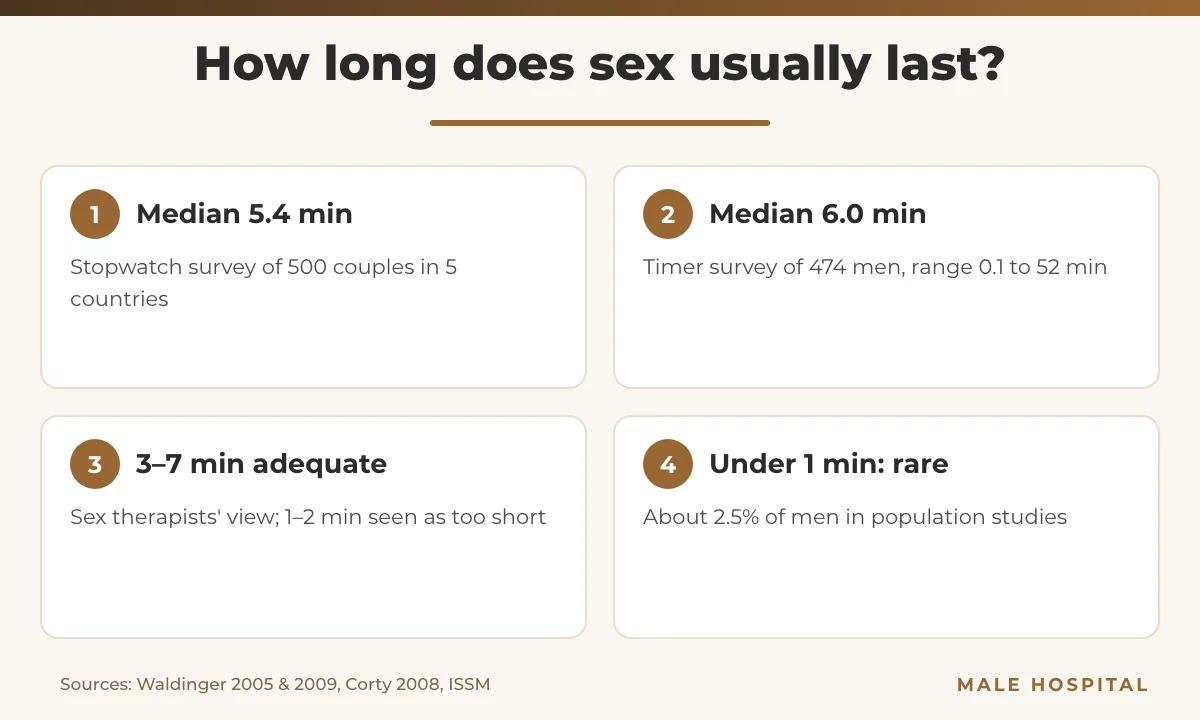
In a 2005 survey of 500 couples from the Netherlands, the United Kingdom, Spain, Turkey and the United States, the median IELT was 5.4 minutes, with a huge range from 0.55 to 44.1 minutes. The median fell with age, from 6.5 minutes in men aged 18–30 to 4.3 minutes in men over 51. Condom use did not change the median, and circumcision made no significant difference outside Turkey.
A follow-up survey of 474 men from the same five countries used a timer device so couples did not have to watch a clock. The median IELT was 6.0 minutes (range 0.1 to 52.1 minutes). Tellingly, men who said they were unhappy with how long they lasted had a median of 5.2 minutes, barely below the population average. In other words, many men who worry about lasting too short a time are completely normal.
Expert opinion lines up with these numbers. When sex therapists in the US and Canada were asked how long intercourse should last, the middle half of answers rated 3 to 7 minutes as “adequate,” 7 to 13 minutes as “desirable,” 1 to 2 minutes as “too short” and 10 to 30 minutes as “too long.” The authors concluded that intercourse lasting 3 to 13 minutes is not a reason for clinical concern.
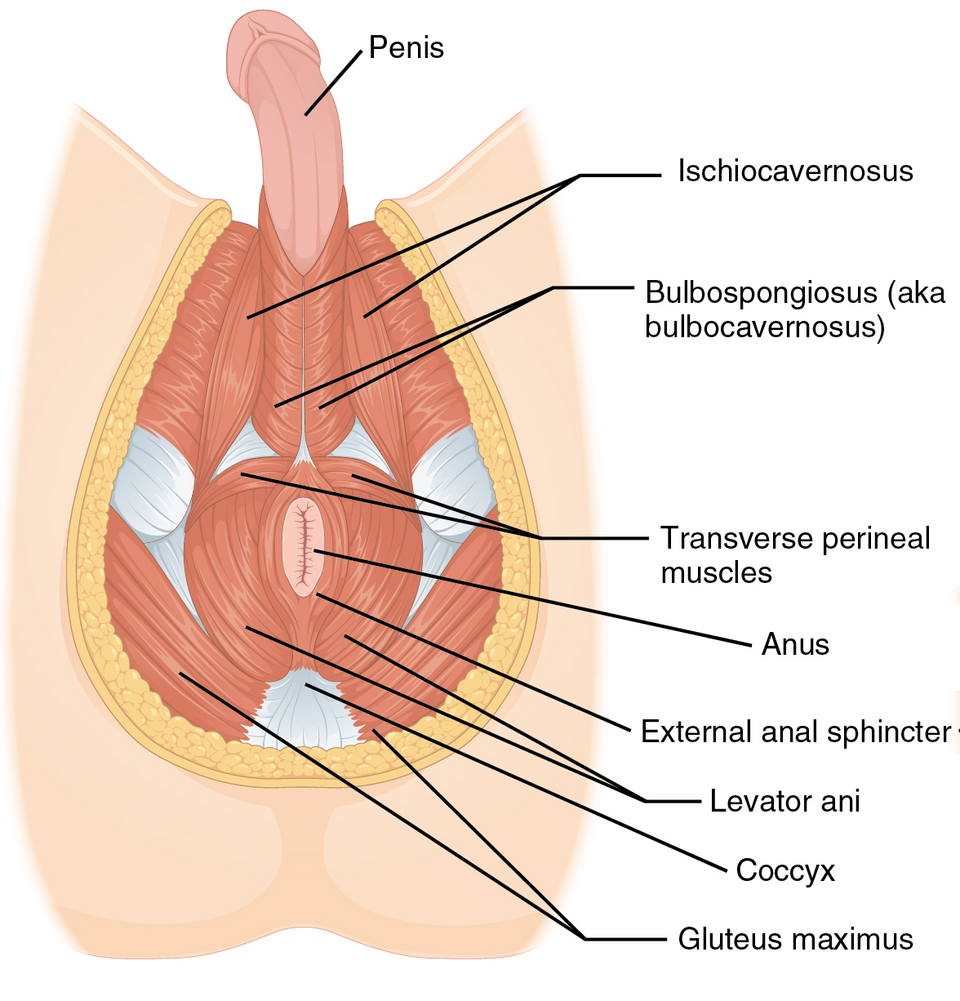
Ejaculation is a reflex. As arousal builds, the muscles at the base of the penis, especially the bulbospongiosus and ischiocavernosus, become more active and then contract rhythmically to push semen out. Most of the methods below work by helping you notice arousal earlier, relax these muscles on purpose, or lower the amount of sensation reaching the reflex.
Source: PMC — Pelvic floor muscle rehabilitation for lifelong premature ejaculation (Pastore et al., 2014)
Stop-start and squeeze: how to last longer in bed with practice
The stop-start and squeeze techniques are the most widely used behavioral treatments for rapid ejaculation. Both teach the same skill: recognizing the moderate level of arousal that comes before the “point of no return,” and bringing it down before you reach it.
The stop-start technique
You, or your partner, stimulate the penis until you feel close to orgasm, then stop completely for about 30 seconds until the urge fades and you feel back in control. Then you start again. Repeat this three or four times before allowing yourself to ejaculate.
The squeeze technique
The squeeze technique follows the same pattern, but instead of simply pausing, you or your partner gently squeeze the penis for about 30 seconds when you are close, until the urge passes and the erection softens slightly. Stimulation then resumes, and the cycle is repeated before orgasm.
Sources: Cleveland Clinic — Premature Ejaculation: Causes, Diagnosis & Treatment; NHS — Ejaculation problems
How to practice step by step
Specialists usually suggest a graduated approach: practice first during solo masturbation, then with your partner’s hand, and finally during intercourse with stop-start thrusting. The NHS notes that these techniques need a lot of practice, so expect weeks rather than days. Treat it as training, not a test.
What the evidence says
Older uncontrolled studies reported success rates of 60% to 90%, and in one self-help program the gains were maintained at a three-month follow-up. However, the International Society for Sexual Medicine (ISSM) notes that controlled evidence is limited, and a Cochrane review judged the evidence for psychological and behavioral therapy as “weak and inconsistent,” partly because the trials were small. The famous 97.8% success rate once reported by Masters and Johnson has never been replicated.
The picture is better when techniques are combined. In one randomized trial in the Cochrane review, behavioral therapy lengthened intercourse by about 408 seconds compared with a waiting list and improved couples’ sexual satisfaction. The European Association of Urology (EAU) states that start-stop exercises combined with education and mindfulness improve symptoms, and that combining behavioral and drug treatment gives better results than medicine alone.
Sources: PMC — ISSM Guidelines Update on PE Diagnosis and Treatment (Althof et al., 2014); PubMed — Psychosocial interventions for premature ejaculation (Cochrane review, Melnik et al., 2011); EAU — Guidelines on Sexual and Reproductive Health: Disorders of Ejaculation
Pelvic floor training for ejaculation control
Pelvic floor training aims to give you conscious control over the muscles that drive the ejaculation reflex. The idea is that men can learn to relax the bulbospongiosus and ischiocavernosus muscles on purpose during high arousal, which may delay the expulsion phase.
In a 2014 Italian study, 40 men with lifelong premature ejaculation who ejaculated within a minute completed a 12-week program. By the end, 33 of them (82.5%) had gained control of the ejaculatory reflex, with mean IELT rising from 39.8 seconds to about 146 seconds. Of the 13 men checked again at six months, the benefit was largely maintained.
Source: PMC — Pelvic floor muscle rehabilitation for lifelong premature ejaculation (Pastore et al., 2014)
A larger follow-up from the same group reviewed 154 men; 122 completed the program and 111 of them gained control, with average IELT around 162 seconds at 12 weeks. At 24 and 36 months after training, 64% and 56% of the men who were followed still had satisfactory control.
What this means for home Kegels
These results need context. The programs were supervised (three sessions a week for 12 weeks, with electrical stimulation and biofeedback), had no control group, and the authors note that no protocol has been standardized. Simple home pelvic floor exercises are low-risk and may help you feel these muscles, but they have not been tested to the same degree.
Sources: PMC — Pelvic floor muscle rehabilitation for lifelong premature ejaculation (Pastore et al., 2014); PMC — Pelvic floor rehabilitation in lifelong premature ejaculation: long-term outcomes (Pastore et al., 2018)
Condoms and numbing sprays to last longer in bed
Condoms, including thicker ones
The NHS and Cleveland Clinic both suggest that wearing a condom, particularly a thicker one, can reduce penile sensitivity and help some men delay ejaculation. Be realistic, though: in the population stopwatch studies, the median ejaculation time was the same with or without a condom. A condom may help you individually, but it is not a strong treatment on its own.
Sources: NHS — Ejaculation problems; PubMed — A five-nation survey of the IELT distribution in the general male population (Waldinger et al., 2009)
Desensitizing (“climax control”) condoms and creams
Some condoms and over-the-counter gels contain a local anesthetic designed to dull sensation. The ISSM considers topical anesthetics moderately effective at delaying ejaculation but warns that some products can numb the penis too much and transfer to the partner. If you use an anesthetic cream, the EAU advises either wearing a condom over it or washing the penis before intercourse. Couples trying to conceive should not use lidocaine-prilocaine products.
Sources: PMC — ISSM Guidelines Update on PE Diagnosis and Treatment (Althof et al., 2014); EAU — Guidelines on Sexual and Reproductive Health: Disorders of Ejaculation
Lidocaine-prilocaine spray
The best-studied product is a metered-dose spray combining lidocaine and prilocaine, authorized in the European Union for lifelong premature ejaculation. The recommended dose is three sprays onto the head of the penis about five minutes before intercourse, no more than three doses in 24 hours and at least four hours apart. The EAU lists it, alongside dapoxetine, as a first-line treatment for lifelong premature ejaculation (strong recommendation).
In two 12-week trials of 256 and 300 men, average time to ejaculation was 2.6 minutes with the spray versus 0.8 minutes with placebo, and 3.8 versus 1.1 minutes. Longer-term studies reported up to a 6.3-fold increase in IELT over three months. Side effects include genital numbness (about 4.5% of men and 1% of partners), erection problems (4.4%) and vaginal burning in partners (3.9%). Do not use it if you or your partner are allergic to amide-type local anesthetics.
Sources: EMA — Fortacin (lidocaine/prilocaine) EPAR summary; EAU — Guidelines on Sexual and Reproductive Health: Disorders of Ejaculation
Performance anxiety and talking with your partner
Anxiety and rapid ejaculation feed each other. Worrying about finishing too fast raises arousal and tension, which makes it more likely to happen, which then increases the worry next time. Psychological factors are present in most men with premature ejaculation, either as a cause or as a result.
Several practical steps can break this loop:
- Shift the focus. Rather than trying to distract yourself, pay attention to body sensations so you can notice arousal rising early. Mindfulness combined with stop-start exercises is the approach the EAU describes as helpful.
- Change the timing. The NHS suggests masturbating an hour or two before sex, which some men find lowers urgency.
- Change position. With your partner on top, they can slow down or pull away when you signal that you are close.
- Get specialist support. Psychosexual counseling or sex therapy can address anxiety, relationship issues and learned habits. In one trial in the Cochrane review, adding behavioral therapy to medicine also lowered anxiety scores.
Sources: NHS — Ejaculation problems; EAU — Guidelines on Sexual and Reproductive Health: Disorders of Ejaculation; PubMed — Psychosocial interventions for premature ejaculation (Cochrane review, Melnik et al., 2011)
Why your partner matters
These techniques are easier with a partner who knows what you are working on. The ISSM describes partner involvement as important, though not essential. A calm conversation outside the bedroom often helps more than any product: explain that you want to make sex better for both of you, agree on a signal for “pause,” and remember that intimacy is more than intercourse.
Source: PMC — ISSM Guidelines Update on PE Diagnosis and Treatment (Althof et al., 2014)
Treat erectile dysfunction first if you have it
Some men who “finish too fast” actually have an erection problem. If an erection is hard to get or keep, a man may rush to ejaculate before he loses it, and over time this becomes a habit. The ISSM notes that coexisting ED is linked to more severe premature ejaculation symptoms.
For this reason the EAU gives a strong recommendation to treat erectile dysfunction, other sexual problems or a genitourinary infection such as prostatitis first, before targeting ejaculation itself. Once erections are reliable, the pressure to hurry often eases. Our erectile dysfunction treatment page outlines the options, and the article on physical and psychological causes of ED explains why anxiety often plays a part.
The role of PDE5 inhibitors such as sildenafil and tadalafil in men with normal erections is less settled. The EAU guidelines recommend them for premature ejaculation without ED, alone or with other therapies, while the 2014 ISSM guideline did not recommend them for lifelong premature ejaculation in men with normal erectile function. This is one reason it is worth getting individual advice rather than self-medicating.
Sources: EAU — Guidelines on Sexual and Reproductive Health: Disorders of Ejaculation; PMC — ISSM Guidelines Update on PE Diagnosis and Treatment (Althof et al., 2014)
Which ways to last longer in bed work best?
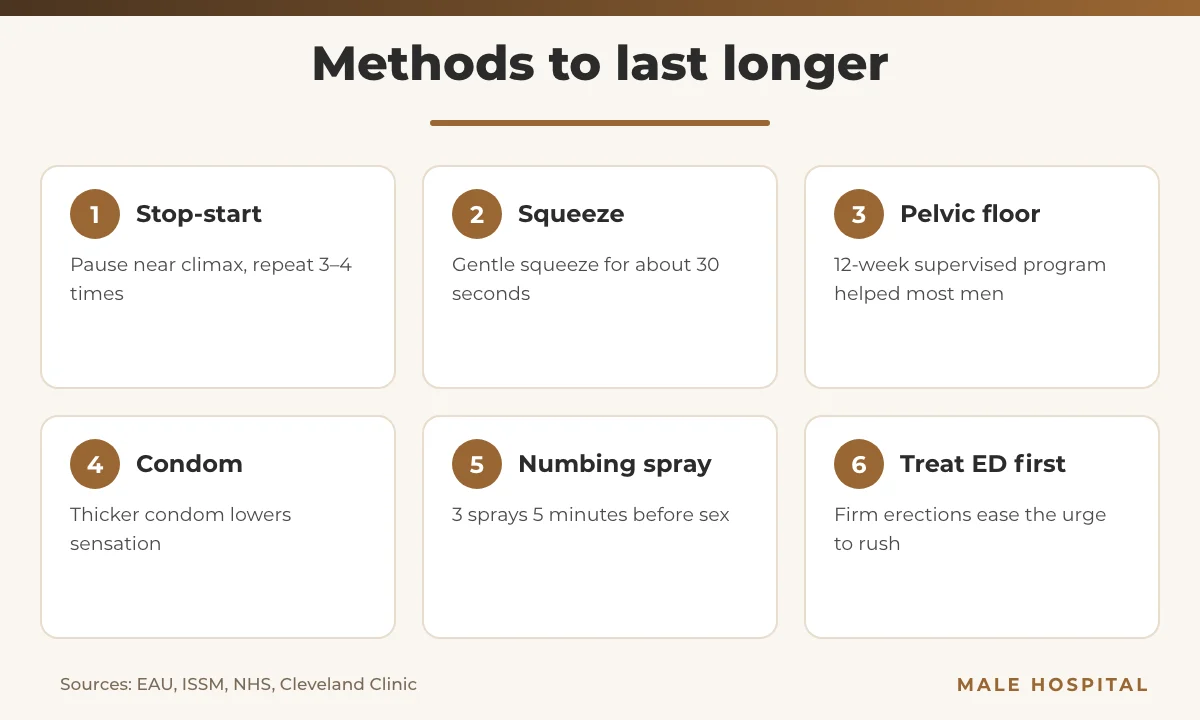
The table below summarizes the main options, how they are used and how strong the evidence is. Prescription medicines are included for completeness; they are covered in more depth on our premature ejaculation treatment page.
| Method | How it is used | Evidence and key points |
|---|---|---|
| Stop-start / squeeze | Pause or squeeze near the point of no return, repeat 3–4 times | Limited controlled evidence alone; better with education, mindfulness or medicine |
| Pelvic floor training | Supervised 12-week program with biofeedback | Most men gained control in small uncontrolled studies; no standard protocol |
| Condom | Thicker condom to reduce sensation | Simple and safe; no difference in median IELT in population studies |
| Lidocaine-prilocaine spray | 3 sprays on the glans 5 minutes before sex | EAU first-line for lifelong PE; possible numbness in man or partner |
| Dapoxetine | On-demand tablet 1–3 hours before sex (prescription) | EAU first-line; not approved in the USA; nausea, dizziness, high dropout |
| Daily SSRIs, clomipramine | Off-label prescription medicines | EAU second-line; need a doctor’s supervision |
| Counseling / sex therapy | Individual or couple sessions | Recommended with medicine for acquired PE; helps anxiety and relationship issues |
Sources: EAU — Guidelines on Sexual and Reproductive Health: Disorders of Ejaculation; NHS — Ejaculation problems
Dapoxetine raised IELT about 2.5- to 3-fold in trials, but up to about 90% of men had stopped it by two years. Tramadol is a third-line option that must never be combined with an SSRI because of the risk of serotonin syndrome. None of these medicines should be started without a medical assessment.
Sources: EAU — Guidelines on Sexual and Reproductive Health: Disorders of Ejaculation; PMC — ISSM Guidelines Update on PE Diagnosis and Treatment (Althof et al., 2014)
Myths and risky “last longer” supplements
Myth: “Real men last 20 minutes or more”
Films and online forums set expectations that have little to do with reality. As the stopwatch data above show, a few minutes is typical. Chasing a much longer target can create the very anxiety that makes you finish faster.
Sources: PubMed — A multinational population survey of intravaginal ejaculation latency time (Waldinger et al., 2005); PubMed — Sex therapists’ perceptions of normal and abnormal ejaculatory latencies (Corty & Guardiani, 2008)
Myth: “Natural supplements are a safe way to last longer”
No herbal pill or “male enhancement” supplement is recommended by the EAU or ISSM for premature ejaculation. Worse, the US Food and Drug Administration (FDA) warns that many products sold for sexual enhancement, online and in stores, contain dangerous hidden ingredients, even when labeled “all natural” or sold as dietary supplements. The FDA says they may not work and can cause serious harm and hospitalization.
In one example from December 2019, FDA laboratory testing of a sexual enhancement product found undeclared sildenafil, tadalafil and dapoxetine. The FDA noted that dapoxetine is not approved in the United States, and that hidden sildenafil or tadalafil can interact with nitrate medicines such as nitroglycerin and drop blood pressure to dangerous levels. Men with heart disease, diabetes, high blood pressure or high cholesterol are at particular risk.
Sources: FDA — Sexual enhancement and energy product notifications; FDA — Public notification: SUPER Platinum 30000 STALLION contains hidden drug ingredients
When it is premature ejaculation: when to see a doctor
Finishing quickly now and then, especially with a new partner or after a long break, is common and not a disorder. Specialists diagnose premature ejaculation only when three things occur together: ejaculation within about one minute of penetration from your first experiences (lifelong) or a clear drop to about three minutes or less (acquired); inability to delay it on nearly every occasion; and real distress or avoidance of intimacy. In population data, only about 2.5% of men had an IELT under one minute, and lifelong premature ejaculation is estimated to affect no more than about 4% of men.
Source: PMC — ISSM Guidelines Update on PE Diagnosis and Treatment (Althof et al., 2014)
Book an appointment with a urologist or andrologist if any of the following apply:
- You regularly ejaculate within about a minute and self-help has not helped after several weeks.
- The problem started suddenly after years of normal control (acquired), which can point to erectile dysfunction, prostatitis or another treatable cause.
- You also have trouble getting or keeping erections.
- It is causing anxiety, low mood, avoidance of sex or strain in your relationship.
- You are considering prescription medicines, or you have taken a “last longer” product and felt unwell.
Sources: Cleveland Clinic — Premature Ejaculation: Causes, Diagnosis & Treatment; EAU — Guidelines on Sexual and Reproductive Health: Disorders of Ejaculation
Our full guide to premature ejaculation explains the four types, their causes and how the diagnosis is made. If you would like personal advice, you can arrange a confidential consultation with our urologist-andrologist via WhatsApp.
FAQs about lasting longer in bed
What is the fastest way to last longer in bed tonight?
Quick options include wearing a thicker condom, masturbating an hour or two before sex, choosing a position where your partner is on top so they can slow down, and pausing when you feel close. Where available, a lidocaine-prilocaine spray used five minutes before sex is the best-studied fast-acting option. Behavioral techniques take longer to learn but build lasting control.
Sources: NHS — Ejaculation problems; EMA — Fortacin (lidocaine/prilocaine) EPAR summary
Do Kegel exercises help you last longer?
They may. In small Italian studies, about four in five men with lifelong premature ejaculation gained control after a 12-week supervised pelvic floor program that combined exercises, electrical stimulation and biofeedback. These studies had no control group, and plain home Kegels have not been tested as rigorously, so think of them as a low-risk add-on rather than a proven cure.
How long does it take for the stop-start technique to work?
Expect several weeks of regular practice. The NHS stresses that stop-start and squeeze methods need a lot of practice, and specialist programs move gradually from solo practice to partner stimulation and then intercourse. Results are usually better when the techniques are combined with education, mindfulness, counseling or, if needed, medicine.
Sources: NHS — Ejaculation problems; PMC — ISSM Guidelines Update on PE Diagnosis and Treatment (Althof et al., 2014)
Do numbing sprays affect my partner?
They can. In studies of the lidocaine-prilocaine spray, about 1% of partners reported genital numbness and about 3.9% reported vaginal burning. The spray is applied only to the head of the penis a few minutes before sex. With anesthetic creams, wearing a condom or washing the penis before intercourse reduces transfer. Avoid these products when trying to conceive.
Source: EAU — Guidelines on Sexual and Reproductive Health: Disorders of Ejaculation
Can Viagra or Cialis help you last longer?
If you also have erectile dysfunction, yes: the EAU advises treating ED first, and reliable erections often reduce the urge to rush. For men with normal erections, guidelines disagree; the EAU supports PDE5 inhibitors for premature ejaculation, while the 2014 ISSM guideline did not. See our comparison of Viagra vs Cialis and ask a doctor before using either.
Sources: EAU — Guidelines on Sexual and Reproductive Health: Disorders of Ejaculation; PMC — ISSM Guidelines Update on PE Diagnosis and Treatment (Althof et al., 2014)
Are online pills for how to last longer in bed safe?
Be very cautious. The FDA has repeatedly found hidden prescription drugs in sexual enhancement products, including sildenafil, tadalafil and dapoxetine, which is not approved in the US. Hidden PDE5 inhibitors can cause a dangerous fall in blood pressure if you take nitrates. Prescription treatment after a medical assessment is far safer than unregulated pills.
Source: FDA — Public notification: SUPER Platinum 30000 STALLION contains hidden drug ingredients
Medically reviewed by Assoc. Prof. Dr. Zülfü Sertkaya, urologist and andrologist (FEBU), Istanbul. Last reviewed: October 2026.
This article is for general information and does not replace an individual consultation with a qualified doctor.
- EAU — Guidelines on Sexual and Reproductive Health: Disorders of Ejaculation
- Sexual Medicine (PMC) — An Update of the ISSM Guidelines for the Diagnosis and Treatment of Premature Ejaculation (Althof et al., 2014)
- J Sex Med (PubMed) — A multinational population survey of intravaginal ejaculation latency time (Waldinger et al., 2005)
- J Sex Med (PubMed) — A five-nation survey to assess the distribution of the IELT among the general male population (Waldinger et al., 2009)
- J Sex Med (PubMed) — Canadian and American sex therapists' perceptions of normal and abnormal ejaculatory latencies (Corty & Guardiani, 2008)
- Cochrane (PubMed) — Psychosocial interventions for premature ejaculation (Melnik et al., 2011)
- Ther Adv Urol (PMC) — Pelvic floor muscle rehabilitation for patients with lifelong premature ejaculation (Pastore et al., 2014)
- Asian J Androl (PMC) — Pelvic muscle floor rehabilitation in lifelong premature ejaculation: long-term outcomes (Pastore et al., 2018)
- NHS — Ejaculation problems
- Cleveland Clinic — Premature Ejaculation: Causes, Diagnosis & Treatment
- EMA — Fortacin (lidocaine/prilocaine) EPAR summary
- FDA — Sexual enhancement and energy product notifications
- FDA — Public notification: SUPER Platinum 30000 STALLION contains hidden drug ingredients