Shockwave therapy for erectile dysfunction (low-intensity extracorporeal shockwave therapy, Li-ESWT) sends low-energy acoustic pulses into the penis to try to improve its blood supply, usually over 4 to 12 short sessions. Sham-controlled trials show a modest average benefit, mainly in men with mild vasculogenic (blood-flow) ED, but the evidence is low-certainty and the effect can fade over time. The European Association of Urology gives it a weak recommendation for selected men, while the American Urological Association still calls it investigational.
Source: EAU Guidelines — Management of erectile dysfunction; AUA — Erectile Dysfunction: AUA Guideline (2018)
- Li-ESWT aims to restore penile blood flow rather than simply trigger an erection, which is why it is called a “restorative” therapy.
- A 2025 Cochrane review of 21 randomized trials found a small short-term gain in erectile function scores versus sham, with low-certainty evidence.
- The best candidates are men with mild, blood-flow-related ED; nerve-related or purely psychological ED usually does not respond.
- Benefits are not permanent: studies suggest improvement peaks within about a year and often declines over two to three years.
- It is not FDA-approved for ED, protocols are not standardized, and many commercial clinics use devices and marketing that the evidence does not support.
- What is shockwave therapy for erectile dysfunction?
- How Li-ESWT is thought to work
- What a treatment course looks like
- Does shockwave therapy for erectile dysfunction work? The evidence
- What EAU and AUA guidelines say
- Who may benefit, and who probably will not
- How long results last and side effects
- Cost and red flags at commercial shockwave clinics
- Proven alternatives to shockwave therapy
- When to see a doctor
- FAQs about shockwave therapy for erectile dysfunction
What is shockwave therapy for erectile dysfunction?
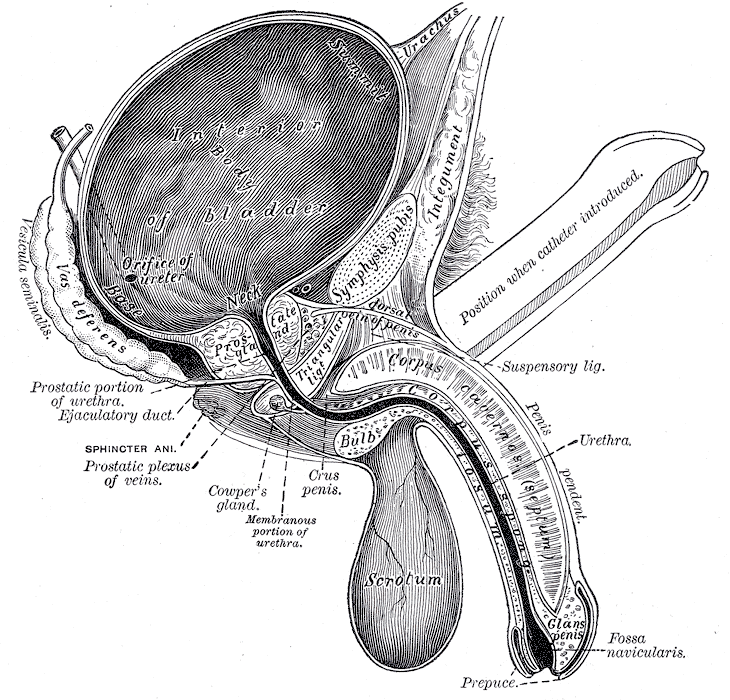
Shockwave therapy for erectile dysfunction uses a handheld applicator, similar to an ultrasound probe, to deliver short acoustic pulses to the shaft of the penis and to the crura, the deep roots of the erectile bodies near the perineum. Urologists have used shockwaves since the 1980s to break kidney stones (lithotripsy); the low-intensity version for ED applies the same physics at a low energy level. Each session takes about 15 minutes and needs no anesthesia.
Unlike tablets such as sildenafil or tadalafil, which help an erection only while the drug is active, Li-ESWT is meant to improve the underlying blood supply. That is why researchers group it with “restorative” or “regenerative” therapies, alongside platelet-rich plasma and stem cells. Of these three, shockwave therapy has by far the most research behind it, but “most” does not yet mean “proven”.
Source: Cleveland Clinic — Can Shockwave Therapy Treat Erectile Dysfunction?; SMSNA — Restorative Therapies for Erectile Dysfunction: Position Statement (2021)
Because most ED has a vascular component, it helps to understand the underlying problem first. Our guides to erectile dysfunction and to the physical and psychological causes of ED explain how artery disease, diabetes, nerves and hormones each play a role.
How Li-ESWT is thought to work
An erection depends on healthy endothelium, the inner lining of the penile arteries and the spongy erectile tissue, which releases nitric oxide to relax smooth muscle and let blood flow in. In vasculogenic ED this lining and its small vessels are damaged by factors such as ageing, smoking, high blood pressure and diabetes.
Shockwave devices generate a pulse with a sharp pressure peak followed by a brief negative-pressure phase. The mechanical stress and tiny cavitation bubbles this creates transfer force to the tissue. The exact mechanism in humans is not known. The leading theory, based mostly on animal and laboratory studies, is that this controlled micro-stress triggers:
- Neo-angiogenesis – growth of new small blood vessels;
- Better microcirculation and vasodilation, with increased nitric oxide signaling;
- Recruitment of progenitor and resident stem cells that may help repair tissue;
- Less fibrosis and some nerve regeneration in experimental models.
These effects are plausible, but they have not been consistently shown in men. The EAU notes that only a few studies have measured improved penile blood-flow parameters, and that the clinical meaning of those changes remains unclear.
Sources: World J Mens Health — Hayon et al. Variations in Low Intensity Shockwave Treatment Protocols for ED (2024); SMSNA — Restorative Therapies for Erectile Dysfunction: Position Statement (2021); EAU Guidelines — Management of erectile dysfunction
What a treatment course looks like
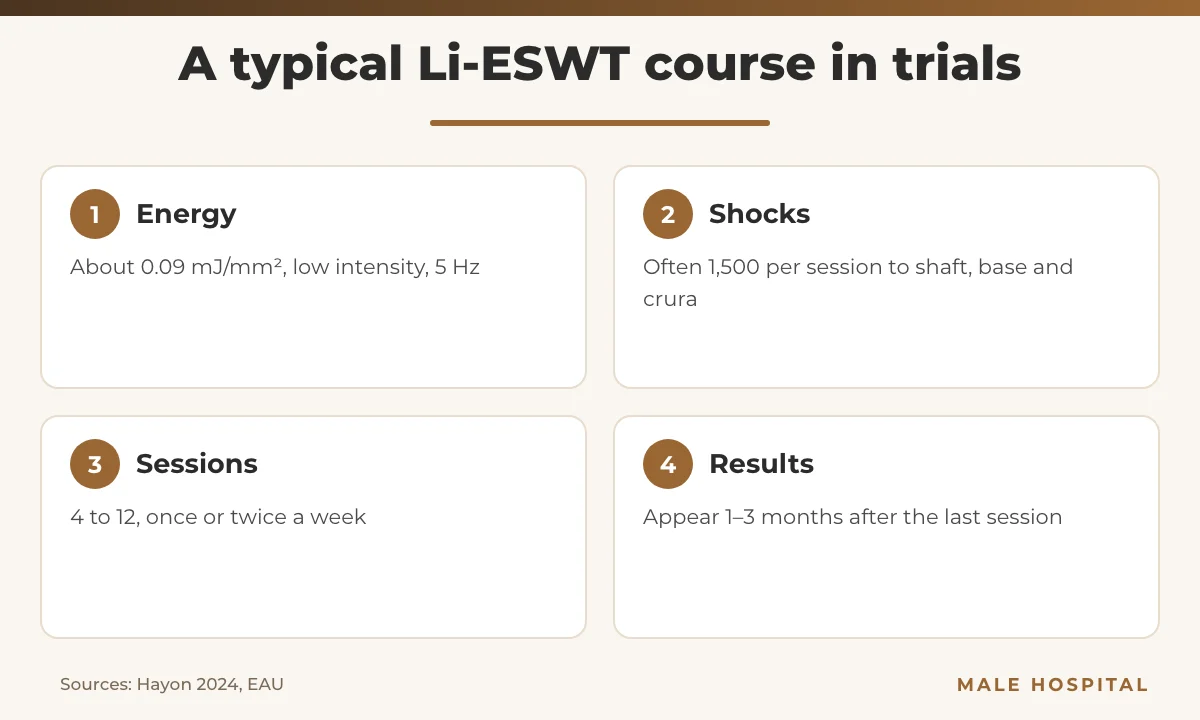
There is no single agreed protocol. Devices differ in how they produce the wave (electrohydraulic, electromagnetic or piezoelectric) and in whether the energy is focused, linear or radial. A 2024 review of randomized sham-controlled trials from the previous ten years found the most common settings were:
- Energy flux density: about 0.09 mJ/mm² (low intensity);
- Frequency: 5 Hz;
- Shocks per session: most often 1,500 – about 900 to the penile shaft and base and 600 to the crura;
- Number of sessions: anywhere from 4 to 12, typically once or twice a week.
Individual trials varied widely. For example, a Greek trial in moderate ED used 12 twice-weekly sessions of 5,000 pulses, while a US trial used six sessions of 3,000 pulses at 0.1 mJ/mm². The EAU also notes a trial in which 0.10 mJ/mm² seemed to perform slightly better than lower energies, but this is a single study. Results usually appear gradually, one to three months after the last session, not immediately.
Sources: World J Mens Health — Hayon et al. (2024); PubMed — Kalyvianakis et al. J Urol 2022; Transl Androl Urol — Lange et al. (2024); EAU Guidelines
Does shockwave therapy for erectile dysfunction work? The evidence
Many early studies were single-arm: men were treated and their scores improved, but without a placebo group it is impossible to separate the treatment effect from expectation, lifestyle changes or natural fluctuation. The questions that matter are answered by randomized trials comparing real treatment with a sham applicator that looks and sounds the same but delivers no energy.
What the meta-analyses found
- Cochrane review, 2025: 21 randomized trials with 1,357 men, most with mild or mild-to-moderate ED. In the short term (up to 3 months), Li-ESWT raised the IIEF-EF score (a 6–30 questionnaire of erectile function) by an average of 3.89 points more than sham. The reviewers judged this a small effect that may fall below the 4-point change men usually notice. Over longer follow-up the difference was 5.25 points, and erection hardness also improved. All evidence was rated low certainty, and several trials were funded by device makers.
- Campbell et al., 2019: seven RCTs, 607 men. One month after treatment the IIEF-EF was 4.23 points higher than sham, and men were more likely to reach a firmer erection hardness score. No significant adverse events were reported.
- Clavijo et al., 2017: seven RCTs, 602 men. A statistically significant but smaller pooled improvement in IIEF-EF versus sham, with marked variation between studies.
Sources: Cochrane Database Syst Rev — Ergun et al. Low-intensity shockwave therapy for erectile dysfunction (2025); Ther Adv Urol — Campbell et al. Meta-analysis of RCTs (2019); PubMed — Clavijo et al. J Sex Med 2017
Why the results are hard to interpret
The biggest problem is heterogeneity: trials used different devices, wave types, energies, shock counts, numbers of sessions and patient groups, so pooling them is like averaging different treatments. Statistical heterogeneity in the Cochrane analyses was high (I² of 62% short term and 87% long term). Individual trials point in different directions. A double-blind trial of men with moderate ED found that 79% of treated men reached a clinically meaningful improvement at 3 months versus none on sham. By contrast, a Danish trial of linear shockwave therapy found success rates of 37.9% with treatment and 38.3% with sham – no real difference. The EAU also cites a radial-wave trial that showed no benefit over placebo.
In short, a well-selected man treated with a focused device may see a real but modest benefit; the average man walking into an unregulated clinic should not expect the results quoted in marketing.
Sources: Cochrane — Ergun et al. (2025); PubMed — Kalyvianakis et al. J Urol 2022; PubMed — Fojecki et al. J Sex Med 2017; EAU Guidelines
What EAU and AUA guidelines say
The two most influential urology guidelines read the same evidence differently, partly because the AUA guideline dates from 2018 and the EAU guideline is updated every year.
| Body | Position on Li-ESWT | Strength |
|---|---|---|
| EAU Sexual and Reproductive Health Guidelines (current edition) | Use with or without PDE5 inhibitors in men with mild vasculogenic ED; as an alternative in well-informed men who do not want or cannot take oral drugs; and in vasculogenic ED with a poor response to PDE5 inhibitors. Describes the improvement as mild/modest. | Weak recommendation |
| AUA Erectile Dysfunction Guideline (2018) | “Should be considered investigational”; sham-controlled trials do not clearly show that benefits reliably outweigh risks and burdens. | Conditional recommendation, evidence Grade C |
| Sexual Medicine Society of North America (2021) | Relatively safe, but robust efficacy data are lacking; restorative therapies should be reserved for clinical trials rather than routine practice. | Position statement |
| Global Andrology Forum (2026) | Modest short-term benefit in young and middle-aged men with mild-to-moderate vasculogenic ED; warns clinicians not to overclaim. | Expert consensus statements |
Sources: EAU Guidelines — Management of erectile dysfunction; AUA — Erectile Dysfunction: AUA Guideline (2018); SMSNA Position Statement (2021); PubMed — Global Andrology Forum Position Statements on Regenerative Therapies for ED (2026)
Put simply: in Europe, Li-ESWT is an acceptable option for carefully chosen men who understand its limits; in the United States it remains officially investigational. Neither guideline places it ahead of proven first-line treatments.
Who may benefit, and who probably will not
Because the therapy targets blood vessels, the right patient has ED that is mainly vascular and not too advanced. Specialists who offer it generally look for:
- Mild or mild-to-moderate vasculogenic ED – the group in which most trials show benefit;
- Men who respond at least partly to PDE5 inhibitors, or who want an option that does not depend on taking a tablet before sex;
- Younger and middle-aged men – one systematic review found that response declined with increasing age;
- Men without diabetes, or with well-controlled risk factors, since diabetes has been linked to weaker results.
It is less likely to help, or not appropriate, when ED is mainly caused by nerve damage (for example after extensive pelvic surgery), when it is psychological, when vascular disease is severe, or when ED is due to low testosterone or medication side effects that need their own treatment. The EAU notes some data showing benefit even in poor responders to tablets with severe ED, but expectations should be lower. Results after radical prostatectomy are less consistent.
Sources: World J Mens Health — Hayon et al. (2024); Int Urol Nephrol — Brunckhorst et al. Long-term efficacy of LISWT (2019); Cleveland Clinic — Can Shockwave Therapy Treat ED?
How long results last and side effects
Durability
Li-ESWT is sometimes marketed as a cure, but the data show a fading effect. A systematic review of 11 studies found improvement at 6 months in most, then either a plateau or a decline by 12 months, although scores stayed above baseline. In a US sham-controlled trial followed for three years, erectile scores were clearly improved at 12 and 24 months but had drifted back toward baseline by 36 months, with the peak effect at about one year. The EAU likewise says benefit appears after one to three months and gradually declines, though some effect may persist for up to five years. Cleveland Clinic urologists describe the effect as lasting about a year or two.
Sources: Brunckhorst et al. (2019); Transl Androl Urol — Lange et al. Long-term outcomes of a randomized sham-controlled trial (2024); EAU Guidelines; Cleveland Clinic
Safety
Safety is the strongest part of the evidence. The Cochrane review found little to no difference in treatment-related adverse events between real and sham treatment over 20 trials, and the US long-term trial recorded no adverse events. The procedure is usually painless; if it feels uncomfortable, the energy can be turned down. The main “side effects” are therefore practical ones: time, travel, cost and the chance of no benefit.
Sources: Cochrane — Ergun et al. (2025); Lange et al. (2024); Cleveland Clinic
Cost and red flags at commercial shockwave clinics
What it costs
Li-ESWT is not FDA-approved for ED, so in the United States it is usually not covered by insurance. Published US figures give a sense of scale: a 2022 “secret shopper” study of 152 clinics in eight large cities found an average price of about $3,338 per treatment course; a Chicago academic center reported $2,400 for six sessions in 2024; and Cleveland Clinic says single sessions can cost up to $500 or more. Prices in other countries differ, and these numbers are not a quote for any clinic.
Sources: Urol Pract — Weinberger et al. Shock Wave Therapy for ED: Marketing and Practice Trends (2022); Hayon et al. (2024); Cleveland Clinic
How the market grew ahead of the evidence
Direct-to-consumer advertising has driven much of the demand. The same 2022 study notes that the US market has been dominated by GAINSWave, a practitioner network and advertising platform that has promoted shockwave therapy for ED despite limited supporting evidence. Of the providers studied, only 25% were urologists and 13% were not physicians at all. There was no standard for focused versus radial devices, where the shocks were applied or how many sessions were sold; some courses were open-ended. The authors concluded that the market targets distressed men and carries a substantial financial impact.
Device type matters. Most positive trials used focused or linear shockwaves; radial “acoustic wave” devices, common in commercial clinics and in home gadgets, produce a different, weaker wave, and the trial evidence for radial therapy in ED is less promising or negative.
Sources: Weinberger et al. (2022); Cleveland Clinic; Hayon et al. (2024)
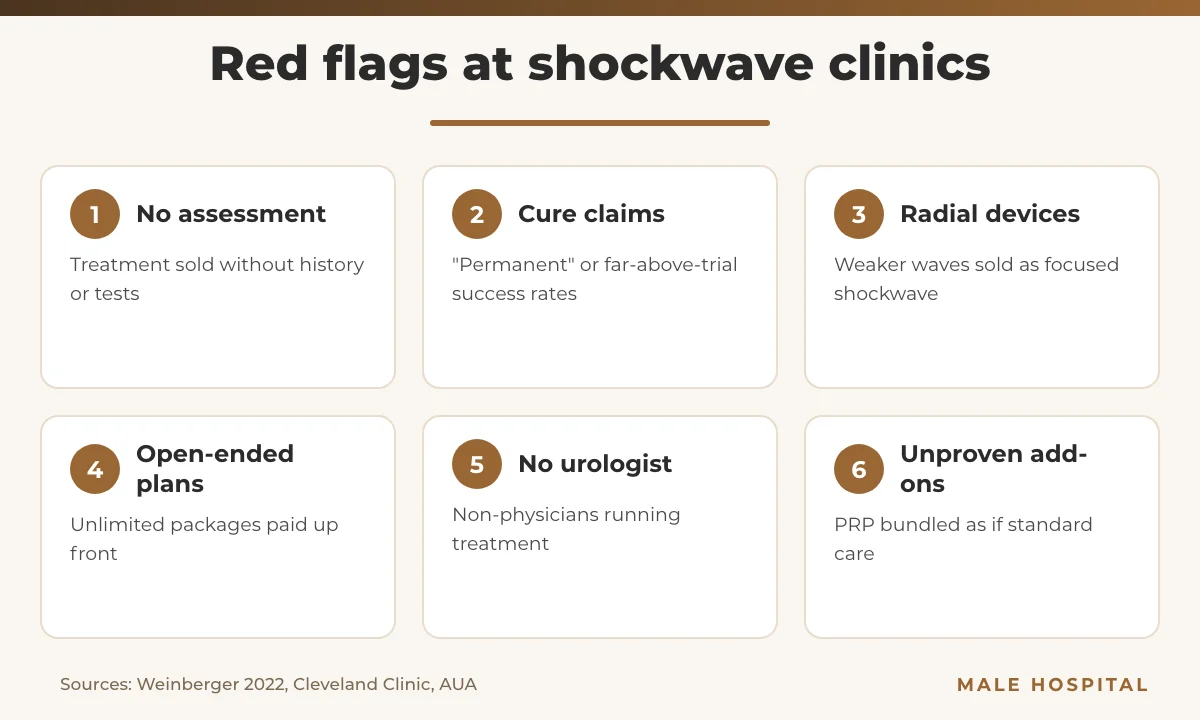
Red flags to watch for
- No examination, medical history or blood tests before treatment is sold.
- Claims of a “cure”, “permanent” results or success rates far above those in trials.
- Radial or “acoustic wave” devices presented as equivalent to focused shockwave therapy.
- Unlimited or open-ended packages paid up front, or pressure to sign the same day.
- No urologist or physician involved, and no plan for what happens if it does not work.
- Bundling with unproven add-ons such as platelet-rich plasma (PRP) injections sold as standard care, although the AUA calls PRP for ED experimental.
Sources: Weinberger et al. (2022); Cleveland Clinic; AUA — Erectile Dysfunction Guideline (2018); Global Andrology Forum (2026)
Proven alternatives to shockwave therapy
Effective, well-studied treatments exist at every stage of ED, and guidelines put them first:
- Lifestyle and risk-factor control: stopping smoking, exercise, weight loss and treating blood pressure, cholesterol and diabetes improve both erections and heart health.
- PDE5 inhibitor tablets (sildenafil, tadalafil, vardenafil, avanafil): first-line for most men; see our comparison of Viagra vs Cialis.
- Vacuum erection devices and penile injections or intraurethral alprostadil when tablets fail or are unsuitable.
- Psychosexual therapy for anxiety, depression or relationship factors, alone or combined with medicine.
- Penile prosthesis surgery for severe ED that does not respond to other options.
Li-ESWT can be combined with tablets; the EAU notes that combining it with daily tadalafil, or with a vacuum device in men with type 2 diabetes, may give better results. It should be one informed choice within a full ED plan, not a replacement for diagnosis.
Source: EAU Guidelines — Management of erectile dysfunction; AUA — Erectile Dysfunction Guideline
When to see a doctor
Before any ED treatment, including shockwave therapy, a doctor should look for the cause. ED shares risk factors with heart disease and can be a sign of cardiovascular problems. See a doctor promptly if:
- ED is new, getting worse, or started after a new medicine;
- you also have chest pain, shortness of breath on exertion, or leg pain when walking;
- you have diabetes, high blood pressure, high cholesterol or smoke and have not had a recent check-up;
- you notice low libido, fatigue or loss of body hair, which may point to low testosterone;
- you have penile pain, a new curve or a lump.
Source: EAU Guidelines — Management of erectile dysfunction; Cleveland Clinic
If you are weighing Li-ESWT against other options, our urologist-andrologist can review your history and tests in a confidential consultation and explain what the evidence means for you; message us on WhatsApp or read about our erectile dysfunction treatment pathway. Costs depend on the assessment and the plan you choose.
FAQs about shockwave therapy for erectile dysfunction
Is shockwave therapy for ED FDA-approved?
No. Shockwave devices are cleared in the United States for other uses, but no restorative therapy, including Li-ESWT, has FDA approval for erectile dysfunction. Treatment for ED is therefore off-label, which is also why insurers usually do not pay for it. In Europe, the EAU guideline allows it as a weakly recommended option for selected men with mild vasculogenic ED.
Source: SMSNA Position Statement (2021); Cleveland Clinic
How many shockwave sessions are needed for ED?
Trials have used between 4 and 12 sessions, most often once or twice a week over 3 to 6 weeks. There is no proven best schedule. Be cautious of clinics that sell open-ended courses or “maintenance” packages without a clear plan and review of your results.
Source: Hayon et al. (2024); Weinberger et al. (2022)
Does shockwave therapy for ED hurt?
It is usually painless and needs no anesthesia. A session takes about 15 minutes. If it becomes uncomfortable the operator can lower the energy. Randomized trials found no meaningful increase in side effects compared with sham treatment.
Source: Cleveland Clinic; Cochrane (2025)
How soon will I notice results?
Not straight away. Because the aim is to improve blood vessels, any benefit usually becomes noticeable one to three months after the course ends. Some trials therefore judge results at one and three months after the last session. If you notice no change, discuss other proven treatments with your urologist.
Source: EAU Guidelines
Can shockwave therapy cure erectile dysfunction?
Current evidence does not support calling it a cure. Trials show an average improvement that is modest, and long-term studies show the benefit tends to peak around one year and decline over two to three years. It does not remove the causes of ED, such as artery disease, diabetes or smoking, which keep progressing unless they are treated.
Source: Lange et al. (2024); Cochrane (2025)
Is GAINSWave the same as Li-ESWT?
GAINSWave is a brand and provider network that markets shockwave treatment directly to consumers, not a separate, better-proven therapy. Clinics under such brands may use different devices, including radial wave devices, and protocols vary. Ask which device and wave type will be used, who performs it, and what results the clinic has actually measured.
Source: Weinberger et al. (2022)
Do at-home shockwave devices work for ED?
There is no good evidence that they do. Home devices use radial or acoustic waves rather than the focused shockwaves studied in most positive trials, and Cleveland Clinic urologists describe them as not effective for ED. Spending money on a home device can also delay a proper diagnosis of the cause of your erection problems.
Source: Cleveland Clinic
Can I keep taking Viagra or Cialis during shockwave therapy?
Yes, in most cases. The EAU recommendation covers shockwave therapy with or without PDE5 inhibitors, and some studies suggest combining it with daily tadalafil may work better than either alone.
Source: EAU Guidelines — Management of erectile dysfunction
Medically reviewed by Assoc. Prof. Dr. Zülfü Sertkaya, urologist and andrologist (FEBU), Istanbul. Last reviewed: October 2026.
This article is for general information and does not replace an individual consultation with a qualified doctor.
- EAU — Sexual and Reproductive Health Guidelines — Management of erectile dysfunction
- AUA — Erectile Dysfunction: AUA Guideline (2018)
- Cochrane Database Syst Rev 2025 (PMC) — Ergun et al. Low-intensity shockwave therapy for erectile dysfunction
- Ther Adv Urol 2019 (PMC) — Campbell et al. Meta-analysis of randomized controlled trials of low-intensity shockwave therapy for ED
- PubMed — J Sex Med 2017 — Clavijo et al. Effects of Li-ESWT on erectile dysfunction: systematic review and meta-analysis
- World J Mens Health 2024 (PMC) — Hayon et al. Variations in low intensity shockwave treatment protocols for erectile dysfunction
- SMSNA — Sex Med 2021 (PMC) — Restorative Therapies for Erectile Dysfunction: Position Statement
- PubMed — World J Mens Health 2026 — Global Andrology Forum Position Statements on Regenerative Therapies for Erectile Dysfunction
- PubMed — J Urol 2022 — Kalyvianakis et al. Low-intensity shock wave therapy on moderate ED: double-blind, randomized, sham-controlled trial
- PubMed — J Sex Med 2017 — Fojecki et al. Low-energy linear shockwave therapy on ED: sham-controlled randomized trial
- Int Urol Nephrol 2019 (PMC) — Brunckhorst et al. Long-term efficacy of low-intensity shockwave therapy for vasculogenic ED
- Transl Androl Urol 2024 (PMC) — Lange et al. Is low-intensity shockwave therapy for ED a durable treatment option?
- Urol Pract 2022 (PMC) — Weinberger et al. Shock wave therapy for ED: marketing and practice trends in major US metropolitan areas
- Cleveland Clinic — Can Shockwave Therapy Treat Erectile Dysfunction?