
Erectile dysfunction and obesity are tightly linked because excess body fat damages blood vessels, lowers testosterone and travels with diabetes, high blood pressure and sleep apnea. The encouraging part is that the link works in reverse too: in a two-year randomized trial, about one in three obese men with ED regained normal erectile function through weight loss and exercise. For men with severe obesity, bariatric surgery also improves erectile scores and testosterone.
Sources: PubMed — JAMA 2004 — Esposito et al. Effect of lifestyle changes on erectile dysfunction in obese men: a randomized controlled trial; EAU — Sexual and Reproductive Health Guidelines — Management of erectile dysfunction
- The EAU lists obesity and metabolic syndrome among the core risk factors for ED, and rates the evidence that exercise and a lower BMI improve erections as level 1b.
- Metabolic syndrome, which centres on abdominal obesity, was associated with up to four times the risk of ED in a 2023 meta-analysis.
- In the Italian JAMA trial, men who cut weight and raised activity from about 48 to 195 minutes a week improved their erectile scores; 17 of 55 reached the normal range, versus 3 of 55 controls.
- Weight loss raises testosterone, and bariatric surgery raised it more than a low-calorie diet.
- Bariatric surgery improved the erectile function score by 4.86 points in a 14-study meta-analysis.
- Erectile dysfunction and obesity: how strong is the link?
- How obesity affects erections
- Does weight loss improve erectile dysfunction?
- Exercise and diet: what to actually do
- Bariatric surgery and erectile function
- Weight-loss medicines (GLP-1 drugs)
- Treating ED while you lose weight
- When to see a doctor
- FAQs about erectile dysfunction and obesity
Erectile dysfunction and obesity: how strong is the link?
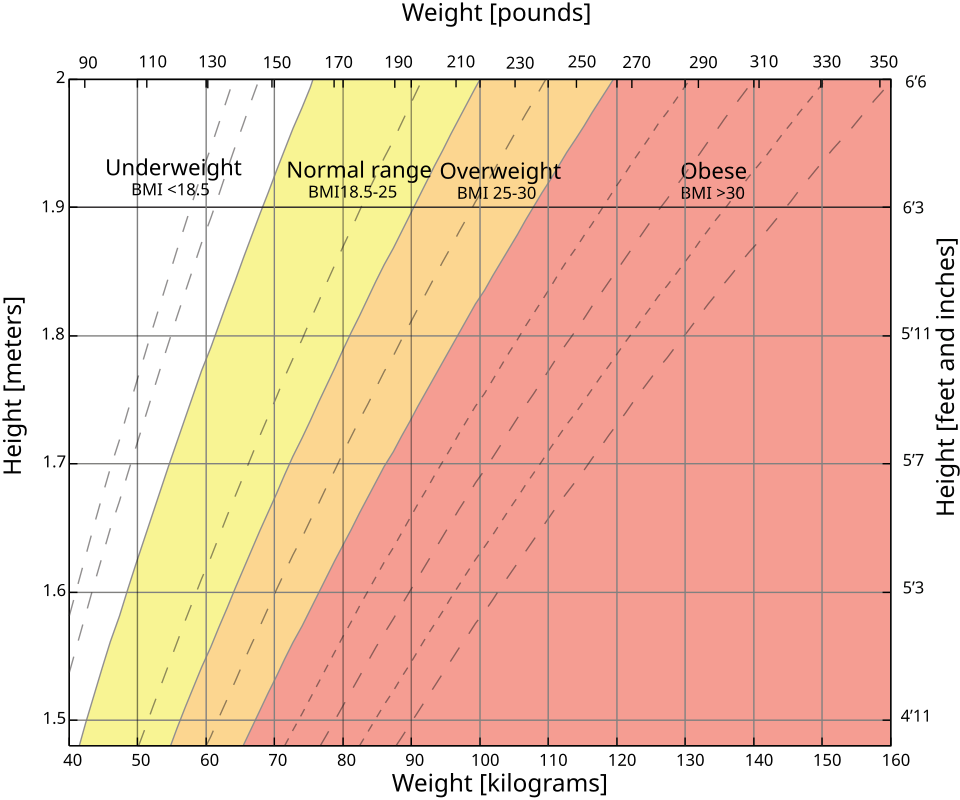
Obesity is defined by body mass index (BMI). For most adults, the NHS classes a BMI of 25 to 29.9 as overweight and 30 or more as obese; for people of South Asian, Chinese, other Asian, Middle Eastern, Black African or African-Caribbean background, the obese threshold is lower, at 27.5. Because BMI cannot tell muscle from fat, the NHS also suggests keeping your waist to less than half your height.
Source: NHS — Obesity
The European Association of Urology (EAU) lists obesity and metabolic syndrome alongside age, diabetes, high cholesterol, hypertension, cardiovascular disease, smoking and lack of exercise as established risk factors for ED. The US NIDDK names obesity and overweight among the most common conditions that lead to ED, and the NHS includes “lose weight if you’re overweight” as the first lifestyle step for men with erection problems.
Sources: EAU — Sexual and Reproductive Health Guidelines — Management of erectile dysfunction; NIDDK — Symptoms & Causes of Erectile Dysfunction; NHS — Erection problems (erectile dysfunction)
This article is a supporting guide to our main erectile dysfunction treatment page. It focuses on body weight: why it matters and what the trials show about losing it.
How obesity affects erections
Damage to blood vessels
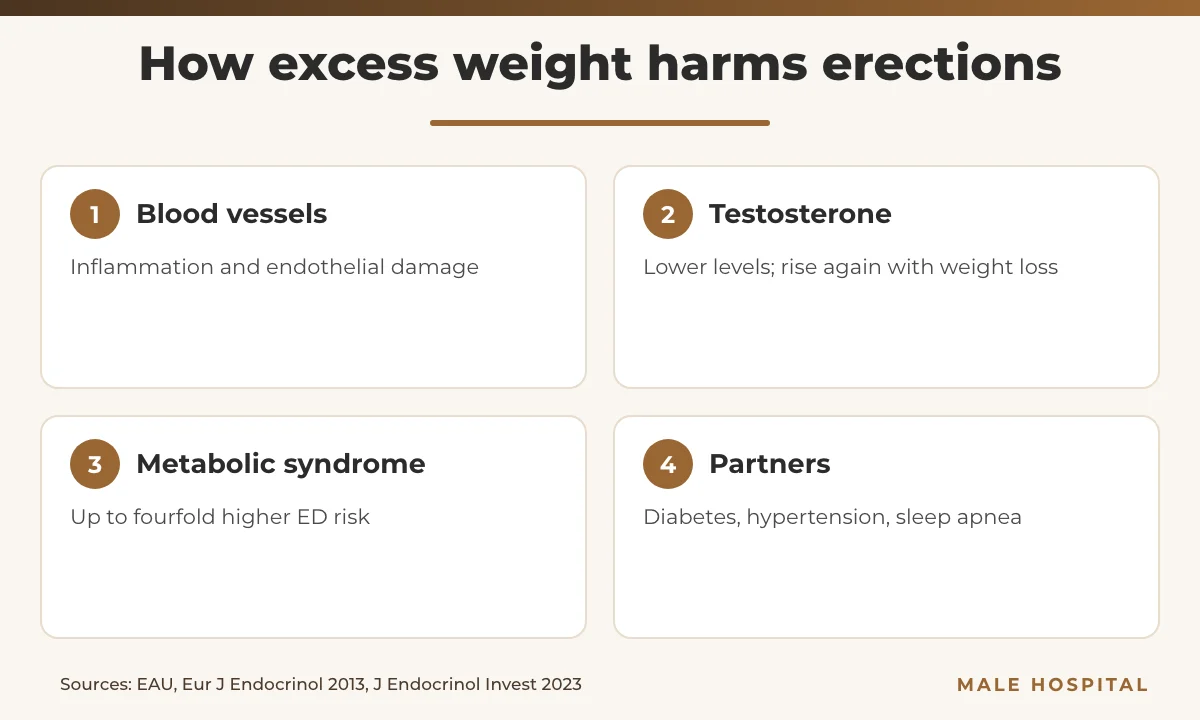
Erections depend on healthy arteries and a vessel lining (endothelium) that can release nitric oxide and relax on demand. Excess fat, especially around the abdomen, keeps the body in a low-grade inflammatory state. In the JAMA trial described below, men who lost weight not only improved their erections but also lowered inflammatory markers such as interleukin 6 and C-reactive protein, and changes in C-reactive protein were independently linked with changes in erectile scores.
Lower testosterone
Obesity is linked with a type of low testosterone in which the brain’s signal to the testes is reduced (hypogonadotropic hypogonadism). A 2013 meta-analysis of 24 studies found that weight loss, by diet or surgery, raised both bound and free testosterone, lowered oestradiol and increased the pituitary hormones that drive the testes. For more on hormones, see low testosterone.
Metabolic syndrome
Metabolic syndrome is the cluster of abdominal obesity, raised blood pressure, high blood sugar and abnormal blood fats. A 2023 meta-analysis found it was associated with up to a fourfold increased risk of ED, with every component contributing. Interestingly, fully adjusted analyses suggested that the individual conditions (such as diabetes and hypertension) drive most of that risk, and that the contribution of low testosterone, although independent, is marginal.
The company obesity keeps
Obesity raises the risk of type 2 diabetes, high blood pressure and obstructive sleep apnea, each of which harms erections on its own. We cover these in erectile dysfunction and diabetes and erectile dysfunction and sleep apnea. The Cleveland Clinic also lists diabetes, high blood pressure, high cholesterol and atherosclerosis among the physical causes of ED.
Sources: Cleveland Clinic — Erectile Dysfunction; NHS — Obesity
Does weight loss improve erectile dysfunction?
The best-known trial was published in JAMA in 2004. Researchers in Naples randomly assigned 110 obese men (BMI 30 or more, aged 35 to 55) with ED but without diabetes, hypertension or high cholesterol to one of two groups. The 55 men in the intervention group received detailed, individual advice to lose at least 10% of their body weight by eating less and moving more; the 55 controls received general information on healthy food and exercise.
After two years:
- Average BMI fell from 36.9 to 31.2 in the intervention group, versus 36.4 to 35.7 in controls.
- Physical activity rose from about 48 to 195 minutes a week in the intervention group.
- The erectile function score (IIEF) improved from 13.9 to 17 in the intervention group and stayed flat in controls.
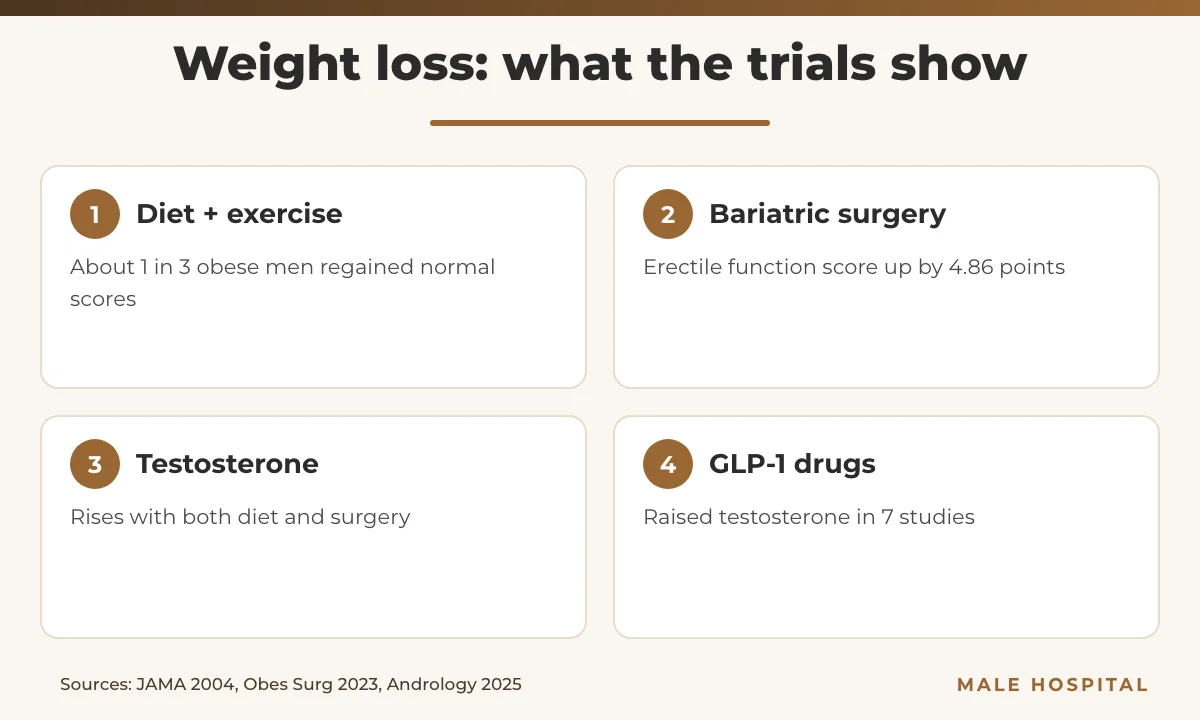
- 17 men in the intervention group and 3 controls reached a score of 22 or more, the normal range.
Changes in BMI, physical activity and C-reactive protein each independently predicted improvement. The authors concluded that lifestyle changes improved sexual function in about one third of obese men with ED.
The EAU guidelines reflect this, rating the evidence that lifestyle modification (regular exercise and a decrease in BMI) can improve erectile function as level 1b, the grade given to at least one good randomized trial.
Source: EAU — Sexual and Reproductive Health Guidelines — Management of erectile dysfunction
Exercise and diet: what to actually do
The Naples trial combined calorie reduction with a big increase in activity, roughly 195 minutes a week by the end. That matches the NHS advice for men with erection problems: lose weight if you are overweight, exercise daily, eat a healthy diet, stop smoking and stay within 14 units of alcohol a week.
Sources: PubMed — JAMA 2004 — Esposito et al. Effect of lifestyle changes on erectile dysfunction in obese men: a randomized controlled trial; NHS — Erection problems (erectile dysfunction)
For the details, our guide to exercises for erectile dysfunction covers the aerobic and pelvic floor programmes that have been tested, and our foods guide reviews the Mediterranean-style diet evidence. A realistic target is steady loss through habits you can keep, because the benefits in the trial came over two years, not two weeks.
| Approach | Effect on erections | Effect on testosterone | Key evidence |
|---|---|---|---|
| Diet plus exercise | About 1 in 3 obese men reached normal erectile scores | Rises with weight loss | JAMA randomized trial (2004); EAU level 1b |
| Low-calorie diet | Helps through weight loss | Smaller rise than surgery | Eur J Endocrinol meta-analysis (2013) |
| Bariatric surgery | IIEF erectile function domain up 4.86 points | Larger rise than diet | Obes Surg meta-analysis (2023) |
| GLP-1 receptor agonists | Not yet proven for ED itself | Raised total testosterone in 7 studies | Andrology meta-analysis (2025) |
| PDE5 inhibitors (sildenafil, tadalafil) | First-line drug treatment | No effect | EAU guidelines |
Sources: PubMed — JAMA 2004 — Esposito et al. Effect of lifestyle changes on erectile dysfunction in obese men: a randomized controlled trial; PubMed — Eur J Endocrinol 2013 — Corona et al. Body weight loss reverts obesity-associated hypogonadotropic hypogonadism: a systematic review and meta-analysis; PMC — Obes Surg 2023 — Małczak et al. Influence of bariatric surgery on erectile dysfunction: a systematic review and meta-analysis; PubMed — Andrology 2025 — Effects of glucagon-like peptide 1 receptor agonists on testicular dysfunction: a systematic review and meta-analysis; EAU — Sexual and Reproductive Health Guidelines — Management of erectile dysfunction
Bariatric surgery and erectile function
For men with severe obesity, weight-loss surgery produces the largest and fastest change in weight. A 2023 meta-analysis in Obesity Surgery pooled 14 studies (508 patients) and found significant improvements after surgery in overall IIEF scores, the erectile function domain (mean difference 4.86 points), desire, intercourse satisfaction and overall satisfaction. Testosterone was higher after surgery. Orgasmic function did not change significantly.
An earlier 2017 meta-analysis in Sexual Medicine Reviews reached the same conclusion, with a 5.66-point increase in the five-item IIEF score after surgery. Both groups of authors cautioned that most studies compared men before and after surgery without a control group, so larger controlled studies are still needed to show how much of the effect is due to the surgery itself.
Sources: PubMed — Sex Med Rev 2017 — What is the impact of bariatric surgery on erectile function? A systematic review and meta-analysis; PMC — Obes Surg 2023 — Małczak et al. Influence of bariatric surgery on erectile dysfunction: a systematic review and meta-analysis
In the 2013 hormone meta-analysis, bariatric surgery raised testosterone more than a low-calorie diet did, and the rise was greater in men who lost more weight, in younger men and in men without diabetes.
Weight-loss medicines (GLP-1 drugs)
GLP-1 receptor agonists such as semaglutide and liraglutide are now widely used for obesity. A 2025 meta-analysis of seven studies (680 men) found that they significantly increased total and free testosterone and the pituitary hormones LH and FSH while lowering weight, waist size and blood sugar; the bigger the weight loss, the bigger the testosterone rise. The authors suggested a possible role in obesity-related low testosterone but noted that the data cannot show a direct effect on the testes.
Direct evidence that these drugs improve erections is still limited, so they should be seen as a weight-loss tool with a likely hormonal bonus rather than as an ED treatment.
Treating ED while you lose weight
Weight loss takes months, and there is no need to put your sex life on hold meanwhile. PDE5 inhibitors (sildenafil, tadalafil, vardenafil, avanafil) remain the first-line drug treatment for ED in men of any weight, provided there are no contraindications such as nitrate use. The EAU also recommends blood tests for glucose, lipids and total testosterone during the initial work-up to find reversible risk factors, which is especially relevant for men carrying excess weight.
Source: EAU — Sexual and Reproductive Health Guidelines — Management of erectile dysfunction
Two size-related points deserve mention. Abdominal and pubic fat can partly bury the penis, making it look and function shorter; we explain this in buried penis. And for men with severe ED who choose a penile implant, research summarised by the International Society for Sexual Medicine found that fungal implant infections were more common in men with diabetes and in overweight men, another reason to work on weight and blood sugar before surgery.
When to see a doctor
See a doctor if erection problems keep happening; the NHS notes they can be a sign of a treatable health condition. Overweight men with ED should ask for checks of:
- Blood pressure.
- Blood sugar (HbA1c) for diabetes.
- Cholesterol and other blood fats.
- Morning testosterone, if you also have low desire or fatigue.
- Sleep apnea, if you snore loudly or feel sleepy during the day.
Seek urgent care for chest pain or breathlessness on exertion, including during sex, and for any erection lasting more than four hours.
Sources: NHS — Erection problems (erectile dysfunction); EAU — Sexual and Reproductive Health Guidelines — Management of erectile dysfunction
Our urologist-andrologist can assess erectile dysfunction and obesity together and plan treatment alongside your weight-loss programme. Message us on WhatsApp for a confidential, free initial consultation.
FAQs about erectile dysfunction and obesity
Can being overweight cause erectile dysfunction?
Yes. The NIDDK lists obesity and overweight among the most common conditions that lead to ED, and the EAU names obesity and metabolic syndrome as established risk factors. Excess fat damages blood vessels, lowers testosterone and raises the risk of diabetes and high blood pressure, all of which reduce blood flow to the penis.
Sources: NIDDK — Symptoms & Causes of Erectile Dysfunction; EAU — Sexual and Reproductive Health Guidelines — Management of erectile dysfunction
How much weight do I need to lose to improve ED?
There is no fixed number. In the JAMA trial, men were coached to lose at least 10% of their body weight, and average BMI fell from 36.9 to 31.2 over two years; about one in three regained normal erectile function. Greater weight loss was linked with greater improvement, alongside more exercise and lower inflammation.
How long does it take for weight loss to improve erections?
The main randomized trial measured results after two years of sustained lifestyle change, so think in months rather than weeks. Some men notice better energy and erections earlier as fitness improves. An ED pill can be used in the meantime while weight and cardiovascular health improve.
Sources: PubMed — JAMA 2004 — Esposito et al. Effect of lifestyle changes on erectile dysfunction in obese men: a randomized controlled trial; EAU — Sexual and Reproductive Health Guidelines — Management of erectile dysfunction
Does losing weight increase testosterone?
Yes. A meta-analysis of 24 studies found that both low-calorie diets and bariatric surgery raised total and free testosterone in men with obesity. Surgery produced a larger rise, and men who lost more weight gained more testosterone. GLP-1 weight-loss medicines have also raised testosterone in studies.
Sources: PubMed — Eur J Endocrinol 2013 — Corona et al. Body weight loss reverts obesity-associated hypogonadotropic hypogonadism: a systematic review and meta-analysis; PubMed — Andrology 2025 — Effects of glucagon-like peptide 1 receptor agonists on testicular dysfunction: a systematic review and meta-analysis
Does bariatric surgery cure erectile dysfunction?
It improves erectile function on average: a 14-study meta-analysis found the erectile function score rose by 4.86 points after surgery, along with desire and satisfaction. It does not guarantee a cure, and most studies lacked a control group. Surgery is chosen for severe obesity and its health risks, not for ED alone.
Do ED pills work in obese men?
Yes, PDE5 inhibitors such as sildenafil and tadalafil are the first-line drug treatment for ED in men of any body weight, provided there are no contraindications such as nitrate use. Combining a pill with weight loss and exercise addresses both the symptom and the underlying cause.
Source: EAU — Sexual and Reproductive Health Guidelines — Management of erectile dysfunction
Medically reviewed by Assoc. Prof. Dr. Zülfü Sertkaya, urologist and andrologist (FEBU), Istanbul. Last reviewed: November 2026.
This article is for general information and does not replace an individual consultation with a qualified doctor.
- PubMed — JAMA 2004 — Esposito et al. Effect of lifestyle changes on erectile dysfunction in obese men: a randomized controlled trial
- EAU — Sexual and Reproductive Health Guidelines — Management of erectile dysfunction
- NIDDK — Symptoms & Causes of Erectile Dysfunction
- NHS — Obesity
- NHS — Erection problems (erectile dysfunction)
- PubMed — J Endocrinol Invest 2023 — Metabolic syndrome and erectile dysfunction: a systematic review and meta-analysis
- PubMed — Eur J Endocrinol 2013 — Corona et al. Body weight loss reverts obesity-associated hypogonadotropic hypogonadism: a systematic review and meta-analysis
- PMC — Obes Surg 2023 — Małczak et al. Influence of bariatric surgery on erectile dysfunction: a systematic review and meta-analysis
- PubMed — Sex Med Rev 2017 — What is the impact of bariatric surgery on erectile function? A systematic review and meta-analysis
- PubMed — Andrology 2025 — Effects of glucagon-like peptide 1 receptor agonists on testicular dysfunction: a systematic review and meta-analysis
- Cleveland Clinic — Erectile Dysfunction
- ISSM — Fungal IPP infections more common in diabetic and overweight men (Gross et al., J Sex Med 2019)