
Venous leak erectile dysfunction (veno-occlusive dysfunction, or venogenic ED) happens when the veins of the penis fail to close off during arousal, so blood drains away and the erection softens or never becomes fully firm. It is diagnosed with tests such as a penile Doppler ultrasound after an injection and, less often, cavernosometry or cavernosography. Most men are treated with the same proven options used for other types of ED: tablets, a vacuum device, penile injections or, when these fail, a penile implant. Surgery to tie off the leaking veins is no longer recommended by European or American urology guidelines.
Source: Cleveland Clinic — Venous Leak; EAU Guidelines — Management of erectile dysfunction
- In venous leak erectile dysfunction, blood gets into the penis but is not trapped there, so erections fade quickly or stay partly soft.
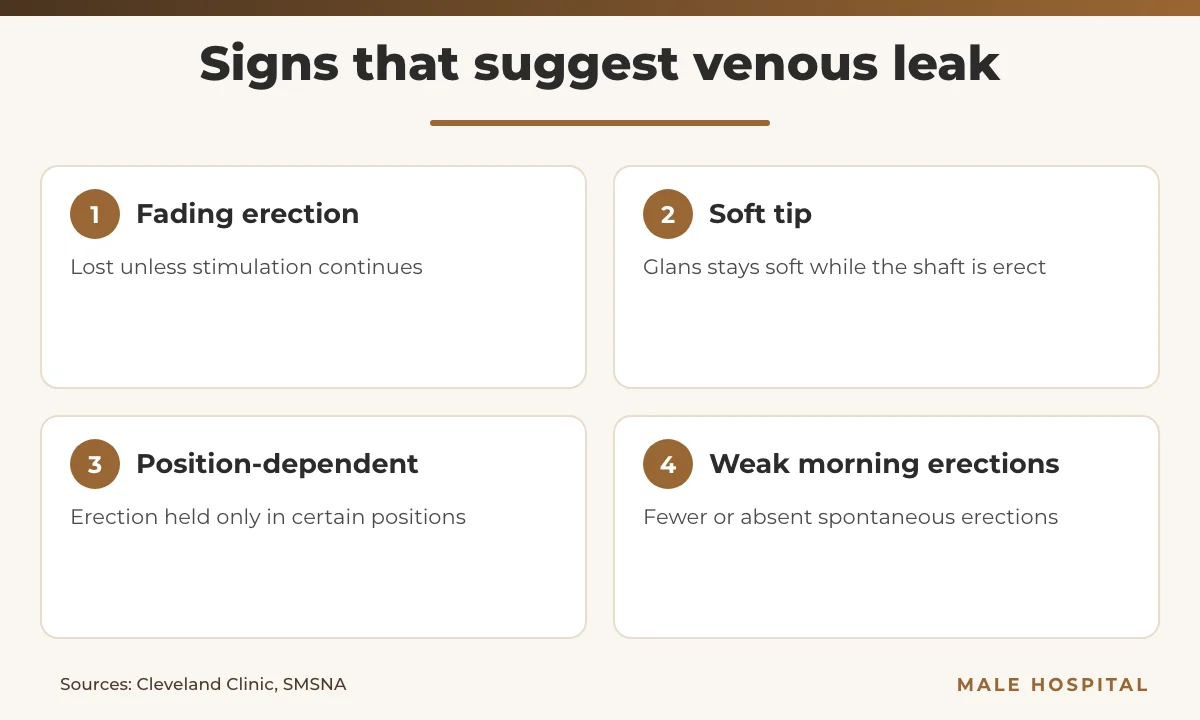
- Typical clues of venous leak erectile dysfunction are losing an erection without constant stimulation, a soft tip, erections only in certain positions and weak morning erections.
- A penile Doppler ultrasound after an injection is the usual first test; cavernosometry and cavernosography are reserved for selected cases.
- Both the EAU and the AUA advise against penile venous surgery because long-term results are poor; embolization is still being studied.
- Tablets, vacuum devices and injections help many men, and a penile implant offers a reliable solution when other treatments fail.
- What is venous leak erectile dysfunction?
- How a healthy penis traps blood
- Symptoms of venous leak
- Causes and risk factors of venous leak erectile dysfunction
- How venous leak erectile dysfunction is diagnosed
- Treatment options that work
- Venous ligation and embolization: what the guidelines say
- When to see a doctor
- FAQs about venous leak erectile dysfunction
What is venous leak erectile dysfunction?
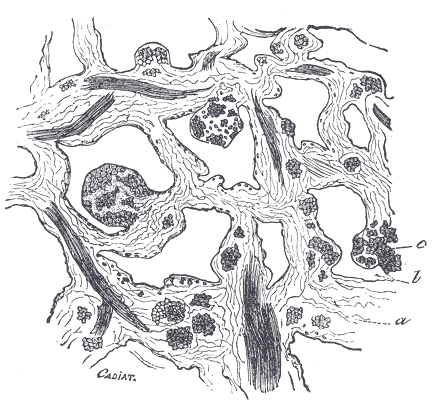
An erection depends on two things happening at the same time: arteries must fill the erectile tissue with blood, and veins must stop that blood from draining away. Venous leak erectile dysfunction is the name for ED caused by a failure of the second step. Doctors also call it venogenic ED, corporo-veno-occlusive dysfunction or penile venous insufficiency.
The International Society for Sexual Medicine (ISSM) explains it simply: if the penile veins do not constrict enough, blood “leaks” back into the body and the erection softens. The ISSM also notes that venous leak erectile dysfunction is a common cause of erection problems in younger men, although it can occur at any age.
Source: ISSM — What is venous leakage and how does it cause ED?; Cleveland Clinic — Venous Leak
Nobody knows exactly how many men are affected by venous leak erectile dysfunction. Both the Cleveland Clinic and the Sexual Medicine Society of North America (SMSNA) say the true number is unknown, while describing venous leakage as a common cause of ED. Vascular problems as a group are thought to account for more than 40% of ED cases, and some vascular specialists consider venous leak the most common vascular cause. The European Association of Urology (EAU) points out that the concept of venogenic ED has been questioned, partly because tests for it can give misleading results.
Sources: SMSNA — What Is Venous Leakage?; CVIR Endovascular (PMC) — Hoppe et al. 2023, CT cavernosography in venous leak; EAU Guidelines — Management of erectile dysfunction
How a healthy penis traps blood
The penis contains two parallel cylinders of spongy erectile tissue, the corpora cavernosa, wrapped in a tough fibrous sheath called the tunica albuginea. A third cylinder underneath, the corpus spongiosum, surrounds the urethra. Small veins drain the spongy spaces, join into a network just beneath the tunica, and then exit through it as “emissary” veins on their way to larger veins such as the deep dorsal vein.
During arousal, the smooth muscle inside the erectile tissue relaxes and the spaces fill with arterial blood. As they swell, they press that network of small veins against the stiff, non-stretchy tunica albuginea. This squeezes the veins shut and traps blood inside, raising the pressure and producing a rigid erection. Doctors call this the veno-occlusive mechanism.
Sources: BMC Urology (PMC) — Shafik et al. 2007, On the pathogenesis of penile venous leakage; Cleveland Clinic — Venous Leak
Venous leak erectile dysfunction happens when this compression is incomplete. The cause can lie in the tunica itself, in erectile tissue that does not relax and expand enough, or in abnormal drainage channels. In a small study published in BMC Urology, men with venogenic ED had lower pressures inside the penis during erection than controls, and their tunica showed degenerated, disorganized collagen. The authors proposed that a “floppy” tunica cannot compress the veins properly, but they stressed that the underlying cause of these changes still needs research.
Source: BMC Urology (PMC) — Shafik et al. 2007, On the pathogenesis of penile venous leakage
Symptoms of venous leak
Venous leak erectile dysfunction is not painful, and its symptoms overlap with other forms of ED, so they suggest the diagnosis rather than prove it. The pattern doctors look for is an erection that starts but cannot be held. Common signs include:
- Difficulty getting an erection firm enough for intercourse or masturbation.
- Losing the erection unless stimulation continues without a break.
- Erections that are maintained only in certain positions.
- A soft glans (tip of the penis) even when the shaft is erect.
- Fewer or absent spontaneous erections, including morning and nighttime erections.
- Erections that soften gradually during sex.
- A poor response to ED tablets.
Sources: Cleveland Clinic — Venous Leak; SMSNA — What Is Venous Leakage?
Because anxiety can produce a very similar pattern, losing an erection quickly does not automatically mean a vein problem. Night-time erection testing and a careful history help tell the two apart, as explained in the diagnosis section below. Our article on psychological erectile dysfunction explains the other side of this picture, and in practice the two frequently coexist.
Causes and risk factors of venous leak erectile dysfunction
Venous leak erectile dysfunction rarely has a single, simple cause. Guideline authors and patient-education sources list a range of contributors that damage the erectile tissue, the tunica or the nerves and vessels that control them:
- Diabetes and high blood pressure: both are common in men with venous leak erectile dysfunction and harm small blood vessels and erectile tissue.
- Aging: age-related changes in the tunica albuginea and erectile smooth muscle are among the proposed mechanisms.
- Peyronie’s disease: the SMSNA notes that the scar tissue that bends the penis may also stop the veins from clamping down.
- Pelvic surgery and radiation: prostatectomy, pelvic radiotherapy and cavernous nerve injury are recognized risk factors.
- Hormonal factors: low testosterone and androgen deprivation therapy for prostate cancer.
- Priapism: abnormal drainage channels can form after a prolonged erection and its repair.
- Lifestyle and medicines: nicotine, alcohol, opioids and some prescription drugs.
- Anxiety: excessive adrenaline (adrenergic) tone in anxious men has been proposed as a contributor, because it works against relaxation of the erectile smooth muscle.
Sources: Cleveland Clinic — Venous Leak; SMSNA — What Is Venous Leakage?; Front Cardiovasc Med (PMC) — Hoppe & Diehm 2021, Percutaneous treatment of venous erectile dysfunction
The last point matters: what looks like a “leak” on a test may partly reflect smooth muscle that is not relaxing, rather than a structural defect in the veins. The SMSNA warns that venous leak erectile dysfunction can be misdiagnosed when the pressure in the penis never rises adequately. If you have curvature, a lump or pain with erections, read our overview of Peyronie’s disease, since treating the plaque and treating the erection are linked decisions.
Source: SMSNA — What Is Venous Leakage?
How venous leak erectile dysfunction is diagnosed
Most men with ED do not need special vascular tests. Diagnosis starts with a medical and sexual history, a physical exam and blood tests such as testosterone, glucose and lipids, sometimes with a psychological assessment. The EAU reserves specialized tests, such as those for venous leak erectile dysfunction, for selected groups, including men with primary ED not explained by an acquired disease, young men with a history of pelvic or perineal trauma, men with penile deformities that may need surgery, and patients who request them. Our article on the erectile dysfunction test walks through the full work-up.
Sources: EAU Guidelines — Management of erectile dysfunction; Cleveland Clinic — Venous Leak
Penile Doppler ultrasound
The key test is a dynamic duplex (Doppler) ultrasound. A drug such as prostaglandin E1 (alprostadil) is injected into the penis to produce an erection, and the ultrasound measures blood flow in the cavernosal arteries. According to the EAU, a peak systolic velocity above 30 cm/s, an end-diastolic velocity below 3 cm/s and a resistance index above 0.8 are usually considered normal. In venous leak, inflow is good but blood keeps flowing out: one interventional review uses a peak systolic velocity above 25 cm/s with an end-diastolic velocity that stays above 5 cm/s 15 minutes after injection, and a resistance index below 0.75.
An important caveat when testing for venous leak erectile dysfunction is that anxiety during the test, or too low a dose of the injected drug, can make healthy veins look leaky. The EAU flags these false positives, which is why an abnormal result is sometimes repeated with a re-dose or interpreted alongside other findings.
Sources: EAU Guidelines — Management of erectile dysfunction; Front Cardiovasc Med (PMC) — Hoppe & Diehm 2021, Percutaneous treatment of venous erectile dysfunction
Cavernosometry and cavernosography
In suspected venous leak erectile dysfunction, dynamic infusion cavernosometry measures the pressure inside the corpora cavernosa while fluid is infused, showing how fast pressure falls when the infusion stops. Cavernosography adds contrast dye and X-ray imaging to show where blood escapes, for example through the deep dorsal vein, cavernosal veins or the plexus around the prostate. These tests are invasive, and the EAU describes them as infrequently used. They are mainly needed before vascular surgery, because the EAU states that veno-occlusive dysfunction must be excluded before arterial revascularization.
Some interventional radiology centers now use CT cavernosography, which a 2023 systematic review found better at pinpointing specific leak sites than conventional X-ray cavernosography, with lower contrast use. The same authors note that CT cavernosography is not yet part of the AUA or EAU guidelines.
Sources: EAU Guidelines — Management of erectile dysfunction; CVIR Endovascular (PMC) — Hoppe et al. 2023, CT cavernosography in venous leak; Front Cardiovasc Med (PMC) — Hoppe & Diehm 2021, Percutaneous treatment of venous erectile dysfunction
Night-time erection testing
Nocturnal penile tumescence and rigidity testing records erections during sleep over at least two nights. The EAU states that an erection of at least 60% rigidity indicates a functioning erectile mechanism, which helps separate physical from psychological ED before invasive vascular tests for venous leak erectile dysfunction are considered.
Source: EAU Guidelines — Management of erectile dysfunction
Treatment options that work
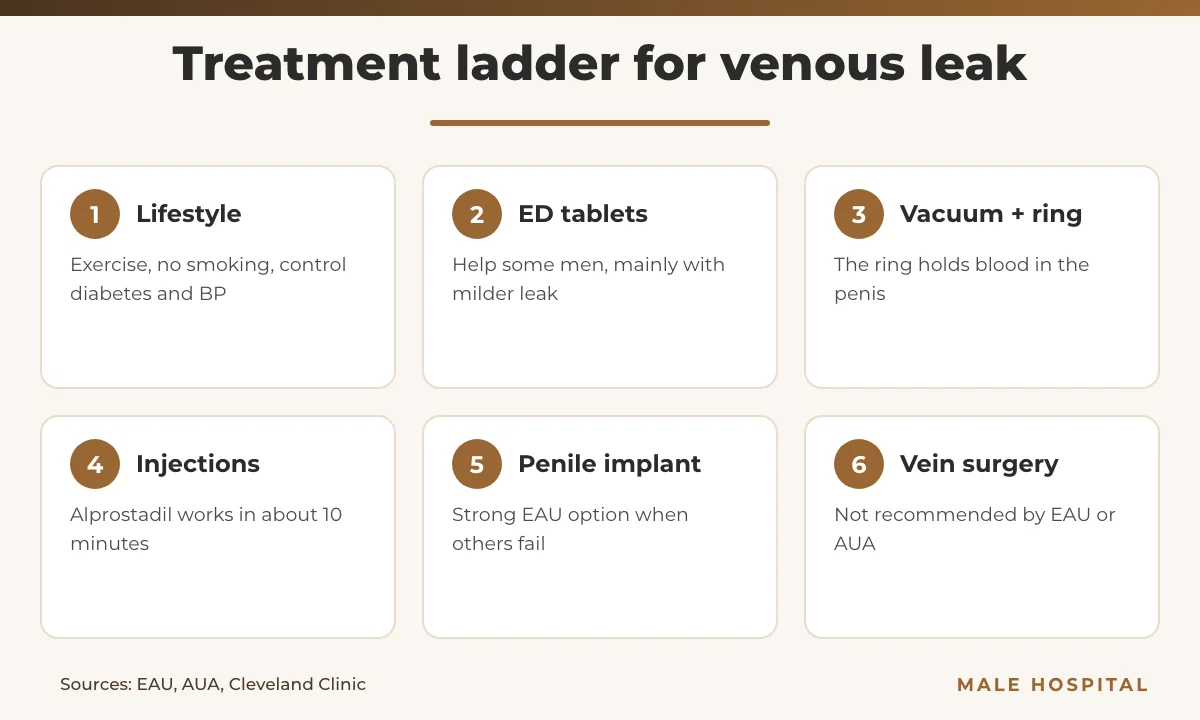
There is no tablet that “seals” leaking veins. Instead, treatment aims to give you reliable erections, and the best choice depends on severity, your preferences, your partner’s preferences and your overall health. Treatment for venous leak erectile dysfunction follows the same stepwise logic as other erectile dysfunction treatment.
Source: Cleveland Clinic — Venous Leak
Lifestyle and underlying conditions
Regular exercise, a healthy weight, not smoking, limiting alcohol and controlling blood pressure, cholesterol and diabetes support erectile health. These steps will not reverse established venous leak erectile dysfunction, but they protect blood vessels and can improve how well other treatments work.
Sources: Cleveland Clinic — Venous Leak; SMSNA — What Is Venous Leakage?
ED tablets (PDE5 inhibitors)
Sildenafil, tadalafil, vardenafil and avanafil increase blood flow into the penis. The ISSM notes that some men with venous leak erectile dysfunction do well on oral ED medicines, but poor response to tablets is also one of the typical signs of the condition. A fair trial means the right dose, taken correctly, on several occasions.
Sources: ISSM — What is venous leakage and how does it cause ED?; Cleveland Clinic — Venous Leak
Vacuum device with a constriction ring
A vacuum erection device draws blood into the penis, and an elastic ring at the base holds it there. Because the ring mechanically does the job the veins are failing to do, this approach suits venous leak erectile dysfunction well. Our guide to the vacuum erection device covers safe use.
Sources: Cleveland Clinic — Venous Leak; SMSNA — What Is Venous Leakage?
Penile injections
Alprostadil, or compounded mixtures of papaverine and phentolamine, are injected into the side of the penis and usually work within about 10 minutes. The EAU reports efficacy above 70% for alprostadil in the general ED population, although 41–68% of men eventually stop injections. Severe venous leak erectile dysfunction can blunt the response, and the AUA recommends a supervised in-office test dose first. Details are in our article on penile injections for erectile dysfunction.
Sources: EAU Guidelines — Management of erectile dysfunction; AUA — Erectile Dysfunction: AUA Guideline (2018); Cleveland Clinic — Venous Leak
Penile implant for refractory cases
When tablets, devices and injections fail or are not acceptable, a penile prosthesis is the most dependable option. In venous leak erectile dysfunction, inflatable cylinders placed inside the erectile chambers create rigidity on demand, regardless of how the veins behave. The EAU gives a strong recommendation to offer an implant when other treatments fail or according to patient preference, and reports some of the highest satisfaction rates in sexual medicine: 92–100 percent of patients and 91–95 percent of partners. Recovery requires avoiding sexual activity for at least six weeks.
Sources: EAU Guidelines — Management of erectile dysfunction; Cleveland Clinic — Venous Leak
| Option | How it helps in venous leak | Guideline position |
|---|---|---|
| ED tablets | Boost inflow; may be enough in milder leak | First-line for ED |
| Vacuum device + ring | Ring physically holds blood in the penis | Established option |
| Penile injections | Strong direct relaxation of erectile tissue | Alternative first-line or second-line (EAU, strong) |
| Penile implant | Rigidity independent of veins | When other treatments fail or by preference (EAU, strong) |
| Venous ligation surgery | Ties off draining veins; benefit fades | Not recommended (EAU, AUA) |
| Venous embolization | Blocks leaking veins from inside | Not in EAU/AUA recommendations; investigational |
Sources: EAU Guidelines — Management of erectile dysfunction; AUA — Erectile Dysfunction: AUA Guideline (2018); CVIR Endovascular (PMC) — Hoppe et al. 2023, CT cavernosography in venous leak
Venous ligation and embolization: what the guidelines say
It seems logical that if veins leak, closing them should fix venous leak erectile dysfunction. Surgeons tried this for decades by tying off or removing the deep dorsal vein and other draining veins. The results were disappointing. The EAU states that venous ligation surgery for veno-occlusive dysfunction is no longer recommended because of poor long-term results. Older reports cited in one review put long-term success at around 25%.
The American Urological Association is equally clear. Its 2018 guideline states that for men with ED, penile venous surgery is not recommended (moderate recommendation, evidence grade C). The panel explains that trials indicate the surgery is unlikely to give long-term success for the overwhelming majority of men, and that it delays more reliable options such as penile prosthesis surgery.
Sources: EAU Guidelines — Management of erectile dysfunction; AUA — Erectile Dysfunction: AUA Guideline (2018); Front Cardiovasc Med (PMC) — Hoppe & Diehm 2021, Percutaneous treatment of venous erectile dysfunction
Venous embolization
A newer, less invasive approach to venous leak erectile dysfunction is endovascular embolization, in which an interventional radiologist blocks the leaking veins from inside with medical glue or coils. A 2021 review reported technical success of 86–97%, but an overall clinical success rate of only 59.5%, ranging from 21.9 to 100 percent between studies, with outcome definitions varying widely. Complications were reported in about 5.2% of cases, mostly minor, with rare pulmonary embolism (under 1%). The authors concluded that long-term results are still pending and further studies are needed.
Neither the EAU nor the AUA guideline recommends embolization for venous leak erectile dysfunction, and the evidence comes mainly from case series rather than randomized, sham-controlled trials. If you are offered embolization, ask how the leak was confirmed, what success rate the center has measured, how long benefits last and what your options are if it fails.
Sources: Front Cardiovasc Med (PMC) — Hoppe & Diehm 2021, Percutaneous treatment of venous erectile dysfunction; CVIR Endovascular (PMC) — Hoppe et al. 2023, CT cavernosography in venous leak
When to see a doctor
See a urologist or sexual medicine specialist if erections keep fading before or during sex, if tablets have not worked after a fair trial (common in venous leak erectile dysfunction), or if ED is affecting your confidence or relationship. ED can also be an early sign of vascular disease, so a check-up is worthwhile even if you plan to treat it yourself. Seek help promptly if:
- ED started suddenly after a pelvic, perineal or penile injury.
- You notice new curvature, a hard lump or pain with erections.
- ED comes with chest pain, breathlessness on exertion or other heart symptoms.
- You have diabetes, high blood pressure or high cholesterol that is not well controlled.
- Emergency: an erection that is painful and lasts more than a few hours (priapism), especially after an injection, needs urgent medical care.
Sources: Cleveland Clinic — Venous Leak; EAU Guidelines — Management of erectile dysfunction
If you think you may have venous leak erectile dysfunction, you can get a confidential assessment with our urologist-andrologist, including Doppler testing and a clear plan from tablets to penile implant surgery if needed. Message us on WhatsApp for a free, private consultation.
FAQs about venous leak erectile dysfunction
Can venous leak be cured?
There is no medicine that repairs leaking veins, and vein surgery is no longer recommended because its benefits usually fade. Many men with venous leak erectile dysfunction still get reliable erections with tablets, a vacuum device or injections. For men who do not respond, a penile implant restores rigidity regardless of venous function and has very high satisfaction rates in guideline reviews.
Source: EAU Guidelines — Management of erectile dysfunction
Can young men have venous leak?
Yes. The ISSM notes that venous leak erectile dysfunction is a common cause of erection problems in younger men. Even so, anxiety is common at younger ages and can mimic a leak, both in symptoms and on Doppler testing. That is why specialists look at morning erections, the full history and, if needed, repeat or additional tests before labeling ED as venous.
Source: ISSM — What is venous leakage and how does it cause ED?
Does Viagra work for venous leak?
It can. The ISSM says some men with venous leak succeed with oral ED medicines such as sildenafil or tadalafil, especially when the leak is mild. However, resistance to these tablets is also a recognized sign of venous leak erectile dysfunction. If several correctly taken doses fail, injections, a vacuum device or an implant are the usual next steps.
Source: ISSM — What is venous leakage and how does it cause ED?; Cleveland Clinic — Venous Leak
How do I know if it is venous leak or anxiety?
You cannot tell venous leak erectile dysfunction from anxiety reliably on your own. Losing erections quickly happens with both. Night-time erection testing helps separate physical from psychological causes, and a Doppler ultrasound after an injection shows how blood flows in and out. Even Doppler can overcall a leak if you are anxious during the test, so results are interpreted by an experienced specialist.
Source: EAU Guidelines — Management of erectile dysfunction
Is venous embolization worth trying?
For venous leak erectile dysfunction, it is an investigational option, not a guideline-recommended treatment. Reviews of embolization series report a pooled clinical success rate of about 60%, with wide variation between studies and limited long-term data. Some men choose it after careful counseling, but you should understand that results may not last and that implants remain the proven fallback.
Can Peyronie’s disease cause venous leak?
Yes. Both the SMSNA and the ISSM list Peyronie’s disease as a contributor. The scar tissue that bends the penis can also stop the veins from clamping down during erection, causing venous leak erectile dysfunction.
Source: SMSNA — What Is Venous Leakage?; ISSM — What is venous leakage and how does it cause ED?
Medically reviewed by Assoc. Prof. Dr. Zülfü Sertkaya, urologist and andrologist (FEBU), Istanbul. Last reviewed: October 2026.
This article is for general information and does not replace an individual consultation with a qualified doctor.
- EAU — Sexual and Reproductive Health Guidelines — Management of erectile dysfunction
- AUA — Erectile Dysfunction: AUA Guideline (2018)
- Cleveland Clinic — Venous Leak
- ISSM — What is venous leakage and how does it cause erectile dysfunction (ED)?
- SMSNA — What Is Venous Leakage?
- Front Cardiovasc Med (PMC) — Hoppe & Diehm 2021 — Percutaneous treatment of venous erectile dysfunction
- CVIR Endovascular (PMC) — Hoppe et al. 2023 — Erectile dysfunction: role of CT cavernosography in the diagnosis and treatment planning of venous leak
- BMC Urology (PMC) — Shafik et al. 2007 — On the pathogenesis of penile venous leakage: role of the tunica albuginea