Sex after heart attack is safe for most men once their condition is stable: the American Heart Association considers it reasonable from about one week after an uncomplicated heart attack, several days after a stent, and six to eight weeks after bypass surgery. Sex demands roughly the effort of walking a mile in 20 minutes or climbing two flights of stairs, and the risk that it triggers a second event is very small. The real obstacles are usually fear, untreated erectile dysfunction and the silence between patients and doctors, all of which can be fixed.
Sources: American Family Physician — AHA statement on sexual activity and cardiovascular disease; JAMA (PubMed) — Triggering myocardial infarction by sexual activity: low absolute risk (Muller et al., 1996)
- The AHA considers sex reasonable at least one week after an uncomplicated heart attack, several days after an uncomplicated stent procedure, and six to eight weeks after bypass surgery once the breastbone has healed.
- Sex raises the risk of a heart attack in the following two hours about 2.5 to 2.7 times, but the absolute risk is tiny, and sexual activity contributed to fewer than 1% of cases in a 1,774-patient study.
- If you can walk a mile in 20 minutes or climb two flights of stairs without chest pain or breathlessness, you can usually manage the physical demands of sex.
- Never combine ED pills with nitrates such as nitroglycerin or GTN spray; keep at least 24 hours between sildenafil or vardenafil and a nitrate, and 48 hours for tadalafil.
- In a study of 1,152 younger men, only 19% had discussed sex with a doctor in the month after the event, and not having that talk delayed their return to sex. Ask the question.
- Is sex after heart attack safe? What the evidence says
- Sex after heart attack timeline: when you can start again
- How hard is sex on the heart?
- Risk categories: who needs a stress test first
- Erectile dysfunction after a heart attack
- ED pills after a heart attack: the nitrate rule
- Fear, anxiety and your partner
- Practical tips for sex after heart attack in the first weeks
- When to see a doctor
- FAQs about sex after heart attack
Is sex after heart attack safe? What the evidence says
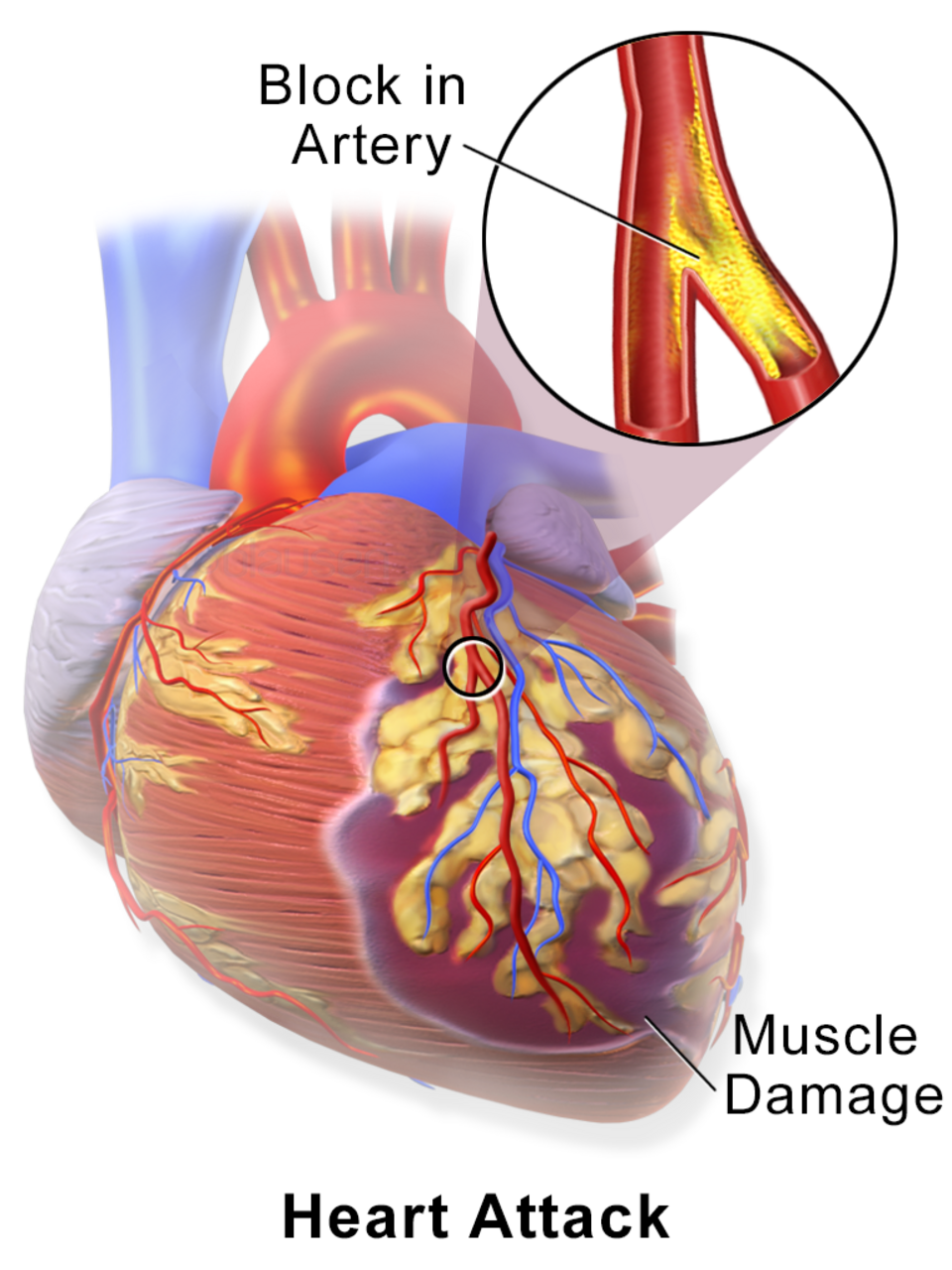
A heart attack (myocardial infarction) happens when a coronary artery is blocked and part of the heart muscle is starved of oxygen. Once the artery has been reopened and your condition is stable, the heart can cope with moderate effort again, and that includes sex. If you also have erection problems, read our guide to erectile dysfunction and heart disease, which explains why the two conditions share the same damaged arteries; this article focuses on the narrower question of resuming sex safely after the event itself.
The best data on triggering come from the Determinants of Myocardial Infarction Onset Study, which interviewed 1,774 heart attack patients at 45 US hospitals. Only 9% had been sexually active in the 24 hours before the event and 3% in the two hours before. The relative risk of a heart attack in the two hours after sex was 2.5, but because that two-hour window is so short, sexual activity was a likely contributor to just 0.9% of heart attacks. The authors estimated the absolute risk for a healthy person at roughly one in a million per episode, and men with a previous infarction were not at greater relative risk than men without heart disease.
A 2011 meta-analysis in JAMA confirmed the pattern: sexual activity raised the short-term risk of a heart attack 2.7-fold, but each extra hour of sexual activity per week translated to only about two to three additional events per 10,000 person-years. Men who exercised regularly had a much weaker triggering effect, with each weekly hour of habitual physical activity linked to roughly a 45% lower relative risk.
Sources: JAMA (PubMed) — Triggering myocardial infarction by sexual activity: low absolute risk (Muller et al., 1996); JAMA (PubMed) — Episodic physical and sexual activity and triggering of acute cardiac events: meta-analysis (Dahabreh and Paulus, 2011)
What the cardiology guidelines conclude
Based on this evidence, the American Heart Association’s scientific statement on sexual activity and cardiovascular disease concludes that patients with stable heart disease, minimal symptoms and low risk on clinical examination can safely have sex. Activity should be deferred only in unstable, decompensated or severely symptomatic disease, and in patients whose cardiac symptoms are actually triggered by sex. Cleveland Clinic cardiologist Steven Nissen summarizes the clinical attitude simply: if you are fit enough for sex, it is encouraged.
Sources: American Family Physician — AHA statement on sexual activity and cardiovascular disease; Cleveland Clinic — 5 common questions about sex and your heart
Sex after heart attack timeline: when you can start again
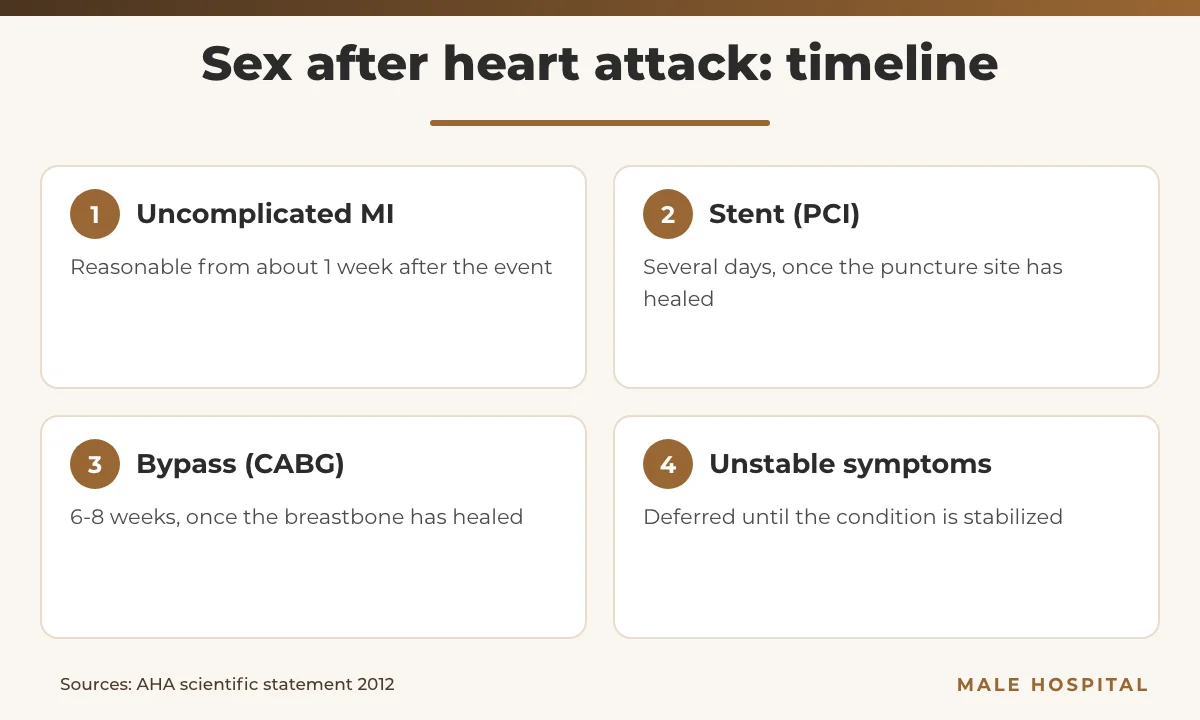
There is no single date that fits everyone, because “heart attack” covers a small event treated with a stent within hours and a large one complicated by heart failure or rhythm problems. The AHA statement gives the following reference points, which your cardiologist will adjust to your case.
| Situation | When sex is considered reasonable (AHA) | Condition |
|---|---|---|
| Uncomplicated heart attack | At least one week after the event | No chest pain or breathlessness with mild to moderate activity |
| Stent / angioplasty (PCI) with complete revascularization | Several days after the procedure | Puncture site in the wrist or groin has healed without complications |
| Bypass surgery (CABG) or other open-heart surgery | Six to eight weeks after surgery | Breastbone (sternotomy) well healed |
| Incomplete revascularization | After a stress test | Test shows no significant remaining ischemia |
| Unstable or refractory angina, decompensated heart failure, uncontrolled arrhythmia | Deferred | Until the condition is stabilized and optimally treated |
The British Heart Foundation gives a similar practical range: most people restart sex as soon as they feel well enough, typically around two to eight weeks, with surgery taking longer. The US National Heart, Lung, and Blood Institute notes that many people can return to normal activities within a few weeks if they have no chest pain or other problems, and advises asking your doctor for a safe schedule that includes when you can resume sexual activity.
A heart attack is a different situation from the gradual changes we describe in sex after 50. Those changes come slowly; here the body is healing from an acute event, so the timeline matters more than age.
Sources: American Family Physician — AHA statement on sexual activity and cardiovascular disease; British Heart Foundation — Sex and heart conditions; NHLBI — Heart attack recovery
How hard is sex on the heart?
Doctors measure physical effort in metabolic equivalents (METs); one MET is the energy you use sitting quietly. The Princeton Consensus, the expert document on sexual activity in cardiac patients, puts sex at about 3 METs, roughly the same as walking one mile on the flat in 20 minutes or climbing two flights of stairs briskly in about 10 seconds. If you can do either of those without chest pain, breathlessness or dizziness, you have shown that your heart can handle sex.
Cleveland Clinic data give a feel for what happens during the act itself. Over an average of 5 to 15 minutes, blood pressure typically peaks around 160/90, comparable to a few minutes of brisk running, and then falls; the partner on top reaches a heart rate of about 120 beats per minute and the partner underneath about 110. These are short, moderate peaks, not a sustained workout.
When the risk is unclear, the AHA recommends an exercise stress test. If you reach 3 to 5 METs or more without angina, breathlessness, ischemic ECG changes, a fall in blood pressure or arrhythmia, sex is considered reasonable. The Princeton panel defines the pass mark as completing four minutes of the standard Bruce treadmill protocol (5 to 6 METs) without symptoms; men who cannot exercise can have a chemical stress test with imaging instead.
Sources: Mayo Clinic Proceedings (PMC) — Princeton III Consensus on erectile dysfunction and cardiovascular disease; Cleveland Clinic — 5 common questions about sex and your heart; American Family Physician — AHA statement on sexual activity and cardiovascular disease
Risk categories: who needs a stress test first
The European Association of Urology (EAU) guideline on erectile dysfunction adopts the Princeton risk categories to decide who can resume sex and start ED treatment straight away, who needs testing first and who must wait. The categories depend on how recent the heart attack was and whether the blocked artery was treated.
| Risk category | Examples after a heart attack | What it means for sex |
|---|---|---|
| Low risk | Successfully revascularized with a stent or bypass; well-controlled blood pressure; mild heart failure (NYHA I–II) reaching 5 METs without ischemia on a recent test | Sex does not pose significant cardiac risk; ED treatment can usually start without further tests |
| Intermediate (indeterminate) risk | Heart attack 2–8 weeks ago without a stent or bypass; mild or moderate stable angina; NYHA III heart failure; prior stroke or peripheral artery disease | Exercise stress test before resuming sex, then reclassified as low or high risk |
| High risk | Heart attack within the last 2 weeks without intervention; unstable or refractory angina; uncontrolled blood pressure; NYHA IV heart failure; high-risk arrhythmias | Sex deferred until the condition is stabilized |
In short: a man whose artery was opened with a stent is low risk even soon after the event, whereas an infarction managed with medicines alone keeps him in the intermediate group for two to eight weeks, so a stress test, often done during cardiac rehabilitation, is the fastest route back to sex after heart attack.
Sources: EAU — Sexual and Reproductive Health Guidelines: management of erectile dysfunction; Mayo Clinic Proceedings (PMC) — Princeton III Consensus on erectile dysfunction and cardiovascular disease
Cardiac rehabilitation helps on both fronts
Cardiac rehabilitation is a supervised program of exercise training, education and stress counseling, typically 36 sessions over 12 weeks in the United States; the NHLBI reports that it improves quality of life and cuts hospital readmissions. The AHA statement adds that rehabilitation and regular exercise lower the risk of cardiovascular complications during sex, and rehab is the natural place to raise sexual questions with a nurse or physiotherapist.
Sources: NHLBI — Heart attack recovery; American Family Physician — AHA statement on sexual activity and cardiovascular disease
Erectile dysfunction after a heart attack
Erectile dysfunction is about twice as common in men with cardiovascular disease as in the general population, and it may appear one to three years before angina, because the small penile arteries narrow before the coronary arteries do. A heart attack therefore often lands on top of erection problems that were already developing. In a US-Spanish study of men and women aged 55 or younger, 21.7% of men reported erectile difficulties and 18.8% low sexual interest one year after the event; among men with no problems before the event, 30.5% developed at least one new sexual problem.
Sources: European Heart Journal (PubMed) — Sexual counselling for individuals with cardiovascular disease and their partners: AHA/ESC consensus (Steinke et al., 2013); JAMA Cardiology (PubMed) — Sexual activity and function in the year after an acute myocardial infarction (Lindau et al., 2016)
Heart medicines and erections: smaller effect than you think
Beta-blockers and diuretics have a reputation for causing ED, but the AHA notes that recent studies do not show a clear link with many modern agents, and it is firm that drugs which improve symptoms or survival should not be withheld because of possible sexual side effects. A striking Italian trial explains part of the reputation: 96 men with newly diagnosed heart disease were given the beta-blocker atenolol. Only 3.1% developed ED when they did not know which drug they were taking, 15.6% when they knew the drug, and 31.2% when they were also told it could cause ED. Expectation, not just pharmacology, drove the problem, and sildenafil and placebo were equally effective at reversing it.
If you believe a medicine is affecting your erections or sex drive, the British Heart Foundation advises speaking to your doctor or pharmacist, who may adjust the dose or switch drugs. Never stop a heart medicine on your own.
Sources: American Family Physician — AHA statement on sexual activity and cardiovascular disease; European Heart Journal (PubMed) — Erectile dysfunction after beta-blockers is related to patient knowledge of side effects (Silvestri et al., 2003); British Heart Foundation — Sex and heart conditions
Treatment options
Once a cardiologist has confirmed you are in the low-risk group, ED after a heart attack is treated like ED in any other man with vascular risk: lifestyle measures, PDE5 inhibitor tablets, and if those fail, vacuum devices, penile injections, shockwave therapy or a penile implant. A urologist-andrologist can map these options for you; see our overview of erectile dysfunction treatment. The one group of drugs that needs special care in heart patients is covered next.
Source: EAU — Sexual and Reproductive Health Guidelines: management of erectile dysfunction
ED pills after a heart attack: the nitrate rule
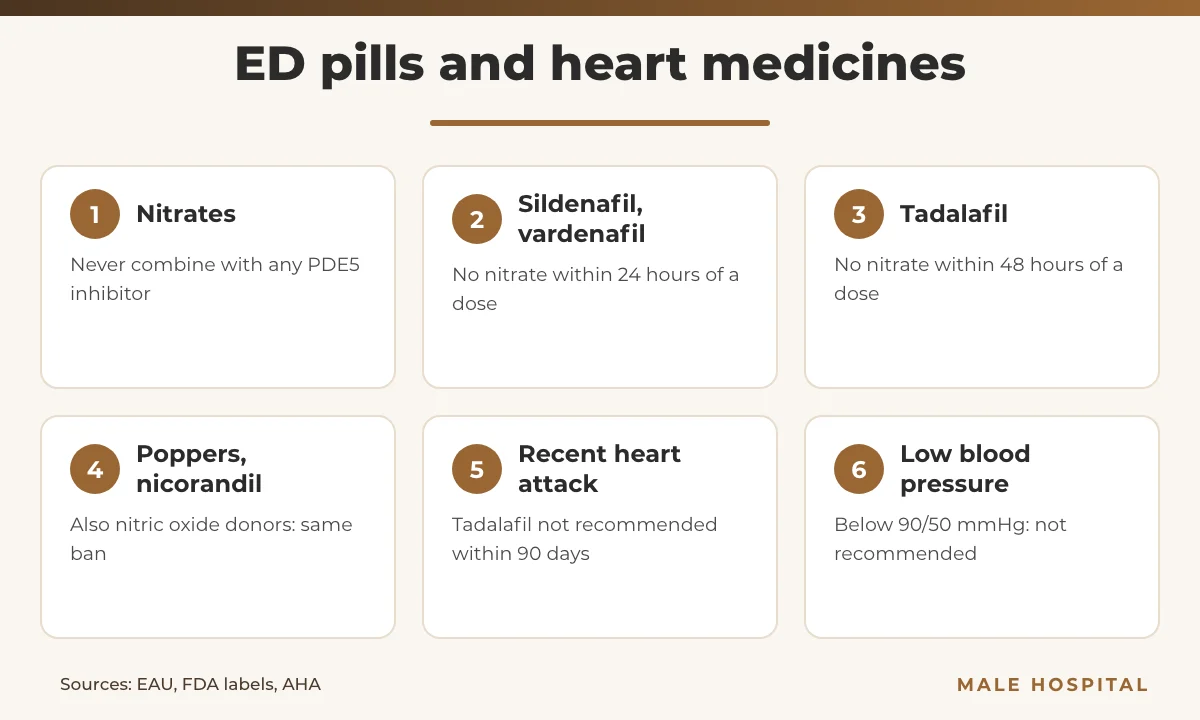
Sildenafil, tadalafil, vardenafil and avanafil (PDE5 inhibitors) are useful and generally safe for ED in stable cardiovascular disease. They have one absolute contraindication that matters enormously after a heart attack: nitrates. Many men leave hospital with a nitroglycerin (GTN) spray or tablets, or with long-acting nitrates such as isosorbide. Combining them with a PDE5 inhibitor can cause an unpredictable, dangerous drop in blood pressure. The EAU guideline extends the ban to recreational “poppers” (amyl nitrite) and to nicorandil, which also release nitric oxide.
The timing rules come from the drug labels and the AHA statement: avoid nitrates within 24 hours of sildenafil or vardenafil and within 48 hours of tadalafil, because tadalafil stays in the body much longer. The tadalafil label states that if a nitrate becomes medically necessary in a life-threatening situation, at least 48 hours should have passed since the last dose, and even then it must be given under close monitoring. Practically, this means that if you carry a GTN spray for angina, you must agree a clear plan with your cardiologist before any ED pill is prescribed.
Sources: EAU — Sexual and Reproductive Health Guidelines: management of erectile dysfunction; DailyMed (FDA label) — CIALIS (tadalafil) prescribing information; American Family Physician — AHA statement on sexual activity and cardiovascular disease
How soon after a heart attack can you take them?
The labels are cautious about the early weeks. The FDA label for tadalafil says it is not recommended for men who had a heart attack within the last 90 days, who have unstable angina or angina during intercourse, who had a stroke within six months, or whose blood pressure is below 90/50 mmHg, because such patients were excluded from the trials. The sildenafil label puts men with a heart attack, stroke or life-threatening arrhythmia in the past six months in a “no controlled data, prescribe with caution” group, and the NHS says sildenafil may not be suitable soon after a heart attack or stroke.
These are cautions rather than lifelong bans. Once the risk assessment places you in the low-risk group and nitrates are not part of your treatment, your doctor can prescribe a PDE5 inhibitor, usually starting low. Side effects such as headache, flushing and nasal congestion are the same as in other men; we list them in sildenafil side effects.
Sources: DailyMed (FDA label) — CIALIS (tadalafil) prescribing information; DailyMed (FDA label) — VIAGRA (sildenafil citrate) prescribing information; NHS — Sildenafil (Viagra)
Do ED pills harm or help the heart after a heart attack?
Reassuringly, large observational data point the other way. A Swedish nationwide cohort followed 43,145 men under 80 after a first heart attack for an average of 3.3 years; the 7.1% who were dispensed ED medication had 33% lower mortality and 40% fewer heart-failure hospitalizations than untreated men. The benefit was seen only with PDE5 inhibitors, not with alprostadil injections. Being observational, the study cannot prove that the pills protect the heart, since men well enough to seek ED treatment may simply be healthier, but it shows no signal of harm when the drugs are used correctly.
Herbal “natural” sex boosters are a different matter: the AHA warns that products of unknown composition may contain hidden PDE5 inhibitor analogues, yohimbine or L-arginine, which can interact with heart drugs or alter blood pressure.
Sources: Heart (PubMed) — Treatment for erectile dysfunction and death or cardiovascular outcomes after myocardial infarction (Andersson et al., 2017); American Family Physician — AHA statement on sexual activity and cardiovascular disease
Fear, anxiety and your partner
The biggest barrier to sex after a heart attack is rarely the heart. In the VIRGO study of 2,349 women and 1,152 men aged 18 to 55, only 12% of women and 19% of men had discussed sex with a physician in the first month after their heart attack. When the conversation did happen, 68% were given restrictions, such as limiting sex (35%), taking a passive role (26%) or keeping the heart rate down (23%), most of which have no basis in guidelines. In the same cohort, 63.9% of men who were sexually active before the event had resumed sex within one month and 94.4% within a year, but men who had not discussed sex with a doctor were about 1.5 times more likely to be delayed.
An earlier US registry found that men who received no discharge instructions about resuming sex were 27% more likely to have stopped sexual activity a year later. Nothing in these data suggests that early sex after heart attack is dangerous; the harm comes from silence.
Sources: Circulation (PubMed) — Sexual activity and counseling in the first month after acute myocardial infarction among younger adults (Lindau et al., 2014); JAMA Cardiology (PubMed) — Sexual activity and function in the year after an acute myocardial infarction (Lindau et al., 2016); American Journal of Cardiology (PubMed) — Patterns and loss of sexual activity in the year after hospitalization for acute myocardial infarction (Lindau et al., 2012)
Managing the fear
Fear of “causing another heart attack” is common in both patients and partners, and the NHLBI notes that worry about a second event and low mood are frequent during recovery. Anxiety itself suppresses desire and erections and can start a cycle of avoidance, the mechanism we describe in sexual performance anxiety. The AHA/ESC consensus therefore recommends that every cardiac patient be screened for anxiety and depression, asked routinely about sexual function, and referred with their partner for sexual counseling when needed. If desire itself has faded, see low libido in men.
Sources: NHLBI — Heart attack recovery; European Heart Journal (PubMed) — Sexual counselling for individuals with cardiovascular disease and their partners: AHA/ESC consensus (Steinke et al., 2013)
Practical tips for sex after heart attack in the first weeks
The British Heart Foundation’s advice for heart patients is sensible and easy to follow:
- Start gently. Ease into sexual activity rather than going from rest to full exertion; cuddling and other forms of intimacy are a good way to rebuild confidence.
- Choose the time well. Daylight hours when you are rested are better than late at night; avoid sex straight after a heavy meal or after more than a little alcohol, both of which can cause dizziness or indigestion that mimics chest pain.
- Comfortable position. Pick a position that does not strain you; after surgery a small smooth cushion between you and your partner can protect the wound. Letting your partner take the more active role is fine.
- Keep your GTN spray within reach on the bedside table if you have been prescribed one, and if you get chest pain at any stage, stop and seek medical help. Chest pain during sex is very uncommon.
- Follow your activity plan. MedlinePlus suggests building walking from about 5 minutes a session in week one to about 30 minutes by week six; as your walking tolerance grows, so does your tolerance for sex.
Cleveland Clinic adds one less comfortable finding: there is evidence that sex with an unfamiliar partner, for example outside a long-term relationship, can be risky for men with heart disease, so the familiar setting of a long-term relationship is the safer place to resume.
Sources: British Heart Foundation — Sex and heart conditions; MedlinePlus — Being active after your heart attack; Cleveland Clinic — 5 common questions about sex and your heart
When to see a doctor
Call the emergency number immediately if, during or after sex, you have tight, squeezing or crushing chest pain, pain spreading to the arm, neck or jaw, severe shortness of breath, cold sweating, nausea with chest discomfort, or if your lips or skin turn pale, blue or grey. Do not drive yourself to hospital. While waiting, sit and rest, take 300 mg of aspirin if you have it and are not allergic, and use your GTN spray if one has been prescribed. If you have taken sildenafil or vardenafil in the last 24 hours, or tadalafil in the last 48 hours, tell the emergency team before they give any nitrate.
Stop and contact your cardiologist or rehab team if you notice angina that is becoming stronger, more frequent or longer-lasting, pain that occurs at rest or does not settle with your usual medicine, unusual breathlessness, palpitations or lightheadedness during activity, including sex.
Book a routine appointment if erections have weakened or disappeared since the event, if desire has faded, if you suspect a medicine is responsible, or if fear is keeping you or your partner from intimacy. These problems are common and treatable; they are not something you have to accept as the price of surviving a heart attack.
Sources: NHS — Heart attack; MedlinePlus — Being active after your heart attack
If you have had a heart attack and your erections or sex drive have not recovered, Assoc. Prof. Dr. Zülfü Sertkaya, our urologist-andrologist in Istanbul, can coordinate with your cardiologist and plan safe treatment; you can arrange a confidential consultation on WhatsApp.
FAQs about sex after heart attack
How long after a heart attack can you have sex?
The American Heart Association considers sex reasonable at least one week after an uncomplicated heart attack, several days after an uncomplicated stent procedure and six to eight weeks after bypass surgery. If yours was treated with medicines only, you may need a stress test first. Your cardiologist sets the final timing.
Source: American Family Physician — AHA statement on sexual activity and cardiovascular disease
Can sex cause another heart attack?
It can trigger one, but very rarely. The risk of a heart attack is about 2.5 to 2.7 times higher in the two hours after sex, yet because the window is so short, sex contributed to under 1% of cases in a 1,774-patient study, and the absolute risk per episode is extremely low. Regular exercise lowers it further.
Sources: JAMA (PubMed) — Triggering myocardial infarction by sexual activity (Muller et al., 1996); JAMA (PubMed) — Episodic physical and sexual activity and acute cardiac events (Dahabreh and Paulus, 2011)
How do I know if my heart is strong enough for sex?
A simple test: walk a mile on flat ground in about 20 minutes or climb two flights of stairs briskly. If you can do that without chest pain, breathlessness or dizziness, you can usually cope with sex, which costs about 3 METs. If you cannot, or your risk is uncertain, ask for an exercise stress test.
Sources: Mayo Clinic Proceedings (PMC) — Princeton III Consensus; British Heart Foundation — Sex and heart conditions
Can I take Viagra after a heart attack?
Often yes, once you are stable, but not with nitrates. The sildenafil label notes there are no controlled data in men with a heart attack in the past six months, so it is prescribed with caution, and the NHS says it may not be suitable soon after a heart attack. Nitrates, including GTN spray and poppers, must never be combined with it.
Sources: DailyMed (FDA label) — VIAGRA (sildenafil citrate) prescribing information; NHS — Sildenafil (Viagra)
How long after Cialis can I use my nitroglycerin spray?
At least 48 hours should pass after the last tadalafil dose before a nitrate is given, and only in a life-threatening situation under medical monitoring; for sildenafil and vardenafil the interval is 24 hours. If you rely on a GTN spray for angina, discuss alternatives to PDE5 inhibitors with your doctor rather than juggling timings.
Sources: DailyMed (FDA label) — CIALIS (tadalafil) prescribing information; American Family Physician — AHA statement on sexual activity and cardiovascular disease
Do beta-blockers cause erectile dysfunction after a heart attack?
Less often than feared. In a trial of 96 men on atenolol, ED developed in 3.1% of those who did not know what they were taking but in 31.2% of those told it could cause ED, so expectation plays a large role. The AHA advises never withholding a life-saving heart drug because of possible sexual side effects.
Sources: European Heart Journal (PubMed) — ED after beta-blockers and patient knowledge of side effects (Silvestri et al., 2003); American Family Physician — AHA statement on sexual activity and cardiovascular disease
Is it normal to be afraid of sex after a heart attack?
Yes. Fear of triggering another event is common in patients and partners, and most men never get clear advice: only 19% of younger men had discussed sex with a doctor one month after their heart attack. Asking your cardiologist or rehab nurse directly, and involving your partner, is the quickest way to replace fear with a plan.
Sources: Circulation (PubMed) — Sexual activity and counseling in the first month after acute myocardial infarction (Lindau et al., 2014); JAHA (PubMed) — Qualitative study to improve sexual outcomes after myocardial infarction (Abramsohn et al., 2013)
Which sexual position is safest after a heart attack?
No position has been shown to be dangerous. The British Heart Foundation recommends whatever is comfortable and does not strain a healing wound, letting your partner take the more active role if that helps. Cleveland Clinic measurements show the partner on top reaches a heart rate of about 120 and the partner underneath about 110, a modest difference.
Sources: British Heart Foundation — Sex and heart conditions; Cleveland Clinic — 5 common questions about sex and your heart
Does having sex after a heart attack help recovery?
Resuming a normal sex life is part of recovering quality of life. In a US registry, patients who were sexually active in the first month had a one-year mortality of 2.1% versus 4.1% in those who were not, a difference that was not statistically significant. The clearer benefit comes from regular exercise and cardiac rehabilitation, which also make sex safer.
Sources: American Journal of Cardiology (PubMed) — Patterns and loss of sexual activity after acute myocardial infarction (Lindau et al., 2012); NHLBI — Heart attack recovery
Medically reviewed by Assoc. Prof. Dr. Zülfü Sertkaya, urologist and andrologist (FEBU), Istanbul. Last reviewed: November 2026.
This article is for general information and does not replace an individual consultation with a qualified doctor.
- American Family Physician (AAFP) — AHA releases statement on sexual activity and cardiovascular disease (2012)
- JAMA (PubMed) — Triggering myocardial infarction by sexual activity: low absolute risk and prevention by regular physical exertion (Muller et al., 1996)
- JAMA (PubMed) — Association of episodic physical and sexual activity with triggering of acute cardiac events: systematic review and meta-analysis (Dahabreh and Paulus, 2011)
- Mayo Clinic Proceedings (PMC) — The Princeton III Consensus recommendations for the management of erectile dysfunction and cardiovascular disease (Nehra et al., 2012)
- EAU — Sexual and Reproductive Health Guidelines — Management of erectile dysfunction
- British Heart Foundation — Sex and heart conditions
- NHLBI — Heart attack recovery
- Cleveland Clinic — 5 common questions about sex and your heart (Steven Nissen, MD)
- European Heart Journal (PubMed) — Sexual counselling for individuals with cardiovascular disease and their partners: AHA/ESC CCNAP consensus document (Steinke et al., 2013)
- JAMA Cardiology (PubMed) — Sexual activity and function in the year after an acute myocardial infarction among younger women and men in the United States and Spain (Lindau et al., 2016)
- Circulation (PubMed) — Sexual activity and counseling in the first month after acute myocardial infarction among younger adults in the United States and Spain (Lindau et al., 2014)
- American Journal of Cardiology (PubMed) — Patterns and loss of sexual activity in the year following hospitalization for acute myocardial infarction (Lindau et al., 2012)
- Journal of the American Heart Association (PubMed) — A qualitative study to improve sexual outcomes in women with myocardial infarction (Abramsohn et al., 2013)
- European Heart Journal (PubMed) — Report of erectile dysfunction after therapy with beta-blockers is related to patient knowledge of side effects and is reversed by placebo (Silvestri et al., 2003)
- Heart (PubMed) — Association between treatment for erectile dysfunction and death or cardiovascular outcomes after myocardial infarction (Andersson et al., 2017)
- DailyMed (FDA label) — CIALIS (tadalafil) tablets — prescribing information
- DailyMed (FDA label) — VIAGRA (sildenafil citrate) tablets — prescribing information
- NHS — Sildenafil (Viagra)
- NHS — Heart attack
- MedlinePlus — Being active after your heart attack