Post finasteride syndrome (PFS) is the name given to sexual, mood and cognitive symptoms that some men report continuing for months or years after they stop finasteride, a 5-alpha-reductase inhibitor used for hair loss and an enlarged prostate. The FDA, the European Medicines Agency and the UK regulator all list sexual dysfunction that continued after discontinuation, depression and suicidal ideation in the drug’s official information, yet large controlled studies have not confirmed a distinct syndrome, so the condition remains real for the men who live with it and unsettled in the science. This page examines that evidence; the wider picture of BPH medications and their sexual side effects is in our main guide.
Sources: FDA — PROPECIA (finasteride 1 mg) prescribing information, 2022; Neurobiology of Stress (PMC) — Post-finasteride syndrome: an emerging clinical problem
- Reported post finasteride syndrome symptoms: low libido, erectile dysfunction, reduced arousal, orgasm problems, genital numbness, depression, anxiety, suicidal thoughts and “brain fog” persisting after the drug is stopped.
- In the 1 mg hair-loss trials, 3.8% of men reported a sexual side effect in year one versus 2.1% on placebo; the label says these resolved in men who stopped and in most who continued.
- Persistent symptoms are described mainly in case series of self-selected men; a 2026 analysis of 14,239 trial participants followed for about 20 years found no excess of PFS-type diagnoses.
- In 2025 the EU confirmed suicidal ideation as a side effect of finasteride tablets and added a patient card to 1 mg packs; the UK added an alert card in 2024.
- No treatment has been proven for post finasteride syndrome itself; care focuses on urgent mental-health support, standard erectile dysfunction treatment and ruling out other causes.
- What is post finasteride syndrome?
- How finasteride works and why side effects happen
- Post finasteride syndrome symptoms
- How common is post finasteride syndrome?
- What the research says: the debate
- What regulators have decided: FDA, EMA and MHRA
- Who may be at higher risk, and how to lower it
- How doctors evaluate suspected post finasteride syndrome
- Post finasteride syndrome treatment: what helps and what is unproven
- When to see a doctor
- FAQs about post finasteride syndrome
What is post finasteride syndrome?
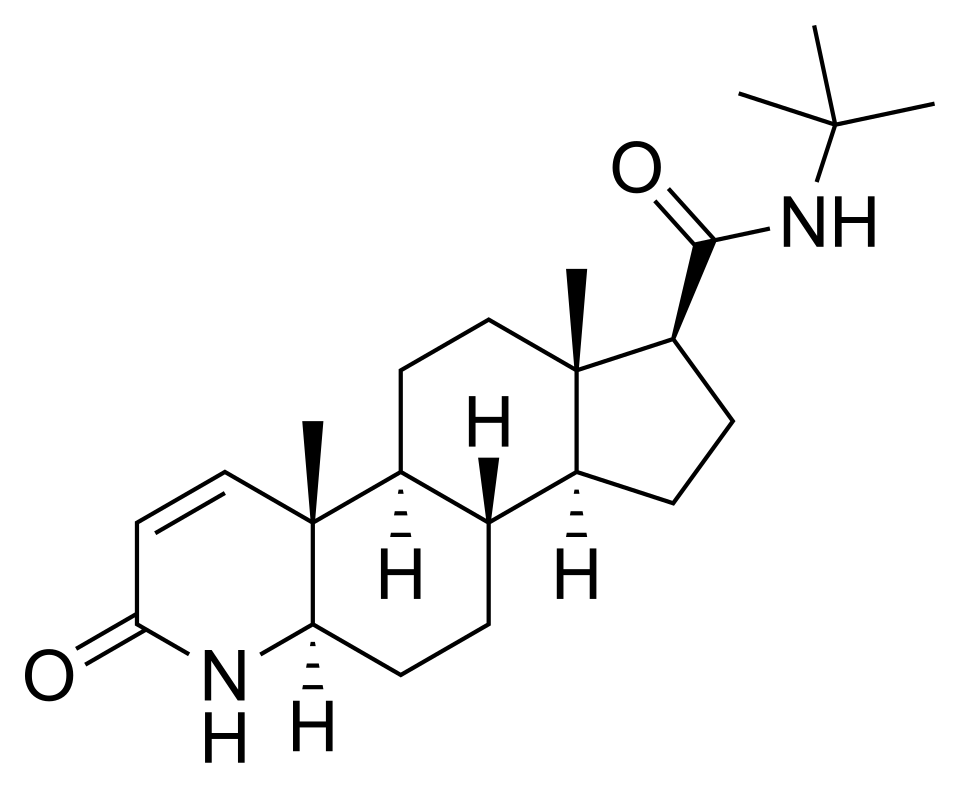
Finasteride is sold as a 1 mg tablet for male pattern hair loss (Propecia and generics) and as a 5 mg tablet for benign prostatic hyperplasia (Proscar and generics). Most men who take it have no lasting problems. A small number describe symptoms that began during treatment and did not go away after stopping. Patient groups named this cluster post finasteride syndrome, and the term now appears in medical journals and regulatory reviews, although it is not a formal diagnosis in disease classifications.
Researchers commonly define post finasteride syndrome as adverse effects that last at least three months after the last dose, in three groups: sexual, neuropsychiatric and physical. Reviews stress that most evidence comes from self-reported surveys and small clinical series rather than controlled trials, that the frequency in the general population is unclear, and that the condition appears rare. It is reported mainly in younger men treated for hair loss rather than older men treated for the prostate.
Sources: Neurobiology of Stress (PMC) — Post-finasteride syndrome: an emerging clinical problem; Anais Brasileiros de Dermatologia (PubMed) — Post-finasteride syndrome
How finasteride works and why side effects happen
The enzyme 5-alpha-reductase converts testosterone into dihydrotestosterone (DHT), the more potent androgen that drives prostate growth and miniaturizes scalp hair follicles in men prone to balding. Finasteride blocks the type 2 form of the enzyme, which dominates in the prostate; dutasteride blocks both types. According to the European Association of Urology (EAU), continuous treatment lowers blood DHT by about 70% with finasteride and about 95% with dutasteride, shrinks the prostate by roughly 18–28% and halves PSA after six to twelve months.
The same enzyme is active in the brain, where it helps make neuroactive steroids such as allopregnanolone that modulate mood and the GABA system. This is why researchers consider finasteride capable of affecting desire, erections, mood and thinking, and it is the starting point for most theories about post finasteride syndrome. The EAU lists reduced libido and erectile dysfunction as the most common adverse events of 5-alpha-reductase inhibitors, with ejaculation disorders less often and breast enlargement or tenderness in about 1–2% of men, and advises counselling patients about these effects before starting.
Sources: EAU Guidelines — Management of non-neurogenic male LUTS: disease management; Neurobiology of Stress (PMC) — Post-finasteride syndrome: an emerging clinical problem
Post finasteride syndrome symptoms
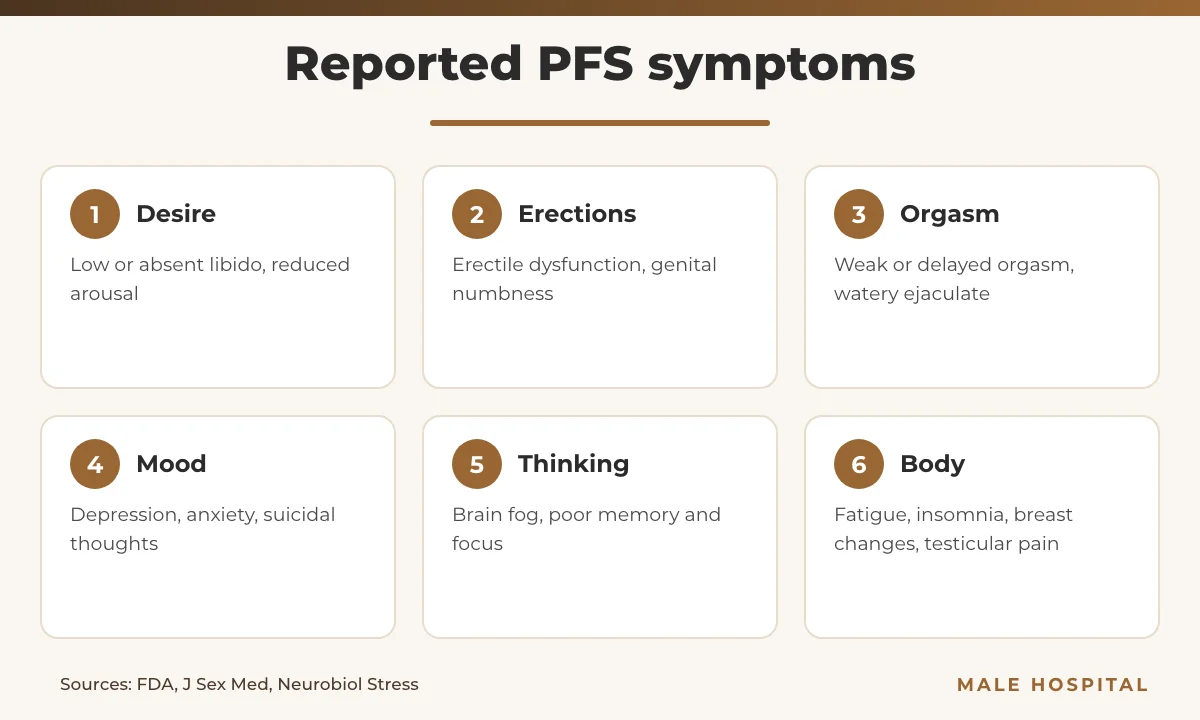
The post finasteride syndrome symptoms men report are consistent across case series, surveys and the FDA’s adverse-event database, even though their cause is debated. Sexual complaints lead the list and usually appear first.
Sexual symptoms
Low or absent libido, difficulty getting or keeping an erection, reduced genital sensation or numbness, weaker or delayed orgasms, and watery or low-volume ejaculate. In the first published series of 71 men aged 21 to 46 with persistent problems after finasteride for hair loss, 94% reported low libido, 92% erectile dysfunction, 92% decreased arousal and 69% orgasm problems. Symptoms had lasted an average of 40 months after stopping.
Mood and cognitive symptoms of post finasteride syndrome
Depression, anxiety, irritability, panic attacks, insomnia and suicidal thoughts are described, along with “brain fog”, poor concentration and forgetfulness. When 16 men with post finasteride syndrome were examined in a clinical study, half met criteria for major depressive disorder and all had erectile dysfunction, severe in ten.
Physical symptoms
Fatigue, muscle weakness or cramps, breast enlargement, testicular pain and changes in semen quality have been reported. The same mix of sexual, mood, cognitive and physical complaints appears in the FDA’s 2025 alert on compounded topical finasteride, where most reports said the effects continued after the product was stopped.
Sources: Journal of Sexual Medicine (PubMed) — Persistent sexual side effects of finasteride for male pattern hair loss; Journal of Steroid Biochemistry and Molecular Biology (PubMed) — Neuroactive steroid levels and psychiatric and andrological features in post-finasteride patients; FDA — Alert on compounded topical finasteride products
How common is post finasteride syndrome?
Nobody can give a reliable figure for post finasteride syndrome, because persistent symptoms have never been measured prospectively in a large trial designed to find them. What we have are the rates of sexual side effects during treatment from the pivotal trials, and spontaneous reports after marketing, which cannot be turned into a percentage.
| Trial finding (drug-related, year 1) | Finasteride | Placebo |
|---|---|---|
| 1 mg, hair loss: decreased libido | 1.8% | 1.3% |
| 1 mg, hair loss: erectile dysfunction | 1.3% | 0.7% |
| 1 mg, hair loss: ejaculation disorder | 1.2% | 0.7% |
| 1 mg, hair loss: any of the above | 3.8% | 2.1% |
| 5 mg, BPH: impotence | 8.1% | 3.7% |
| 5 mg, BPH: decreased libido | 6.4% | 3.4% |
| 5 mg, BPH: impotence, years 2–4 | 5.1% | 5.1% |
Two label details matter for the post finasteride syndrome debate. In the hair-loss trials the sexual side effects resolved in men who stopped the drug and in most who kept taking it, and each effect fell to 0.3% or less by the fifth year. In the four-year BPH trial the difference from placebo disappeared after the first year. The trials, in other words, saw early and mostly reversible effects, not a lasting syndrome. A 2016 systematic review put sexual effects at 3.4% to 15.8% of men across studies.
Critics reply that the trials were not built to detect persistence. A 2015 meta-analysis examined 34 finasteride hair-loss trials and judged that none had adequate safety reporting, and that only 31% of 5,704 real-world users in a clinical database would even have qualified for the pivotal trials. So the true rate of post finasteride syndrome sits somewhere between “very rare” and “under-counted”, and honest clinicians say so.
Sources: FDA — PROPECIA (finasteride 1 mg) prescribing information, 2022; FDA — PROSCAR (finasteride 5 mg) prescribing information, 2026; Journal of Clinical and Aesthetic Dermatology (PubMed) — Adverse effects and safety of 5-alpha reductase inhibitors: a systematic review; JAMA Dermatology (PubMed) — Adverse event reporting in clinical trials of finasteride for androgenic alopecia
What the research says: the debate
The argument over post finasteride syndrome has three strands: studies of men who report it, studies searching for a mechanism, and population data that look for an excess of symptoms in finasteride users.
Case series: symptoms that outlast the drug
The 2011 series of 71 men was followed by a reassessment of 54 of them after 9 to 16 months: 96% still had persistent sexual side effects. These studies showed the pattern clearly but had no control group and recruited men through a post finasteride syndrome website, so they cannot say how often the problem happens or prove the drug caused it.
Mechanism studies: what is different in affected men
A 2016 controlled study compared men with persistent symptoms with symptom-free former users and non-users. Hormone levels, body composition, androgen receptor and 5-alpha-reductase gene sequences and androgen-dependent gene activity in skin were all similar, with no evidence of androgen deficiency or lasting enzyme blockade. Symptomatic men did have worse sexual function, higher depression scores and abnormal brain responses to sexual and emotional images on functional MRI. An Italian group found altered neuroactive steroid levels in the cerebrospinal fluid of 16 post finasteride syndrome patients and abnormal pudendal nerve responses in those with severe erectile dysfunction. Something measurable seems to be happening, mostly in the nervous system, but the samples are very small.
Population data: no excess found so far
The strongest counter-evidence arrived in 2026. Investigators linked participants of the Prostate Cancer Prevention Trial, a randomized placebo-controlled trial of finasteride 5 mg, to Medicare claims: 7,087 men on finasteride and 7,152 on placebo, followed for a median of about 20 years. Across 22 pre-specified PFS-type diagnoses nothing differed: erectile dysfunction 21.8% versus 21.7%, depression 25.2% versus 24.3%, suicide attempt or death 1.1% in both groups. The authors found no evidence of a true post finasteride syndrome and suggested reporting bias explains the anecdotes. The limits are obvious too: these were older men on the 5 mg dose, and claims data miss milder symptoms.
Pharmacovigilance paints a different picture. A 2021 analysis of the WHO’s VigiBase found disproportionate reporting of suicidality with finasteride (reporting odds ratio 1.63) and psychological adverse events (4.33), strongest in men under 45 using it for hair loss, while noting that publicity may have stimulated reporting. A 2025 FAERS analysis counted 1,566 suicidality reports between 2015 and 2024, 43% from men aged 18 to 39 and two-thirds for hair loss; such reports cannot prove causation. Both camps agree that properly designed prospective studies are still missing.
Sources: Journal of Sexual Medicine (PubMed) — Persistent sexual side effects of finasteride: reassessment at follow-up; Journal of Clinical Endocrinology & Metabolism (PubMed) — Characteristics of men who report persistent sexual symptoms after finasteride use; Urology (PMC) — No evidence of post-finasteride syndrome in 267,983 person-years of follow-up in the PCPT; JAMA Dermatology (PubMed) — Investigation of suicidality and psychological adverse events in patients treated with finasteride; Pharmaceuticals (PMC) — Suicidality risks associated with finasteride: FAERS data 2015–2024
What regulators have decided: FDA, EMA and MHRA
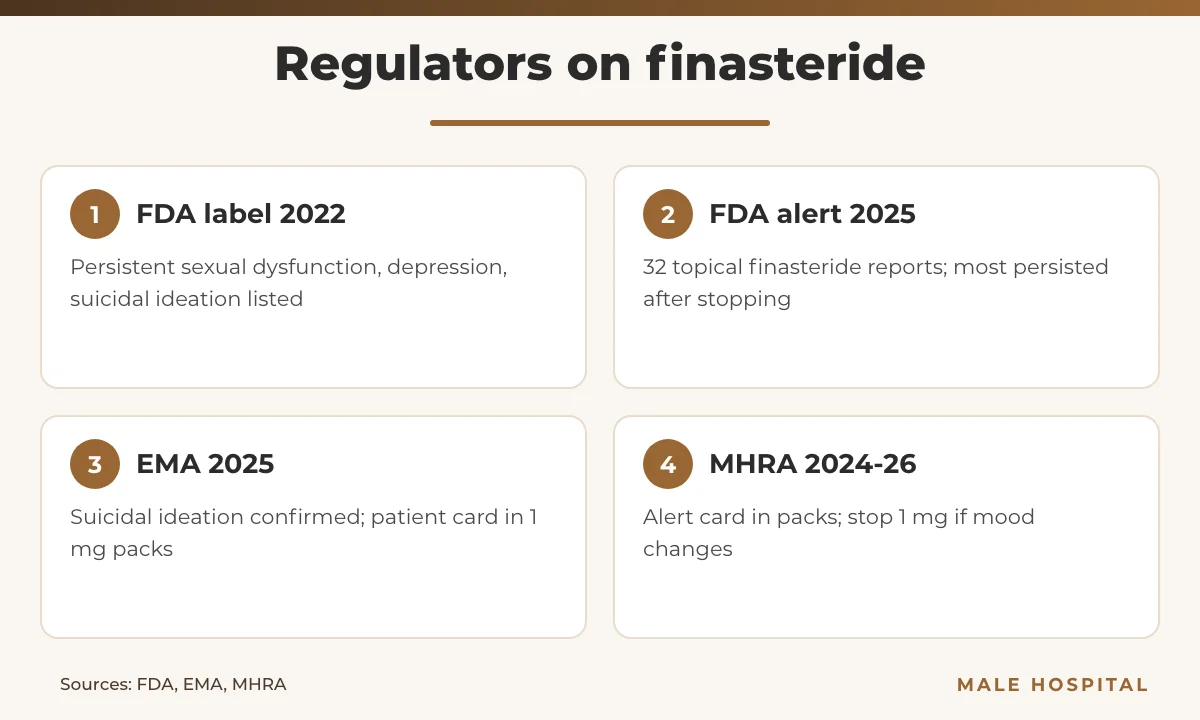
Regulators do not have to settle the post finasteride syndrome debate before acting; they add warnings when a signal is plausible. All three major agencies have done so.
| Regulator | Action | Key points |
|---|---|---|
| FDA (United States) | Label updates; Propecia revised July 2022 | Lists sexual dysfunction that continued after discontinuation (erectile, libido, ejaculation and orgasm disorders), depression, and suicidal ideation and behavior. The Proscar label adds that such reports were rare in BPH patients and finasteride’s independent role is unknown. |
| FDA (United States) | Compounding risk alert, April 2025 | 32 adverse-event cases with compounded topical finasteride, 2019–2024; most said effects persisted after stopping; no topical finasteride is FDA-approved. |
| EMA (European Union) | EU-wide review; Commission decision 22 August 2025 | Suicidal ideation confirmed as a side effect of finasteride 1 mg and 5 mg tablets (frequency unknown) after 325 cases were reviewed against roughly 270 million patient-years of use; no direct link for dutasteride or finasteride spray; patient card in 1 mg packs; benefits still outweigh risks. |
| MHRA (United Kingdom) | Safety review April 2024; updated warnings August 2026 | 281 Yellow Card reports of depressed mood or suicidal behaviour and 426 of sexual dysfunction by April 2024; alert card in packs; 2026 letter advises seeking advice for sexual dysfunction and considering stopping, and extends a precautionary mood warning to dutasteride. |
Two practical messages follow. Men taking 1 mg for hair loss who develop depressed mood or suicidal thoughts are told to stop the tablet and contact a doctor as soon as possible; men on 5 mg for the prostate are told to seek urgent advice. And the EU review recognizes that sexual side effects can feed mood changes, which is why patients are now asked to report sexual problems early rather than wait them out. The cards in the box exist because regulators found these effects poorly known among patients and prescribers alike.
Sources: EMA — Finasteride- and dutasteride-containing medicinal products: referral; MHRA (GOV.UK) — Men on finasteride asked to stay vigilant for psychiatric and sexual side effects; MHRA / Medicines UK — Finasteride and dutasteride: updated safety warnings (DHPC letter, 2026); FDA — PROSCAR (finasteride 5 mg) prescribing information, 2026
Who may be at higher risk, and how to lower it
No test predicts who will develop post finasteride syndrome. The reports, however, cluster in a recognizable group: younger men treated for hair loss, often with a personal or family history of mood problems. In one survey of men reporting post finasteride syndrome, nearly 57% had a prior psychiatric diagnosis and 28% had a first-degree relative with a mental-health disorder, and the FAERS and VigiBase analyses found the strongest signals in men under 40 to 45 on the 1 mg dose. Whether this reflects biological susceptibility or simply who reports is unknown, but it shapes sensible precautions.
- Screen mood before starting. Reviews and the MHRA advise asking about past depression or suicidal thoughts; men with a history of mood disorders may be better served by other hair-loss options or closely supervised follow-up.
- “Topical” does not mean risk-free. The FDA’s 2025 alert was prompted partly by patients who had been told compounded sprays carried no systemic risk.
- Treat the first weeks as a trial. New loss of desire, erection problems, numbness or low mood are the moment to call the prescriber, not to push through.
- Do not switch to dutasteride to escape the problem. It blocks the same enzyme more completely, and regulators now apply a precautionary mood warning to it.
- Weigh need against risk. The EAU reserves 5-alpha-reductase inhibitors for men with moderate-to-severe prostate symptoms and a prostate above about 40 mL; for cosmetic hair loss the calculation is personal.
If low desire is your main worry, our guide to low libido in men covers the many other causes a doctor will consider before blaming a tablet.
Sources: American Journal of Men’s Health (PubMed) — Emotional consequences of finasteride; Journal of Cosmetic Dermatology (PMC) — Finasteride use: evaluation of depression and suicide risk; FDA — Alert on compounded topical finasteride products; EAU Guidelines — Management of non-neurogenic male LUTS: disease management
How doctors evaluate suspected post finasteride syndrome
Because post finasteride syndrome has no diagnostic test, the evaluation documents the symptoms and excludes everything else that could explain them. A urologist-andrologist will usually cover three areas.
History and timeline
When finasteride was started and stopped, the dose and formulation, when each symptom began, and whether anything else changed at the same time: new medicines (particularly antidepressants, which cause similar sexual effects), relationship stress, alcohol, sleep or weight. An erectile-function questionnaire and a depression screen give a baseline.
Hormones and general health
Morning testosterone, prolactin, thyroid function, glucose and lipids. Research on post finasteride syndrome has consistently found normal hormone levels, so this step is not expected to “find” PFS; it catches treatable alternatives such as low testosterone, high prolactin or diabetes.
Erection-specific testing
Where erections are the main complaint, the usual erectile dysfunction test work-up applies: nocturnal erection monitoring, penile Doppler ultrasound and, in selected cases, nerve studies, since the Italian post finasteride syndrome cohort showed abnormal pudendal nerve responses in men with severe erectile dysfunction. Mood is assessed in parallel, and if depression is significant a psychiatrist joins the team. Experts increasingly call for this multidisciplinary approach rather than dismissing patients or accepting every symptom as drug-caused without looking further.
Sources: Journal of Clinical Endocrinology & Metabolism (PubMed) — Characteristics of men who report persistent sexual symptoms after finasteride use; Journal of Steroid Biochemistry and Molecular Biology (PubMed) — Neuroactive steroid levels and psychiatric and andrological features in post-finasteride patients; International Journal of Impotence Research (PubMed) — Post-finasteride syndrome: a true clinical entity?
Post finasteride syndrome treatment: what helps and what is unproven
The honest summary from the specialist literature is that there is no evidence-based treatment for post finasteride syndrome as a condition. That does not mean nothing can be done: each symptom can be treated on its own merits while research continues.
Mental health first
Depression and suicidal thoughts are the most dangerous part of this picture and the most treatable. Psychological therapy and, where appropriate, medication are the priority, and anyone with thoughts of self-harm needs same-day help. The NHS also suggests telling family or friends that the drug can affect mood so they can notice changes you might not.
Erections and desire
Erectile dysfunction after finasteride is approached like erectile dysfunction from any cause: phosphodiesterase-5 inhibitor tablets, vacuum devices, penile injections and, for men who do not respond over the long term, a penile implant, as described on our erectile dysfunction treatment page. Testosterone therapy is not a post finasteride syndrome treatment: the controlled study found no androgen deficiency in affected men, so it is used only if testosterone is genuinely low. Sex therapy helps when performance anxiety has settled on top of the physical problem, a pattern covered in our guide to psychological erectile dysfunction.
Unproven approaches
Hormone “re-balancing” regimens, neurosteroid supplements, restarting finasteride briefly, or protocols sold online have no trial evidence and can cause harm. Reviews from both sides of the debate agree that controlled studies are needed before any treatment specific to post finasteride syndrome can be recommended.
If you stopped finasteride months ago and your erections, desire or mood have not recovered, a confidential post finasteride syndrome assessment with our urologist-andrologist can separate what the drug may have done from what else is going on; message us on WhatsApp to arrange it.
Sources: Fertility and Sterility (PubMed) — Post-finasteride syndrome: a surmountable challenge for clinicians; NHS — Side effects of finasteride; Journal of Clinical Endocrinology & Metabolism (PubMed) — Characteristics of men who report persistent sexual symptoms after finasteride use; Neurobiology of Stress (PMC) — Post-finasteride syndrome: an emerging clinical problem
When to see a doctor
Seek help the same day, through emergency services if necessary, if you have thoughts of harming yourself; do not drive yourself. Contact your prescriber promptly, and stop 1 mg finasteride as the regulators advise, if you notice:
- low mood, loss of interest, anxiety or panic attacks that started after beginning the tablet;
- loss of sexual desire, new erection problems, genital numbness or a marked drop in semen volume;
- breast lumps, pain, swelling or nipple discharge, which must be checked because male breast cancer has been reported;
- a sexual or mood symptom still present three months after stopping finasteride, the usual definition of post finasteride syndrome;
- trouble conceiving while on the drug, since poor semen quality has been reported and often improves after stopping.
Women who are or could become pregnant should not handle crushed or broken tablets, because finasteride can harm a male fetus.
Sources: NHS — Side effects of finasteride; MedlinePlus — Finasteride; FDA — PROPECIA (finasteride 1 mg) prescribing information, 2022
FAQs about post finasteride syndrome
Is post finasteride syndrome real?
The symptoms of post finasteride syndrome are real and are listed in official drug labels. Whether they form a distinct syndrome caused by the drug is unresolved: case series and adverse-event databases support it, while a 2026 analysis of 14,239 trial participants followed for about 20 years found no excess of PFS-type diagnoses. Most specialists treat it as rare but possible.
Sources: Urology (PMC) — No evidence of post-finasteride syndrome in the PCPT; International Journal of Impotence Research (PubMed) — Post-finasteride syndrome: a true clinical entity?
How long does post finasteride syndrome last?
There is no reliable answer for how long post finasteride syndrome lasts. In the hair-loss trials, sexual side effects resolved after stopping. In the published series of men who sought help for persistent problems, symptoms had lasted an average of 40 months, and 96% still had them at a follow-up 9 to 16 months later. Those men were self-selected, so their experience cannot be generalized to all users.
Sources: Journal of Sexual Medicine (PubMed) — Persistent sexual side effects of finasteride; Journal of Sexual Medicine (PubMed) — Reassessment at follow-up
Can post finasteride syndrome happen after a short course or a low dose?
Reports describe post finasteride syndrome after both short and long use, and reviewers note that if the condition exists it seems to affect susceptible men regardless of dose or duration. The average length of use in the first case series was 28 months, but no minimum exposure has been identified, and 1 mg users are reported more often than 5 mg users.
Sources: Fertility and Sterility (PubMed) — Post-finasteride syndrome: a surmountable challenge for clinicians; Journal of Sexual Medicine (PubMed) — Persistent sexual side effects of finasteride
Does topical finasteride avoid persistent side effects?
Not reliably. The FDA received 32 reports of adverse events with compounded topical finasteride between 2019 and 2024, including erectile dysfunction, depression, anxiety and suicidal ideation, and most said the effects persisted after stopping. No topical finasteride product is FDA-approved, and some patients reported being told it was risk-free.
Source: FDA — Alert on compounded topical finasteride products
Is dutasteride safer than finasteride for persistent side effects?
Not necessarily. Dutasteride blocks both forms of the enzyme and lowers DHT more than finasteride. The EU review found insufficient evidence to link it directly to suicidal ideation, but regulators added a precautionary mood warning because it works the same way, and its label also mentions sexual dysfunction. It is not a way around the problem.
Sources: EMA — Finasteride- and dutasteride-containing medicinal products: referral; MHRA / Medicines UK — DHPC letter, 2026
Are hormone levels abnormal in men with post finasteride syndrome?
Usually not. A controlled study found testosterone and other hormones, markers of androgen action and the relevant gene sequences to be similar in symptomatic men, symptom-free former users and non-users. One small study did find altered neuroactive steroids in cerebrospinal fluid, which is why research now focuses on the brain rather than the testes.
Sources: Journal of Clinical Endocrinology & Metabolism (PubMed) — Characteristics of men who report persistent sexual symptoms; Journal of Steroid Biochemistry and Molecular Biology (PubMed) — Neuroactive steroid levels in post-finasteride patients
Should I stop finasteride if I notice side effects?
For the 1 mg hair-loss dose, UK and EU regulators advise stopping and contacting a doctor as soon as possible if depressed mood or suicidal thoughts appear, and seeking advice for sexual side effects. For the 5 mg prostate dose, seek prompt medical advice rather than stopping on your own, because the drug may be protecting you from urinary retention or surgery.
Sources: MHRA (GOV.UK) — Men on finasteride asked to stay vigilant; EMA — Finasteride and dutasteride referral
Medically reviewed by Assoc. Prof. Dr. Zülfü Sertkaya, urologist and andrologist (FEBU), Istanbul. Last reviewed: November 2026.
This article is for general information and does not replace an individual consultation with a qualified doctor.
- FDA — PROPECIA (finasteride 1 mg) prescribing information, revised 07/2022
- FDA — PROSCAR (finasteride 5 mg) prescribing information, 2026
- FDA — FDA alerts health care providers, compounders and consumers of potential risks associated with compounded topical finasteride products (2025)
- European Medicines Agency — Finasteride- and dutasteride-containing medicinal products: Article 31 referral (2025)
- MHRA (GOV.UK) — Men on finasteride asked to stay vigilant for possible psychiatric and sexual side effects (2024)
- MHRA / Medicines UK (emc) — Finasteride and dutasteride: updated safety warnings for psychiatric side effects and sexual dysfunction (DHPC, 2026)
- NHS — Side effects of finasteride
- MedlinePlus (NIH) — Finasteride
- European Association of Urology — Guidelines on management of non-neurogenic male LUTS: disease management
- Neurobiology of Stress (PMC) — Post-finasteride syndrome: an emerging clinical problem (Diviccaro et al., 2020)
- Urology (PMC) — No evidence of post-finasteride syndrome in 267,983 person-years follow-up in the Prostate Cancer Prevention Trial (Till et al., 2026)
- Pharmaceuticals (PMC) — Suicidality risks associated with finasteride: real-world data from FDA adverse event reports (Thaibah et al., 2025)
- Journal of Cosmetic Dermatology (PMC) — Finasteride use: evaluation of depression and suicide risk (Gupta et al., 2025)
- Journal of Sexual Medicine (PubMed) — Persistent sexual side effects of finasteride for male pattern hair loss (Irwig & Kolukula, 2011)
- Journal of Sexual Medicine (PubMed) — Persistent sexual side effects of finasteride: could they be permanent? (Irwig, 2012)
- Journal of Clinical Endocrinology & Metabolism (PubMed) — Characteristics of men who report persistent sexual symptoms after finasteride use for hair loss (Basaria et al., 2016)
- Journal of Steroid Biochemistry and Molecular Biology (PubMed) — Neuroactive steroid levels and psychiatric and andrological features in post-finasteride patients (Melcangi et al., 2017)
- JAMA Dermatology (PubMed) — Adverse event reporting in clinical trials of finasteride for androgenic alopecia: a meta-analysis (Belknap et al., 2015)
- JAMA Dermatology (PubMed) — Investigation of suicidality and psychological adverse events in patients treated with finasteride (Nguyen et al., 2021)
- Journal of Clinical and Aesthetic Dermatology (PubMed) — Adverse effects and safety of 5-alpha reductase inhibitors: a systematic review (Hirshburg et al., 2016)
- Fertility and Sterility (PubMed) — Post-finasteride syndrome: a surmountable challenge for clinicians (Traish, 2020)
- International Journal of Impotence Research (PubMed) — Post-finasteride syndrome: a true clinical entity? (Cilio et al., 2025)
- Anais Brasileiros de Dermatologia (PubMed) — Post-finasteride syndrome (Pereira & Coelho, 2020)
- American Journal of Men's Health (PubMed) — Emotional consequences of finasteride: fool's gold (Ganzer & Jacobs, 2018)