
BPH medications sexual side effects depend mostly on the drug class. Alpha-blockers such as tamsulosin and silodosin mainly change ejaculation, often producing an orgasm with little or no semen, while 5-alpha-reductase inhibitors (finasteride and dutasteride) can lower libido and cause erection problems, especially in the first year. All of these effects are listed in the official FDA labels, most are reversible, and there are options if they bother you. This page is a drug-by-drug companion to our overview of enlarged prostate and erectile dysfunction.
Source: EAU Guidelines — Management of Non-neurogenic Male LUTS: Disease Management
- Alpha-blockers for BPH do not harm libido or erections, according to European guidelines, but they often reduce or abolish the semen released at orgasm.
- Silodosin carries the highest rate: 28.1% of men reported retrograde ejaculation in the FDA label trials, versus 0.9% on placebo. Tamsulosin 0.4 mg caused abnormal ejaculation in 8.4%.
- Finasteride and dutasteride for BPH most often cause reduced libido and erectile dysfunction; in trials these effects were concentrated in the first 6 to 12 months.
- Rare reports describe sexual problems that continue after stopping a 5-alpha-reductase inhibitor; the FDA labels say the drug’s role in this is unknown.
- Combining an alpha-blocker with a 5-alpha-reductase inhibitor roughly adds up the risks, while tadalafil 5 mg daily treats urinary symptoms and erections at the same time.
- BPH medications sexual side effects at a glance
- Alpha-blockers: tamsulosin, silodosin and ejaculation
- Finasteride and dutasteride: libido, erections and semen
- Do the sexual side effects of BPH medications go away?
- Combination therapy: why the side effects add up
- BPH treatments with fewer sexual side effects
- Managing BPH medications sexual side effects
- When to see a doctor
- FAQs about BPH medications sexual side effects
BPH medications sexual side effects at a glance
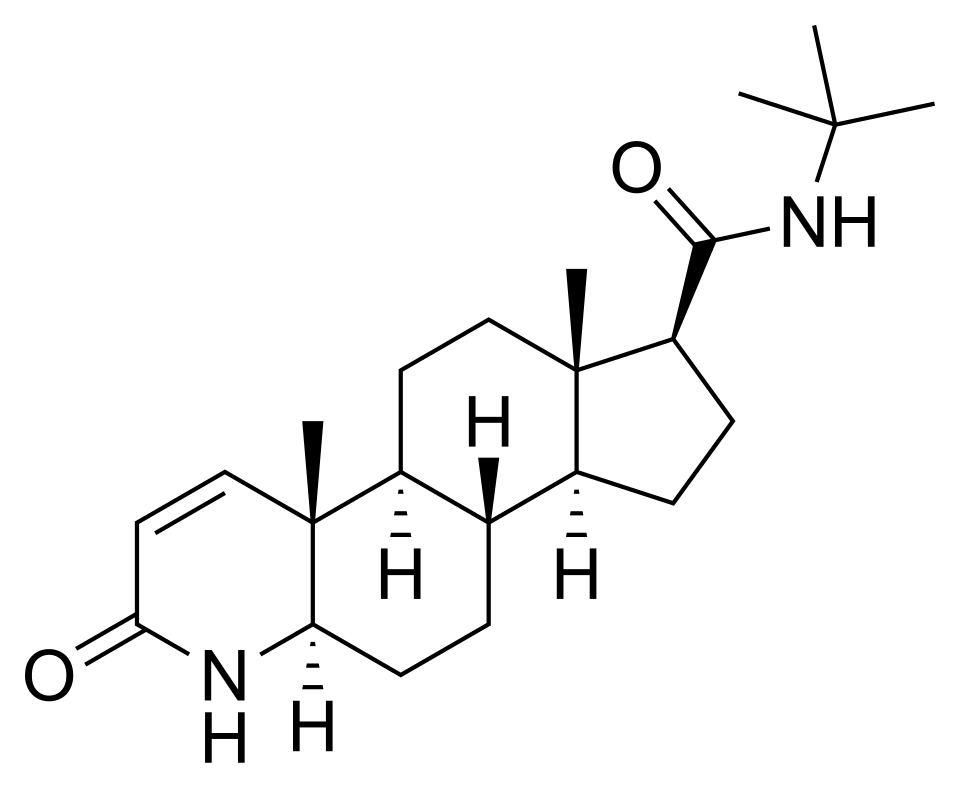
Benign prostatic hyperplasia (BPH) is a noncancerous enlargement of the prostate that can squeeze the urethra and cause a weak stream, frequent urination and getting up at night. Medicines are the usual first step when symptoms are bothersome. The two main families work in different ways: alpha-blockers relax the muscle in the prostate and bladder neck so urine flows more easily, while 5-alpha-reductase inhibitors (5-ARIs) slowly shrink the gland. Some men take both together.
Source: NIDDK — Enlarged Prostate (Benign Prostatic Hyperplasia)
Because the mechanisms differ, so do the sexual effects. The table below summarizes what the FDA labels and the European Association of Urology (EAU) guideline report for the most widely used BPH drugs. Percentages come from the placebo-controlled trials described in each label, so they show the rate on the drug alongside the rate on a dummy pill.
| Medicine | Main sexual effect | Rate in label trials (drug vs placebo) | Reversible? |
|---|---|---|---|
| Tamsulosin 0.4 mg (Flomax) | Abnormal ejaculation | 8.4% vs 0.2% | Yes, after stopping |
| Tamsulosin 0.8 mg | Abnormal ejaculation | 18.1% vs 0.2% | Yes, after stopping |
| Silodosin 8 mg (Rapaflo) | Retrograde ejaculation (little or no semen) | 28.1% vs 0.9% | Yes, label states it is reversible |
| Finasteride 5 mg (Proscar) | Erectile dysfunction, lower libido, less semen | Year 1: ED 8.1% vs 3.7%; libido 6.4% vs 3.4% | Usually; rare persistent reports |
| Dutasteride 0.5 mg (Avodart) | Erectile dysfunction, lower libido | Months 0–6: ED 4.7% vs 1.7%; libido 3.0% vs 1.4% | Usually; may persist in some men |
Sources: FDA — FLOMAX (tamsulosin) prescribing information; FDA — RAPAFLO (silodosin) prescribing information; FDA — PROSCAR (finasteride) prescribing information; FDA — AVODART (dutasteride) prescribing information
Keep in mind that sexual problems are common in men with BPH even before any treatment. In the long MTOPS trial printed in the finasteride label, 12.2% of men on placebo reported impotence over four to six years. Some of what men notice after starting a pill would have happened anyway, which is why the placebo column matters.
Source: FDA — PROSCAR (finasteride) prescribing information
Alpha-blockers: tamsulosin, silodosin and ejaculation
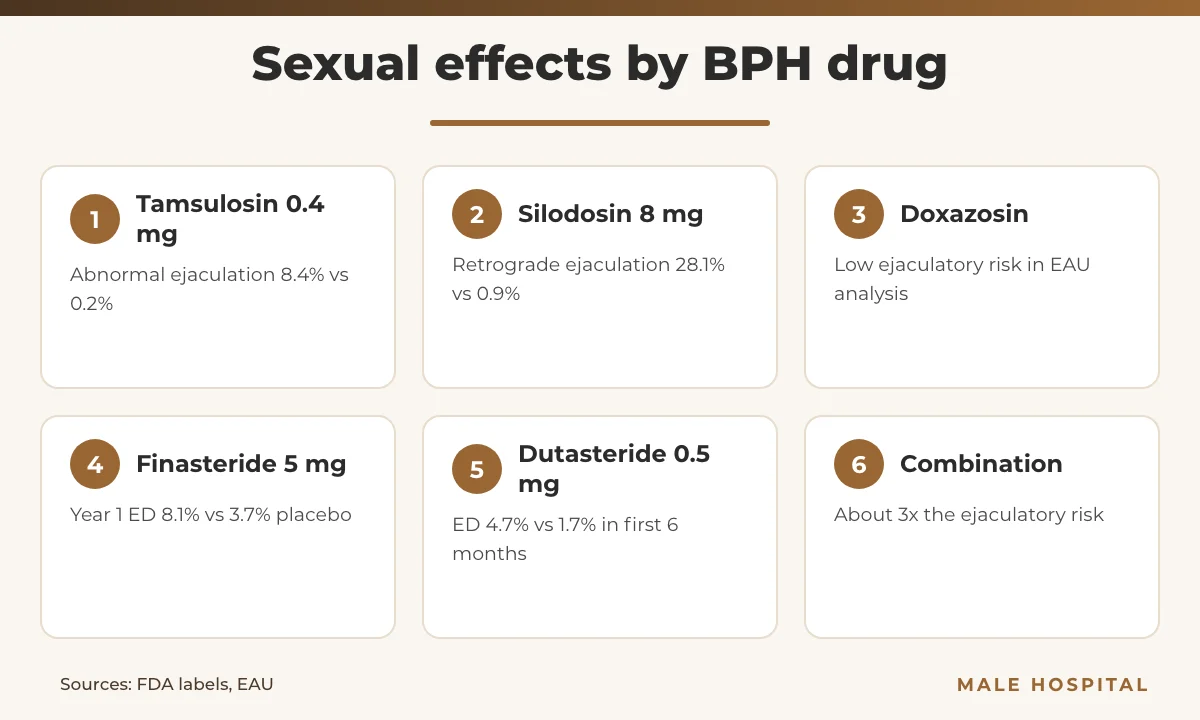
Alpha-blockers are widely used as a first BPH medicine. The EAU guideline states that they do not adversely affect libido or erectile function but can cause abnormal ejaculation, with an odds ratio of about 7.5 compared with placebo. The more effective the alpha-blocker is at relaxing the prostate, the more often ejaculation changes.
In the guideline’s analysis of BPH drugs, tamsulosin (odds ratio 8.57) and especially silodosin (odds ratio 32.5) were far more likely to cause ejaculatory dysfunction than placebo, while the older drugs doxazosin and terazosin carried a low risk. Younger age appears to be a risk factor.
Sources: EAU Guidelines — Management of Non-neurogenic Male LUTS: Disease Management; PubMed — Gacci et al. 2014, Effect of medical treatments for BPH-related LUTS on ejaculatory function (meta-analysis)
What “abnormal ejaculation” actually means
The Flomax label groups several experiences under this term: ejaculation failure, ejaculation disorder, retrograde ejaculation (semen going backward into the bladder) and a smaller volume of semen. Men usually describe a normal orgasm with little or no fluid, sometimes called a “dry orgasm.” Erection and the pleasure of orgasm are usually unchanged.
For years this was blamed on retrograde ejaculation. The EAU guideline now explains that the main cause is a decrease or absence of seminal fluid during ejaculation, meaning the glands do not push fluid into the urethra in the first place. Either way, the effect is not dangerous. You can read more about the condition itself in our guide to retrograde ejaculation.
Sources: FDA — FLOMAX (tamsulosin) prescribing information; EAU Guidelines — Management of Non-neurogenic Male LUTS: Disease Management
Tamsulosin (Flomax)
In two US trials, abnormal ejaculation affected 8.4% of men on 0.4 mg and 18.1% on 0.8 mg, compared with 0.2% on placebo, so the effect is clearly dose-related. Very few men stopped the drug for this reason: 8 of 492 men (1.6%) on the higher dose and none on 0.4 mg. Decreased libido was reported by 1.0% on 0.4 mg versus 1.2% on placebo, which is no real difference. The NHS lists ejaculation problems as a common side effect of tamsulosin.
Sources: FDA — FLOMAX (tamsulosin) prescribing information; NHS — Side effects of tamsulosin
Silodosin (Rapaflo)
The silodosin label reports retrograde ejaculation in 131 of 466 men with BPH (28.1%) over 12 weeks, compared with 0.9% on placebo. It was also the most common reason for stopping, in 2.8% of men. The label tells doctors to counsel patients that the most common side effect is an orgasm with reduced or no semen, that it poses no safety concern and that it reverses when the drug is stopped.
Source: FDA — RAPAFLO (silodosin) prescribing information
Priapism: rare but urgent
Rarely, alpha-blockers used for BPH can cause priapism, a painful erection lasting hours that is not related to sexual activity. The Flomax label estimates it at probably less than 1 in 50,000 patients but stresses that it can lead to permanent impotence if not treated promptly. MedlinePlus advises calling your doctor immediately for a painful erection that lasts for hours.
Sources: FDA — FLOMAX (tamsulosin) prescribing information; MedlinePlus — Tamsulosin
Finasteride and dutasteride: libido, erections and semen
Finasteride and dutasteride block the enzyme that converts testosterone into dihydrotestosterone (DHT), the hormone that drives prostate growth. They shrink the gland slowly: the EAU guideline notes that benefits over placebo appear only after at least six months, so these drugs are meant for long-term use in men with BPH and a larger prostate. The most common side effects, according to the guideline, are reduced libido and erectile dysfunction, and less often ejaculatory problems such as decreased semen volume.
Source: EAU Guidelines — Management of Non-neurogenic Male LUTS: Disease Management
Finasteride (Proscar)
The four-year PLESS trial in the Proscar label followed more than 3,000 men with BPH. In year 1, impotence was reported by 8.1% on finasteride versus 3.7% on placebo, decreased libido by 6.4% versus 3.4%, and decreased semen volume by 3.7% versus 0.8%. In years 2 to 4 there was no significant difference between the groups for impotence, libido or ejaculation disorder. Overall, 3.7% of men on finasteride and 2.1% on placebo stopped because of sexual side effects.
Source: FDA — PROSCAR (finasteride) prescribing information
Dutasteride (Avodart)
Dutasteride shows the same front-loaded pattern. In pooled BPH trials of over 4,300 men, impotence was reported by 4.7% on dutasteride versus 1.7% on placebo in the first six months, then fell to about the placebo rate. Decreased libido was 3.0% versus 1.4% and ejaculation disorders 1.4% versus 0.5% in the same period. Breast tenderness or enlargement was also more common than on placebo. Over four years there was no evidence that sexual side effects increased with longer use.
Sources: FDA — AVODART (dutasteride) prescribing information; MedlinePlus — Dutasteride
A 2016 meta-analysis of 17 randomized trials with 17,494 men confirmed that, in men with BPH, 5-ARIs raise the risk of erectile dysfunction (relative risk 1.55) and decreased libido (relative risk 1.69) compared with placebo. If your sex drive drops, it is worth checking other causes too; our article on low libido in men covers the full list.
Source: PubMed — Liu et al. 2016, Effect of 5α-Reductase Inhibitors on Sexual Function (meta-analysis)
Semen, sperm and fertility
Both drugs change semen. In healthy volunteers, finasteride reduced ejaculate volume by a median 0.6 mL (22.1%) with fewer sperm per ejaculate; values stayed in the normal range and returned to baseline after stopping, on average in 84 weeks. Dutasteride reduced total sperm count, semen volume and sperm motility over 52 weeks, and the effect on sperm count had not reversed 24 weeks after stopping. The label says the clinical significance for an individual man’s fertility is not known, so men planning a pregnancy should discuss this before starting.
Sources: FDA — PROSCAR (finasteride) prescribing information; FDA — AVODART (dutasteride) prescribing information
Other label warnings worth knowing
Finasteride lowers PSA by about 50% within six months, so your doctor must interpret PSA tests with this in mind. In large prevention trials, high-grade (Gleason 8–10) prostate cancer was slightly more common on finasteride (1.8% vs 1.1%) and dutasteride (1.0% vs 0.5%). Women who are or may become pregnant should not handle crushed finasteride tablets or leaking dutasteride capsules, and men taking dutasteride should not donate blood during treatment and for six months afterward.
Sources: FDA — PROSCAR (finasteride) prescribing information; MedlinePlus — Dutasteride
Do the sexual side effects of BPH medications go away?
For alpha-blockers the answer is clear: ejaculation returns to normal after the drug is stopped. The silodosin label states this directly, and the tamsulosin label notes that the reduced fertility seen in animal studies, attributed to impaired ejaculation, was reversible.
Sources: FDA — RAPAFLO (silodosin) prescribing information; FDA — FLOMAX (tamsulosin) prescribing information
For 5-ARIs the picture is more nuanced. In trials, most sexual effects appeared early and faded to placebo levels with continued use. However, the current Proscar label lists rare postmarketing reports of sexual dysfunction that continued after stopping, including erectile dysfunction, decreased libido and ejaculation disorders. It adds that most of these men were older, took other medicines or had other conditions, and that finasteride’s independent role is unknown. The Avodart label carries a similar statement. The NHS says these effects usually improve but can sometimes carry on after stopping.
The finasteride label also lists depression and suicidal ideation among postmarketing reports. If your mood changes while taking a 5-ARI for BPH, tell your doctor promptly.
Sources: FDA — PROSCAR (finasteride) prescribing information; FDA — AVODART (dutasteride) prescribing information; NHS — Side effects of finasteride
Combination therapy: why the side effects add up
Men with a large prostate and significant symptoms are often given an alpha-blocker plus a 5-ARI, because research suggests the two together may work better than either alone. The trade-off is more side effects. The EAU guideline reports that combination BPH therapy carries about a threefold higher risk of ejaculatory dysfunction than either drug alone.
The trial data show this clearly. In MTOPS, abnormal ejaculation affected 14.1% of men on finasteride plus doxazosin, compared with 7.2% on finasteride, 4.5% on doxazosin and 2.3% on placebo. In the CombAT trial of dutasteride plus tamsulosin, ejaculation disorders occurred in 11% on the combination versus 2% on dutasteride and 4% on tamsulosin alone.
Sources: NIDDK — Enlarged Prostate (Benign Prostatic Hyperplasia); EAU Guidelines — Management of Non-neurogenic Male LUTS: Disease Management; FDA — PROSCAR (finasteride) prescribing information; FDA — AVODART (dutasteride) prescribing information
BPH treatments with fewer sexual side effects
If sexual function is a priority, there are several alternative BPH treatments your urologist can weigh against your symptoms, prostate size and other health conditions.
- Tadalafil 5 mg once daily. The only PDE5 inhibitor licensed for urinary symptoms of BPH, with or without erectile dysfunction. It improves symptom scores and erectile function but not urine flow rate. See our guide to the tadalafil daily dose.
- Doxazosin or terazosin. Older alpha-blockers with a low risk of ejaculatory dysfunction in the guideline’s analysis, though in MTOPS doxazosin caused more dizziness and postural hypotension than placebo.
- Bladder-directed drugs. Antimuscarinics and beta-3 agonists treat urgency and frequency; the guideline lists no sexual side effects for them used alone.
- Hexane-extracted saw palmetto (Serenoa repens). The EAU says it has a very limited negative impact on sexual function and gives a weak recommendation for men who want to avoid potential side effects.
Sources: EAU Guidelines — Management of Non-neurogenic Male LUTS: Disease Management; FDA — PROSCAR (finasteride) prescribing information
When medicines are not enough or not tolerated, minimally invasive procedures are another route. The EAU guideline recommends the prostatic urethral lift for men who want to preserve ejaculation, and reports antegrade ejaculation preserved in 98% of men at 12 months after water vapor therapy. Our enlarged prostate and erectile dysfunction guide compares these procedures in more detail.
Source: EAU Guidelines — Management of Non-neurogenic Male LUTS: Disease Management
Managing BPH medications sexual side effects
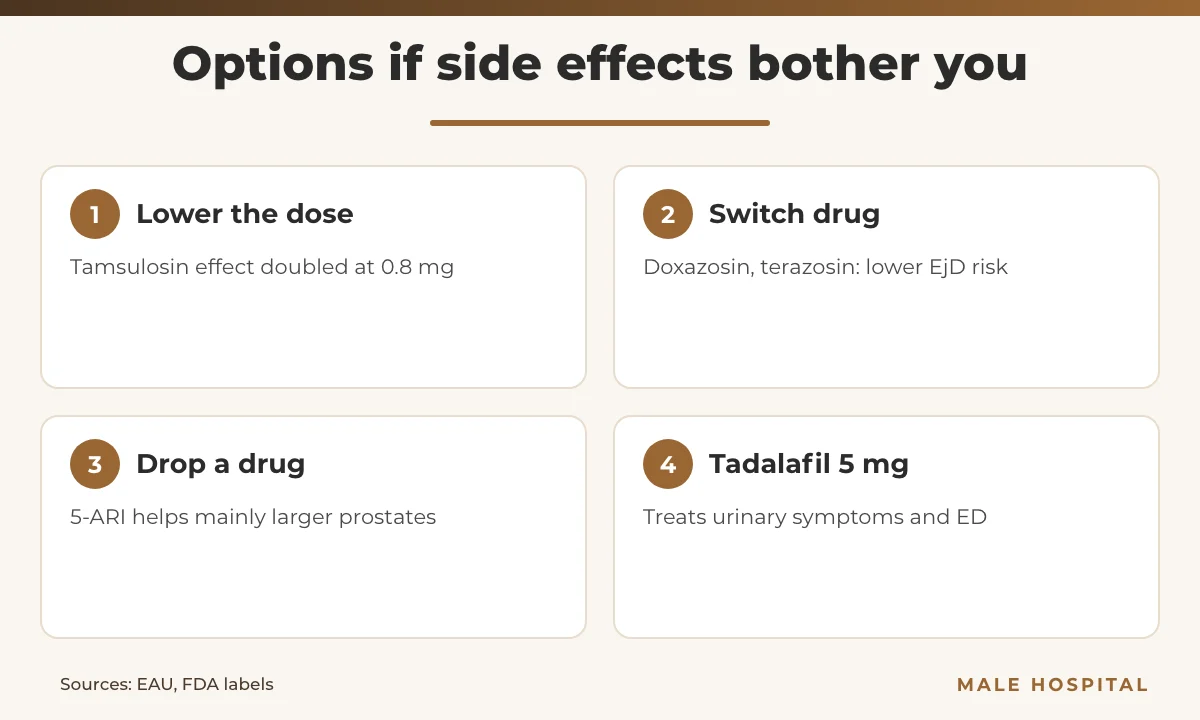
Most men can find a BPH regimen that controls urinary symptoms without ruining their sex life. The key is to report changes early rather than quietly stopping the tablets, since the urinary symptoms they control can return.
Practical steps to discuss with your doctor
- Name the exact problem. Dry orgasm, weak erections and low desire point to different drugs and different fixes.
- Review the dose. Tamsulosin’s ejaculatory effect roughly doubled from 0.4 mg to 0.8 mg in the label trials, so the lowest effective dose matters.
- Consider switching within the class. Moving from silodosin or tamsulosin to an alpha-blocker with a lower ejaculatory risk is an option the guideline data support.
- Reassess the need for combination therapy. If your prostate is not large, a 5-ARI may add side effects for little benefit; the EAU notes finasteride may not beat placebo in prostates under 40 mL.
- Treat erectile dysfunction directly. PDE5 inhibitors work for erections that weaken on a 5-ARI. Because alpha-blockers and PDE5 inhibitors both lower blood pressure, the labels advise caution when combining them, so your doctor should plan the doses.
Sources: FDA — FLOMAX (tamsulosin) prescribing information; EAU Guidelines — Management of Non-neurogenic Male LUTS: Disease Management
If erection problems continue despite adjustments, a full assessment helps separate a drug effect from vascular disease, diabetes or low testosterone, which are common in the same age group. Our erectile dysfunction treatment page explains every option, from tablets to injections and implants.
When to see a doctor
Contact your doctor if sexual side effects are bothering you, if they continue after stopping a medicine, or if you are planning to father a child while on a 5-ARI. Seek urgent care for any of the following:
- An erection that is painful and lasts for hours without sexual stimulation (possible priapism).
- Low mood, loss of interest in life or thoughts of self-harm while taking finasteride or dutasteride.
- Breast lumps, pain, swelling or nipple discharge.
- Fainting or severe dizziness on standing, especially after combining an alpha-blocker with an erection pill.
- Being unable to pass urine at all, or blood in the urine.
Also tell your eye surgeon about any alpha-blocker before cataract surgery, even if you have stopped it, because of a risk called intraoperative floppy iris syndrome.
Sources: MedlinePlus — Tamsulosin; NHS — Side effects of finasteride; FDA — RAPAFLO (silodosin) prescribing information
If BPH treatment is affecting your sex life, you can get a confidential consultation with our urologist-andrologist on WhatsApp to review your medicines and options. Costs depend on the assessment, and the first conversation is free.
FAQs about BPH medications sexual side effects
Does tamsulosin cause erectile dysfunction?
Not in a meaningful way. Erectile dysfunction does not appear among the common side effects in the Flomax label, and decreased libido occurred at about the same rate as placebo (1.0% vs 1.2% at 0.4 mg). The EAU guideline states that alpha-blockers do not adversely affect erections. Its main sexual effect is on ejaculation, with less or no semen.
Source: FDA — FLOMAX (tamsulosin) prescribing information
Is a dry orgasm from silodosin or tamsulosin harmful?
No. The silodosin label tells doctors to explain that an orgasm with reduced or no semen poses no safety concern and reverses after stopping the drug. The sensation of orgasm is usually preserved. The main practical issue is fertility: if you are trying to conceive, discuss pausing or switching the medicine with your urologist.
Source: FDA — RAPAFLO (silodosin) prescribing information
Does finasteride for BPH cause permanent erectile dysfunction?
In most men, no. In the PLESS trial, the excess of erection problems was seen mainly in year 1, and in years 2 to 4 rates matched placebo. The label does list rare postmarketing reports of sexual dysfunction continuing after stopping, mostly in older men with other conditions or medicines, and states finasteride’s independent role is unknown.
Source: FDA — PROSCAR (finasteride) prescribing information
Which BPH medicine has the fewest sexual side effects?
Among alpha-blockers, doxazosin and terazosin had the lowest ejaculatory risk in the EAU analysis, while silodosin had the highest. Tadalafil 5 mg daily may even improve erections while treating urinary symptoms, and hexane-extracted saw palmetto has a very limited effect on sexual function. The best choice still depends on your symptoms and prostate size.
Source: EAU Guidelines — Management of Non-neurogenic Male LUTS: Disease Management
Can I take Viagra or Cialis with tamsulosin?
Often yes, but under medical supervision. Alpha-blockers and PDE5 inhibitors both widen blood vessels and can lower blood pressure, so the FDA labels advise caution when they are combined, and the NHS lists sildenafil among medicines that may not mix well with tamsulosin. Your doctor may adjust doses or timing; report dizziness or fainting.
Sources: FDA — FLOMAX (tamsulosin) prescribing information; NHS — Side effects of tamsulosin
Does dutasteride affect fertility?
It can change semen. Over 52 weeks, dutasteride lowered total sperm count, semen volume and sperm motility, and the drop in sperm count had not recovered 24 weeks after stopping. Average values stayed within the normal range, and the label says the effect on an individual man’s fertility is unknown. Men planning children should raise this before starting.
Source: FDA — AVODART (dutasteride) prescribing information
Do sexual side effects of finasteride or dutasteride improve over time?
Usually, yes. BPH trial data in both labels show sexual side effects concentrated in the first 6 to 12 months, with no increase over four years of treatment. For dutasteride, impotence fell from 4.7% in the first six months to rates similar to placebo afterward. The NHS also notes these effects usually improve after a while.
Sources: FDA — AVODART (dutasteride) prescribing information; NHS — Side effects of finasteride
Should I stop my BPH medicine if it affects my sex life?
Do not stop without talking to your doctor. Urinary symptoms can return, and a 5-ARI takes at least six months to work again if restarted. Many sexual side effects can be solved by lowering the dose, switching to another alpha-blocker, dropping an unnecessary second drug or adding a treatment for erections.
Source: EAU Guidelines — Management of Non-neurogenic Male LUTS: Disease Management
Medically reviewed by Assoc. Prof. Dr. Zülfü Sertkaya, urologist and andrologist (FEBU), Istanbul. Last reviewed: November 2026.
This article is for general information and does not replace an individual consultation with a qualified doctor.
- EAU — Management of Non-neurogenic Male LUTS: Disease Management
- FDA — FLOMAX (tamsulosin hydrochloride) prescribing information
- FDA — RAPAFLO (silodosin) prescribing information
- FDA — PROSCAR (finasteride) prescribing information
- FDA — AVODART (dutasteride) prescribing information
- NIDDK — Enlarged Prostate (Benign Prostatic Hyperplasia)
- NHS — Side effects of tamsulosin
- NHS — Side effects of finasteride
- MedlinePlus — Tamsulosin
- MedlinePlus — Dutasteride
- PubMed — Gacci et al. Effect of medical treatments for BPH-related LUTS on ejaculatory function: meta-analysis (J Sex Med, 2014)
- PubMed — Liu et al. Effect of 5α-Reductase Inhibitors on Sexual Function: meta-analysis of RCTs (J Sex Med, 2016)