Chronic pelvic pain syndrome (CP/CPPS) in men is pain felt in the pelvis, perineum or genitals for at least three months, without a bacterial infection or another disease that explains it. It is the most common form of prostatitis, but it behaves more like a chronic pain condition than an infection. The best results come from multimodal treatment matched to each man’s symptom profile using the UPOINT system, with sexual problems assessed and treated as part of the plan.
Source: EAU Guidelines — Chronic Pelvic Pain: Diagnostic evaluation; NIDDK — Prostatitis: Inflammation of the Prostate
- CP/CPPS is NIH category III prostatitis: at least three months of pelvic pain with no proven infection. European guidelines call it primary prostate pain syndrome.
- Pelvic floor muscle tension, nerve sensitisation, low-grade inflammation and stress all play a part, so a single pill rarely solves it.
- The UPOINT system sorts symptoms into six domains (urinary, psychosocial, organ-specific, infection, neurologic/systemic and muscle tenderness) and matches a treatment to each.
- In the original UPOINT study, 84% of men had a clinically meaningful drop in symptom score with phenotype-directed therapy.
- Pooled studies find erectile dysfunction in about 34% and premature ejaculation in about 35% of men with CP/CPPS; painful ejaculation is a common symptom.
- What is chronic pelvic pain syndrome in men?
- Symptoms: pain, urinary and sexual
- What causes chronic pelvic pain syndrome?
- How it is diagnosed: the NIH-CPSI score
- The UPOINT system explained
- Chronic pelvic pain syndrome treatment: what works
- Effects on erections, ejaculation and relationships
- Self-care and long-term outlook
- When to see a doctor
- FAQs about chronic pelvic pain syndrome
What is chronic pelvic pain syndrome in men?
Doctors divide prostatitis into four NIH categories: acute bacterial, chronic bacterial, chronic prostatitis/chronic pelvic pain (CP/CPPS), and asymptomatic inflammation. Our prostatitis overview covers all four; this guide focuses only on category III, which NIDDK describes as the most common and least understood form.
The European Association of Urology (EAU) uses the term primary prostate pain syndrome. It defines it as pain perceived in the region of the prostate, reproduced when the prostate is pressed during examination, lasting at least three months, with no other lower urinary tract disease to explain it. Conditions with similar symptoms, such as infection, stones or cancer, have to be excluded first.
Estimates of how common it is vary with the method used. Population studies summarised by the EAU report prostatitis-type symptoms in 2.2–14.2% of men, and men aged 50–59 have about three times the risk of men aged 20–39. NIDDK estimates that it affects 10–15% of men in the United States and notes that it can appear at any age.
Sources: EAU Guidelines — Chronic Pelvic Pain: Epidemiology, aetiology and pathophysiology; NIDDK — Prostatitis: Inflammation of the Prostate
Symptoms: pain, urinary and sexual
The defining feature is pain or discomfort lasting three months or more. It can sit in one place or move around, and it often flares and settles over weeks. Common locations are:
- the perineum, the area between the scrotum and the anus;
- the lower abdomen and lower back;
- the penis, the scrotum and the testicles.
Urinary symptoms are frequent too: passing urine eight or more times a day, urgency, and a weak or interrupted stream. Sexual symptoms include pain during or after ejaculation, pain during intercourse, erectile dysfunction and sometimes blood in the semen.
Because testicular pain can also come from conditions that need urgent care, a new or sudden scrotal pain should not be assumed to be CPPS. Our guide to testicular pain lists the causes that need same-day attention.
Sources: NIDDK — Prostatitis: Inflammation of the Prostate; Cleveland Clinic — Prostatitis
What causes chronic pelvic pain syndrome?
No single cause has been found. The EAU describes it as a condition that develops in susceptible men exposed to one or more triggers, such as a past infection, nerve injury, muscle problems, hormonal or immune changes, or psychological stress. The 2025 American Urological Association (AUA) guideline makes a similar point: pain can persist from a neurologic origin, not only from ongoing tissue injury.
Pelvic floor muscles
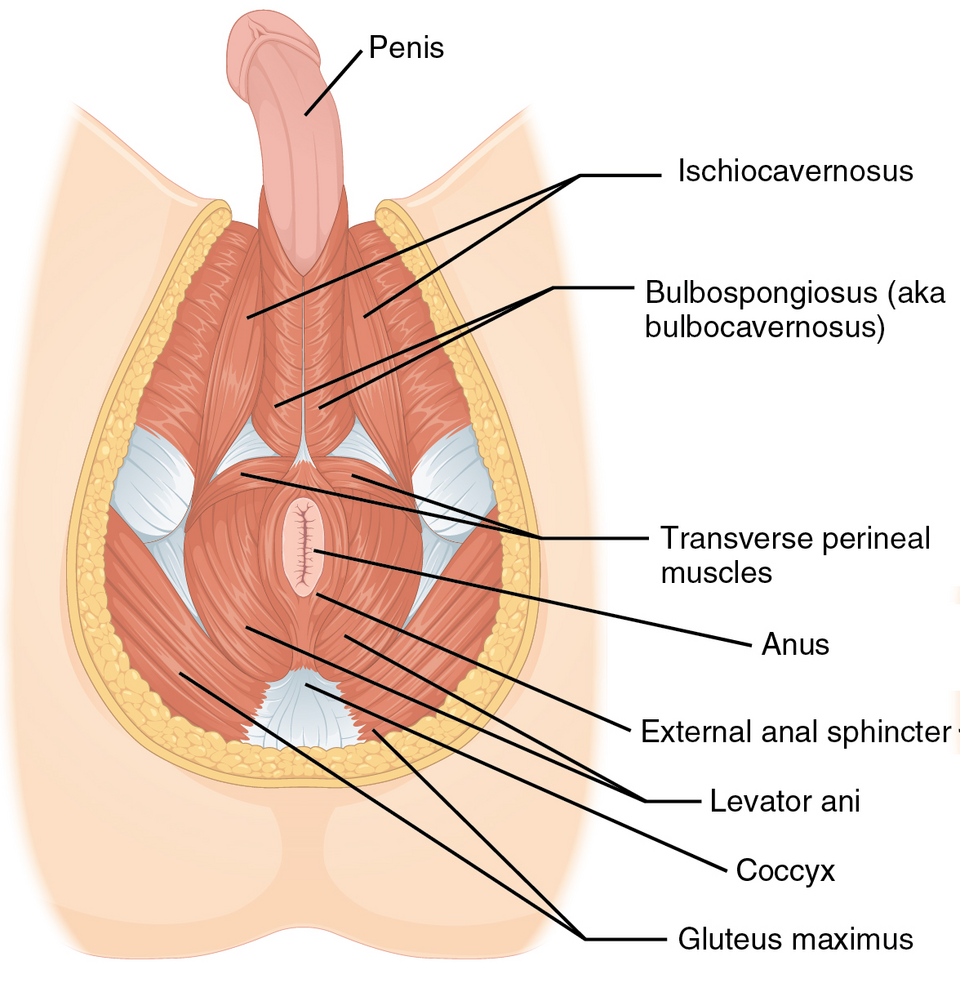
Tight, tender pelvic floor muscles are one of the most consistent findings. In one specialist-centre cohort cited by the EAU, 92.2% of men with pelvic pain had pelvic floor muscle dysfunction, whether or not inflammation was present. Another study found muscle tenderness in 51% of men with prostatitis symptoms compared with 7% of controls.
Nerves and central sensitisation
Over time, the nervous system can become “sensitised”: pain signals are amplified, and normal sensations from the bladder, prostate or muscles are felt as pain. This helps explain why some men also have pain outside the pelvis, irritable bowel syndrome or chronic fatigue.
Inflammation, infection and stress
Chronic, but not acute, inflammation in prostate tissue has been linked to symptoms getting worse. Bacteria are rarely the driver: only about 8% of men with suspected CP/CPPS have positive prostate cultures, similar to men without symptoms. Anxiety appears to be a risk factor for developing the condition, and NIDDK notes that psychological stress may raise the chance of it.
Sources: EAU Guidelines — Chronic Pelvic Pain: Epidemiology, aetiology and pathophysiology; AUA Guideline 2025 — Male Chronic Pelvic Pain Part II: Treatment of CP/CPPS (J Urol); EAU Guidelines — Chronic Pelvic Pain: Diagnostic evaluation
How it is diagnosed: the NIH-CPSI score
There is no single test for CP/CPPS. The diagnosis is made from the history, an examination and tests that rule out other problems. The EAU strongly recommends adapting the work-up to each man and excluding diseases with similar symptoms.
A typical assessment includes:
- History and examination, including a gentle rectal exam to check the prostate and the tone and tenderness of the pelvic floor muscles, and a search for myofascial trigger points.
- Urine tests, sometimes before and after prostate massage (the two-glass test), to look for infection.
- Other tests when needed, such as blood tests, urine flow studies, ultrasound or cystoscopy, to exclude other causes.
- Questionnaires on sexual function, such as the IIEF for erections and the PEDT for premature ejaculation, plus screening for pain-related fear, anxiety and low mood.
The NIH Chronic Prostatitis Symptom Index
The EAU strongly recommends the NIH Chronic Prostatitis Symptom Index (NIH-CPSI) for the first assessment and for follow-up. It is a nine-item, self-completed questionnaire covering pain (location, severity and frequency), urinary symptoms and quality of life. The total score runs from 0 to 43: 0–15 is usually considered mild, 16–29 moderate and above 29 severe. A fall of six points or more is widely used as the threshold for meaningful improvement.
Sources: EAU Guidelines — Chronic Pelvic Pain: Diagnostic evaluation; Litwin et al., J Urol 1999 — The NIH Chronic Prostatitis Symptom Index; Guan et al., Asian J Androl 2015 (PMC) — UPOINT in CP/CPPS: a prospective study
The UPOINT system explained
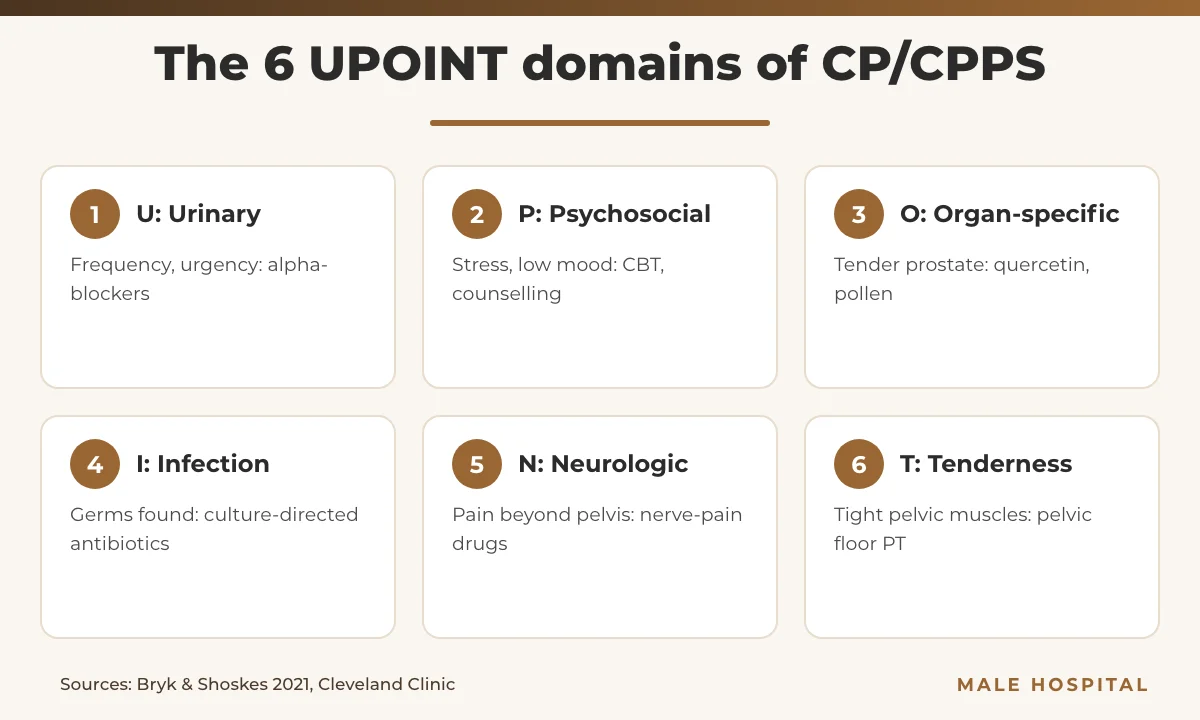
Large drug trials in CP/CPPS often showed only small benefits. One reason is that it is not one disease: two men with the same diagnosis can have very different drivers of pain. The UPOINT system, developed by Shoskes and colleagues, sorts each man’s symptoms into six domains. A man can be positive in several domains, and each positive domain receives its own treatment.
| Domain | Typical clues | Matched treatment |
|---|---|---|
| U — Urinary | Frequency, urgency, night-time urination, poor emptying | Alpha-blockers (tamsulosin, alfuzosin, silodosin), bladder medicines, less caffeine, timed voiding |
| P — Psychosocial | Depression, anxiety, stress, catastrophising about pain | Cognitive behavioural therapy (CBT), counselling, stress reduction, medication from a mental health specialist |
| O — Organ-specific | Tender prostate, inflammatory cells in prostate fluid, blood in semen | Quercetin or pollen extract (cernilton) |
| I — Infection | Germs found in urine or prostate fluid without meeting criteria for bacterial prostatitis | Culture-directed antibiotics only |
| N — Neurologic/systemic | Pain outside the pelvis, fibromyalgia, irritable bowel, chronic fatigue | Nerve-pain medicines such as amitriptyline, duloxetine or gabapentin; avoid long-term opioids |
| T — Tenderness of muscles | Spasm, tenderness or trigger points in pelvic or abdominal muscles | Pelvic floor physical therapy with myofascial release; acupuncture or shockwave as add-ons |
In the original prospective study of 100 men followed for at least six months, 84% had a drop of six points or more in their NIH-CPSI score with UPOINT-directed therapy, and half improved by at least 50%. A later study of 140 Chinese men found 75% reached the six-point threshold, and Cleveland Clinic reports that about 80% of people with CPPS improve with this approach. The more domains a man has, the more severe his symptoms tend to be.
Some clinicians add an “S” domain for sexual dysfunction (UPOINTS). Men in this domain report worse quality of life, but studies disagree on whether it adds predictive value, and it has not yet been tested prospectively as a treatment guide.
Sources: Bryk & Shoskes, Arab J Urol 2021 (PMC) — Using the UPOINT system to manage men with CPPS; Guan et al., Asian J Androl 2015 (PMC) — UPOINT in CP/CPPS: a prospective study; Cleveland Clinic — Prostatitis
Chronic pelvic pain syndrome treatment: what works
Both the EAU and the 2025 AUA guideline recommend a multimodal, multidisciplinary approach: urologic medicines alongside physical therapy, psychological support and lifestyle changes, with referral to other specialists when needed. The table summarises how the EAU rates the main options.
| Treatment | EAU position | Practical notes |
|---|---|---|
| Alpha-blockers | Strong recommendation if symptoms are under one year | Benefit probably absent in long-standing cases; dizziness and low blood pressure possible |
| Antibiotics (quinolone or tetracycline) | Strong recommendation, at least six weeks, in untreated men with symptoms under one year | Effects are modest; repeated courses without evidence of infection are not helpful |
| Acupuncture | Strong recommendation | Better than sham in symptoms and quality of life; benefit lasted to 24 weeks in a large trial |
| Anti-inflammatories (NSAIDs) | Weak recommendation | Weigh long-term side effects |
| High-dose pentosan polysulphate | Weak recommendation | Improved global assessment and quality of life |
| Phytotherapy (pollen extract, quercetin) | Some benefit on pain | Matches the organ-specific domain |
| Shockwave therapy | Probably effective short term | Long-term benefit not shown |
| Pregabalin | Not effective | No significant benefit in a randomised trial |
| Surgery (prostate resection or removal) | No evidence to support it | Not a treatment for chronic pelvic pain |
Sources: EAU Guidelines — Chronic Pelvic Pain: Management; AUA Guideline 2025 — Male Chronic Pelvic Pain Part II: Treatment of CP/CPPS (J Urol)
Pelvic floor physical therapy
For men with muscle tenderness, a pelvic floor physiotherapist uses myofascial release, trigger point work, relaxation exercises and biofeedback to release tight, tender muscles. The AUA guideline gives particular attention to pelvic floor muscle pain and the role of physical therapy, and the EAU rates myofascial treatment and biofeedback as effective in pelvic floor pain.
Psychological support
Chronic pain and stress feed each other. CBT designed for this condition may improve pain and quality of life, and NIDDK notes that stress reduction can lower the chance of flare-ups in men whose symptoms are stress-related. The NHS lists CBT or counselling, physiotherapy and acupuncture among treatments for chronic prostatitis.
How strong is the evidence?
A 2019 Cochrane review of 99 drug trials in 9,119 men found that alpha-blockers, antibiotics, anti-inflammatories and phytotherapy may reduce symptoms in the short term, but the quality of evidence was mostly low, and few trials measured sexual function. A separate Cochrane review found moderate- to high-quality evidence that acupuncture and shockwave therapy reduce symptoms in the short term. This is why combining several modest treatments usually works better than relying on one.
Sources: Cochrane Review 2019 (PMC) — Pharmacological interventions for CP/CPPS; Cochrane Review 2018 (PMC) — Non-pharmacological interventions for CP/CPPS; NHS — Prostatitis; NIDDK — Prostatitis: Inflammation of the Prostate
Effects on erections, ejaculation and relationships
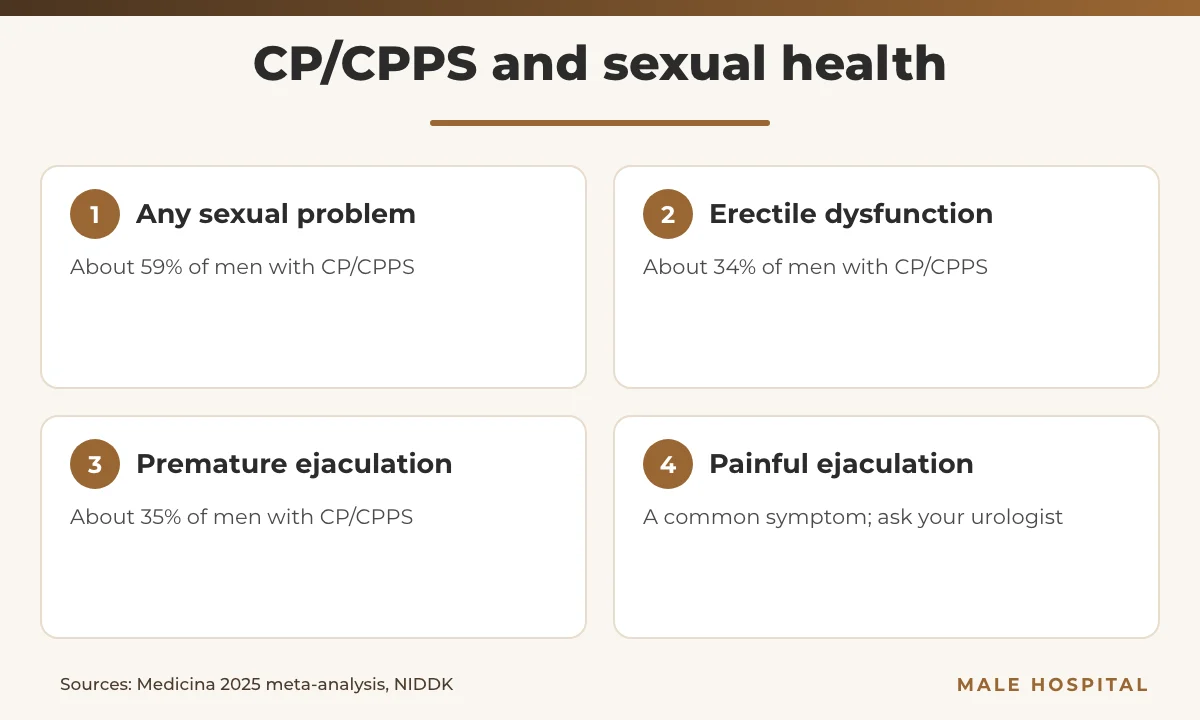
Sexual problems are among the most distressing parts of the condition, and the EAU strongly recommends that they are asked about at every assessment. A 2025 meta-analysis of 26 studies with 20,127 men found some form of sexual dysfunction in about 59% of men with CP/CPPS, erectile dysfunction in about 34% and premature ejaculation in about 35%. The studies varied widely, so these are broad estimates.
Painful ejaculation
Pain during or after ejaculation, felt in the penis, perineum or testicles, is a common symptom. Over time it can make sex something to dread, which strains relationships. Our guide to painful ejaculation covers other causes that should be ruled out.
Erectile dysfunction
EAU data show ED rates between 15% and 48% in men with this condition, and ED is more common in young men with prostate pain than in the general population. Pain, poor sleep, anxiety and the fear of a painful climax all contribute, so psychological erectile dysfunction often overlaps with the physical side. Standard erectile dysfunction treatment can be used alongside CPPS therapy. In one small trial within a Cochrane review, shockwave therapy also improved erectile function scores.
Premature ejaculation and relationships
Ejaculatory problems in CP/CPPS are mainly premature ejaculation. The EAU also notes that men with chronic pelvic pain report high rates of relationship breakdown, depression and even suicidal thoughts, which is why emotional support and involving the partner matter.
Sources: Alshahrani et al., Medicina 2025 (PMC) — Prevalence of sexual dysfunction with CP/CPPS; EAU Guidelines — Chronic Pelvic Pain: Epidemiology, aetiology and pathophysiology; Cochrane Review 2018 (PMC) — Non-pharmacological interventions for CP/CPPS
Self-care and long-term outlook
Self-care does not replace medical treatment, but it helps many men manage flare-ups. Cleveland Clinic suggests discussing these steps with your doctor:
- Drink enough fluids and limit caffeine and alcohol.
- Avoid spicy and acidic foods if they worsen symptoms.
- Use warm sitz baths or a heating pad on the lower back.
- Sit on a doughnut-shaped cushion and take breaks from long sitting; avoid cycling during flares.
- Try gentle pelvic floor stretches and relaxation, ideally taught by a physiotherapist.
In a Cochrane review, a lifestyle-change programme and a physical activity programme each reduced symptoms in single small trials, although the evidence was low quality. Most men with CP/CPPS feel better with symptom-based treatment, even if it takes longer than for bacterial prostatitis. Tracking your NIH-CPSI score every few weeks makes progress easier to see.
Sources: Cleveland Clinic — Prostatitis; Cochrane Review 2018 (PMC) — Non-pharmacological interventions for CP/CPPS
When to see a doctor
See a urologist if pelvic, genital or perineal pain lasts more than a few weeks, keeps coming back, or affects urination, sleep or sex. Seek urgent care if you have:
- inability to pass urine;
- fever, chills or feeling very unwell with pelvic pain, which can mean acute bacterial prostatitis;
- symptoms that do not improve, or get worse, 48 hours after starting antibiotics;
- signs of sepsis such as sudden confusion, pale or blue lips, or severe breathlessness.
Source: NHS — Prostatitis; NIDDK — Prostatitis: Inflammation of the Prostate
If chronic pelvic pain is affecting your erections, ejaculation or relationship, you can arrange a confidential consultation with our urologist-andrologist, Assoc. Prof. Dr. Zülfü Sertkaya, by WhatsApp. The right plan, and its cost, depends on your assessment.
FAQs about chronic pelvic pain syndrome
Is chronic pelvic pain syndrome the same as prostatitis?
It is one type of prostatitis, NIH category III, but there is no proven bacterial infection. Many experts prefer the name chronic pelvic pain syndrome because the prostate is often not the only source of pain; pelvic floor muscles, nerves and stress also contribute. European guidelines call it primary prostate pain syndrome.
Source: EAU Guidelines — Chronic Pelvic Pain: Diagnostic evaluation
Can CP/CPPS be cured?
There is no single cure, but most men improve. With treatment matched to their UPOINT domains, 84% of men in the original study had a meaningful symptom reduction and half improved by at least 50%. Symptoms may flare again under stress or after long sitting, so ongoing self-care helps keep them under control.
Source: Bryk & Shoskes, Arab J Urol 2021 (PMC) — Using the UPOINT system to manage men with CPPS
Do antibiotics help CP/CPPS?
Only in selected men. The EAU recommends a single course of a quinolone or tetracycline for at least six weeks in men who have not been treated before and have had symptoms for less than a year. Benefits are modest, and repeated antibiotic courses without evidence of infection are not helpful.
Source: EAU Guidelines — Chronic Pelvic Pain: Management
Can stress cause pelvic pain in men?
Stress does not cause it alone, but it is a recognised risk factor and can trigger flares. Anxiety appears to raise the risk of developing the condition, and tension often shows up as tight pelvic floor muscles. That is why CBT, counselling and relaxation training are part of the psychosocial domain of UPOINT.
Source: EAU Guidelines — Chronic Pelvic Pain: Epidemiology, aetiology and pathophysiology; NIDDK — Prostatitis: Inflammation of the Prostate
Does CPPS cause erectile dysfunction?
It is strongly linked to it. A 2025 meta-analysis found ED in about one in three men with CP/CPPS, and ED is more common in young men with prostate pain than in the general population. Pain, anxiety and poor sleep all play a part, and ED can be treated at the same time as the pelvic pain.
Source: Alshahrani et al., Medicina 2025 (PMC) — Prevalence of sexual dysfunction with CP/CPPS
Is it safe to keep having sex with CPPS?
CP/CPPS is not caused by a bacterial infection, so it is not something you pass to a partner. If ejaculation is painful, tell your doctor, because treating the urinary, muscle and inflammatory domains often eases the pain. Pelvic floor relaxation and open communication with your partner can make intimacy more comfortable while treatment works.
Source: NIDDK — Prostatitis: Inflammation of the Prostate; Cleveland Clinic — Prostatitis
Does pelvic floor therapy work for men?
Yes, for men whose exam shows tight or tender pelvic muscles. Therapy uses myofascial release, trigger point work, relaxation and biofeedback. The EAU rates myofascial treatment and biofeedback as effective in pelvic floor pain, and the AUA guideline highlights physical therapy for pelvic floor muscle pain.
Source: EAU Guidelines — Chronic Pelvic Pain: Management; AUA Guideline 2025 — Male Chronic Pelvic Pain Part II (J Urol)
Is surgery ever needed for chronic pelvic pain?
No. The EAU found no evidence supporting operations such as bladder neck incision, prostate resection or prostate removal for this condition. Treatment should focus on the multimodal options above.
Source: EAU Guidelines — Chronic Pelvic Pain: Management
Medically reviewed by Assoc. Prof. Dr. Zülfü Sertkaya, urologist and andrologist (FEBU), Istanbul. Last reviewed: November 2026.
This article is for general information and does not replace an individual consultation with a qualified doctor.
- EAU — Chronic Pelvic Pain Guidelines — Epidemiology, aetiology and pathophysiology
- EAU — Chronic Pelvic Pain Guidelines — Diagnostic evaluation
- EAU — Chronic Pelvic Pain Guidelines — Management
- AUA / J Urol (PubMed) — Male Chronic Pelvic Pain: AUA Guideline Part II — Treatment of CP/CPPS (2025)
- NIDDK (NIH) — Prostatitis: Inflammation of the Prostate
- NHS — Prostatitis
- Cleveland Clinic — Prostatitis
- J Urol (PubMed) — Litwin et al. 1999 — The NIH Chronic Prostatitis Symptom Index: development and validation
- Arab J Urol (PMC) — Bryk & Shoskes 2021 — Using the UPOINT system to manage men with chronic pelvic pain syndrome
- Asian J Androl (PMC) — Guan et al. 2015 — Use of the UPOINT phenotype system in CP/CPPS: a prospective study
- Cochrane (PMC) — Franco et al. 2019 — Pharmacological interventions for treating CP/CPPS
- Cochrane (PMC) — Franco et al. 2018 — Non-pharmacological interventions for treating CP/CPPS
- Medicina (PMC) — Alshahrani et al. 2025 — Prevalence of sexual dysfunction with CP/CPPS: updated systematic review and meta-analysis