A numbing spray for premature ejaculation is a local anesthetic, usually lidocaine or a lidocaine-prilocaine mix, sprayed on the head of the penis a few minutes before sex to reduce sensitivity and delay climax. The prescription spray Fortacin is approved in Europe for lifelong premature ejaculation, and both European and American urology guidelines list topical anesthetics as a first-line option. This guide focuses on sprays; for the full picture of the condition and every treatment, see our premature ejaculation guide and our premature ejaculation treatment page.
Source: European Medicines Agency — Fortacin EPAR; EAU — Sexual and Reproductive Health Guidelines (disorders of ejaculation)
- Fortacin delivers 7.5 mg lidocaine and 2.5 mg prilocaine per spray; one dose is 3 sprays on the glans, with excess wiped off after 5 minutes.
- In two 12-week trials, average time to ejaculation rose to 2.6 and 3.8 minutes with the numbing spray, versus 0.8 and 1.1 minutes with placebo.
- The EAU recommends either dapoxetine or a lidocaine/prilocaine spray as first-line treatment for lifelong premature ejaculation (strong recommendation).
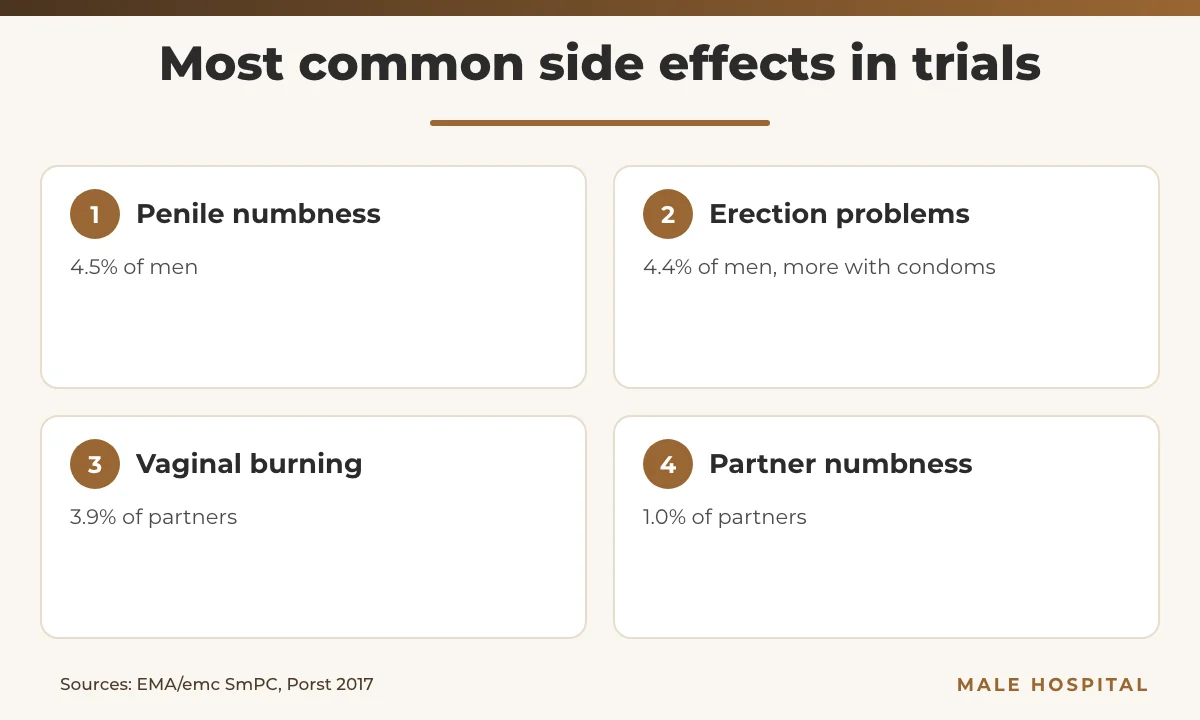
- The most common side effects are reduced penile sensation (4.5%) and erection problems (4.4%) in men, and vaginal burning (3.9%) in partners.
- Do not use it with polyurethane condoms, and avoid it (or wash it off first) when trying to conceive.
- How a numbing spray for premature ejaculation works
- Lidocaine-prilocaine spray (Fortacin): the evidence
- Over-the-counter lidocaine sprays and benzocaine products
- Numbing spray vs creams, condoms and pills
- How to use a numbing spray step by step
- Numbing spray for premature ejaculation: side effects
- Who should avoid a numbing spray for premature ejaculation
- When a spray is not enough
- When to see a doctor
- FAQs about numbing sprays for premature ejaculation
How a numbing spray for premature ejaculation works
Premature ejaculation (PE) means ejaculating sooner than you or your partner would like, nearly every time, with distress or frustration as a result. Many doctors use about one minute after penetration as the threshold for the lifelong form. It is common: Cleveland Clinic estimates that 30% to 40% of men experience it at some point in their lives.
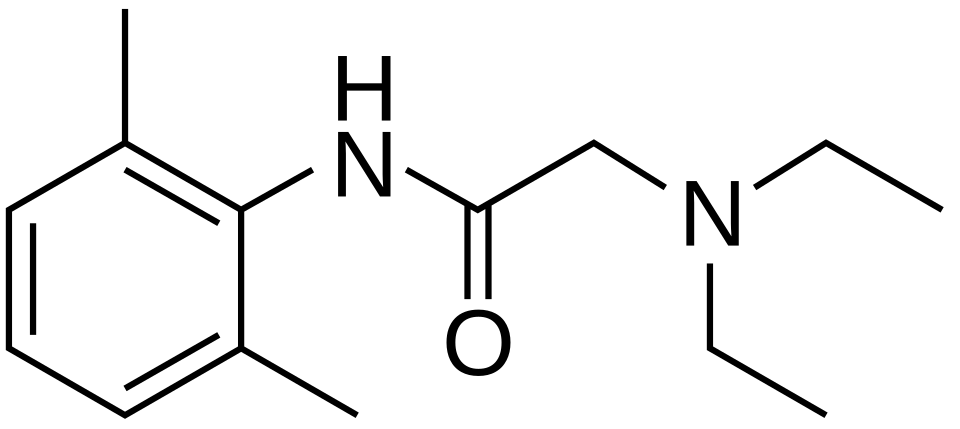
One theory behind lifelong PE is that the glans (head of the penis) is especially sensitive, so the reflex that triggers ejaculation fires too quickly. Local anesthetics in a numbing spray, such as lidocaine and prilocaine, block sodium channels in nerve endings, which temporarily and reversibly slows nerve signals. With less sensory input from the glans, the ejaculatory reflex takes longer to build, while erection, orgasm and ejaculation itself remain possible.
Source: Cleveland Clinic — Premature ejaculation; Urologia (PMC) — Porst & Burri 2017, Fortacin spray for premature ejaculation
Topical anesthetics are the oldest known drug treatment for PE. They act only where they are applied, and the amount absorbed into the bloodstream is low. That is why a numbing spray or cream suits men who want an “on-demand” option without taking a daily tablet. They do not change the brain chemistry behind ejaculation, so they treat the timing, not the cause.
Source: AUA/SMSNA — Disorders of Ejaculation guideline; emc — Fortacin cutaneous spray: Summary of Product Characteristics
Lidocaine-prilocaine spray (Fortacin): the evidence
Fortacin is a metered-dose numbing spray containing lidocaine 150 mg/mL and prilocaine 50 mg/mL. Each spray delivers 7.5 mg lidocaine and 2.5 mg prilocaine. The two drugs are in their uncharged “base” form, which forms a thin, slightly oily film that passes through the delicate surface of the glans but not through the thicker, keratinized skin of the shaft. The European Medicines Agency authorized it on 15 November 2013 (first under the name Lidocaine/Prilocaine Plethora) for adult men with primary, lifelong PE.
Source: European Medicines Agency — Fortacin EPAR; Urologia (PMC) — Porst & Burri 2017, Fortacin spray for premature ejaculation
What the two main trials found
The numbing spray, developed under the code name PSD502, was tested in two double-blind, placebo-controlled phase III studies lasting three months. Men had to show an intravaginal ejaculatory latency time (IELT) of one minute or less in at least two of their first three sexual encounters during a baseline period. Times were recorded with a stopwatch.
| Study | Men randomized | Baseline IELT | IELT with spray | IELT with placebo |
|---|---|---|---|---|
| Dinsmore & Wyllie 2009 (Europe) | 300 | 0.6 min | 3.8 min | 1.1 min |
| Carson & Wyllie 2010 (USA, Canada, Poland) | 256 | 0.56 min | 2.6 min | 0.8 min |
Source: BJU International (PubMed) — Dinsmore & Wyllie 2009, PSD502 phase III study; Journal of Sexual Medicine (PubMed) — Carson & Wyllie 2010, PSD502 phase III study
The values are geometric means over the treatment period. In the European study, the adjusted increase was 6.3-fold with the spray and 1.7-fold with placebo. Men using the numbing spray also reported better ejaculatory control and sexual satisfaction, and less distress. At the end of that study, 66% rated the spray “good” or “excellent”. No systemic side effects were reported.
Source: BJU International (PubMed) — Dinsmore & Wyllie 2009, PSD502 phase III study; EAU — Sexual and Reproductive Health Guidelines (disorders of ejaculation)
What the guidelines and reviews say
The European Association of Urology (EAU) gives a strong recommendation to use either dapoxetine or a lidocaine/prilocaine spray as first-line treatment for lifelong PE. It notes that, for treatment periods of under eight weeks, a network meta-analysis found local anesthetics had the best efficacy of the options compared, including SSRIs, dapoxetine, PDE5 inhibitors and tramadol. The American Urological Association (AUA) and SMSNA also list topical penile anesthetics among first-line drug treatments. The AUA points out that no drug is FDA-approved for PE, so prescription use in the US is off-label.
Source: EAU — Sexual and Reproductive Health Guidelines (disorders of ejaculation); AUA/SMSNA — Disorders of Ejaculation guideline
Independent reviews broadly agree. A 2013 meta-analysis of seven trials (566 men on local anesthetics, 388 on placebo) found a clear increase in IELT and better control and satisfaction. Side effects were more frequent than with placebo but stayed local. A 2016 systematic review of nine trials concluded that topical anesthetics appear more effective than placebo, paroxetine and sildenafil at lengthening IELT. Its authors added that the quality of most trials was uncertain.
Source: Asian Journal of Andrology (PMC) — Xia et al. 2013, local anaesthetics for PE meta-analysis; Sexual Health (PubMed) — Martyn-St James et al. 2016, topical anaesthetics systematic review
Real-life use over 12 months
A study of 198 men with PE at an Italian andrology center followed real-world use of the numbing spray for a year. Up to six months, 92.9% had tried it and 66.4% used it regularly, and IELT and PE symptom scores improved. By 12 months, only 26.8% were still using it regularly. This shows the spray helps many men, but a large share stop over time, so it is worth discussing other options early.
Source: Int J Impotence Research (PubMed) — Boeri et al. 2022, real-life use of lidocaine/prilocaine spray
Over-the-counter lidocaine sprays and benzocaine products
Many “delay sprays” sold online or in shops are not Fortacin. In the United States, the FDA regulates over-the-counter male genital desensitizers through a monograph rather than individual approval. The monograph allows only two active ingredients: lidocaine in a metered spray delivering approximately 10 mg per spray, and benzocaine at 3% to 7.5% in a water-soluble base, usually sold as wipes, gels or condoms.
Source: US Code of Federal Regulations — 21 CFR 348.10, male genital desensitizer ingredients
Labels must state that PE may be due to a condition requiring medical supervision and that you should stop if you or your partner develop a rash, burning or itching. Lidocaine numbing spray products direct 3 or more sprays, not more than 10, on the head and shaft before intercourse, and washing the product off afterwards. These products have far less clinical trial data than Fortacin, and doses vary between brands. Buy from a pharmacy and avoid products that do not list the active ingredient and dose.
Source: US Code of Federal Regulations — 21 CFR 348.50, labeling of male genital desensitizers
Numbing spray vs creams, condoms and pills
A numbing spray for premature ejaculation is one of several first-line choices. Older lidocaine/prilocaine creams were designed for intact skin, take longer to work and are harder to dose. They can also transfer to a partner unless a condom is used or the penis is washed before sex. Even so, a cream can raise stopwatch-measured IELT from 1–2 minutes to 6–9 minutes. Condoms on their own reduce sensitivity and are effective, especially combined with a local anesthetic.
Source: Urologia (PMC) — Porst & Burri 2017, Fortacin spray for premature ejaculation; EAU — Sexual and Reproductive Health Guidelines (disorders of ejaculation)
| Option | How it is used | Main advantages | Main drawbacks |
|---|---|---|---|
| Lidocaine-prilocaine spray (Fortacin) | 3 sprays on the glans, wipe off after 5 minutes | Fast, dose-controlled, guideline first-line | Local numbness, erection problems in a minority, cost of repeat use |
| OTC lidocaine spray | 3–10 sprays on head and shaft, wash off after sex | Easy to buy | Less trial data, product quality varies |
| Lidocaine/prilocaine or benzocaine cream | Applied before sex, often with a condom | Can lengthen IELT considerably | Slower, messy, partner numbness if not washed off |
| Condom alone | Worn during sex | Cheap, also protects against STIs | Modest effect on its own |
| Dapoxetine tablet | Taken 1–2 hours before sex | Guideline first-line for lifelong PE, no contact with partner | Nausea, headache, dizziness; approved in Europe but not in the USA |
Source: EAU — Sexual and Reproductive Health Guidelines (disorders of ejaculation); US Code of Federal Regulations — 21 CFR 348.50, labeling of male genital desensitizers; NHS — Ejaculation problems
Oral options, including dapoxetine and off-label daily SSRIs, are covered in detail in our guide to premature ejaculation pills. Many men try a numbing spray first because it works only when needed and does not affect the rest of the body.
How to use a numbing spray step by step
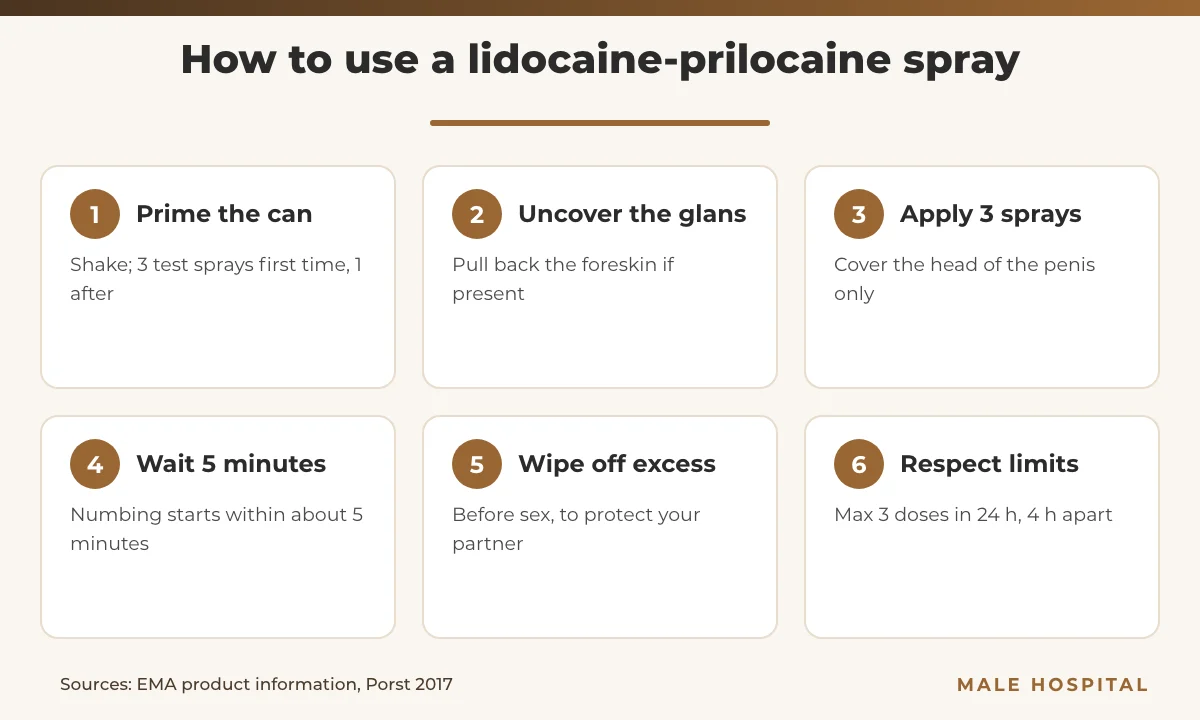
Always follow the leaflet of the numbing spray you have. The steps below come from the official product information for the lidocaine-prilocaine spray:
- Prime the can. Before first use, shake briefly and spray three times into the air. Before each later use, shake and spray once into the air.
- Uncover the glans. If you are uncircumcised, pull back the foreskin first.
- Apply one dose. Give 3 sprays to cover the head of the penis. One dose contains 22.5 mg lidocaine and 7.5 mg prilocaine.
- Wait 5 minutes. The numbing effect starts within about 5 minutes.
- Wipe off the excess before intercourse. This lowers the amount that can pass to your partner.
- Respect the limits. No more than 3 doses in 24 hours, at least 4 hours apart.
Source: emc — Fortacin cutaneous spray: Summary of Product Characteristics; Urologia (PMC) — Porst & Burri 2017, Fortacin spray for premature ejaculation
Keep it away from your eyes. If it gets into an eye, rinse with water or saline and protect the eye until feeling returns. A 6.5 mL can delivers at least 20 doses. Real-life data suggest timing and dose may need adjusting to suit each man, so tell your doctor if the effect is too strong or too weak. A numbing spray works best alongside the behavioral techniques in our guide on how to last longer in bed.
Source: emc — Fortacin cutaneous spray: Summary of Product Characteristics; Int J Impotence Research (PubMed) — Boeri et al. 2022, real-life use of lidocaine/prilocaine spray
Numbing spray for premature ejaculation: side effects
In pooled trial data from 596 men and 584 partners, treatment-related side effects occurred in 9.6% of men and 6.0% of partners. Most were mild to moderate and appeared during sex or within 24 hours. Very few people stopped treatment because of them.
Source: Urologia (PMC) — Porst & Burri 2017, Fortacin spray for premature ejaculation
Side effects in men
The most common were reduced feeling in the penis (genital hypoesthesia, 4.5%) and erectile dysfunction (4.4%). Genital burning was also common. Less common effects included abnormal orgasm, failure to ejaculate, penile pain, itching, redness, headache and throat irritation. Erection problems and numbness were more frequent when a male condom was worn with the numbing spray.
Source: emc — Fortacin cutaneous spray: Summary of Product Characteristics
Side effects in partners
Partners most often reported a vulvovaginal burning sensation (3.9%) and numbness (1.0%). The NHS notes that anesthetic products can transfer to the vagina and reduce a partner’s sensation. If the numbing spray reaches the mouth, nose, throat, vagina or anus, numbness there can mask pain and increase the risk of injury. This is why wiping off the excess, or using a compatible condom, matters.
Source: emc — Fortacin cutaneous spray: Summary of Product Characteristics; NHS — Ejaculation problems
Rare systemic risks
Very little of the drug enters the bloodstream. Even so, prilocaine, like benzocaine, can rarely contribute to methemoglobinemia, a blood disorder that lowers the oxygen-carrying capacity of red cells and can cause bluish skin, headache and breathlessness. Caution is advised in men with anemia, G6PD deficiency or methemoglobinemia, and in those taking medicines that can trigger it. Large doses also carry a risk of toxicity in men taking class I antiarrhythmic drugs such as mexiletine, and in severe liver disease.
Source: emc — Fortacin cutaneous spray: Summary of Product Characteristics; MedlinePlus — Methemoglobinemia
Who should avoid a numbing spray for premature ejaculation
Do not use a lidocaine-prilocaine spray if you or your partner are allergic to amide-type local anesthetics. Check your condoms: the numbing spray must not be used with polyurethane male or female condoms, which deteriorated in testing, but latex, polyisoprene, nitrile and silicone were not affected.
Source: emc — Fortacin cutaneous spray: Summary of Product Characteristics; European Medicines Agency — Fortacin EPAR
Couples trying for a baby need extra care. The EAU advises them to avoid lidocaine/prilocaine products because these may be toxic to fresh sperm. A laboratory study of 20 normal semen samples found that a common over-the-counter lidocaine spray reduced sperm motility, forward movement and survival, although it did not increase DNA damage. The product information advises men hoping to conceive to avoid the numbing spray or wash the glans thoroughly before sex. It is not a contraceptive.
Source: EAU — Sexual and Reproductive Health Guidelines (disorders of ejaculation); Urology (PubMed) — Sutton et al. 2018, topical PE product and fresh human sperm
If your partner is pregnant, data are limited, and the numbing spray should be avoided unless you use an effective barrier condom. If you have erection problems as well as PE, a numbing product can make an erection harder to keep, so treat the erection problem first.
Source: emc — Fortacin cutaneous spray: Summary of Product Characteristics; EAU — Sexual and Reproductive Health Guidelines (disorders of ejaculation)
When a spray is not enough
Not everyone responds, and some men find the loss of sensation reduces pleasure. In the trials, the numbing spray improved timing on average, but individual results varied widely. If a spray has not helped after a fair trial, the EAU guideline offers other first-line, second-line and third-line options.
- Oral treatment: on-demand dapoxetine, off-label daily SSRIs (second line) or on-demand clomipramine; PDE5 inhibitors may also be used in men with PE but without erectile dysfunction.
- Behavioral and psychosexual therapy: start-stop exercises combined with psychoeducation and mindfulness can improve symptoms, although the evidence is weaker than for drugs. For acquired PE, the EAU recommends combining psychological or behavioral therapy with medication.
- Tramadol: a third-line on-demand option, to be used with caution because of its risks.
- Treating a cause: acquired PE may be linked to erectile dysfunction, prostatitis, an overactive thyroid or poor sleep, and treating the cause comes first.
Source: EAU — Sexual and Reproductive Health Guidelines (disorders of ejaculation); NHS — Ejaculation problems
Procedures are not a routine alternative. The EAU advises against dorsal neurectomy (cutting penile nerve branches) until more safety data are available, and recommends hyaluronic acid injections of the glans only with caution. Any such option should be considered only after a specialist assessment, once proven treatments have failed.
Source: EAU — Sexual and Reproductive Health Guidelines (disorders of ejaculation)
When to see a doctor
Occasional early ejaculation is normal, and a numbing spray for premature ejaculation is not a substitute for a diagnosis. See a urologist or your doctor if it happens most of the time, causes distress or relationship problems, or started suddenly after years of normal control. Seek medical advice promptly if you notice:
- A rash, swelling, blistering or burning that persists after you stop the spray
- Lasting numbness, pain or skin damage on the penis
- Bluish skin, breathlessness, headache or dizziness after using an anesthetic product, which may signal methemoglobinemia
- Pain on ejaculation, blood in the semen, or urinary symptoms alongside PE
- Erection problems that started with or before the PE
- Low mood or anxiety linked to sex
Source: Cleveland Clinic — Premature ejaculation; US Code of Federal Regulations — 21 CFR 348.50, labeling of male genital desensitizers; MedlinePlus — Methemoglobinemia
If you would like a tailored plan, you can book a confidential consultation with our urologist-andrologist Assoc. Prof. Dr. Zülfü Sertkaya, whose clinical focus includes premature ejaculation; see our premature ejaculation treatment options or message us on WhatsApp for a free initial consultation.
FAQs about numbing sprays for premature ejaculation
Do numbing sprays really work for premature ejaculation?
Yes, for many men. In the two main trials of the lidocaine-prilocaine numbing spray, average time to ejaculation rose from around half a minute to 2.6 and 3.8 minutes, compared with 0.8 and 1.1 minutes on placebo. Meta-analyses of topical anesthetics confirm a benefit over placebo, although results vary between individuals and trial quality is mixed.
Source: European Medicines Agency — Fortacin EPAR; Asian Journal of Andrology (PMC) — Xia et al. 2013, local anaesthetics for PE meta-analysis
How long before sex should I apply a delay spray?
For the lidocaine-prilocaine spray, apply 3 sprays to the glans and wait about 5 minutes, then wipe off the excess before intercourse. Over-the-counter lidocaine sprays have their own directions, usually 3 or more sprays before sex. Applying the numbing spray much earlier or using extra sprays increases numbness and the chance of losing your erection.
Source: emc — Fortacin cutaneous spray: Summary of Product Characteristics; US Code of Federal Regulations — 21 CFR 348.50, labeling of male genital desensitizers
Will a numbing spray make my partner numb?
It can. About 1% of partners in the trials reported numbness and 3.9% reported vaginal burning. Wiping off the excess numbing spray after 5 minutes reduces transfer. With creams or over-the-counter products, use a condom or wash the penis before sex. Stop if your partner develops a rash, burning or itching.
Source: emc — Fortacin cutaneous spray: Summary of Product Characteristics; Cleveland Clinic — Premature ejaculation
Can I use a numbing spray with a condom?
Yes, with the right material. The lidocaine-prilocaine spray must not be used with polyurethane condoms, which deteriorated in testing. Latex, polyisoprene, nitrile and silicone condoms were not affected. Be aware that numbness and erection problems were more common when men used the numbing spray with a condom, so you may need less product.
Source: emc — Fortacin cutaneous spray: Summary of Product Characteristics
Is Fortacin available over the counter?
Fortacin is authorized across the European Union, and in the UK it is listed as a pharmacy medicine. It is not FDA-approved in the United States, where over-the-counter lidocaine “delay sprays” sold under the FDA monograph are the usual alternative. Availability and prescription rules differ by country, so check with a local pharmacist or doctor.
Source: European Medicines Agency — Fortacin EPAR; emc — Fortacin cutaneous spray: Summary of Product Characteristics; AUA/SMSNA — Disorders of Ejaculation guideline
Can a numbing spray cause erectile dysfunction?
Erection problems are one of the most common numbing spray side effects, reported by 4.4% of men in the trials. The effect is temporary and linked to reduced sensation, and few men stopped treatment because of it. Using fewer sprays, wiping off the excess carefully or avoiding the condom-plus-spray combination may help. Persistent erection problems deserve a medical check.
Source: emc — Fortacin cutaneous spray: Summary of Product Characteristics; Urologia (PMC) — Porst & Burri 2017, Fortacin spray for premature ejaculation
Is it safe to use a numbing spray when trying to conceive?
It is better to avoid it. The EAU advises couples seeking pregnancy not to use lidocaine/prilocaine products, and laboratory testing showed a common lidocaine spray reduced sperm movement and survival. If you do use one, the product information advises washing the glans thoroughly before intercourse. Ask your doctor about alternatives such as behavioral therapy.
Source: EAU — Sexual and Reproductive Health Guidelines (disorders of ejaculation); Urology (PubMed) — Sutton et al. 2018, topical PE product and fresh human sperm
Can I use a numbing spray every day?
The lidocaine-prilocaine spray is used on demand, before sex, with up to 3 doses in 24 hours at least 4 hours apart. Regular numbing spray use over months was studied and found safe in the trials and real-life follow-up. If you feel you need it every time and for the long term, discuss other options with a specialist.
Source: emc — Fortacin cutaneous spray: Summary of Product Characteristics; Int J Impotence Research (PubMed) — Boeri et al. 2022, real-life use of lidocaine/prilocaine spray
Medically reviewed by Assoc. Prof. Dr. Zülfü Sertkaya, urologist and andrologist (FEBU), Istanbul. Last reviewed: November 2026.
This article is for general information and does not replace an individual consultation with a qualified doctor.
- EAU — Sexual and Reproductive Health Guidelines (disorders of ejaculation)
- European Medicines Agency — Fortacin EPAR
- emc — Fortacin cutaneous spray: Summary of Product Characteristics
- US Code of Federal Regulations — 21 CFR 348.10, male genital desensitizer ingredients
- US Code of Federal Regulations — 21 CFR 348.50, labeling of male genital desensitizers
- NHS — Ejaculation problems
- Cleveland Clinic — Premature ejaculation
- AUA/SMSNA — Disorders of Ejaculation guideline
- BJU International (PubMed) — Dinsmore & Wyllie 2009, PSD502 phase III study
- Journal of Sexual Medicine (PubMed) — Carson & Wyllie 2010, PSD502 phase III study
- Urologia (PMC) — Porst & Burri 2017, Fortacin spray for premature ejaculation
- Asian Journal of Andrology (PMC) — Xia et al. 2013, local anaesthetics for PE meta-analysis
- Sexual Health (PubMed) — Martyn-St James et al. 2016, topical anaesthetics systematic review
- Int J Impotence Research (PubMed) — Boeri et al. 2022, real-life use of lidocaine/prilocaine spray
- MedlinePlus — Methemoglobinemia
- Urology (PubMed) — Sutton et al. 2018, topical PE product and fresh human sperm