Low testosterone, called male hypogonadism or testosterone deficiency by doctors, is a clinical syndrome: a man has symptoms or signs that fit, plus consistently low testosterone on repeated early-morning blood tests. It can start in the testicles (primary hypogonadism) or in the brain’s control centers, the hypothalamus and pituitary (secondary hypogonadism), and finding which one is involved decides both the further tests and the right treatment.
Source: EAU — Sexual and Reproductive Health Guidelines: Male Hypogonadism; Endocrine Society — Testosterone Therapy for Hypogonadism Guideline
- Low testosterone (hypogonadism) needs both symptoms and low levels; a single low result or symptoms alone are not enough for a diagnosis.
- Primary hypogonadism (testicular failure) shows high LH and FSH; secondary hypogonadism (hypothalamus or pituitary) shows low or inappropriately normal LH and FSH.
- Symptomatic low testosterone affects about 2.1–5.7% of men aged 40–79, and is far more common with obesity, type 2 diabetes and chronic disease.
- Weight loss and treating the underlying cause come first in many men; testosterone therapy is for confirmed deficiency and is ruled out for men who want children soon.
- Men who wish to father a child are usually offered hormone treatments that keep sperm production going, such as hCG with or without FSH.
- What is low testosterone (male hypogonadism)?
- How common is male hypogonadism?
- Primary vs secondary hypogonadism
- Causes of low testosterone
- How low testosterone is diagnosed
- Health effects of untreated low testosterone
- Low testosterone treatment options
- Low testosterone and fertility
- When to see a doctor
- FAQs about low testosterone
What is low testosterone (male hypogonadism)?
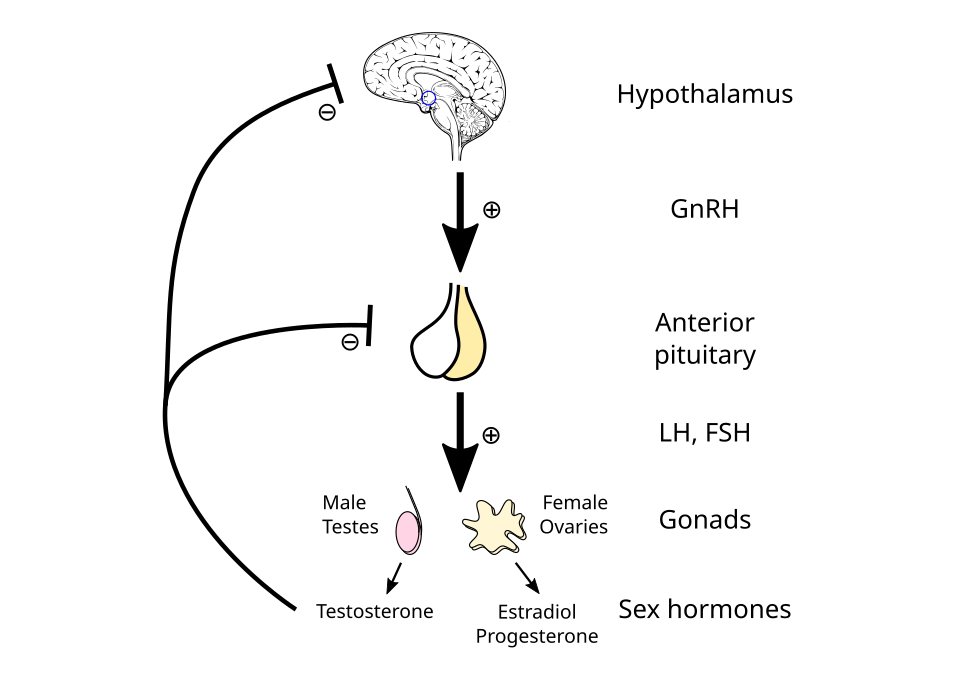
Testosterone is made mainly by the Leydig cells of the testicles. Production is controlled by a feedback loop called the hypothalamic–pituitary–gonadal (HPG) axis: the hypothalamus releases gonadotropin-releasing hormone (GnRH), which tells the pituitary gland to release luteinizing hormone (LH) and follicle-stimulating hormone (FSH). LH drives testosterone production, while FSH supports sperm production. Testosterone then signals back to the brain to slow the loop down, so a fault anywhere in this loop can lead to low testosterone.
The European Association of Urology (EAU) defines male hypogonadism as a clinical syndrome made up of symptoms, with or without signs, together with biochemical evidence of testosterone deficiency. When it first appears in adult life it is often called late-onset hypogonadism (LOH), and by definition it also requires persistent symptoms plus low levels on blood tests.
Source: EAU — Sexual and Reproductive Health Guidelines: Male Hypogonadism; MedlinePlus — Hypogonadism
This definition matters. The American Urological Association (AUA) stresses that testosterone deficiency is not simply a low number on a lab report: a man qualifies for treatment only when low levels come with related symptoms or signs. Because tiredness, low mood and poor sleep are also caused by stress, depression and many illnesses, the symptoms alone cannot prove a hormone problem. Our separate guide to low testosterone symptoms walks through each sign in detail and how specific it is.
Source: AUA — Evaluation and Management of Testosterone Deficiency
How common is male hypogonadism?
Testosterone falls gradually with age, but much more slowly than many advertisements suggest. In the European Male Ageing Study (EMAS), total testosterone declined by about 0.4% per year and free (unbound) testosterone by about 1.3% per year in men aged 40–79. Most healthy older men therefore keep levels within the normal range and do not develop low testosterone.
Symptomatic hypogonadism, meaning low testosterone plus symptoms, is estimated at 2.1–5.7% of men aged 40–79. The EAU notes that it is much more common in men with obesity, type 2 diabetes, metabolic syndrome, cardiovascular disease, chronic obstructive lung disease, kidney disease and cancer. In other words, general health is a stronger driver of low levels than age alone.
Source: EAU — Sexual and Reproductive Health Guidelines: Male Hypogonadism
The EMAS researchers studied 3,369 men from eight European centers and found that only three sexual symptoms (poor morning erections, low sexual desire and erectile dysfunction) had a true syndrome-like link with falling testosterone. They proposed that late-onset hypogonadism be identified by at least three sexual symptoms together with total testosterone below 11 nmol/L and free testosterone below 220 pmol/L.
Primary vs secondary hypogonadism
Doctors classify low testosterone by where the problem lies. This is not just a label: it tells the doctor which extra tests to order, whether fertility can be restored with hormones, and whether a hidden condition such as a pituitary tumor needs to be found.
Primary hypogonadism (hypergonadotropic)
In primary hypogonadism the testicles themselves are damaged or underdeveloped. The brain notices the shortfall and pushes harder, so LH and FSH are high. Sperm production is often affected as well.
Secondary hypogonadism (hypogonadotropic)
In secondary, or central, hypogonadism the testicles are capable but receive too little stimulation because the hypothalamus or pituitary is not working properly. LH and FSH are low or inappropriately normal. Both the Endocrine Society and the EAU recommend measuring LH and FSH to tell the two types apart.
Functional hypogonadism
The EAU also separates “classical” or organic hypogonadism, caused by a clear disease of the testicles, pituitary or hypothalamus, from functional hypogonadism. Functional hypogonadism is diagnosed when no structural problem in the HPG axis is found and the deficiency is mainly due to other conditions, such as obesity or type 2 diabetes. It is often at least partly reversible when those conditions improve.
Source: EAU — Sexual and Reproductive Health Guidelines: Male Hypogonadism; Endocrine Society — Testosterone Therapy for Hypogonadism Guideline
| Feature | Primary hypogonadism | Secondary hypogonadism |
|---|---|---|
| Where the problem is | Testicles | Hypothalamus or pituitary |
| Testosterone | Low | Low |
| LH and FSH | High | Low or inappropriately normal |
| Typical examples | Klinefelter syndrome, testicular injury, chemotherapy, radiation, orchitis | Obesity and type 2 diabetes, opioids, anabolic steroids, pituitary tumors, Kallmann syndrome |
| Extra tests often needed | Karyotype (chromosome test), semen analysis | Prolactin, iron studies, other pituitary hormones, pituitary MRI in selected men |
| Fertility with hormone stimulation | Not restored by hCG/FSH | Often possible with hCG ± FSH |
Source: EAU — Sexual and Reproductive Health Guidelines: Male Hypogonadism; MedlinePlus — Hypogonadism
Causes of low testosterone
Causes of primary hypogonadism
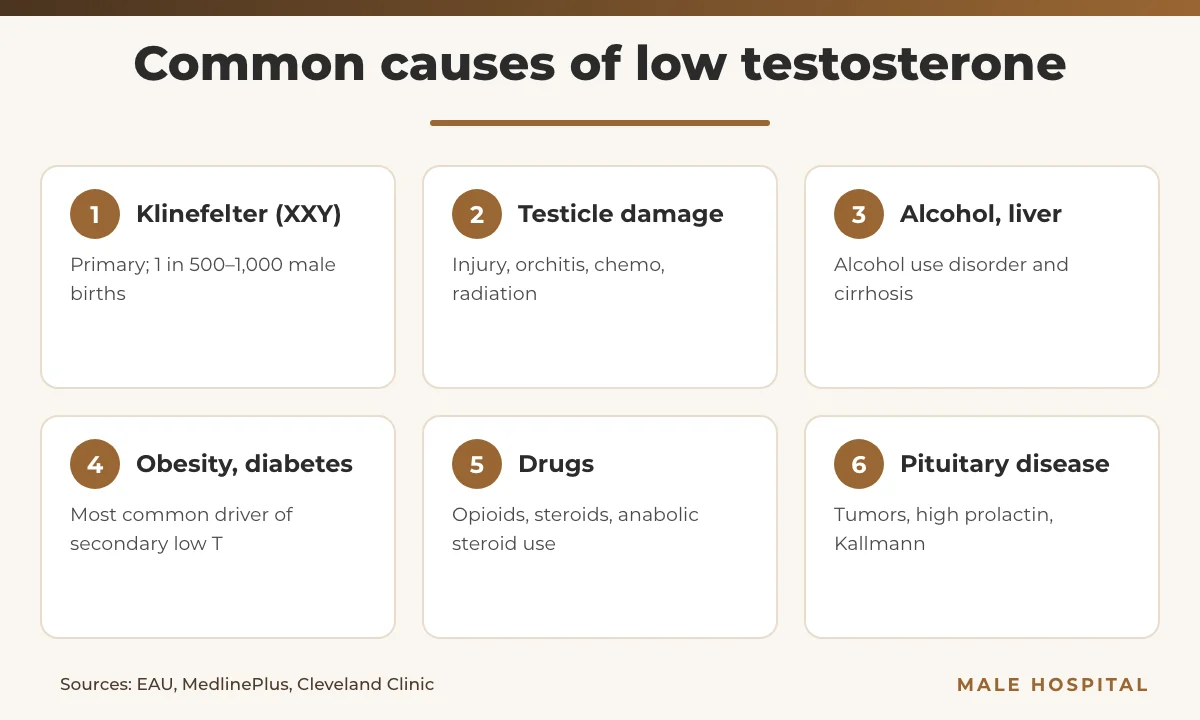
- Klinefelter syndrome: the most common congenital cause. Men are born with an extra X chromosome (47,XXY). The EAU estimates it in 1 in 500–1,000 live male births and reports that fewer than half of affected men are ever diagnosed. The NHS notes it is often found only when a man has fertility tests, with small firm testes, low sex drive and infertility as typical adult features.
- Undescended testicles that were not corrected in childhood.
- Testicular damage: injury, torsion, surgery, orchitis (testicular inflammation), chemotherapy (especially alkylating agents) and radiation to the testicles.
- Alcohol and liver disease: alcohol use disorder and cirrhosis are listed as acquired causes.
- Other conditions: chronic kidney or liver failure, HIV, testicular cancer and some autoimmune diseases.
Source: EAU — Sexual and Reproductive Health Guidelines: Male Hypogonadism; NHS — Klinefelter syndrome; Cleveland Clinic — Male Hypogonadism (Low T)
Causes of secondary hypogonadism
- Obesity, type 2 diabetes and metabolic syndrome: Cleveland Clinic notes that most men with symptoms have problems related to obesity or diabetes, which is why lifestyle change is central to treatment.
- Medicines and drugs: long-term opioids, glucocorticoids (steroid medicines), estrogens and progestogens, GnRH analogues, and drugs that raise prolactin. Taking anabolic steroids switches off the body’s own production, and stopping them can leave a man temporarily hypogonadal.
- Pituitary and hypothalamic disease: pituitary adenomas, high prolactin (hyperprolactinemia), brain injury, bleeding into the pituitary, and surgery or radiation to this area.
- Genetic conditions: Kallmann syndrome, a form of hypogonadotropic hypogonadism with delayed or absent puberty and a reduced or absent sense of smell, affecting about 1 in 30,000 males. Prader-Willi syndrome is another rare cause.
- Systemic illness and stress on the body: iron overload (hemochromatosis), obstructive sleep apnea, Cushing syndrome, eating disorders, very intense endurance exercise, rapid major weight loss and acute or critical illness.
Source: MedlinePlus — Hypogonadism; MedlinePlus Genetics — Kallmann syndrome; Cleveland Clinic — Male Hypogonadism (Low T)
Some conditions, such as hemochromatosis, chronic organ failure and HIV, can affect both the testicles and the pituitary at once. Age itself is also listed among the contributing factors in both groups, but on its own it usually causes only a slow decline.
Source: EAU — Sexual and Reproductive Health Guidelines: Male Hypogonadism
How low testosterone is diagnosed
Who should be tested
Guidelines advise against screening every man, and the EAU recommends against using symptom questionnaires for screening because they are not specific enough. Instead, testing for low testosterone is aimed at men with symptoms and at groups at higher risk. The AUA lists men with anemia, bone loss, diabetes, previous chemotherapy or radiation, HIV, long-term opioid or steroid use, infertility or pituitary disease.
Source: Urology Times — Testosterone deficiency FAQs from the AUA guideline; Endocrine Society — Testosterone Therapy for Hypogonadism Guideline
The blood tests
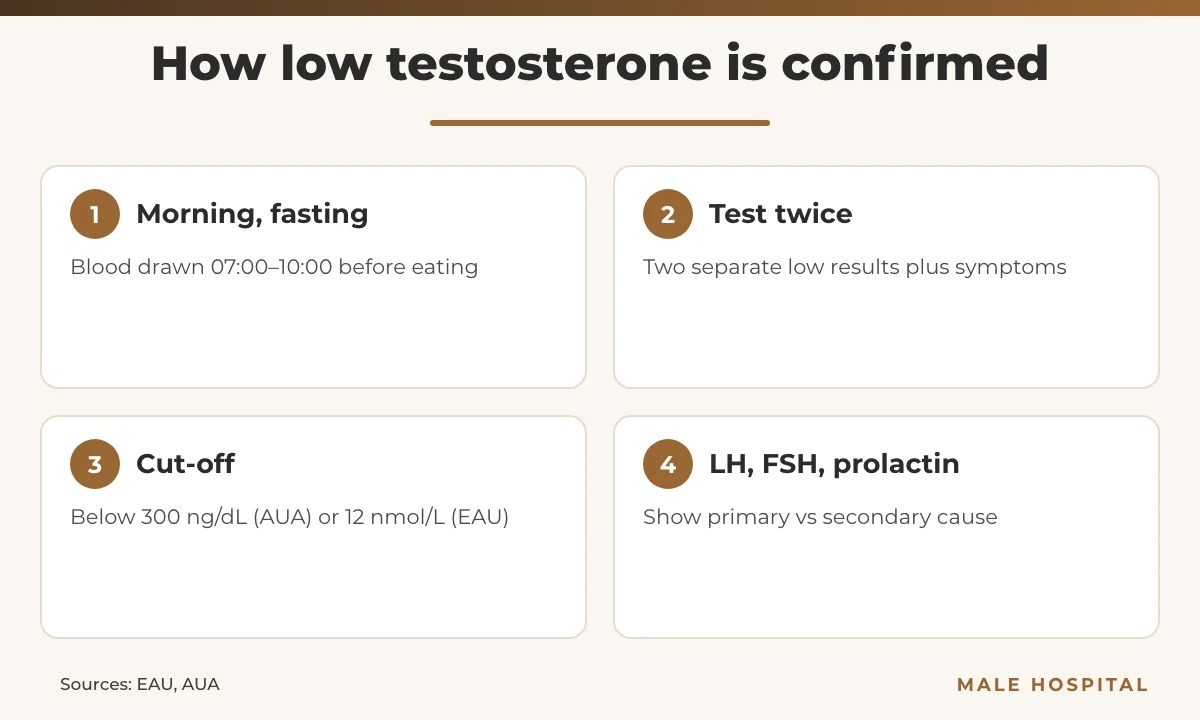
- Timing: blood is drawn in the morning (the EAU specifies 07:00–10:00) and fasting, because testosterone peaks in the morning and a non-fasting sample can underestimate total testosterone by more than 30%. Night-shift workers should be tested after adequate sleep.
- Repeat test: a low result must be confirmed on at least two separate occasions before diagnosis and before any treatment.
- Thresholds: the AUA considers total testosterone below 300 ng/dL a reasonable cut-off; the EAU uses 12 nmol/L (3.5 ng/mL). If total testosterone is borderline, calculated free testosterone below 220 pmol/L can support the diagnosis.
- LH and FSH: separate primary from secondary hypogonadism.
- Prolactin: checked when LH is low or low-normal, or when sex drive is low with secondary hypogonadism.
Source: EAU — Sexual and Reproductive Health Guidelines: Male Hypogonadism; Urology Times — Testosterone deficiency FAQs from the AUA guideline
Finding the cause
Once low testosterone is confirmed, the work-up looks for the reason. Depending on the results, this may include iron studies, thyroid tests and other pituitary hormones, a karyotype if Klinefelter syndrome is suspected, and a semen analysis if fertility matters. The EAU recommends a pituitary MRI when secondary hypogonadism comes with high prolactin, symptoms of a pituitary mass or other pituitary hormone deficiencies, and suggests considering it when total testosterone is below 6 nmol/L. Before any testosterone therapy, the AUA also advises a baseline hematocrit and, in men over 40, a PSA test.
Source: MedlinePlus — Hypogonadism; EAU — Sexual and Reproductive Health Guidelines: Male Hypogonadism; Urology Times — Testosterone deficiency FAQs from the AUA guideline
Health effects of untreated low testosterone
Beyond how a man feels day to day, long-standing low testosterone is linked with several health problems. Some are direct effects of the missing hormone; others reflect shared causes such as obesity and diabetes, so the arrow does not always point one way.
- Sexual function: low libido, fewer morning erections and erectile dysfunction, the symptoms most specifically tied to low levels.
- Bone: normal bone mineralization needs sex hormones. Severe hypogonadism is frequently associated with bone loss and osteoporosis, which raises fracture risk.
- Metabolism: hypogonadism often occurs together with metabolic syndrome and type 2 diabetes. The overall evidence on whether testosterone therapy improves blood sugar control is still inconclusive.
- Heart and survival: studies link late-onset hypogonadism with higher all-cause and cardiovascular mortality, but the EAU states that the effect of testosterone therapy on mortality has not been conclusively established.
- Blood, muscle and mood: unexplained anemia, loss of muscle and strength, more body fat and low mood can all be part of the picture.
- Fertility: many causes of hypogonadism also reduce sperm production, and infertility is a listed complication.
Source: EAU — Sexual and Reproductive Health Guidelines: Male Hypogonadism; MedlinePlus — Hypogonadism; Cleveland Clinic — Male Hypogonadism (Low T)
When hypogonadism starts before puberty, as in Kallmann syndrome or some cases of Klinefelter syndrome, puberty may be delayed or incomplete, with little facial hair, a higher voice and, in Kallmann syndrome, sometimes a micropenis and undescended testes. Timely hormone treatment in adolescence helps prevent many of these problems.
Source: MedlinePlus Genetics — Kallmann syndrome; NHS — Klinefelter syndrome
Low testosterone treatment options
Low testosterone treatment depends on the cause, the severity, the symptoms and, very importantly, whether the man wants children. The options below are an overview; each one should be chosen after a full assessment.
1. Lifestyle change and weight loss
For men who are overweight or obese, the EAU recommends weight loss and lifestyle change as the first approach. Diet and exercise alone usually raise testosterone modestly, by about 1–2 nmol/L. A meta-analysis of 24 studies found that weight loss raised total testosterone by an average of 2.87 nmol/L with a low-calorie diet and 8.73 nmol/L after bariatric surgery, with larger rises in men who lost more weight. Cleveland Clinic suggests considering other treatment if healthy eating and activity have not helped after 6–12 months, or sooner if symptoms are severe.
Source: Eur J Endocrinol (PubMed) — Body weight loss reverts obesity-associated hypogonadotropic hypogonadism (2013); EAU — Sexual and Reproductive Health Guidelines: Male Hypogonadism; Cleveland Clinic — Male Hypogonadism (Low T)
2. Treating the underlying cause
Where possible, the cause of low testosterone is removed: reviewing opioids, steroids or other drugs that suppress the axis, treating sleep apnea or high prolactin, and managing diabetes. A pituitary or hypothalamic tumor may need medication, surgery or radiation therapy.
3. Testosterone replacement therapy
For confirmed low testosterone, the hormone can be replaced with gels, injections, long-acting injections, pellets, nasal gel or oral capsules. It can improve sex drive, mood, energy and bone density, but it needs regular monitoring and is not appropriate for everyone. Our detailed guide to testosterone replacement therapy covers the forms, benefits timeline, heart-safety data and monitoring schedule.
Source: MedlinePlus — Hypogonadism; Cleveland Clinic — Male Hypogonadism (Low T)
The EAU lists situations in which testosterone therapy must not be used and others that call for extra caution:
| Absolute contraindications | Relative contraindications |
|---|---|
| Locally advanced or metastatic prostate cancer | Severe urinary symptoms (IPSS above 19) |
| Male breast cancer | Baseline hematocrit 48–50% |
| Active desire to have children | Family history of venous thromboembolism (blood clots) |
| Hematocrit 54% or higher | — |
| Uncontrolled or poorly controlled heart failure | — |
Source: EAU — Sexual and Reproductive Health Guidelines: Male Hypogonadism
4. Hormone treatments that keep fertility
Men with secondary hypogonadism who want children are treated differently, as explained in the next section. For older men, the Endocrine Society advises against routinely prescribing testosterone to every man aged 65 or over with low levels, and instead suggests an individual decision after discussing risks and benefits in men with symptoms and consistently low morning levels.
Source: Endocrine Society — Testosterone Therapy for Hypogonadism Guideline
Low testosterone and fertility
A point many men do not expect: taking testosterone switches off the brain’s LH and FSH signals through the feedback loop, which lowers sperm production. For this reason the EAU strongly recommends against testosterone therapy for male infertility or in men who wish to become fathers, and the AUA advises a fertility evaluation before therapy is started.
For men with secondary hypogonadism who want children, gonadotropins are the standard treatment: hCG, which acts like LH, combined with FSH gives better results than hCG alone. Selective estrogen receptor modulators (SERMs) such as clomiphene and aromatase inhibitors are sometimes used off-label, but the EAU rates the evidence as poor; they only work if the HPG axis is intact, so they do not help primary hypogonadism. Men with primary testicular failure, such as Klinefelter syndrome, may still become fathers through surgical sperm retrieval combined with ICSI. Read more in our pillar guide to male infertility.
Source: EAU — Sexual and Reproductive Health Guidelines: Male Hypogonadism; NHS — Klinefelter syndrome; Urology Times — Testosterone deficiency FAQs from the AUA guideline
When to see a doctor
See a doctor if low sex drive, fewer morning erections or erection problems persist for several weeks, especially with fatigue, low mood or loss of muscle. Seek prompt assessment for these red flags:
- New persistent headaches or problems with vision together with low sex drive, which can be symptoms of a pituitary mass.
- Delayed or absent puberty in a teenager, or a reduced sense of smell with delayed puberty.
- Small or shrinking testicles, or breast enlargement.
- A fracture after a minor fall, or a diagnosis of osteoporosis.
- Low libido after stopping anabolic steroids, or while taking long-term opioids.
- Difficulty conceiving with your partner.
Source: EAU — Sexual and Reproductive Health Guidelines: Male Hypogonadism; MedlinePlus Genetics — Kallmann syndrome
If you are worried about low testosterone, you can arrange a confidential assessment with our urologist-andrologist, Assoc. Prof. Dr. Zülfü Sertkaya, through WhatsApp; the right tests and treatment depend on your results and on whether you plan to have children.
FAQs about low testosterone
What level of testosterone is considered low?
The AUA considers total testosterone below 300 ng/dL a reasonable cut-off, while the EAU uses 12 nmol/L (3.5 ng/mL). A number alone is not a diagnosis: the result must be repeated on a second early-morning fasting sample and must come with symptoms or signs of deficiency before a doctor calls it hypogonadism.
Source: Urology Times — Testosterone deficiency FAQs from the AUA guideline; EAU — Sexual and Reproductive Health Guidelines: Male Hypogonadism
Is low testosterone just a normal part of ageing?
Only partly. In the EMAS study, total testosterone fell by roughly 0.4% a year after age 40, which is slow. Most men who develop symptomatic low testosterone also have obesity, type 2 diabetes or another chronic illness, so improving general health often matters more than age when it comes to restoring hormone levels.
Source: EAU — Sexual and Reproductive Health Guidelines: Male Hypogonadism
Can low testosterone be reversed without medication?
In functional low testosterone linked to excess weight, often yes, at least partly. A meta-analysis found that a low-calorie diet raised total testosterone by about 2.87 nmol/L and bariatric surgery by about 8.73 nmol/L, with bigger gains after more weight loss. Stopping suppressing drugs and treating sleep apnea can also help. Testicular or pituitary damage usually needs medical treatment.
What is the difference between primary and secondary hypogonadism?
Primary hypogonadism means the testicles cannot make enough testosterone, so the pituitary hormones LH and FSH are high. Secondary hypogonadism means the hypothalamus or pituitary does not send enough signal, so LH and FSH are low or inappropriately normal. The distinction guides further tests, such as prolactin and pituitary imaging, and decides whether fertility can be restored with hormone injections.
Source: Endocrine Society — Testosterone Therapy for Hypogonadism Guideline; MedlinePlus — Hypogonadism
Can young men have low testosterone?
Yes. Low testosterone can occur at any age: genetic conditions such as Klinefelter syndrome and Kallmann syndrome are present from birth, and testicular injury, chemotherapy, opioid use and anabolic steroids can affect men of any age. Klinefelter syndrome occurs in about 1 in 500–1,000 male births, yet fewer than half of affected men are ever diagnosed, often only during fertility testing.
Source: EAU — Sexual and Reproductive Health Guidelines: Male Hypogonadism; NHS — Klinefelter syndrome
Does low testosterone cause infertility?
It can, because many causes of low testosterone also impair sperm production, and infertility is a recognized complication. Testosterone therapy itself does not fix fertility and actually suppresses sperm production. Men with secondary hypogonadism who want children are usually treated with hCG, often with FSH, which stimulates the testicles to make both testosterone and sperm.
Source: MedlinePlus — Hypogonadism; EAU — Sexual and Reproductive Health Guidelines: Male Hypogonadism
Should every man over 40 have his testosterone checked?
No. The Endocrine Society recommends against routine screening of the general male population, and the EAU advises testing only men with symptoms. Testing makes sense if you have suggestive symptoms or a higher-risk condition such as diabetes, unexplained anemia, bone loss, long-term opioid or steroid use, pituitary disease or infertility.
Source: Endocrine Society — Testosterone Therapy for Hypogonadism Guideline; Urology Times — Testosterone deficiency FAQs from the AUA guideline
Are over-the-counter testosterone boosters effective?
Cleveland Clinic advises against relying on over-the-counter supplements for symptoms of low testosterone and recommends seeing a healthcare provider instead. Supplements do not address the actual cause, whether that is a pituitary problem, a medicine, obesity or testicular damage, and a proper work-up can uncover conditions that need specific treatment.
Source: Cleveland Clinic — Male Hypogonadism (Low T)
Medically reviewed by Assoc. Prof. Dr. Zülfü Sertkaya, urologist and andrologist (FEBU), Istanbul. Last reviewed: October 2026.
This article is for general information and does not replace an individual consultation with a qualified doctor.
- EAU — Sexual and Reproductive Health Guidelines: Male Hypogonadism
- AUA — Evaluation and Management of Testosterone Deficiency
- Urology Times — Testosterone deficiency FAQs from the AUA guideline
- Endocrine Society — Testosterone Therapy for Hypogonadism Guideline
- MedlinePlus — Hypogonadism
- MedlinePlus Genetics — Kallmann syndrome
- Cleveland Clinic — Male Hypogonadism (Low T)
- NHS — Klinefelter syndrome
- N Engl J Med (PubMed) — Identification of late-onset hypogonadism in middle-aged and elderly men (EMAS, 2010)
- Eur J Endocrinol (PubMed) — Body weight loss reverts obesity-associated hypogonadotropic hypogonadism (2013)