Erectile dysfunction in young men is more common than most people think: in one clinical series, one in four men seeking first help for new erection problems was 40 or younger. In men in their 20s and 30s, the cause is often psychological or lifestyle-related, but a real physical cause is found in a meaningful share of cases, so every young man with persistent ED deserves a proper medical check. The good news is that most causes can be identified and treated.
Source: PubMed — Capogrosso et al., J Sex Med 2013; PubMed — Nguyen et al., Sex Med Rev 2017
- In an Italian clinic study, 26% of men with new-onset ED were aged 40 or under, and almost half of them had severe ED.
- Anxiety, stress, depression and relationship problems are common triggers, but studies find a physical cause in at least 15–20% of young men with ED.
- Smoking, heavy drinking, recreational drugs, anabolic steroids, low activity and some medicines are well-documented, modifiable risk factors.
- ED in a young man can be an early sign of heart, blood vessel or metabolic disease, so doctors check blood sugar, lipids and testosterone.
- Treatment for young men combines lifestyle change, PDE5 inhibitor tablets as first-line therapy and, when needed, cognitive behavioral therapy that includes the partner.
- What ED means for men in their 20s and 30s
- How common is erectile dysfunction in young men?
- Causes of erectile dysfunction in young men
- ED as an early health warning
- Psychological or physical? Clues doctors look for
- How doctors evaluate ED in men under 40
- Treatment options for ED under 40
- Lifestyle steps that protect erections
- When to see a doctor
- FAQs about erectile dysfunction in young men
What ED means for men in their 20s and 30s
Erectile dysfunction (ED) means repeatedly being unable to get or keep an erection firm enough for satisfying sex. An occasional failed erection is normal at any age. The NHS notes that it is usually caused by stress, tiredness or drinking too much alcohol and is nothing to worry about. ED becomes a medical issue when it keeps happening.
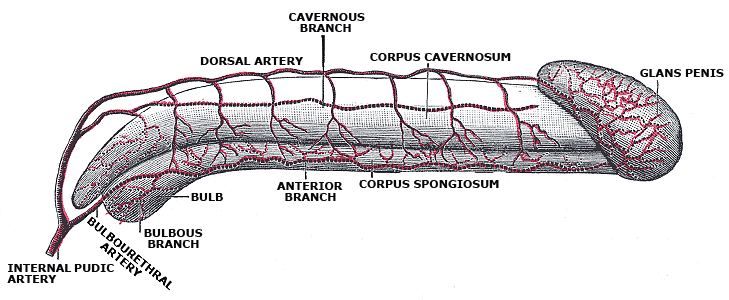
An erection depends on several systems working together. Nerve signals from the brain and the penis relax the muscle inside the erectile tissue, blood rushes in and the outflow of blood is restricted. Anything that disturbs the mind, the nerves, the blood vessels or the hormones can interfere with this process, and that is true at 25 just as at 65.
For a long time, doctors assumed that ED in men under 40 was almost always “in the head.” Better diagnostic testing has changed that view. Psychological causes are still more common in younger men, but research shows that a physical (organic) cause is present in a significant minority, and those physical causes can carry important health implications.
Source: NHS — Erection problems (erectile dysfunction); PubMed — Papagiannopoulos et al., Asian J Androl 2015
How common is erectile dysfunction in young men?
Exact numbers vary a lot between studies, because researchers use different questionnaires, age groups and definitions. A 2019 review of population studies found that reported ED prevalence ranged from 3% to 76.5% worldwide, and that the screening tool used was a major source of these differences. Studies that used the validated International Index of Erectile Function (IIEF) found a high prevalence of ED in young men.
Here is what the better-known studies report:
- Men seeking help in clinic: among 439 consecutive men attending an Italian urology clinic with new-onset ED, 114 (26%) were aged 40 or under. Their average age was 32, and the youngest was 17.
- Severity: severe ED was found in 48.8% of the younger men and 40% of the older men, a difference that was not statistically significant. In other words, ED in young men is not always mild.
- General population of young men: a survey of young Swiss men found that 30% reported ED and 11% reported premature ejaculation.
- Reviews: a 2017 review concluded that large multinational studies have estimated the prevalence of ED in young men to be as high as 30%.
Survey figures like these include mild and occasional problems, so they do not mean that a third of young men need treatment. They do show that ED in younger men is common enough that no one should feel alone or abnormal for raising it with a doctor.
Sources: PubMed — Kessler et al., The global prevalence of erectile dysfunction, BJU Int 2019; PubMed — Capogrosso et al., J Sex Med 2013; PubMed — Mialon et al., J Adolesc Health 2012; PubMed — Nguyen et al., Sex Med Rev 2017
Causes of erectile dysfunction in young men
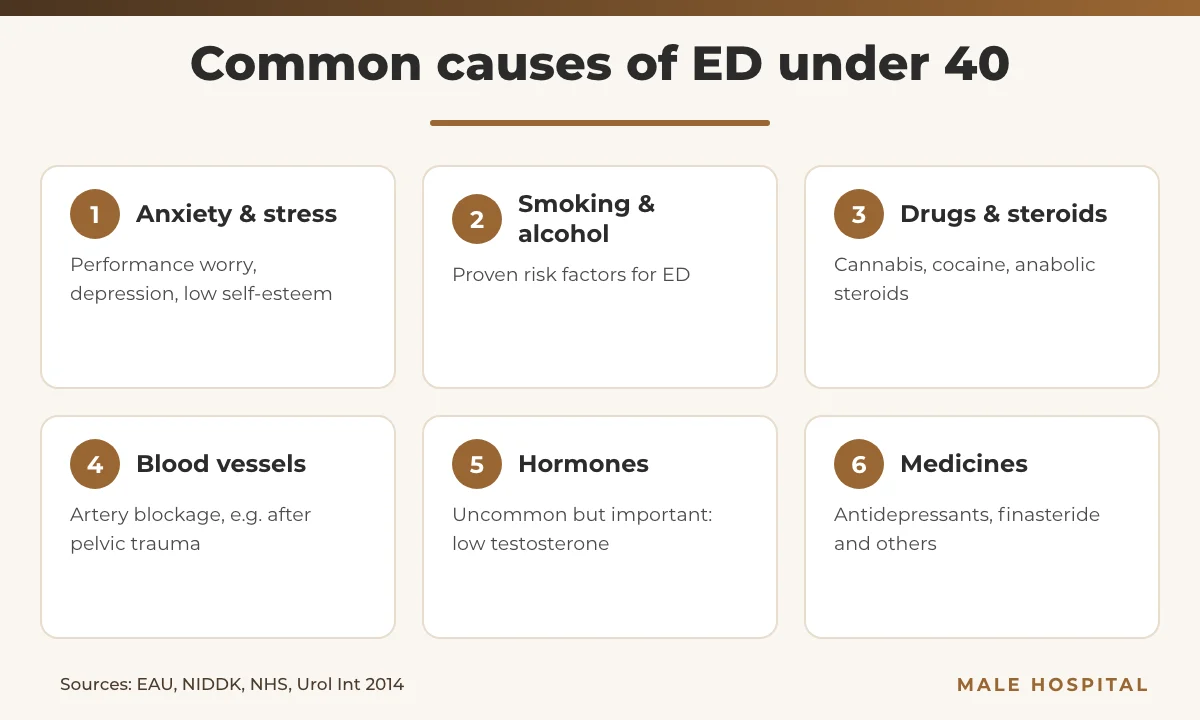
Most young men with ED have more than one contributing factor. A broader overview of all causes is in our guide to erectile dysfunction causes; below we focus on those most relevant in your 20s and 30s.
Psychological and emotional factors
Anxiety, depression, stress, loneliness and low self-esteem or poor body image can cause ED or make it worse. Performance anxiety is especially common in younger men: one failed erection leads to worry about the next encounter, and the worry itself blocks arousal. In the Swiss survey of young men, poor mental health was the only factor directly linked to both ED and premature ejaculation after other variables were taken into account. Our article on psychological erectile dysfunction covers these triggers and their treatment in depth.
Sources: NIDDK — Symptoms & Causes of Erectile Dysfunction; PubMed — Mialon et al., J Adolesc Health 2012
Pornography: what the research shows
Many young men worry that watching pornography has caused their ED. A study of three separate samples of men found little or no evidence of an association between simply using pornography and ED. Men who felt their own use was problematic did report more ED at the same time, but the researchers found no evidence that pornography use caused ED over time.
Source: PubMed — Grubbs & Gola, Is pornography use related to erectile functioning? J Sex Med 2019
Smoking, alcohol and inactivity
The European Association of Urology (EAU) lists cigarette smoking, obesity and lack of exercise among the vascular risk factors for ED, and excessive alcohol intake among drug-related causes. A 2021 systematic review of 24 studies confirmed smoking, alcohol and drug use as risk factors, while a healthy diet, physical activity and intimacy were protective. In the Italian clinic study, men aged 40 or under with ED smoked and used illicit drugs more often than older men with ED.
Sources: EAU Guidelines — Management of erectile dysfunction; PubMed — Sivaratnam et al., Behavior-related ED, J Sex Med 2021; PubMed — Capogrosso et al., J Sex Med 2013
Recreational drugs and anabolic steroids
The EAU guideline names heroin, cocaine, marijuana, methadone, synthetic drugs and anabolic steroids as possible drug-related causes of ED. For cannabis, a 2019 meta-analysis of five case-control studies (3,395 men) found ED in 69.1% of cannabis users versus 34.7% of non-users. The results varied widely between studies, and the authors said longer-term research is needed to confirm the link.
Anabolic steroids, used by some men to build muscle, can cause erectile dysfunction, shrunken testicles, a reduced sperm count, infertility and breast development, according to the NHS. Stopping them suddenly can bring on low sex drive, depression and fatigue, so men who want to stop should seek medical advice.
Sources: EAU Guidelines — Management of erectile dysfunction; PubMed — Pizzol et al., Cannabis use and ED, Am J Mens Health 2019; NHS — Anabolic steroid misuse
Vascular and structural causes
Reviews of men under 40 have found an organic cause in 15% to 72% of cases, depending on the population studied. In young men, vascular ED is commonly due to a focal blockage in the arteries supplying the penis and this is a recognized problem after pelvic or perineal trauma. Structural problems also occur: an estimated 8% of men with Peyronie’s disease (scar tissue causing curvature) are under 40, and about 21% of these young men have ED.
Hormonal and neurological causes
Hormonal causes are uncommon in young men but should not be missed. They include Klinefelter syndrome and congenital or acquired hypogonadotropic hypogonadism, conditions in which the testes produce too little testosterone. If a hormone problem is suspected, our guide to low testosterone symptoms explains what to look for. Young men with multiple sclerosis, epilepsy or injuries close to the spinal cord are also at increased risk of ED.
Medicines
Medicines linked to ED in younger men include antidepressants, non-steroidal anti-inflammatory drugs (NSAIDs), finasteride (used for hair loss), antiepileptics and antipsychotics. The NIDDK also lists antihistamines, blood pressure medicines, sedatives and certain pain relievers among the drug classes that can cause ED. Never stop a prescribed medicine on your own.
Sources: PubMed — Ludwig & Phillips, Organic causes of ED in men under 40, Urol Int 2014; NIDDK — Symptoms & Causes of Erectile Dysfunction
ED as an early health warning in young men
The EAU guideline states that ED should be considered a precursor of cardiovascular disease, and that more severe and longer-standing ED carries greater risk. A population review found that men with ED had higher odds of cardiovascular death and death from any cause.
This matters for young men too. A review from San Raffaele University in Milan concluded that ED predicts later cardiovascular events even in young men and can be the first sign of diabetes or metabolic syndrome. Physical (organic) ED has also been shown to predict higher future illness and mortality. That is why doctors recommend a full general health assessment for ED, regardless of age, rather than simply handing out tablets.
Sources: EAU Guidelines — Management of erectile dysfunction; PubMed — Capogrosso et al., Curr Opin Urol 2016; PubMed — Kessler et al., BJU Int 2019; PubMed — Papagiannopoulos et al., Asian J Androl 2015
Psychological or physical? Clues doctors look for
In young men, the pattern of symptoms gives useful hints. These clues guide the doctor but do not replace an examination, because many men have both types of cause at once.
| Feature | More typical of psychological ED | More typical of physical (organic) ED |
|---|---|---|
| Onset | Sudden, often after a stressful event | Gradual, worsening over time |
| Spontaneous or self-stimulated erections | Usually good quality | Also reduced |
| Sex drive (libido) | May be decreased | Low to normal |
| Common background | Depression, anxiety, partner difficulties | Vascular, hormonal, nerve, medication or structural problems |
The NHS adds that, depending on the cause, a man may still get erections at other times, such as on waking. Normal morning erections make a purely physical cause less likely, but they do not rule one out.
Sources: PubMed — Nguyen et al., Sex Med Rev 2017; NHS — Erection problems (erectile dysfunction)
How doctors evaluate ED in men under 40
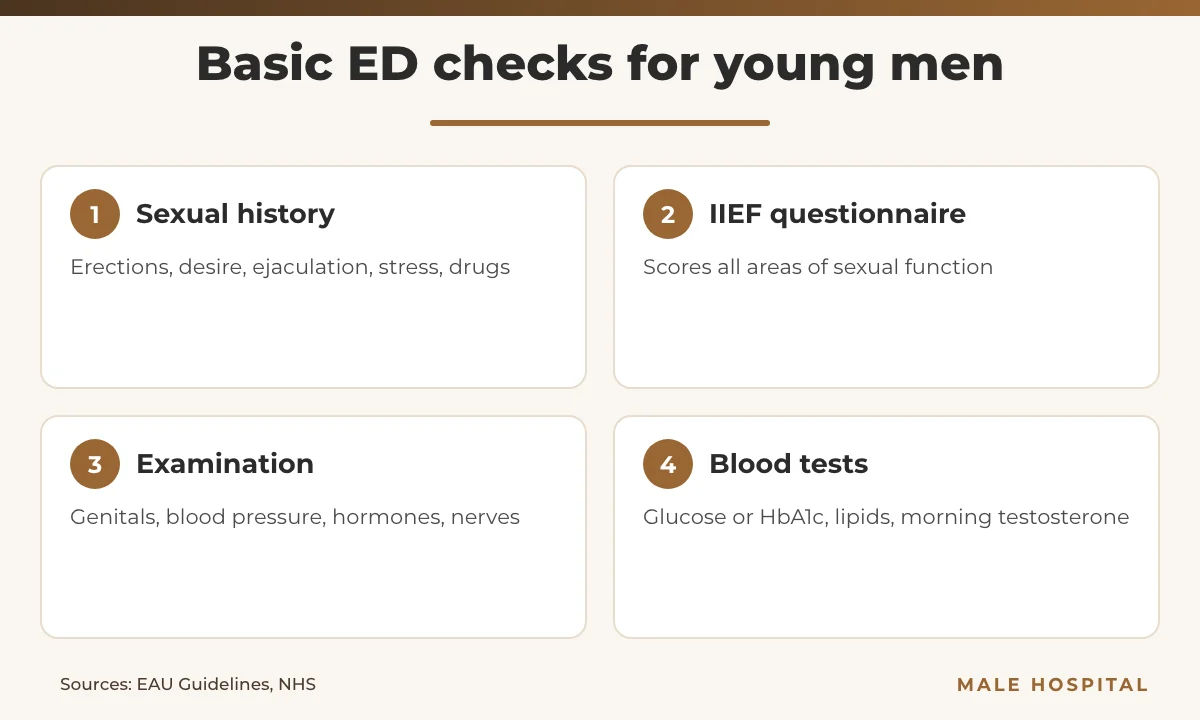
For most young men, a focused history, a physical examination and basic blood tests are enough to plan treatment. More advanced tests are kept for specific situations.
Basic workup
- Medical and sexual history: how erections behave, plus desire, arousal, ejaculation and orgasm, as well as medicines, drugs, alcohol, stress and relationship issues.
- Questionnaire: a validated tool such as the IIEF scores all areas of sexual function.
- Physical examination: a focused check of the genitals and of the hormonal, vascular and nervous systems, including blood pressure.
- Blood tests: fasting blood glucose or HbA1c and a lipid profile, plus early-morning fasting total testosterone.
Sources: EAU Guidelines — Management of erectile dysfunction; NHS — Erection problems (erectile dysfunction)
Specialized tests
Nocturnal penile tumescence and rigidity (NPTR) testing records erections during sleep and helps separate organic from psychogenic ED. Penile duplex Doppler ultrasound measures blood flow in the penis and is used when a vascular cause is suspected. The EAU lists primary ED (lifelong ED that is not explained by an acquired disease or a psychological disorder) and young men with a history of pelvic or perineal trauma among the indications for these tests. Because vascular causes are relatively common in young men, a urology review recommends considering NPT testing and Doppler ultrasound in this group.
Sources: EAU Guidelines — Management of erectile dysfunction; PubMed — Ludwig & Phillips, Urol Int 2014; Cleveland Clinic — Erectile Dysfunction
Treatment options for ED under 40
In young men, treatment targets the cause and usually combines several approaches. The EAU recommends starting lifestyle changes and risk-factor control before or at the same time as ED treatment.
PDE5 inhibitor tablets
Phosphodiesterase type 5 (PDE5) inhibitors such as sildenafil, tadalafil, vardenafil and avanafil are the first-line medical treatment for ED and remain the mainstay in young men. Sildenafil is usually taken about an hour before sex. Some men prefer a daily low dose of tadalafil, which removes the need to plan sex around a tablet. In men with performance anxiety, a short course can help break the cycle of failure and worry.
Safety matters. The NHS warns that taking sildenafil with poppers (amyl nitrite) or illegal drugs such as amphetamines, ecstasy or cocaine raises the risk of serious side effects, and advises avoiding heavy drinking. Many websites sell fake ED medicines, and the US FDA warns that sexual enhancement products sold online are often contaminated with hidden drug ingredients that can cause serious harm. Get tablets on prescription after a medical check.
Sources: EAU Guidelines — Management of erectile dysfunction; NHS — Sildenafil (Viagra); FDA — Sexual enhancement and energy product notifications
Psychological treatment
When anxiety, stress, depression or relationship problems play a role, the EAU recommends cognitive behavioral therapy (CBT), ideally including the partner and combined with medical treatment when indicated. Sex therapy, counseling and treatment of depression or anxiety can all help.
Treating physical causes
Medicine-related ED may improve after a dose change or switch. Confirmed hormone deficiency is treated by a specialist. For a small group of young men whose ED follows pelvic or perineal trauma, surgical penile revascularization has a 60–70% long-term success rate, but only after the arterial narrowing is confirmed on specialized imaging and leakage from the penile veins has been excluded.
Other options
If tablets do not work, penile injections, vacuum devices and a penile implant are available. The full range is explained on our erectile dysfunction treatment page.
Sources: EAU Guidelines — Management of erectile dysfunction; Cleveland Clinic — Erectile Dysfunction
Lifestyle steps that protect erections
Because so many causes of erectile dysfunction in young men are linked to habits, lifestyle change is often the most powerful long-term treatment:
- Stop smoking. Quitting may help mild ED over several months.
- Exercise regularly. Regular vigorous aerobic exercise may reverse some mild cases.
- Limit alcohol. The NHS advises no more than 14 units a week.
- Avoid recreational drugs and anabolic steroids. Both are listed causes of ED.
- Keep a healthy weight, eat well and sleep well.
- Manage stress. The NHS also suggests not cycling for more than 3 hours a week.
Sources: Cleveland Clinic — Erectile Dysfunction; NHS — Erection problems (erectile dysfunction)
When to see a doctor
See a doctor if erection problems keep happening, even if you feel otherwise healthy. Arrange a prompt check if you notice:
- ED that started gradually and is getting worse, or erections that are weak even during masturbation and on waking.
- ED after an injury to the pelvis, perineum or spine.
- Low sex drive, smaller or softer testicles, or breast swelling.
- A new bend, lump or pain in the penis.
- Known or suspected high blood pressure, high cholesterol or diabetes, which can all be linked to frequent ED.
- ED that began after starting a new medicine or using anabolic steroids.
Seek emergency care for an erection that is painful and lasts longer than 2 to 4 hours, especially after using ED medicines. This is called priapism and needs urgent treatment.
Sources: NHS — Erection problems (erectile dysfunction); Cleveland Clinic — Erectile Dysfunction
If you would like a confidential assessment, our urologist-andrologist can look for both physical and psychological causes and explain your erectile dysfunction treatment options. You can start with a free, private consultation on WhatsApp.
FAQs about erectile dysfunction in young men
Is it normal to have erectile dysfunction at 25?
Occasional erection problems are normal at any age and are usually caused by stress, tiredness or alcohol. Persistent problems at 25 are not rare: in one clinic study, a quarter of men seeking help for new ED were 40 or younger. Because a physical cause is sometimes found, ongoing problems are worth a medical check rather than silent worry.
Sources: NHS — Erection problems; PubMed — Capogrosso et al., 2013
Is ED in young men always psychological?
No. Psychological causes are more common in younger men, but studies find a physical cause in at least 15–20% of young men with ED, and some series report even higher figures. Vascular problems, hormone disorders, nerve conditions, Peyronie’s disease and medicines can all be responsible, which is why doctors examine and test rather than assume stress.
Sources: PubMed — Papagiannopoulos et al., 2015; PubMed — Ludwig & Phillips, 2014
Can anxiety alone cause ED in young men?
Yes. Anxiety, stress and depression can cause ED or make it worse, even when blood vessels and nerves are healthy. Performance anxiety creates a cycle in which fear of failure blocks arousal. Cognitive behavioral therapy, ideally with the partner involved and combined with tablets when needed, is a recommended approach.
Sources: NIDDK — Symptoms & Causes of ED; EAU Guidelines
Does smoking weed cause erectile dysfunction?
Possibly. A 2019 meta-analysis of five case-control studies found ED in about 69% of cannabis users compared with about 35% of non-users. The studies were very different from each other, so the link is not proven to be causal. European urology guidelines nevertheless list marijuana among drug-related causes of ED.
Sources: PubMed — Pizzol et al., 2019; EAU Guidelines
Can steroids from the gym cause ED?
Yes. The NHS lists erectile dysfunction, shrunken testicles, reduced sperm count, infertility and breast development as effects of anabolic steroid misuse in men. Stopping suddenly can cause low sex drive, depression and fatigue. A doctor can check hormone levels and help plan a safe recovery.
Source: NHS — Anabolic steroid misuse
Is it safe for young men to take Viagra or Cialis?
PDE5 inhibitors are the first-line treatment for ED at any adult age, but they should be prescribed after a medical check. They must not be combined with poppers or illegal stimulants, and they are unsuitable for men with certain heart, blood pressure or eye conditions. Avoid online products, which may be fake or contain hidden ingredients.
Sources: NHS — Sildenafil (Viagra); FDA — Sexual enhancement product notifications
Can erectile dysfunction in young men be cured?
Often, yes, when the cause can be removed. Psychological ED responds well to therapy, and ED linked to smoking, alcohol, drugs, steroids or a medicine may improve once the trigger is addressed. Vigorous exercise and quitting smoking may reverse some mild cases. Other causes can be controlled effectively even if they cannot be cured.
Sources: Cleveland Clinic — Erectile Dysfunction; PubMed — Sivaratnam et al., 2021
Does watching porn cause erectile dysfunction?
Current evidence says probably not. A study across three samples of men found little or no link between simply using pornography and ED, and no evidence that pornography use caused ED over time. Men who saw their own use as problematic did report more ED, so distress around pornography is worth discussing with a therapist.
Source: PubMed — Grubbs & Gola, 2019
Medically reviewed by Assoc. Prof. Dr. Zülfü Sertkaya, urologist and andrologist (FEBU), Istanbul. Last reviewed: October 2026.
This article is for general information and does not replace an individual consultation with a qualified doctor.
- EAU — Sexual and Reproductive Health Guidelines — Management of erectile dysfunction
- NIDDK — Symptoms & Causes of Erectile Dysfunction
- NHS — Erection problems (erectile dysfunction)
- NHS — Anabolic steroid misuse
- NHS — Sildenafil (Viagra)
- Cleveland Clinic — Erectile Dysfunction
- FDA — Sexual Enhancement and Energy Product Notifications
- PubMed — J Sex Med 2013 — Capogrosso et al. One patient out of four with newly diagnosed erectile dysfunction is a young man
- PubMed — Sex Med Rev 2017 — Nguyen et al. Erectile Dysfunction in Young Men — A Review of the Prevalence and Risk Factors
- PubMed — BJU Int 2019 — Kessler et al. The global prevalence of erectile dysfunction: a review
- PubMed — J Adolesc Health 2012 — Mialon et al. Sexual dysfunctions among young men: prevalence and associated factors
- PubMed — Urol Int 2014 — Ludwig & Phillips. Organic causes of erectile dysfunction in men under 40
- PubMed — Asian J Androl 2015 — Papagiannopoulos et al. Evaluation of young men with organic erectile dysfunction
- PubMed — Curr Opin Urol 2016 — Capogrosso et al. Erectile dysfunction in young patients is a proxy of overall men's health status
- PubMed — Am J Mens Health 2019 — Pizzol et al. Relationship between cannabis use and erectile dysfunction: a systematic review and meta-analysis
- PubMed — J Sex Med 2019 — Grubbs & Gola. Is pornography use related to erectile functioning?
- PubMed — J Sex Med 2021 — Sivaratnam et al. Behavior-related erectile dysfunction: a systematic review and meta-analysis