Male infertility means a man’s health problem is the reason, or part of the reason, a couple has not conceived after 12 months of regular unprotected sex. A male factor is found in about half of infertile couples, and the most common causes are varicocele, hormone problems, genetic conditions, blockages and lifestyle or medication effects. Diagnosis starts with a semen analysis, and many causes can be treated or bypassed with sperm retrieval and IVF/ICSI.
Source: WHO — Infertility fact sheet; EAU — Sexual and Reproductive Health Guidelines (infertility chapter)
- Infertility is defined as no pregnancy after 12 months or more of regular unprotected sex; the WHO estimates it affects about 1 in 6 people of reproductive age.
- A male factor is found in about 50% of infertile couples and is the only factor in about 20%, so both partners should be assessed from the start.
- Main causes include varicocele, Klinefelter syndrome, Y-chromosome microdeletions, CFTR-related absence of the vas deferens, blockages, infections, heat, smoking and testosterone or anabolic steroid use.
- A semen analysis, repeated if abnormal, is the core test; hormones, scrotal ultrasound and genetic tests are added depending on the result.
- Even men with no sperm in the ejaculate may father a biological child: microdissection TESE (micro-TESE) can find sperm in many cases for use with ICSI.
What is male infertility?
The World Health Organization (WHO) defines infertility as the failure to achieve a pregnancy after 12 months or more of regular unprotected sexual intercourse. It is a disease of the male or female reproductive system, and the WHO estimates that about 1 in 6 people of reproductive age experience it at some point in their lives. The European Association of Urology (EAU) puts the figure at about 15% of couples.
Source: WHO — Infertility fact sheet; EAU — Sexual and Reproductive Health Guidelines (infertility chapter)
The NHS notes that more than 8 out of 10 couples in which the woman is under 40 conceive within a year, and Cleveland Clinic puts a young couple’s chance per month at roughly 20–25%. A few months without success is therefore normal.
Source: NHS — Infertility; Cleveland Clinic — Infertility in men: causes, diagnosis and treatment
Male fertility depends on three things working together: the testicles must make enough healthy sperm, hormones from the brain (FSH and LH) must drive that production, and the tubes (epididymis, vas deferens and ejaculatory ducts) must carry sperm into the semen. A problem at any of these steps can cause male infertility. Sperm production can be reduced (oligozoospermia), absent (azoospermia), or the sperm may move poorly or have abnormal shapes.
Source: NHS — Infertility: causes; Cleveland Clinic — Infertility in men: causes, diagnosis and treatment
How common is male infertility?
Male infertility is far more common than many couples expect. According to the EAU guideline, a male-associated factor is found in about 50% of infertile couples, and in about 20% the male factor is the only cause. In 30–40% of men no clear cause is found; this used to be called “idiopathic” infertility. The US National Institute of Child Health and Human Development (NICHD) similarly reports that men are the only or a contributing cause in about 40% of couples.
Source: EAU — Sexual and Reproductive Health Guidelines (infertility chapter); NICHD (NIH) — What causes male infertility?
A complete lack of sperm (azoospermia) explains about 15% of cases in infertile men, and problems transporting sperm account for about 10–20%. This is why the man should be evaluated at the same time as his partner, not after months of female testing.
Source: NICHD (NIH) — What causes male infertility?; HFEA — Intracytoplasmic sperm injection (ICSI)
Causes of male infertility
The table below shows how often the main identifiable causes appear in the EAU data, both in unselected infertile men and in men with azoospermia (no sperm in the ejaculate).
| Cause | Unselected infertile men | Men with azoospermia |
|---|---|---|
| Varicocele | 14.8% | 10.9% |
| Klinefelter syndrome (47,XXY) | 2.6% | 13.7% |
| Obstruction (blockage) | 2.2% | 10.3% |
| Cystic fibrosis / absent vas deferens | 0.5% | 3.0% |
Source: EAU — Sexual and Reproductive Health Guidelines (infertility chapter)
Varicocele
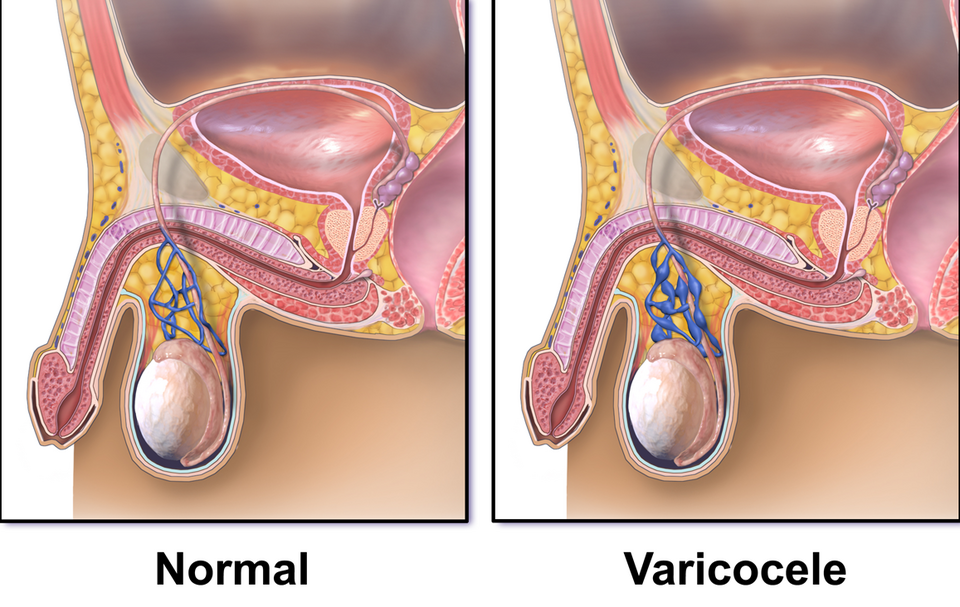
A varicocele is a group of enlarged veins in the scrotum. The NICHD explains that these veins disturb blood flow and raise the temperature of the testicle, which can harm sperm production, and reports that a varicocele is present in about 40% of men with fertility problems. Many men with a varicocele are fertile, however, so a varicocele is only treated for fertility when specific criteria are met (see treatment below).
Source: NICHD (NIH) — What causes male infertility?; EAU — Sexual and Reproductive Health Guidelines (infertility chapter)
Hormonal causes
Sperm production is driven by the pituitary hormones FSH and LH. Disorders of the hypothalamus or pituitary gland (hypogonadotropic hypogonadism), high prolactin, thyroid problems and diabetes can all reduce fertility. Low testosterone can accompany infertility, and the NHS lists hypogonadism, which may be caused by a tumour, illegal drug use or Klinefelter syndrome, as a cause. If you have symptoms such as low libido or fewer morning erections, our guide to low testosterone symptoms explains how this is diagnosed.
Source: NICHD (NIH) — What causes male infertility?; NHS — Infertility: causes; Cleveland Clinic — Infertility in men: causes, diagnosis and treatment
Genetic causes: Klinefelter, Y microdeletions and CFTR
Klinefelter syndrome (an extra X chromosome, 47,XXY) is the most common chromosome problem in infertile men. It is found in 2.6% of unselected infertile men but 13.7% of men with azoospermia.
Y-chromosome microdeletions are small missing segments in the “azoospermia factor” (AZF) regions of the Y chromosome, which hold genes needed for sperm development. The EAU reports them in 8–12% of azoospermic men and 3–7% of men with low sperm counts, while they are extremely rare when the concentration is above 5 million/mL. MedlinePlus notes that a man with a Y microdeletion who fathers a son through assisted reproduction will pass the deletion to all of his sons.
CFTR gene mutations, the same gene involved in cystic fibrosis, can cause congenital bilateral absence of the vas deferens (CBAVD). Sperm production is usually normal, but sperm cannot reach the semen. CBAVD accounts for 1–2% of all infertility in men, and more than half of affected men carry CFTR mutations.
Source: EAU — Sexual and Reproductive Health Guidelines (infertility chapter); MedlinePlus Genetics — Y chromosome infertility; MedlinePlus Genetics — Congenital bilateral absence of the vas deferens
Blockages, infections and injury
A blockage anywhere from the epididymis to the ejaculatory ducts stops sperm from reaching the semen even when production is normal. Causes include previous infection, injury, surgery and vasectomy. Infections such as epididymitis, orchitis (including mumps orchitis), gonorrhea and chlamydia can damage the testicles or the tubes. Undescended testicles, testicular injury and cancer treatment (chemotherapy, radiation or removal of a testicle) are other well-known causes.
Source: NICHD (NIH) — What causes male infertility?; Cleveland Clinic — Infertility in men: causes, diagnosis and treatment; NHS — Infertility: causes
Lifestyle and heat
Higher scrotal temperature is linked to lower semen quality; Cleveland Clinic lists frequent heat exposure such as saunas and hot tubs as a risk factor. Smoking has a negative association with sperm parameters in a meta-analysis of 20 studies with 5,865 men cited by the EAU. Cannabis, cocaine and alcohol, a body mass index above 25, age 40 or older, and exposure to toxins such as lead, pesticides and mercury are also listed risk factors.
Source: NHS — Infertility: causes; Cleveland Clinic — Infertility in men: causes, diagnosis and treatment; EAU — Sexual and Reproductive Health Guidelines (infertility chapter)
Medications, testosterone and anabolic steroids
One of the most important, and most reversible, causes today is exogenous testosterone: testosterone therapy and anabolic-androgenic steroids taken for muscle building. Extra testosterone from outside the body signals the brain to switch off FSH and LH, so the testicles reduce sperm production. Cleveland Clinic lists both testosterone therapy and anabolic steroids as risk factors, and the NHS warns that long-term anabolic steroid misuse can reduce sperm count and movement.
Source: Cleveland Clinic — Infertility in men: causes, diagnosis and treatment; NHS — Infertility: causes
Other medicines matter too: sulfasalazine (temporarily), chemotherapy, some herbal remedies, flutamide, spironolactone and bicalutamide. Never stop a prescribed medicine on your own; ask your doctor about alternatives.
Source: NHS — Infertility: causes; Cleveland Clinic — Infertility in men: causes, diagnosis and treatment
Risk factors at a glance
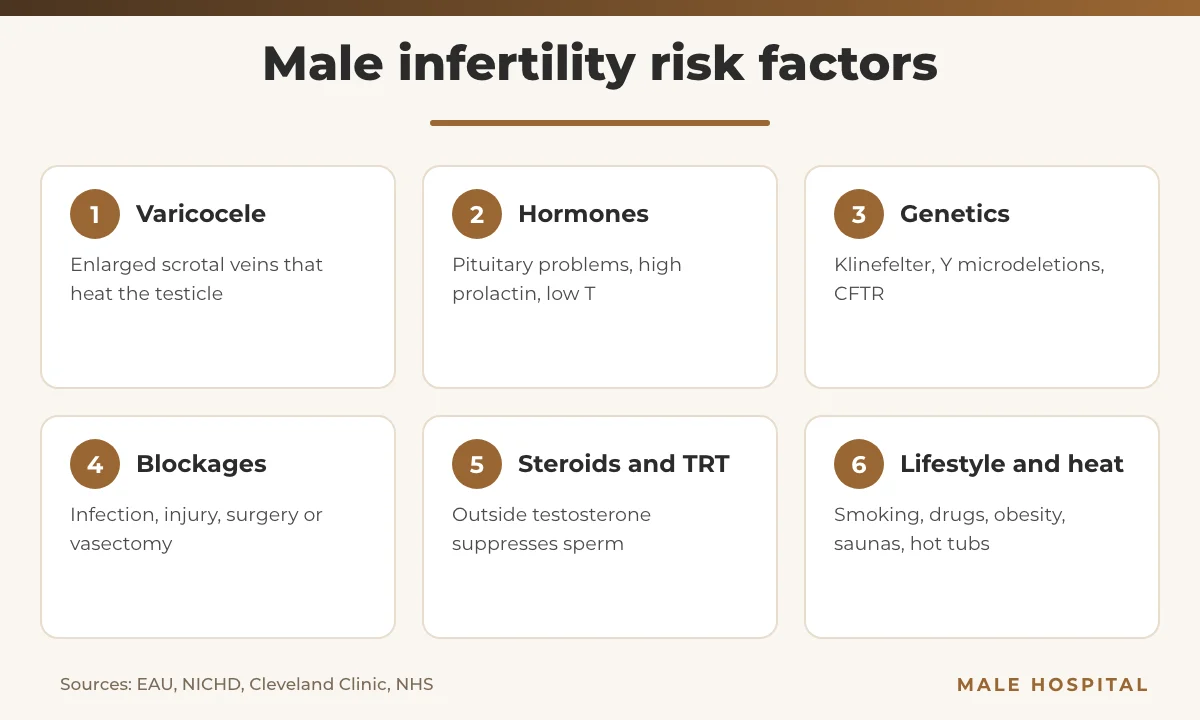
Some risk factors are fixed, but many are modifiable. The EAU recommends that doctors ask about gonadotoxic medicines and recreational drugs in every man being evaluated, because stopping them can allow sperm production to recover. The guideline also notes that infertile men have a higher risk of testicular cancer than fertile men (pooled odds ratio 1.91), which is one more reason a proper male evaluation is worthwhile.
Source: EAU — Sexual and Reproductive Health Guidelines (infertility chapter)
How male infertility is diagnosed
A urologist or andrologist begins with a full medical, sexual and reproductive history and an examination of the testicles, epididymis, vas deferens and veins.
Source: EAU — Sexual and Reproductive Health Guidelines (infertility chapter); Cleveland Clinic — Infertility in men: causes, diagnosis and treatment
Semen analysis
The semen analysis is the cornerstone test. You are usually asked to avoid ejaculation for two to seven days beforehand, then provide a sample by masturbation. The EAU recommends that laboratories follow the latest WHO manual and that an abnormal result be repeated, with at least two consecutive analyses, because sperm counts naturally vary from one sample to another.
Source: Cleveland Clinic — Semen Analysis; EAU — Sexual and Reproductive Health Guidelines (infertility chapter)
The 6th edition of the WHO manual (2021) reports the lower 5th-centile values from fertile men. These are not strict cut-offs between fertile and infertile men; a man below one value may still father a child naturally, and a man above all of them can still have a fertility problem.
| Semen parameter | WHO 2021 lower reference (5th centile) |
|---|---|
| Semen volume | 1.4 mL |
| Sperm concentration | 16 million per mL |
| Total sperm number | 39 million per ejaculate |
| Total motility | 42% |
| Progressive motility | 30% |
| Vitality (live sperm) | 54% |
| Normal forms (morphology) | 4% |
Source: Andrology (PubMed) — Campbell et al. 2021 — Distribution of semen examination results 2020; Life (PMC) — Boitrelle et al. 2021 — The Sixth Edition of the WHO Manual for Human Semen Analysis
Hormone tests
For men with a low sperm count or no sperm, the EAU strongly recommends measuring serum total testosterone, FSH and LH. Higher FSH levels are associated with lower sperm counts, while low FSH and LH with low testosterone point to hypogonadotropic hypogonadism, a cause that can be treated with medicine. FSH does not reliably predict whether sperm will be found at surgery, however.
Source: EAU — Sexual and Reproductive Health Guidelines (infertility chapter)
Ultrasound
Scrotal ultrasound helps assess a varicocele when examination is unclear and screens for testicular tumours, given the higher cancer risk in infertile men. A transrectal ultrasound (TRUS) is recommended when a blockage near the prostate (distal obstruction) is suspected, for example when semen volume is very low.
Source: EAU — Sexual and Reproductive Health Guidelines (infertility chapter)
Genetic tests
The EAU recommends offering a karyotype (chromosome test) with genetic counselling to all men with azoospermia or a sperm concentration below 5 million/mL. Y-chromosome microdeletion testing must be done when the concentration is 1 million/mL or less and should be considered below 5 million/mL. Men with an absent or abnormal vas deferens, and their partners, should be tested for CFTR mutations, because a child could inherit cystic fibrosis.
Source: EAU — Sexual and Reproductive Health Guidelines (infertility chapter); MedlinePlus Genetics — Congenital bilateral absence of the vas deferens
Male infertility treatment options
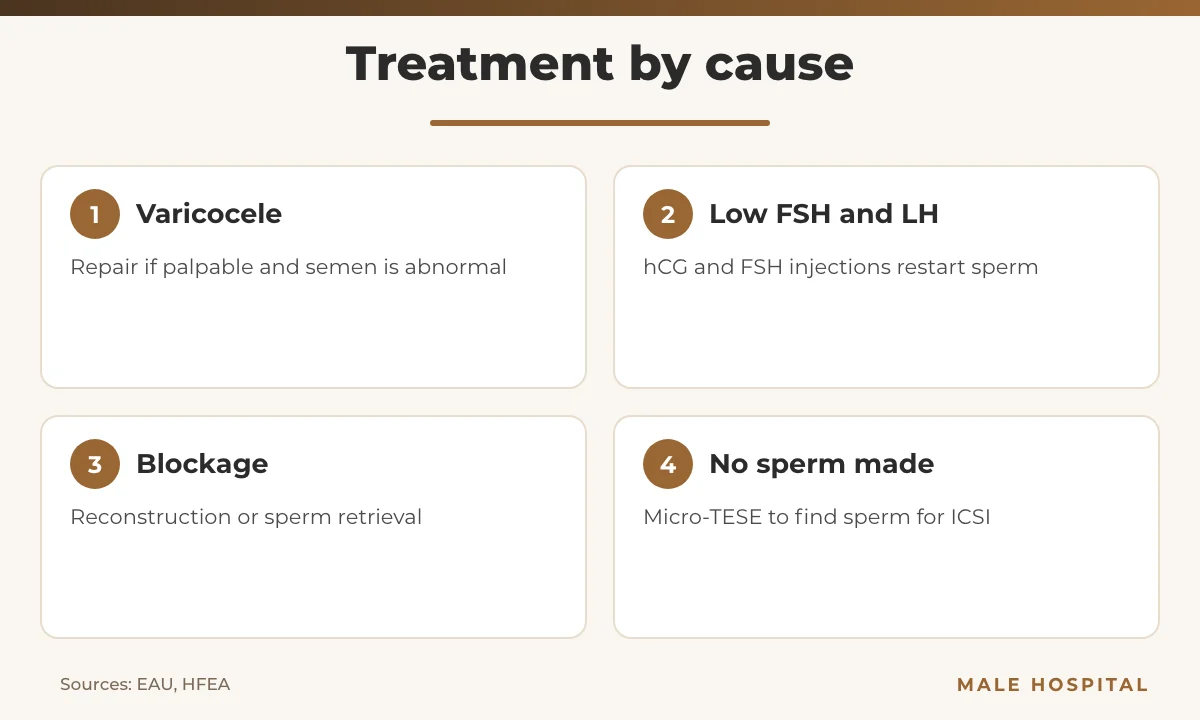
Treatment depends on the cause and the partner’s age and fertility. The aim is to improve natural fertility or to obtain sperm for assisted reproduction.
Lifestyle changes
Stopping smoking, cannabis and other recreational drugs, reducing alcohol, keeping a healthy weight, exercising and managing stress are recommended first steps. The evidence is honest but limited: uncontrolled studies suggest weight loss improves sperm parameters, but a meta-analysis found that bariatric surgery did not improve sperm quality in men with severe obesity. Your doctor will usually repeat the semen analysis after a period of change to see whether the numbers have moved.
Source: Cleveland Clinic — Infertility in men: causes, diagnosis and treatment; EAU — Sexual and Reproductive Health Guidelines (infertility chapter)
Varicocele repair (varicocelectomy)
The EAU strongly recommends treating a varicocele in infertile men who have a clinical (palpable) varicocele, abnormal semen parameters and otherwise unexplained infertility, when the female partner has good ovarian reserve. It strongly recommends not operating on men with a normal semen analysis or a subclinical varicocele seen only on ultrasound. In men with non-obstructive azoospermia, sperm appeared in the ejaculate after varicocelectomy in 43.9% of patients in a cited meta-analysis.
Source: EAU — Sexual and Reproductive Health Guidelines (infertility chapter)
Hormonal therapy
Men with hypogonadotropic hypogonadism (low FSH and LH from the pituitary or hypothalamus) can often have sperm production restarted with hCG and FSH injections, which the EAU strongly recommends. In primary testicular failure, gonadotropin therapy has no substantial proven benefit. Clomiphene and other SERMs are sometimes used, but evidence is of low quality and the EAU advises against their routine use in unexplained infertility. After anabolic steroid use, stopping the steroids is the first step; clomiphene is mentioned as an alternative to hCG to help restart sperm production. Testosterone itself is not a fertility treatment, because it suppresses sperm production.
Source: EAU — Sexual and Reproductive Health Guidelines (infertility chapter); Cleveland Clinic — Infertility in men: causes, diagnosis and treatment
Surgery for blockages
When a blockage is the cause, it can sometimes be bypassed. Vasectomy reversal has mean patency rates of 90–97% and pregnancy rates of 52–73% in the EAU data. For acquired epididymal blockage, epididymovasostomy achieves patency in 63–85% and cumulative natural pregnancy in 21–45% of couples. In CBAVD, sperm is retrieved directly from the epididymis (MESA or PESA) for ICSI.
Source: EAU — Sexual and Reproductive Health Guidelines (infertility chapter); NHS — Infertility: treatment
Sperm retrieval and micro-TESE
If there are no sperm in the ejaculate, sperm can be retrieved surgically from the testicle or epididymis and frozen for later use. In non-obstructive azoospermia, the EAU recommends microdissection testicular sperm extraction (micro-TESE) as the treatment of choice. In micro-TESE, the surgeon uses an operating microscope to find the small areas of the testicle that still produce sperm. In pooled case-control studies sperm was found in 52% with micro-TESE versus 35% with conventional TESE, although the latest meta-analysis found similar rates (46%) for both; micro-TESE causes fewer haematomas and less scarring.
Source: EAU — Sexual and Reproductive Health Guidelines (infertility chapter); NHS — Infertility: treatment
Results depend on the cause. In Klinefelter syndrome, TESE or micro-TESE recovers sperm in up to 50% of men, and in AZFc microdeletions testicular sperm is found in 50–75%. Before any gonadotoxic treatment such as chemotherapy, the EAU strongly recommends offering sperm freezing.
Source: EAU — Sexual and Reproductive Health Guidelines (infertility chapter)
IUI, IVF and ICSI
In intrauterine insemination (IUI), washed, fast-moving sperm are placed inside the womb through a thin tube. In IVF, eggs are fertilized in the laboratory; in ICSI, a single sperm is injected directly into each egg. The UK Human Fertilisation and Embryology Authority (HFEA) calls ICSI the most common and successful treatment for male infertility, used for very low counts, poor motility or shape, and surgically retrieved sperm, with success rates very similar to IVF. Because sons can inherit some genetic causes, genetic counselling is advised first. Donor sperm is an option when no sperm can be found.
Source: NHS — Infertility: treatment; HFEA — Intracytoplasmic sperm injection (ICSI)
Treatment options compared
| Treatment | Best suited for | What the evidence says |
|---|---|---|
| Lifestyle changes | All men, especially smokers and men with obesity | Smoking linked to worse sperm; weight-loss benefit from uncontrolled studies |
| Varicocelectomy | Palpable varicocele + abnormal semen + unexplained infertility | Recommended by EAU; not for normal semen or subclinical varicocele |
| hCG + FSH | Hypogonadotropic hypogonadism | Strong EAU recommendation; no proven benefit in primary testicular failure |
| Blockage surgery | Vasectomy or epididymal obstruction | Reversal patency 90–97%; epididymovasostomy 63–85% |
| Micro-TESE + ICSI | Non-obstructive azoospermia | EAU treatment of choice; sperm found in about half of men in studies |
| IUI / IVF / ICSI | Low count, poor motility, retrieved sperm | ICSI is the most common treatment for male factor |
Source: EAU — Sexual and Reproductive Health Guidelines (infertility chapter); HFEA — Intracytoplasmic sperm injection (ICSI)
When to see a doctor
See a doctor if you and your partner have not conceived after a year of regular unprotected sex. Go sooner if your partner is 36 or older, or if either of you already knows of a possible fertility problem. For men, reasons to seek an earlier assessment include:
- A history of undescended testicles, testicular injury or testicular surgery.
- Previous chemotherapy, radiation or other cancer treatment.
- Current or past use of testosterone therapy or anabolic steroids.
- Low sex drive, erection problems or problems ejaculating.
- A previous vasectomy, or a history of mumps orchitis or a sexually transmitted infection.
- Visible or painful enlarged veins in the scrotum, or a lump or change in a testicle (always check a lump promptly).
Source: NHS — Infertility; Cleveland Clinic — Infertility in men: causes, diagnosis and treatment; NICHD (NIH) — What causes male infertility?
Erectile and ejaculation problems can themselves prevent conception; our overview of erectile dysfunction covers how these are assessed and treated.
Getting assessed by a urologist-andrologist
A urologist with andrology training can interpret semen and hormone results together and perform surgery such as varicocelectomy or micro-TESE when needed. At Male Hospital in Istanbul, assessments are led by Assoc. Prof. Dr. Zülfü Sertkaya, a urologist and andrologist (FEBU) who has been a urology specialist since 2014 and whose clinical focus includes male infertility. His research topics include micro-TESE, hormones and semen parameters in infertile men, and he is a member of the EAU, ESSM and ISSM.
If you have been trying to conceive without success, you can book a confidential consultation with our urologist-andrologist on WhatsApp. The cost depends on which tests and treatments you need after the assessment, and the first message is free.
FAQs about male infertility
What is the most common cause of male infertility?
Among identifiable causes, varicocele is the most common in EAU data, found in about 15% of unselected infertile men. However, in 30–40% of men no specific cause is found after testing. Lifestyle factors, medicines such as testosterone or anabolic steroids, genetic conditions and blockages make up most of the remaining identifiable causes.
Source: EAU — Sexual and Reproductive Health Guidelines (infertility chapter)
Can a man with zero sperm count have a biological child?
Often, yes. If the cause is a blockage, sperm production is usually normal and sperm can be retrieved from the epididymis or testicle. In non-obstructive azoospermia, micro-TESE finds sperm in roughly half of men in pooled studies, and in up to 50% of men with Klinefelter syndrome. Retrieved sperm is then used with ICSI.
Source: EAU — Sexual and Reproductive Health Guidelines (infertility chapter); HFEA — Intracytoplasmic sperm injection (ICSI)
Does testosterone therapy cause male infertility?
It can. Testosterone or anabolic steroids taken from outside the body suppress the brain hormones that drive sperm production, which can lower the sperm count or stop it entirely. Cleveland Clinic lists testosterone therapy and anabolic steroids as risk factors. Men who want children should discuss fertility-sparing options with a urologist before starting testosterone.
Source: Cleveland Clinic — Infertility in men: causes, diagnosis and treatment; NHS — Infertility: causes
What is a normal sperm count?
The WHO 2021 manual lists 16 million sperm per mL and 39 million per ejaculate as the lower 5th-centile values in fertile men, with 42% total motility and 4% normal forms. These values are references rather than strict cut-offs, so a result just below them does not automatically mean infertility, and one result should be repeated.
Source: Andrology (PubMed) — Campbell et al. 2021 — Distribution of semen examination results 2020; Life (PMC) — Boitrelle et al. 2021 — The Sixth Edition of the WHO Manual for Human Semen Analysis
Can varicocele surgery improve fertility?
It can help selected men. The EAU recommends varicocele repair when a man has a palpable varicocele, abnormal semen parameters and otherwise unexplained infertility, and his partner has good ovarian reserve. It is not recommended when the semen analysis is normal or when the varicocele is only seen on ultrasound and cannot be felt.
Source: EAU — Sexual and Reproductive Health Guidelines (infertility chapter)
Is male infertility genetic?
Sometimes. Klinefelter syndrome, Y-chromosome microdeletions and CFTR mutations are the main genetic causes, and they are much more common in men with azoospermia or very low counts. Some can be passed on: a Y microdeletion passes to all sons conceived with ICSI, and CFTR mutations can cause cystic fibrosis in a child, so counselling is advised.
Source: MedlinePlus Genetics — Y chromosome infertility; MedlinePlus Genetics — Congenital bilateral absence of the vas deferens
Medically reviewed by Assoc. Prof. Dr. Zülfü Sertkaya, urologist and andrologist (FEBU), Istanbul. Last reviewed: October 2026.
This article is for general information and does not replace an individual consultation with a qualified doctor.
- EAU — Sexual and Reproductive Health Guidelines (infertility chapter)
- WHO — Infertility fact sheet
- NHS — Infertility
- NHS — Infertility: causes
- NHS — Infertility: treatment
- Cleveland Clinic — Infertility in men: causes, diagnosis and treatment
- Cleveland Clinic — Semen Analysis
- NICHD (NIH) — What causes male infertility?
- MedlinePlus Genetics — Y chromosome infertility
- MedlinePlus Genetics — Congenital bilateral absence of the vas deferens
- HFEA — Intracytoplasmic sperm injection (ICSI)
- Andrology (PubMed) — Campbell et al. 2021 — Distribution of semen examination results 2020
- Life (PMC) — Boitrelle et al. 2021 — The Sixth Edition of the WHO Manual for Human Semen Analysis