Foods for erectile dysfunction work best as a whole eating pattern, not as single “miracle” items. Large studies link a Mediterranean-style diet (vegetables, fruit, legumes, whole grains, nuts, olive oil and fish) and flavonoid-rich fruit such as berries and citrus with a lower risk of ED, and small trials show diet change can improve erections in men with obesity or metabolic syndrome. No food works like a prescription treatment, so diet is a foundation, not a replacement. For the wider picture of lifestyle options, see our guide to natural remedies for erectile dysfunction.
Source: NIDDK — Eating, Diet, & Nutrition for Erectile Dysfunction; JAMA Netw Open 2020 — Bauer et al. Association of Diet With Erectile Dysfunction
- The US National Institute of Diabetes and Digestive and Kidney Diseases (NIDDK) says a healthy diet can lower the risk of ED, and names the Mediterranean diet as one that helps, making it the best-supported choice among foods for erectile dysfunction.
- In more than 21,000 US men followed for about 11 years, those who ate most like a Mediterranean diet, the best-studied pattern of foods for erectile dysfunction, had a lower risk of developing ED, especially men under 60.
- Among fruit-based foods for erectile dysfunction, men with the highest intake of certain flavonoids (found in berries, citrus, apples and pears) had a 9–11% lower risk of ED in a large observational study.
- Popular “erection foods” such as watermelon, pistachios or oysters have little or no direct trial evidence; the best data on foods for erectile dysfunction support the overall pattern.
- Diet changes based on foods for erectile dysfunction take months, work best with exercise and weight loss, and do not replace a medical check, because ED can be an early sign of heart disease.
- Can foods for erectile dysfunction really help?
- The Mediterranean diet and erectile function
- Flavonoid-rich fruit: berries, citrus, apples and pears
- Best foods for erectile dysfunction: a practical list
- Nuts, watermelon and other popular claims
- Foods and drinks to limit
- Food, grapefruit and ED tablets
- Honest limits of the evidence on foods for erectile dysfunction
- When to see a doctor
- FAQs about foods for erectile dysfunction
Can foods for erectile dysfunction really help?
An erection is a blood-flow event. When you are aroused, the arteries in the penis widen and the spongy erectile tissue fills with blood. Anything that damages blood vessels, nerves or hormones can interfere with this, and NIDDK lists diabetes, atherosclerosis (hardened, narrowed arteries), high blood pressure, lack of exercise, heavy drinking and smoking among the common causes of erectile dysfunction (ED).
That is why diet matters, and why foods for erectile dysfunction are really foods for healthy blood vessels. The same eating habits that raise the risk of diabetes, heart disease and obesity also raise the risk of ED, according to NIDDK. Cleveland Clinic adds that ED can be the first symptom of an underlying problem such as heart disease. Food works slowly, by protecting blood vessels and improving weight, blood sugar and cholesterol.
Sources: NIDDK — Symptoms & Causes of Erectile Dysfunction; Cleveland Clinic — Erectile Dysfunction (ED)
The European Association of Urology (EAU) states, at its highest level of evidence (1a), that lifestyle changes can improve ED in specific populations. It gives a strong recommendation to start lifestyle changes and risk-factor control before, or at the same time as, any ED treatment, and to check blood sugar, cholesterol and testosterone to find reversible problems.
Source: EAU Guidelines — Management of erectile dysfunction
The Mediterranean diet and erectile function
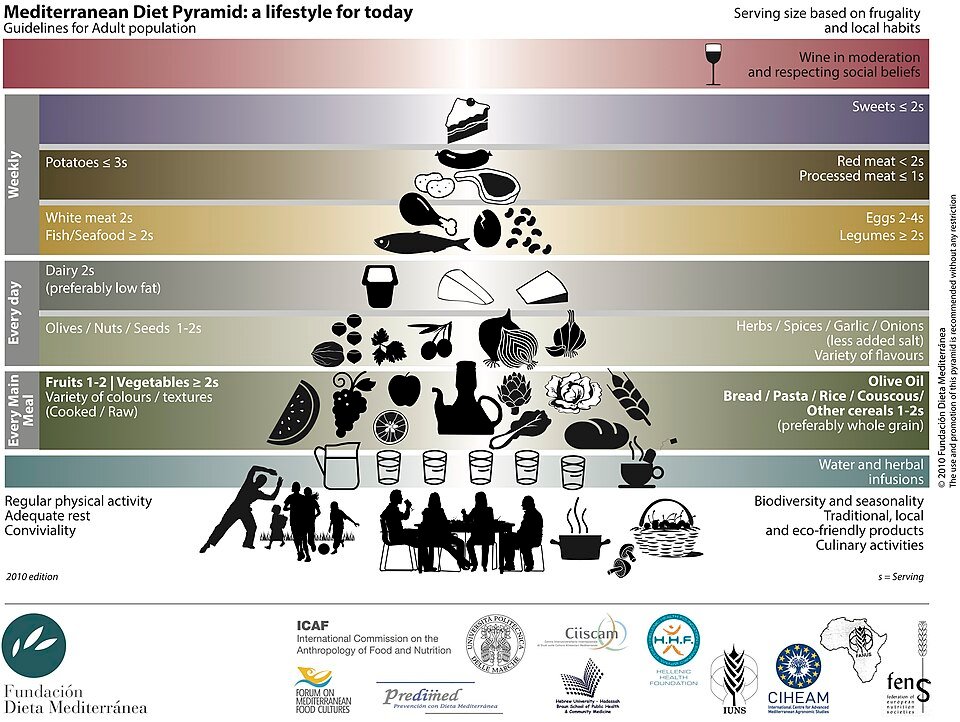
The Mediterranean diet is the eating pattern with the most research behind it for ED. It is built on vegetables, fruit, legumes (beans, lentils, chickpeas), whole grains, nuts and seeds, olive oil and fish, with only small amounts of red and processed meat, sweets and refined grains. NIDDK recommends this kind of eating and says studies show the Mediterranean diet helps decrease the chance of getting ED, which puts it at the heart of any list of foods for erectile dysfunction.
Source: NIDDK — Eating, Diet, & Nutrition for Erectile Dysfunction
The largest study: 21,469 men followed for about 11 years
In a 2020 analysis of the US Health Professionals Follow-up Study, researchers followed 21,469 men without ED, heart attack, diabetes or stroke at the start for an average of 10.8 years, measuring diet every 4 years, which makes it the largest long-term data set on foods for erectile dysfunction in this guide.
Men under 60 who scored highest on a Mediterranean diet score had a 22% lower risk of developing ED than men with the lowest scores (hazard ratio 0.78). The link was weaker but still present in men aged 60 to 70 (0.82) and smallest in men over 70 (0.93).
Trials in men with metabolic syndrome and diabetes
Observational studies cannot prove that foods for erectile dysfunction cause better erections, so trials matter. In an Italian study of 65 men with metabolic syndrome (a cluster of belly fat, high blood pressure, high blood sugar and abnormal blood fats) and ED, 35 were assigned to a Mediterranean-style diet and 30 to a control diet. After 2 years, the Mediterranean group ate more fruit, vegetables, nuts, whole grains and olive oil, and their blood-vessel function and inflammation markers improved. Thirteen men in the diet group reached a normal erectile function score, compared with two in the control group.
Among 555 men with type 2 diabetes, those who followed a Mediterranean diet most closely had less ED overall (51.9% vs 62%) and less severe ED (16.5% vs 26.4%) than those with the lowest adherence, suggesting foods for erectile dysfunction matter in diabetes too.
Sources: Int J Impot Res 2006 — Esposito et al. Mediterranean diet improves erectile function in subjects with the metabolic syndrome; J Sex Med 2010 — Giugliano et al. Adherence to Mediterranean diet and erectile dysfunction in men with type 2 diabetes
Flavonoid-rich fruit: berries, citrus, apples and pears
Flavonoids are natural plant compounds found in fruit, vegetables, tea and wine, and they explain much of the interest in fruit as foods for erectile dysfunction.
In a 2016 study in the American Journal of Clinical Nutrition, 25,096 men from the same Health Professionals cohort reported their diets and erectile function over 10 years; about 36% developed ED. Men with the highest intake of three flavonoid subclasses had a lower risk of ED after adjusting for heart risk factors:
- Anthocyanins (in blueberries, strawberries and other dark berries): 9% lower risk.
- Flavanones (mainly citrus fruit and juices): 11% lower risk.
- Flavones (largely from the same foods as flavanones): 9% lower risk.
The main sources in this group of men were strawberries, blueberries, red wine, apples and pears, and citrus products. Higher total fruit intake, the simplest of all foods for erectile dysfunction, was linked to a 14% lower risk. Men who ate the most of these flavonoids and were also physically active had a 21% lower risk than men with low intake and low activity.
Source: Am J Clin Nutr 2016 — Cassidy et al. Dietary flavonoid intake and incidence of erectile dysfunction
Two caveats apply to fruit as foods for erectile dysfunction: the benefit was seen only in men younger than 70, and single foods were less convincing than the pattern (blueberries more than 3 times a week did not reach statistical significance on their own). The authors called for intervention trials, which have not yet confirmed that eating more berries improves existing ED. Red wine appears in the source list, but that does not make alcohol a treatment; see the alcohol section below.
Source: Am J Clin Nutr 2016 — Cassidy et al. Dietary flavonoid intake and incidence of erectile dysfunction
Best foods for erectile dysfunction: a practical list
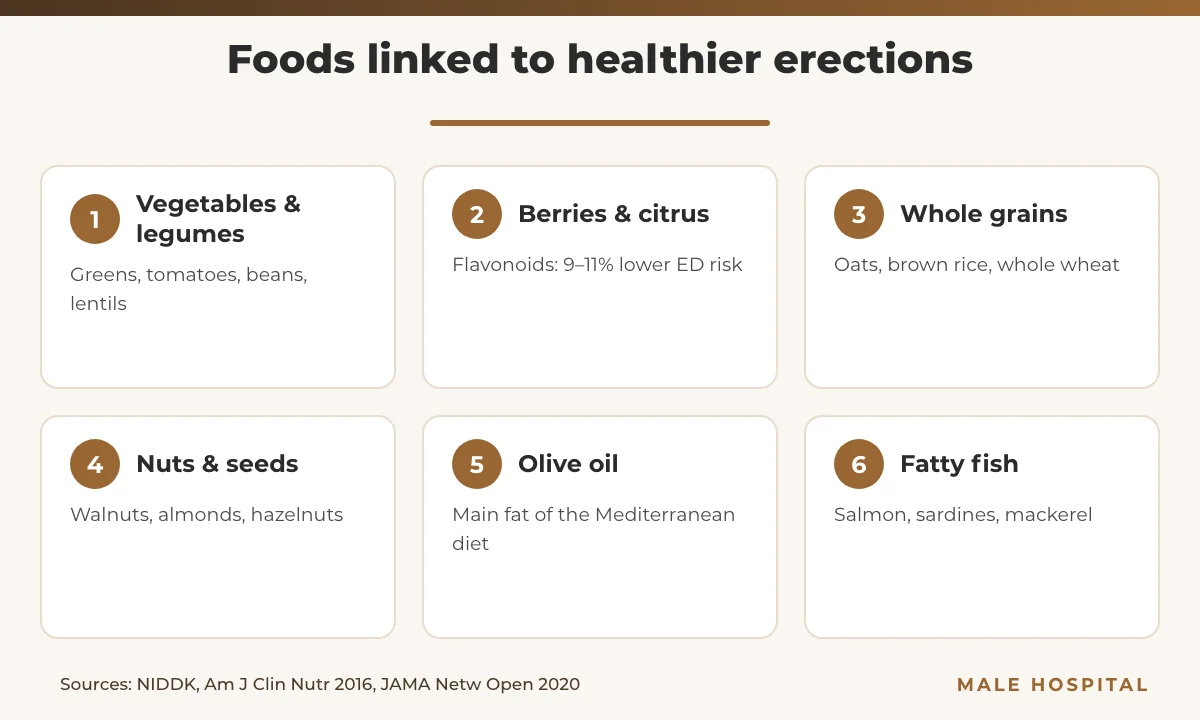
Putting the evidence together, these are the best foods for erectile dysfunction to build your meals around. None is magic on its own; the benefit in studies came from eating this way most days, for years.
| Food group | Examples | What the evidence shows |
|---|---|---|
| Vegetables and legumes | Leafy greens, tomatoes, beans, lentils, chickpeas | Core of the Mediterranean pattern linked to lower ED risk; recommended by NIDDK |
| Flavonoid-rich fruit | Blueberries, strawberries, citrus, apples, pears | 9–14% lower ED risk in a 10-year observational study of men under 70 |
| Whole grains | Oats, whole-wheat bread, brown rice, bulgur | Part of diets that improved erectile scores in metabolic syndrome trials |
| Nuts and seeds | Walnuts, almonds, hazelnuts, pistachios | Healthy fats recommended by NIDDK; direct ED trials are small (see below) |
| Olive oil | Extra-virgin olive oil instead of butter | Main fat in the Mediterranean diet trials |
| Fatty fish | Salmon, sardines, mackerel | Source of unsaturated fat recommended by NIDDK; more common in men without ED |
Sources: NIDDK — Eating, Diet, & Nutrition for Erectile Dysfunction; Int J Impot Res 2006 — Esposito et al.
To put foods for erectile dysfunction into practice, start by filling half your plate with vegetables, swap white bread and rice for whole grains, cook with olive oil, eat fish twice a week, and keep fruit and a small handful of unsalted nuts for snacks. Cleveland Clinic recommends the same direction: foods low in saturated fat, such as fruit, vegetables and whole grains.
Sources: Cleveland Clinic — Erectile Dysfunction (ED); NIDDK — Eating, Diet, & Nutrition for Erectile Dysfunction
Nuts, watermelon and other popular claims
Nuts
In a Spanish randomized trial (FERTINUTS), 83 healthy men aged 18 to 35 either added 60 g of mixed nuts a day (30 g walnuts, 15 g almonds, 15 g hazelnuts) to their usual Western diet or avoided nuts for 14 weeks. The nut group reported better orgasmic function and sexual desire, but the erectile function score did not differ significantly between the groups. None of these men had ED, so the trial says little about nuts as foods for erectile dysfunction.
A Turkish study gave 17 men with ED 100 g of pistachios a day for 3 weeks and reported better erectile scores, penile blood flow and cholesterol. However, it had no control group and very few participants, so it cannot show that pistachios caused the improvement. Nuts are a healthy part of the Mediterranean pattern; they belong among foods for erectile dysfunction but are not a stand-alone ED treatment.
Source: Int J Impot Res 2011 — Aldemir et al. Pistachio diet improves erectile function parameters
Watermelon and L-citrulline
Watermelon is often called “natural Viagra” because it contains L-citrulline, which the body converts to L-arginine, a building block of nitric oxide (the molecule that relaxes penile blood vessels). The study usually quoted to rank watermelon among foods for erectile dysfunction did not test watermelon at all. It gave 24 men with mild ED a 1.5 g daily L-citrulline supplement, single-blind, for one month. Half improved from mild ED to normal erection hardness, compared with 8.3% on placebo, and the authors themselves said it was less effective than standard ED tablets and needed more research. For more on pills and powders, read our review of the best supplements for erectile dysfunction.
Foods and drinks to limit
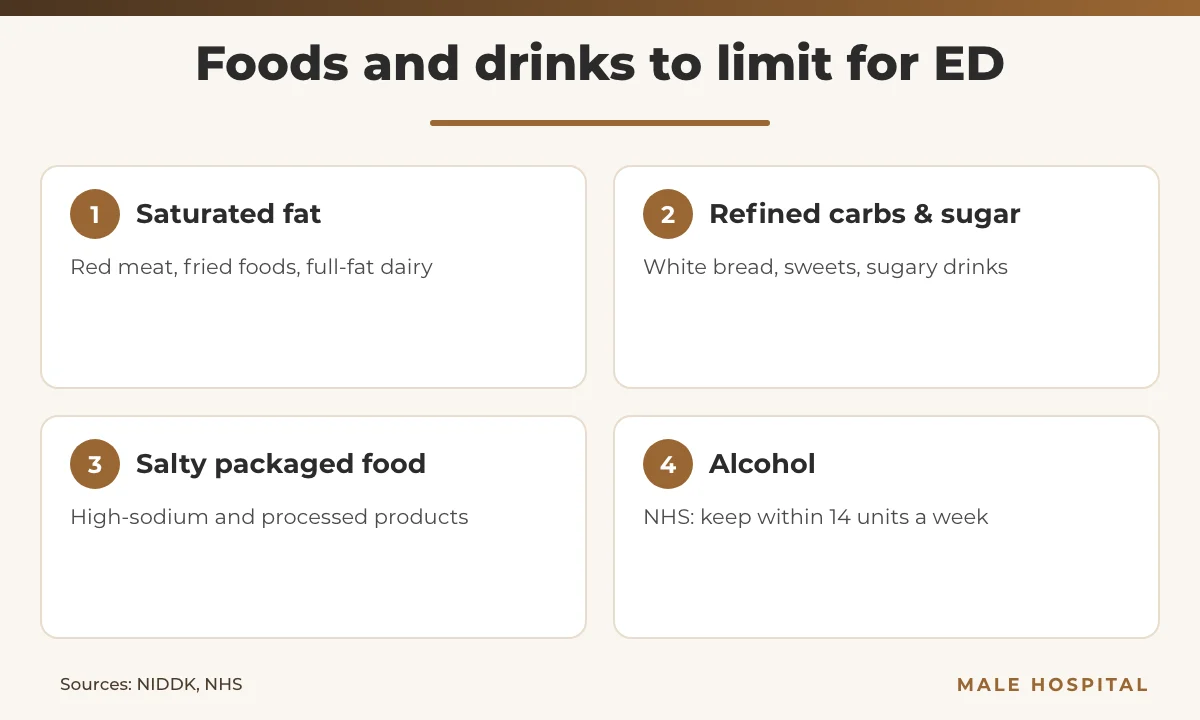
NIDDK advises cutting back on foods and drinks that raise the risk of diabetes, heart disease and obesity, because they can also increase the chance of ED. Alongside foods for erectile dysfunction, its list of things to limit includes saturated fats such as red meat and fried foods, full-fat dairy, refined carbohydrates, foods high in sodium or added sugars, packaged foods, and alcoholic drinks.
Source: NIDDK — Eating, Diet, & Nutrition for Erectile Dysfunction
Alcohol deserves a special mention. Heavy drinking is a recognized cause of ED, and the NHS advises keeping alcohol within 14 units a week. So while red wine contains flavonoids, you get the same compounds from berries and citrus, the fruit-based foods for erectile dysfunction, without the risks. Our article on alcohol and erectile dysfunction covers this in depth.
Sources: NHS — Erection problems (erectile dysfunction); NIDDK — Symptoms & Causes of Erectile Dysfunction
Diet works best with weight loss and exercise
The most convincing trial combined diet and activity, showing that foods for erectile dysfunction work best alongside exercise. In a 2-year randomized trial in JAMA, 110 obese men with ED were assigned either to detailed advice to lose at least 10% of their body weight by eating fewer calories and moving more, or to general healthy-living information. Weekly exercise in the intervention group rose from 48 to 195 minutes, and their erectile function scores improved while the control group stayed flat; 17 men in the intervention group, versus 3 controls, reached a normal score.
EAU likewise notes that regular exercise and lower body weight can improve erectile function. Our guide to exercises for erectile dysfunction explains how to add activity safely.
Sources: JAMA 2004 — Esposito et al. Effect of lifestyle changes on erectile dysfunction in obese men; EAU Guidelines — Management of erectile dysfunction
Food, grapefruit and ED tablets
Food choices matter beyond foods for erectile dysfunction: if you take an ED medicine, food can change how it works:
- Heavy, fatty meals: sildenafil (Viagra) can be taken with or without food, but a high-fat meal makes it take longer to start working. Tadalafil (Cialis) may be taken with or without food.
- Grapefruit: MedlinePlus advises talking to your doctor about eating grapefruit or drinking grapefruit juice while taking sildenafil or tadalafil. The FDA explains that grapefruit juice can block CYP3A4, an enzyme in the small intestine that breaks down many drugs, so more medicine enters the blood and stays longer.
- Alcohol: drinking a lot (more than five glasses of wine or five shots of whiskey) while on tadalafil makes side effects such as dizziness, headache, fast heartbeat and low blood pressure more likely.
Sources: MedlinePlus — Sildenafil; MedlinePlus — Tadalafil; FDA — Grapefruit Juice and Some Drugs Don’t Mix
Be wary of “herbal” or “food-based” sexual enhancement products sold as foods for erectile dysfunction. The US National Center for Complementary and Integrative Health (NCCIH) warns that supplements marketed for ED have been found to contain hidden drug ingredients that are not on the label, and some can interact with nitrate heart medicines and cause a dangerous drop in blood pressure.
Source: NCCIH — 4 Things To Know About Dietary Supplements Marketed for Sexual Enhancement
Honest limits of the evidence on foods for erectile dysfunction
The research on foods for erectile dysfunction is encouraging but has clear limits:
- Mostly observational: the largest studies (Mediterranean diet and flavonoids) show associations. Men who eat well also tend to exercise more and smoke less, which can exaggerate the apparent effect of foods for erectile dysfunction.
- Few, small trials: the diet trials that measured erections involved tens of men, mostly with obesity or metabolic syndrome.
- Prevention more than cure: the cohort studies looked at men without ED at the start, so they tell us more about lowering future risk than about reversing established ED.
- Modest effects: risk reductions of roughly 10–22% from foods for erectile dysfunction are meaningful but smaller than the effect of prescription treatment.
A 2025 meta-analysis of 14 studies with 27,389 participants found that plant-based, low-fat and Mediterranean-style diets rich in produce and nuts were associated with lower ED risk, and that diet combined with exercise improved erectile scores. It pooled very different study designs, so its numbers on foods for erectile dysfunction need caution.
Sources: Asian J Androl 2025 — Yang et al. Association between improved erectile function and dietary patterns: a systematic review and meta-analysis; JAMA Netw Open 2020 — Bauer et al.
The practical takeaway on foods for erectile dysfunction: eat the Mediterranean way because it protects your heart, blood vessels and erections together, but do not wait months on diet alone if ED is affecting your life. Effective medical options exist, and our erectile dysfunction treatment page explains them step by step.
When to see a doctor
The NHS advises seeing a doctor if erection problems keep happening, because they may be a sign of a treatable health condition. Because ED shares risk factors with heart disease, a check-up can uncover high blood pressure, diabetes or high cholesterol early. Seek medical advice promptly if:
- ED persists for several weeks or keeps coming back, even after adding foods for erectile dysfunction and other lifestyle changes.
- You also have chest pain, shortness of breath on exertion, or a family history of early heart disease.
- You have symptoms of diabetes, such as unusual thirst, frequent urination or unexplained weight loss.
- You notice low sex drive, tiredness or loss of body hair, which can point to a hormone problem.
Our article on erectile dysfunction and heart disease explains why ED can be an early warning sign.
Sources: NHS — Erection problems (erectile dysfunction); Cleveland Clinic — Erectile Dysfunction (ED)
If you would like a confidential assessment of what is behind your erections and which treatments fit you, you can message our urologist-andrologist team on WhatsApp. A personal plan can combine heart-healthy eating with proven erectile dysfunction treatment when needed.
FAQs about foods for erectile dysfunction
What is the best diet for erectile dysfunction?
The Mediterranean diet has the strongest evidence among foods for erectile dysfunction. It emphasizes vegetables, fruit, legumes, whole grains, nuts, olive oil and fish while limiting red and processed meat, sweets and refined grains. In a large US study, men under 60 who followed it most closely had a 22% lower risk of developing ED. Trials in men with metabolic syndrome also showed improved erectile scores.
Source: JAMA Netw Open 2020 — Bauer et al.
Which fruits are good for erections?
Fruits rich in flavonoids, such as blueberries, strawberries, citrus, apples and pears, are among the best-studied foods for erectile dysfunction and were linked to a lower risk of ED in a 10-year study of more than 25,000 men. Higher total fruit intake was associated with a 14% lower risk. The effect was seen in men under 70, and trials have not yet proven that eating more fruit reverses existing ED.
Source: Am J Clin Nutr 2016 — Cassidy et al.
Is watermelon a natural Viagra?
No. Watermelon contains L-citrulline, which the body turns into L-arginine, a precursor of nitric oxide. But the study often quoted used a concentrated 1.5 g citrulline supplement in only 24 men with mild ED, and the authors noted it was less effective than standard ED medicines. No trial has shown that eating watermelon treats erectile dysfunction, so it is not one of the proven foods for erectile dysfunction.
Source: Urology 2011 — Cormio et al.
How long does it take for diet changes to improve ED?
With foods for erectile dysfunction, think in months to years, not days. In the main Italian trials, diet and lifestyle programs ran for 2 years before improvements in erectile scores were measured. Benefits come gradually through better blood vessel health, weight, blood sugar and cholesterol. If ED is bothering you now, you can start treatment at the same time, as EAU guidelines recommend.
Sources: JAMA 2004 — Esposito et al.; EAU Guidelines — Management of erectile dysfunction
Do nuts help with erectile dysfunction?
Nuts are part of heart-healthy eating and often listed among foods for erectile dysfunction, but direct evidence is limited. In a 14-week randomized trial of healthy young men, 60 g of mixed nuts a day improved reported orgasm and desire but not the erectile function score. A small pistachio study in men with ED reported benefits but had no control group, so the result is uncertain.
Sources: Nutrients 2019 — Salas-Huetos et al.; Int J Impot Res 2011 — Aldemir et al.
Which foods should I avoid if I have ED?
NIDDK suggests cutting back on saturated fats from red meat and fried foods, full-fat dairy, refined carbohydrates, salty and sugary foods, packaged foods and alcohol. These raise the risk of diabetes, heart disease and obesity, which are major causes of ED. Keeping alcohol within the NHS limit of 14 units a week also helps.
Sources: NIDDK — Eating, Diet, & Nutrition for ED; NHS — Erection problems
Can I eat grapefruit while taking Viagra or Cialis?
Ask your doctor first. MedlinePlus advises discussing grapefruit and grapefruit juice with your doctor while taking sildenafil or tadalafil. According to the FDA, grapefruit juice can block an intestinal enzyme (CYP3A4) that breaks down many medicines, which can raise drug levels in the blood. Also note that a high-fat meal can delay how quickly sildenafil starts to work.
Sources: MedlinePlus — Sildenafil; FDA — Grapefruit Juice and Some Drugs Don’t Mix
Can diet alone cure erectile dysfunction?
Sometimes diet and lifestyle changes restore normal erections, especially in men whose ED is linked to obesity or metabolic syndrome; in one 2-year trial, lifestyle change improved sexual function in about one third of obese men with ED. For many men, though, foods for erectile dysfunction are not enough on their own. It works best alongside exercise, weight loss and, when needed, medical treatment.
Source: JAMA 2004 — Esposito et al. Effect of lifestyle changes on erectile dysfunction in obese men
Medically reviewed by Assoc. Prof. Dr. Zülfü Sertkaya, urologist and andrologist (FEBU), Istanbul. Last reviewed: November 2026.
This article is for general information and does not replace an individual consultation with a qualified doctor.
- NIDDK — Eating, Diet, & Nutrition for Erectile Dysfunction
- NIDDK — Symptoms & Causes of Erectile Dysfunction
- EAU — Sexual and Reproductive Health Guidelines — Management of erectile dysfunction
- NHS — Erection problems (erectile dysfunction)
- Cleveland Clinic — Erectile Dysfunction (ED): Causes, Diagnosis & Treatment
- MedlinePlus — Sildenafil
- MedlinePlus — Tadalafil
- FDA — Grapefruit Juice and Some Drugs Don't Mix
- NCCIH — 4 Things To Know About Dietary Supplements Marketed for Sexual Enhancement
- PubMed — JAMA Netw Open 2020 — Bauer et al. Association of Diet With Erectile Dysfunction Among Men in the Health Professionals Follow-up Study
- PMC — Am J Clin Nutr 2016 — Cassidy et al. Dietary flavonoid intake and incidence of erectile dysfunction
- PubMed — Int J Impot Res 2006 — Esposito et al. Mediterranean diet improves erectile function in subjects with the metabolic syndrome
- PubMed — J Sex Med 2010 — Giugliano et al. Adherence to Mediterranean diet and erectile dysfunction in men with type 2 diabetes
- PubMed — JAMA 2004 — Esposito et al. Effect of lifestyle changes on erectile dysfunction in obese men: a randomized controlled trial
- PMC — Nutrients 2019 — Salas-Huetos et al. Effect of Nut Consumption on Erectile and Sexual Function in Healthy Males (FERTINUTS)
- PubMed — Int J Impot Res 2011 — Aldemir et al. Pistachio diet improves erectile function parameters and serum lipid profiles in patients with ED
- PubMed — Urology 2011 — Cormio et al. Oral L-citrulline supplementation improves erection hardness in men with mild erectile dysfunction
- PubMed — Asian J Androl 2025 — Yang et al. Association between improved erectile function and dietary patterns: a systematic review and meta-analysis