Sildenafil side effects are usually mild and short-lived: headache, facial flushing, indigestion, a stuffy nose and a temporary blue tinge to vision are the most common, and they become more frequent as the dose rises from 25 mg to 100 mg. Rare but serious reactions include an erection lasting more than 4 hours (priapism), sudden loss of vision or hearing, and a dangerous drop in blood pressure when sildenafil (Viagra) is combined with nitrates.
Sources: DailyMed (FDA label) — VIAGRA (sildenafil citrate) prescribing information; EAU Guidelines — Management of Erectile Dysfunction
- In FDA fixed-dose trials, headache affected 16% of men on 25 mg, 21% on 50 mg and 28% on 100 mg, versus 7% on placebo.
- Blue-tinged or blurred vision is strongly dose-related: 1–2% at 25–50 mg but 11% at 100 mg. It is usually mild and passes.
- Only 2.5% of men stopped sildenafil because of side effects in trials, almost the same as placebo (2.3%).
- Never combine sildenafil with nitrates, “poppers” or riociguat. Alpha-blockers, ritonavir and some antibiotics and antifungals need a lower dose.
- Seek emergency care for an erection lasting over 4 hours, sudden vision or hearing loss, or chest pain during sex.
- Why sildenafil side effects happen
- Common sildenafil side effects and how often they occur
- Vision and hearing: blue tinge, NAION and sudden hearing loss
- Serious sildenafil side effects: priapism, low blood pressure and the heart
- Who should not take sildenafil: contraindications and interactions
- Who needs a lower dose
- How to reduce sildenafil side effects
- Counterfeit and tainted products
- When to see a doctor
- FAQs about sildenafil side effects
Why sildenafil side effects happen
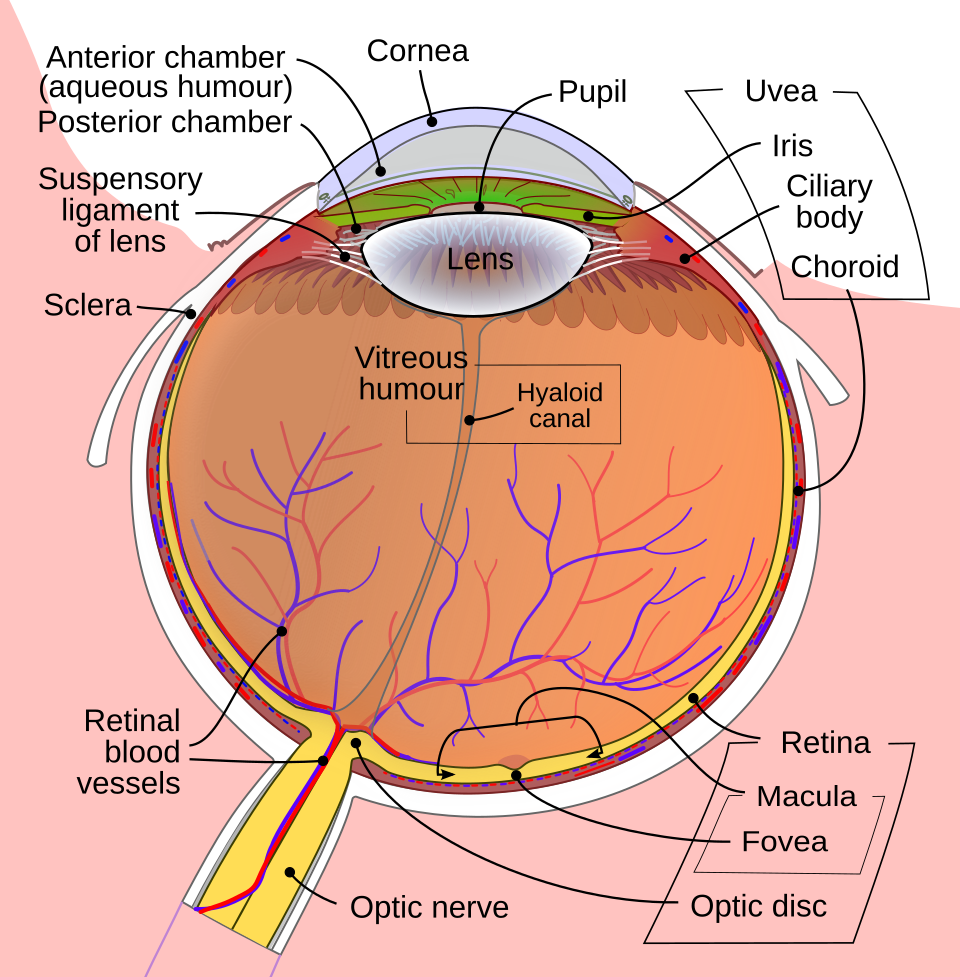
Sildenafil is a phosphodiesterase type 5 (PDE5) inhibitor. During sexual arousal, nerves in the penis release nitric oxide, which raises a messenger molecule called cGMP; cGMP relaxes the smooth muscle of the erectile tissue so blood can flow in. PDE5 breaks cGMP down, and sildenafil blocks that enzyme, so erections become easier to get and keep. At recommended doses it has no effect without sexual stimulation.
PDE5 is not confined to the penis: the FDA label notes it is also found in blood vessels, platelets, muscle and several organs. Widening blood vessels in the head explains the headache, flushing and stuffy nose. Sildenafil is also only about 10 times more potent at PDE5 than at PDE6, an enzyme in the retina that helps convert light into nerve signals. That weaker selectivity is thought to cause the color-vision changes some men notice.
Source: DailyMed (FDA label) — VIAGRA (sildenafil citrate) prescribing information
Typical side effects appear soon after a dose and fade as the drug wears off; our guide on how long Viagra lasts explains that timeline.
Common sildenafil side effects and how often they occur
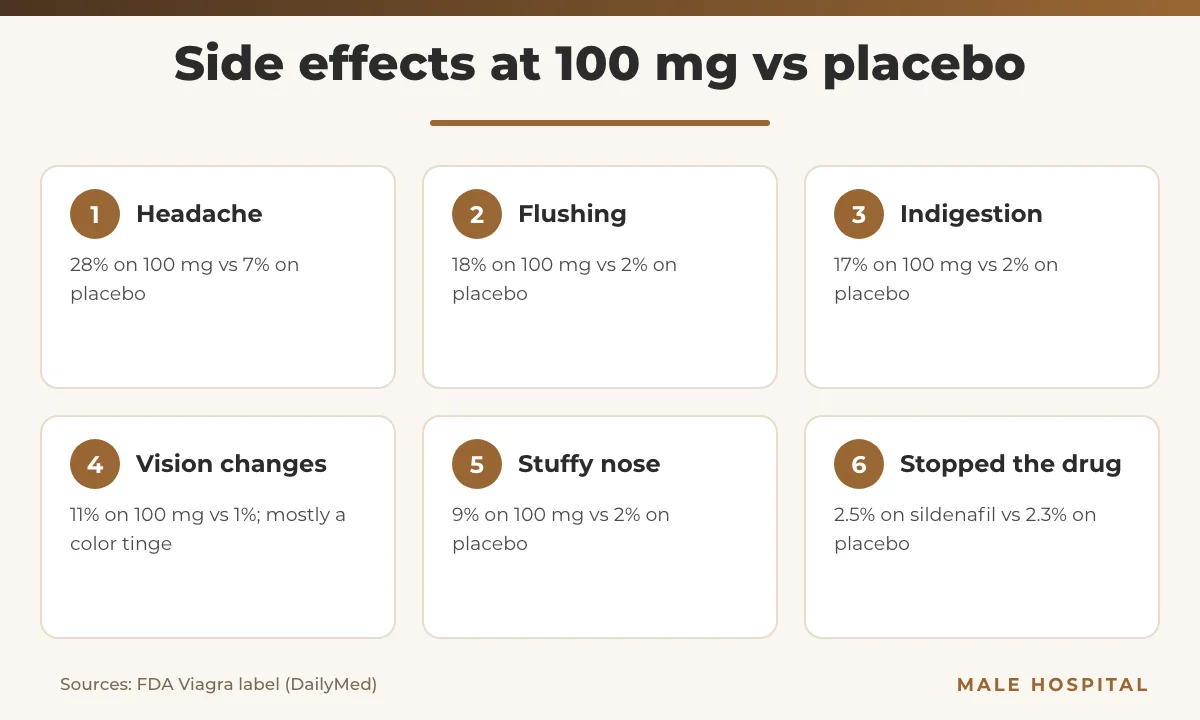
In the FDA label’s fixed-dose trials, men were assigned 25 mg, 50 mg or 100 mg, which shows how side effects rise with dose. The table lists every reaction reported by at least 2% of men and more often than with placebo.
| Side effect | 25 mg | 50 mg | 100 mg | Placebo |
|---|---|---|---|---|
| Headache | 16% | 21% | 28% | 7% |
| Flushing | 10% | 19% | 18% | 2% |
| Dyspepsia (indigestion) | 3% | 9% | 17% | 2% |
| Abnormal vision (color tinge, light sensitivity, blur) | 1% | 2% | 11% | 1% |
| Nasal congestion | 4% | 4% | 9% | 2% |
| Back pain | 3% | 4% | 4% | 2% |
| Myalgia (muscle aches) | 2% | 2% | 4% | 1% |
| Nausea | 2% | 3% | 3% | 1% |
| Dizziness | 3% | 4% | 3% | 2% |
| Rash | 1% | 2% | 3% | 1% |
Source: DailyMed (FDA label) — VIAGRA (sildenafil citrate) prescribing information (Table 1, fixed-dose phase II/III studies)
In flexible-dose trials, closer to real-life use, rates were lower: headache 16%, flushing 10%, dyspepsia 7%, nasal congestion 4%, abnormal vision 3%, and back pain, dizziness and rash 2% each. The discontinuation rate due to side effects was 2.5% with sildenafil and 2.3% with placebo. The EAU guidelines list headache at 12.8%, flushing 10.4%, dyspepsia 4.6%, abnormal vision 1.9%, dizziness 1.2% and nasal congestion 1.1%, and describe PDE5 inhibitor side effects as generally mild and self-limiting.
Sources: DailyMed (FDA label) — VIAGRA (sildenafil citrate) prescribing information; EAU Guidelines — Management of Erectile Dysfunction
Other effects patients report
MedlinePlus lists heartburn, diarrhea, nosebleeds, numbness or tingling in the arms or legs, and light sensitivity. The NHS lists headache, dizziness, a blocked nose, stomach ache, diarrhea or nausea, anxiety and temporary blurred vision as common. A review of 67 double-blind trials (more than 14,000 men) found sildenafil well tolerated, including in men over 65 and over 75.
Sources: MedlinePlus — Sildenafil; NHS — Side effects of sildenafil; Int J Clin Pract (PMC) — Safety of sildenafil citrate: review of 67 double-blind placebo-controlled trials (Giuliano et al., 2010)
Side effects at pulmonary hypertension doses (Revatio)
Sildenafil is also sold as Revatio for pulmonary arterial hypertension (PAH) (20 mg three times a day). In the main trial, headache occurred in 46% of patients on 20 mg three times daily versus 39% on placebo. Nosebleeds were reported in 13% of patients whose PAH was linked to connective tissue disease. Its label warns against combining it with Viagra or other PDE5 inhibitors.
Source: DailyMed (FDA label) — REVATIO (sildenafil) prescribing information
Vision and hearing: blue tinge, NAION and sudden hearing loss
The “blue vision” effect
The best-known of all sildenafil side effects is a temporary color tinge, often described as seeing things in blue, along with increased sensitivity to light or blurred vision. In clinical pharmacology studies at single doses of 100 mg and 200 mg, volunteers had a short-lived, dose-related difficulty telling blue from green, peaking around the time of the highest blood level. In the flexible-dose trials, only one patient stopped treatment because of abnormal vision.
Source: DailyMed (FDA label) — VIAGRA (sildenafil citrate) prescribing information
NAION: sudden loss of vision
Non-arteritic anterior ischemic optic neuropathy (NAION) is a rare condition in which blood flow to the optic nerve drops, causing sudden, sometimes permanent, vision loss. It has been reported rarely after all PDE5 inhibitors. The label notes that NAION occurs in about 2.5–11.8 per 100,000 men aged 50 or older each year, and that observational studies suggest roughly a two-fold higher risk in the hours after PDE5 inhibitor use. These data do not prove cause and effect, and other risk factors such as a “crowded” optic disc may contribute. Men who have already had NAION are at higher risk of a recurrence, so sildenafil is used in them only with caution, if at all.
Sources: DailyMed (FDA label) — VIAGRA (sildenafil citrate) prescribing information; MedlinePlus — Sildenafil
Sudden hearing loss
Sudden decrease or loss of hearing, sometimes with ringing in the ears (tinnitus) and dizziness, has been reported in time association with PDE5 inhibitors, including sildenafil. A causal link has not been established. The advice is the same as for vision: stop sildenafil and get prompt medical attention, and do not take another PDE5 inhibitor until a doctor has assessed you.
Sources: DailyMed (FDA label) — VIAGRA (sildenafil citrate) prescribing information; MedlinePlus — Sildenafil
Serious sildenafil side effects: priapism, low blood pressure and the heart
Priapism
Prolonged erections lasting more than 4 hours, and priapism (painful erections lasting more than 6 hours), have been reported infrequently. If an erection persists beyond 4 hours, it is an emergency: untreated priapism can damage penile tissue and cause permanent loss of erections. Men with a deformed penis (angulation, scarring of the erectile tissue or Peyronie’s disease) and those with conditions that predispose to priapism, such as sickle cell anemia, multiple myeloma or leukemia, should use sildenafil with caution.
Sources: DailyMed (FDA label) — VIAGRA (sildenafil citrate) prescribing information; NHS — Side effects of sildenafil
Low blood pressure
Sildenafil widens blood vessels throughout the body. In healthy volunteers, a 100 mg dose lowered sitting blood pressure by an average of about 8/5 mmHg, most noticeably 1–2 hours after the dose and back to normal by 8 hours. This matters mainly when another blood-pressure-lowering drug is added, or in men with low blood pressure or a narrowed aortic valve. Symptoms of low blood pressure include dizziness, lightheadedness and fainting.
Source: DailyMed (FDA label) — VIAGRA (sildenafil citrate) prescribing information
Heart risk during sex
ED medicines are not generally used in men for whom sex is inadvisable because of their heart condition. The FDA label notes there are no controlled data in men who had a heart attack, stroke or life-threatening arrhythmia within the last 6 months, men with resting blood pressure below 90/50 or above 170/110 mmHg, or men with heart failure or unstable angina. Heart attacks and strokes have been reported during or soon after sex in men taking sildenafil, mostly in men with existing risk factors; whether the drug, the sex or the underlying disease was responsible cannot be determined.
The reassuring side: the EAU guidelines state that no randomized or open-label study has shown a rise in heart attack rates with PDE5 inhibitors, and the 67-trial review found no causal link between sildenafil and cardiovascular events. The EAU recommends a cardiovascular risk assessment before treatment.
Sources: DailyMed (FDA label) — VIAGRA (sildenafil citrate) prescribing information; EAU Guidelines — Management of Erectile Dysfunction; Int J Clin Pract (PMC) — Safety of sildenafil citrate: review of 67 double-blind placebo-controlled trials (Giuliano et al., 2010)
Who should not take sildenafil: contraindications and interactions
Absolute contraindications
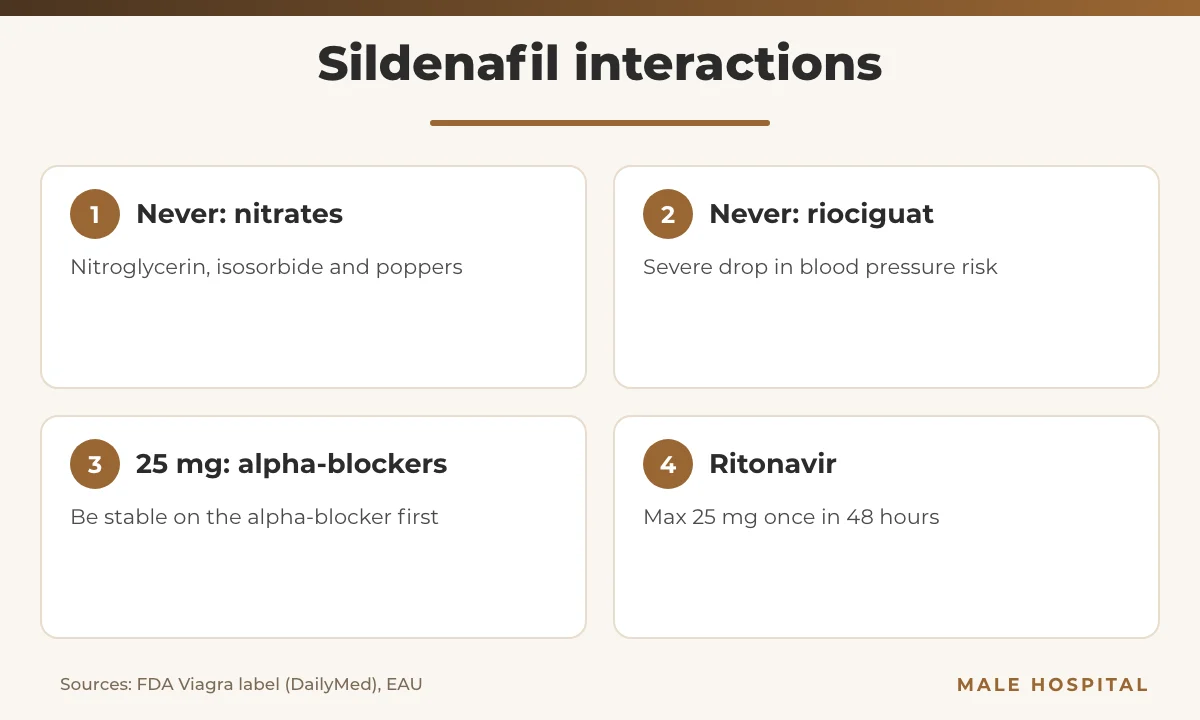
- Nitrates and nitric oxide donors in any form, taken regularly or occasionally: nitroglycerin, isosorbide and the recreational “poppers” (amyl or butyl nitrite/nitrate). Sildenafil strongly amplifies their blood-pressure-lowering effect. The EAU calls this an absolute contraindication because it can cause unpredictable falls in blood pressure; it also lists nicorandil, a heart drug with nitrate-like action.
- Riociguat (Adempas) and other guanylate cyclase stimulators used for pulmonary hypertension.
- Known allergy to sildenafil or any ingredient of the tablet.
The label states that it is not known when nitrates can be given safely after sildenafil. Even 24 hours after a 100 mg dose, a little drug remains, and levels at that point are 3–8 times higher in men over 65 and in those with liver or severe kidney disease or taking CYP3A4 inhibitors. Cleveland Clinic advises going to the emergency room for chest pain within 24 hours of taking any PDE5 inhibitor, and telling the staff what you took.
Sources: DailyMed (FDA label) — VIAGRA (sildenafil citrate) prescribing information; EAU Guidelines — Management of Erectile Dysfunction; Cleveland Clinic — Phosphodiesterase inhibitors
Interactions that need caution or a lower dose
- Alpha-blockers (such as doxazosin or tamsulosin, used for high blood pressure or an enlarged prostate). Both drug classes lower blood pressure. You should be stable on the alpha-blocker first, then start sildenafil at 25 mg. The EAU notes that a meta-analysis found no increase in hypotension-related events, so the combination is allowed with this care.
- Ritonavir (an HIV medicine) raised sildenafil exposure 11-fold. The maximum is a single 25 mg dose in 48 hours.
- Other CYP3A4 inhibitors, such as erythromycin, saquinavir, ketoconazole and itraconazole, raise sildenafil levels about three-fold; a 25 mg starting dose should be considered. The NHS also mentions clarithromycin and advises avoiding grapefruit juice, which can make side effects more likely.
- Other ED or PAH treatments, including Revatio, tadalafil or other PDE5 inhibitors: combinations are not recommended because they may lower blood pressure further.
- Alcohol. In a label study, sildenafil 50 mg did not worsen the blood-pressure drop caused by alcohol at a blood level of about 0.08%. Even so, the NHS advises against drinking too much, because heavy drinking itself makes erections harder.
Sources: DailyMed (FDA label) — VIAGRA (sildenafil citrate) prescribing information; NHS — Sildenafil: a medicine for erection problems; EAU Guidelines — Management of Erectile Dysfunction
Tadalafil lasts longer, which changes the timing rules; see our article on Cialis side effects, and our Viagra vs Cialis comparison if you are deciding between the two.
Who needs a lower dose
The usual dose is 50 mg about an hour before sex, at most once a day, adjusted between 25 mg and 100 mg. The FDA label suggests a 25 mg starting dose in groups that clear sildenafil more slowly:
- Age over 65: healthy older volunteers had about 84% higher sildenafil exposure than young men.
- Liver impairment (for example cirrhosis): exposure rose by about 85% in mild to moderate disease; severe liver disease has not been studied.
- Severe kidney impairment (creatinine clearance below 30 mL/min).
- Men taking alpha-blockers, ritonavir, erythromycin or strong CYP3A4 inhibitors, as described above.
Source: DailyMed (FDA label) — VIAGRA (sildenafil citrate) prescribing information
How to reduce sildenafil side effects
Because most sildenafil side effects are dose-related, the simplest strategy is the lowest dose that works for you. Practical steps supported by the label and patient leaflets:
- Ask about 25 mg or 50 mg before moving to 100 mg. Indigestion rose from 3% at 25 mg to 17% at 100 mg, and visual changes from 1% to 11%.
- Do not double up. Take no more than one dose a day, and never combine it with another ED pill or with Revatio.
- Avoid grapefruit and heavy drinking, both mentioned by the NHS.
- Don’t drive or use machinery if you feel dizzy or your vision is blurred, until it passes.
- Tell your doctor about every medicine and supplement, including HIV drugs, antifungals, antibiotics, blood pressure and prostate tablets, and St John’s wort.
- If a side effect persists, ask a doctor or pharmacist about changing the dose or drug.
Sources: NHS — Side effects of sildenafil; NHS — Sildenafil: a medicine for erection problems; DailyMed (FDA label) — VIAGRA (sildenafil citrate) prescribing information
Sildenafil does not treat the cause of erectile dysfunction. If tablets cause side effects you cannot tolerate, there are other options, from daily low-dose tadalafil to injections, shockwave therapy and penile implants; a specialist can help you weigh them.
Counterfeit and tainted products
Some of the most dangerous sildenafil side effects come from products that do not say they contain sildenafil at all. The FDA regularly warns about “natural” sexual enhancement supplements, honeys and chocolates containing hidden sildenafil or tadalafil. In its notices, the FDA explains that these undeclared ingredients may interact with nitrates such as nitroglycerin and lower blood pressure to dangerous levels, and that people with diabetes, high blood pressure, high cholesterol or heart disease often take nitrates.
The FDA warns that a product’s absence from its list does not mean it is safe. The safest course is to get sildenafil only on prescription or from a registered pharmacy, and to avoid any “herbal Viagra” or “natural” enhancement product sold online.
Sources: FDA — X10 Natural Enhancement Supplement may be harmful due to hidden drug ingredients; FDA — Sexual Enhancement and Energy Product Notifications
When to see a doctor
Most side effects of sildenafil fade within a few hours. Get emergency help if you have:
- An erection lasting more than 4 hours, especially if painful.
- Sudden loss or dimming of vision in one or both eyes.
- Sudden decrease or loss of hearing, with or without ringing in the ears or dizziness.
- Chest pain, especially during or after sex; tell the medical team you took sildenafil so they do not give nitrates.
- Fainting, a fast or irregular heartbeat, or a seizure.
- Swelling of the face, lips, tongue or throat, trouble breathing, or blistering skin.
Book a routine visit if side effects keep bothering you, if sildenafil does not work, or if you started it without a prescription. The NHS advises a check-up within 6 months of starting sildenafil bought over the counter, because ED can be an early sign of heart disease or diabetes. Start by understanding what causes erectile dysfunction in your case.
Sources: NHS — Sildenafil: a medicine for erection problems; MedlinePlus — Sildenafil; Cleveland Clinic — Phosphodiesterase inhibitors
If you are worried about side effects or want to review whether sildenafil is right for you, you can arrange a confidential consultation with our urologist-andrologist via WhatsApp. We can review your heart health and medicines and discuss all erectile dysfunction treatment options.
FAQs about sildenafil side effects
How long do sildenafil side effects last?
Most side effects, such as headache, flushing and a stuffy nose, follow the drug’s blood level. Sildenafil peaks within 30–120 minutes and has a half-life of about 4 hours, so these effects usually ease within a few hours. Blood-pressure effects in volunteers were back to placebo levels by 8 hours. Any effect that persists or is severe, such as vision or hearing loss, needs prompt medical care.
Source: DailyMed (FDA label) — VIAGRA (sildenafil citrate) prescribing information
Why does sildenafil make everything look blue?
Sildenafil also weakly blocks PDE6, an enzyme the retina uses to turn light into nerve signals. At higher doses, this briefly makes it harder to tell blue from green, peaking around the highest blood level. It was reported by 11% of men on 100 mg versus 1–2% on lower doses. It is temporary and did not affect visual sharpness or eye pressure in testing.
Source: DailyMed (FDA label) — VIAGRA (sildenafil citrate) prescribing information
Is 100 mg of sildenafil more likely to cause side effects than 50 mg?
Yes, for several effects. In FDA fixed-dose trials, headache rose from 21% at 50 mg to 28% at 100 mg, indigestion from 9% to 17%, visual changes from 2% to 11% and nasal congestion from 4% to 9%. Flushing was similar at both doses. That is why doctors usually start at 50 mg, or 25 mg in higher-risk men.
Source: DailyMed (FDA label) — VIAGRA (sildenafil citrate) prescribing information
Can I drink alcohol with sildenafil?
Moderate drinking is generally acceptable. In a study reaching a blood alcohol level of about 0.08%, sildenafil 50 mg did not worsen alcohol’s blood-pressure-lowering effect. However, the NHS advises avoiding drinking too much, because heavy drinking makes erections harder to achieve and may add to dizziness. Never combine sildenafil with “poppers”, which are nitrites and can cause a dangerous drop in blood pressure.
Sources: DailyMed (FDA label) — VIAGRA (sildenafil citrate) prescribing information; NHS — Sildenafil: a medicine for erection problems
Is sildenafil bad for your heart?
For most men with ED, no. The EAU guidelines state that no randomized or open-label study has shown an increase in heart attack rates with PDE5 inhibitors. The risk lies mainly in sexual activity for men with unstable heart disease, and in combining sildenafil with nitrates. Men with recent heart attack or stroke, unstable angina, heart failure or very low or high blood pressure need a cardiac assessment first.
Sources: EAU Guidelines — Management of Erectile Dysfunction; DailyMed (FDA label) — VIAGRA (sildenafil citrate) prescribing information
Can I take sildenafil with tamsulosin for my prostate?
Often yes, with care. Tamsulosin is an alpha-blocker, and both drugs lower blood pressure. The FDA label advises being stable on the alpha-blocker first and starting sildenafil at the lowest dose, 25 mg. The EAU notes that a meta-analysis found no increase in hypotension-related events with this combination. Stand up slowly and report dizziness or fainting to your doctor.
Sources: DailyMed (FDA label) — VIAGRA (sildenafil citrate) prescribing information; EAU Guidelines — Management of Erectile Dysfunction
Are generic sildenafil side effects different from Viagra?
Approved generic sildenafil has the same active ingredient as Viagra, so expect the same side effects and warnings. The real risk lies in unregulated products: supplements and “herbal” pills that the FDA has found to contain hidden sildenafil or tadalafil in unknown amounts, which can interact dangerously with nitrates.
Sources: MedlinePlus — Sildenafil; FDA — Sexual Enhancement and Energy Product Notifications
Medically reviewed by Assoc. Prof. Dr. Zülfü Sertkaya, urologist and andrologist (FEBU), Istanbul. Last reviewed: October 2026.
This article is for general information and does not replace an individual consultation with a qualified doctor.
- DailyMed (FDA label) — VIAGRA (sildenafil citrate) tablets — prescribing information
- DailyMed (FDA label) — REVATIO (sildenafil) — prescribing information
- EAU — Sexual and Reproductive Health Guidelines — Management of Erectile Dysfunction
- MedlinePlus — Sildenafil
- NHS — Side effects of sildenafil
- NHS — Sildenafil: a medicine for erection problems
- Int J Clin Pract (PMC) — Safety of sildenafil citrate: review of 67 double-blind placebo-controlled trials and the postmarketing safety database (Giuliano et al., 2010)
- Cleveland Clinic — Phosphodiesterase inhibitors
- FDA — X10 Natural Enhancement Supplement may be harmful due to hidden drug ingredients
- FDA — Sexual Enhancement and Energy Product Notifications