Erectile dysfunction (ED) is the ongoing inability to get or keep an erection firm enough for satisfying sex. It is common, it becomes more frequent with age, and it is not a normal part of getting older. Because ED is often linked to blood vessel, hormone, nerve or mental health problems, it is a reason to see a doctor, and most men can be treated effectively.
Source: NIDDK — Definition & Facts for ED; MedlinePlus — ED health topic
- Erectile dysfunction is a persistent problem with getting or keeping an erection; an occasional “off night” is usually caused by stress, tiredness or alcohol.
- In the Massachusetts Male Aging Study, 52% of men aged 40–70 had some degree of ED.
- More than 80% of cases have a physical cause, most often a blood-flow problem, so ED can be an early warning sign of heart disease.
- Diagnosis starts with a medical and sexual history, a physical exam and simple blood tests.
- Lifestyle changes and PDE5 inhibitor tablets are first-line treatment, with injections, vacuum devices and penile implants as further options.
- What is erectile dysfunction? Definition and symptoms
- How erections work
- How common is erectile dysfunction? Prevalence by age
- What causes erectile dysfunction?
- Erectile dysfunction as a warning sign for heart disease
- How doctors diagnose erectile dysfunction
- Treatment options at a glance
- Can erectile dysfunction be prevented?
- When to see a doctor
- FAQs about erectile dysfunction
What is erectile dysfunction? Definition and symptoms
Doctors define erectile dysfunction as the inability to get or maintain an erection long enough to have sexual intercourse. It used to be called impotence, a term that is now used less often because it sounds judgmental and says nothing about the cause.
For Arabic-speaking readers: a detailed, source-referenced overview of this condition in Arabic is available in the Alphateb medical encyclopedia — ضعف الانتصاب.
The key word is persistent. Almost every man has an occasional night when an erection does not cooperate. The NHS notes that occasional erection problems are usually nothing to worry about and are commonly linked to stress, tiredness or drinking too much alcohol. ED is when the problem keeps coming back.
Source: Cleveland Clinic — ED overview; NHS — Erection problems
Common symptoms
ED does not always mean a complete absence of erections. It can show up in several ways:
- Getting an erection sometimes, but not every time you want to have sex
- Getting an erection that does not last long enough for sex
- Being unable to get an erection at any time
- Needing a lot more stimulation than before to get or keep an erection
Low desire, early ejaculation and difficulty reaching orgasm are separate conditions, although they can occur alongside ED and are worth mentioning to your doctor.
Source: NIDDK — Symptoms & Causes of ED; Cleveland Clinic — ED overview
How erections work
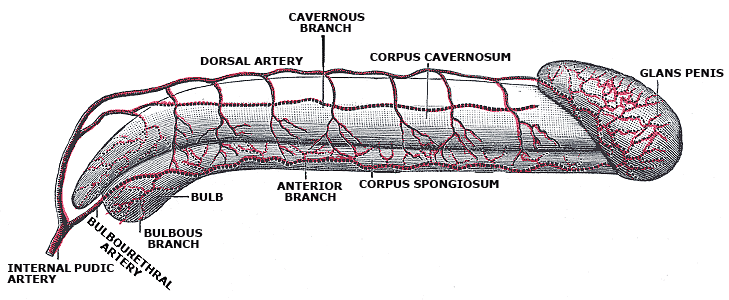
An erection is a blood-flow event controlled by nerves. Inside the penis are two spongy cylinders called the corpora cavernosa. At rest, the smooth muscle in their walls is contracted and little blood flows in.
When you are aroused, nerve fibers release a chemical messenger called nitric oxide. Nitric oxide raises levels of another molecule, cyclic GMP (cGMP), which lowers calcium inside the muscle cells and lets the smooth muscle relax. Blood then rushes into the spaces of the corpora cavernosa. As this tissue swells, it presses on the small veins beneath the tough outer sheath and blocks blood from draining out. This trapping mechanism is called veno-occlusion, and it is what keeps the penis rigid.
The erection fades when an enzyme called phosphodiesterase type 5 (PDE5) breaks down cGMP. This is why the best-known ED tablets are called PDE5 inhibitors: they slow that breakdown so the natural erection signal lasts longer. They do not create desire on their own; sexual stimulation is still needed.
Source: Nature Reviews Disease Primers (PMC) — ED primer, Yafi et al. 2016
Several systems have to work together: healthy arteries to deliver blood, working valves to trap it, intact nerves from the brain and spinal cord, and enough testosterone to support the process. Feeling relaxed, confident and aroused matters too. A problem in any one of these links can cause ED.
Source: Cleveland Clinic — ED overview
How common is erectile dysfunction? Prevalence by age
ED is the most common sexual problem men report to doctors. US research summarized by the National Institutes of Health suggests that 30 to 50 million American men live with it, and that it becomes more common with age.
Source: NIDDK — Definition & Facts for ED
The Massachusetts Male Aging Study (MMAS)
The most quoted figure comes from the Massachusetts Male Aging Study, a community survey of men aged 40 to 70 near Boston carried out from 1987 to 1989. Combining minimal, moderate and complete ED, 52% of men were affected. The rate of complete ED tripled from 5% at age 40 to 15% at age 70, and age was the factor most strongly linked to the problem. After adjusting for age, ED was also tied to heart disease, high blood pressure, diabetes, related medicines, depression and anger.
Source: PubMed — Feldman et al., Massachusetts Male Aging Study (J Urol 1994)
| Study / source | Who was studied | Key finding |
|---|---|---|
| MMAS (USA) | Men aged 40–70 | 52% overall: 17.2% minimal, 25.2% moderate, 9.6% complete ED |
| MMAS long-term data | Same cohort followed over time | 26 new cases per 1,000 men each year |
| Cologne study (Germany) | Adult men | 19.2% overall, rising steeply from 2.3% to 53.4% with age |
| Men seeking help (EAU summary) | New patients with ED | 1 in 4 was younger than 40; almost half of these had severe ED |
| NIDDK summary (USA) | US men | About 40% affected at age 40 and 70% by age 70 |
Source: EAU Guidelines — Epidemiology and prevalence of sexual dysfunction; NIDDK — Definition & Facts for ED
Numbers differ between studies because they use different questionnaires, age groups and populations. The message is consistent, though: ED is very common, it rises with age, and younger men are not immune. The rising rate with age reflects the build-up of conditions such as diabetes and vascular disease, which is why medical bodies stress that ED is not simply an inevitable part of aging.
Source: EAU Guidelines — Epidemiology and prevalence of sexual dysfunction; MedlinePlus — ED health topic
What causes erectile dysfunction?
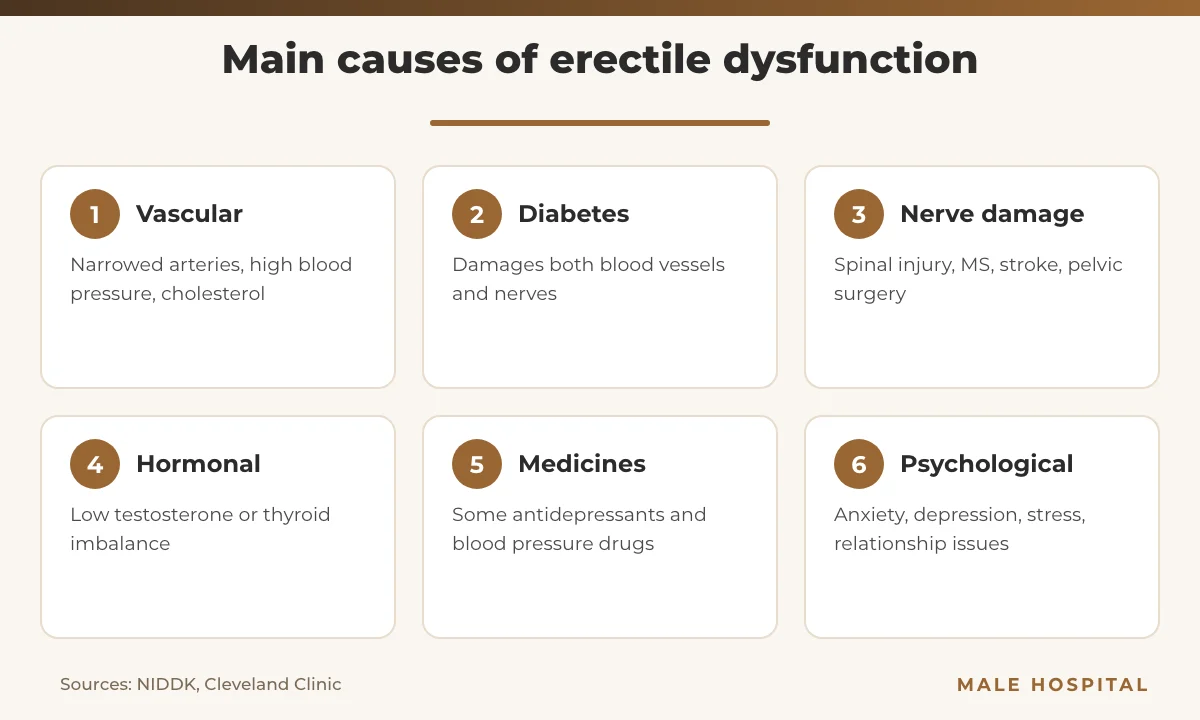
For decades, ED was thought to be mostly “in the head.” Current evidence shows the opposite: more than 80% of cases have a physical (organic) cause, although psychological factors are more often the main driver in younger men. In practice, many men have a mix of both, because a physical problem soon creates performance anxiety.
Source: Nature Reviews Disease Primers (PMC) — ED primer, Yafi et al. 2016
The main groups of causes are:
- Vascular (the most common): narrowed or stiff arteries from atherosclerosis, high blood pressure or high cholesterol limit blood flow into the penis.
- Diabetes and other chronic diseases: diabetes damages both blood vessels and nerves; chronic kidney disease, obesity and COPD are also linked.
- Nerve damage: spinal cord injury, multiple sclerosis, stroke, pelvic surgery or radiation.
- Hormonal: low testosterone or thyroid imbalance.
- Medicines: including some antidepressants, blood pressure medicines and diuretics, sedatives, some pain relievers and hormone treatments.
- Psychological: anxiety, depression, stress, low self-esteem and relationship difficulties.
- Lifestyle: smoking, heavy drinking, recreational drug use and physical inactivity.
- Penile conditions: such as Peyronie’s disease.
Source: NIDDK — Symptoms & Causes of ED; Cleveland Clinic — ED overview
Recognized risk factors include being 40 or older, diabetes, a body mass index over 25, depression, lack of exercise and smoking. We cover each cause in depth in a separate guide; the point here is that ED usually has an identifiable reason, and finding it shapes the treatment.
Source: Cleveland Clinic — ED overview
Erectile dysfunction as a warning sign for heart disease
Erections and heart health depend on the same thing: healthy, flexible blood vessels. ED and cardiovascular disease share the same risk factors, and erection problems often appear before heart symptoms do. That is why ED is often the first sign of an underlying problem such as heart disease.
Source: Cleveland Clinic — ED overview; Nature Reviews Disease Primers (PMC) — ED primer, Yafi et al. 2016
What the research shows
A landmark analysis published in JAMA followed 9,457 men aged 55 and older from the Prostate Cancer Prevention Trial. Men who developed new ED had a 25% higher risk of a later cardiovascular event after adjusting for other risk factors (hazard ratio 1.25). For men with either new or existing ED, the risk was 45% higher. The researchers noted that this was in the same range as the risk linked to current smoking or a family history of heart attack, and concluded that ED should prompt a check of cardiovascular risk factors.
Source: PubMed — Thompson et al., ED and subsequent cardiovascular disease (JAMA 2005)
The European Association of Urology (EAU) guidelines now state that ED should be considered a precursor of cardiovascular disease, and that more severe and longer-standing ED carries greater risk. Men younger than 50 with ED also have a higher estimated cardiovascular risk. In practical terms, a new erection problem is a good reason to have your blood pressure, blood sugar and cholesterol checked, even if you feel otherwise healthy.
Source: EAU Guidelines — Management of ED
How doctors diagnose erectile dysfunction
Most men are diagnosed without invasive tests. The aim is to confirm ED, judge how severe it is, and look for causes and linked health problems.
1. Medical and sexual history
Your doctor asks about your general health, medicines and supplements, alcohol and smoking, mental health and stress. You will also be asked how often erections happen, how firm they are and how long they last, and about desire, ejaculation and orgasm. Guidelines recommend a validated questionnaire, such as the International Index of Erectile Function (IIEF), to measure all areas of sexual function. With your permission, your partner may be asked how the relationship is affected.
2. Physical examination
The exam focuses on the genital, hormonal, vascular and nervous systems. It can reveal signs of low testosterone, nerve problems, reduced pulses, or penile conditions such as Peyronie’s disease plaques.
3. Blood and other tests
The EAU recommends fasting blood glucose or HbA1c and a lipid profile if these have not been checked in the past 12 months, plus an early-morning fasting total testosterone level. Depending on your history, your doctor may add thyroid, kidney or liver tests and a urine test.
Source: EAU Guidelines — Management of ED; NIDDK — Diagnosis of ED
4. Specialist tests (when needed)
Some men need further assessment, for example before surgery or when the cause is unclear:
- Penile Doppler ultrasound: shows how blood flows through the penis.
- Injection test: a medicine is injected into the penis to see how firm the erection becomes and how long it lasts.
- Nocturnal erection test: checks erections during sleep, at home or in a sleep lab, to help show whether the problem is physical.
- Nerve testing: such as penile biothesiometry, which measures response to vibration.
Source: NIDDK — Diagnosis of ED; Cleveland Clinic — ED overview
Treatment options at a glance
Treatment starts with the cause. That can mean adjusting a medicine that affects erections, treating diabetes, high blood pressure or low testosterone, and addressing anxiety or depression. The EAU recommends starting lifestyle changes and risk-factor control before or at the same time as any ED medication.
Options, roughly in the order they are usually considered:
- PDE5 inhibitor tablets (sildenafil, tadalafil, vardenafil, avanafil): the guideline-recommended first-line therapy. They boost blood flow when you are sexually stimulated.
- Counseling or sex therapy: helpful when stress, anxiety or relationship issues play a role, and often combined with other treatments.
- Penile injections or urethral medicines (such as alprostadil): work directly in the penis, often within minutes.
- Vacuum erection devices: draw blood into the penis to create an erection without medication.
- Testosterone therapy: only when blood tests confirm low testosterone, sometimes combined with a PDE5 inhibitor.
- Low-intensity shockwave therapy: may give a mild, modest improvement in men with blood-flow-related ED; the EAU gives it only a weak recommendation.
- Penile implant surgery: usually reserved for men who do not respond to, or cannot use, other treatments.
Source: EAU Guidelines — Management of ED; NIDDK — Treatment for ED
This is only a summary. Our erectile dysfunction treatment page explains each option, how it is chosen and what to expect. If tablets and other measures have failed, you can read how penile prosthesis surgery works and what really happens to size and performance after an implant.
A word of caution about buying ED pills online: medicines from unregulated websites may be fake or contain the wrong dose. The NIH advises against ordering ED medicine online before talking with a health professional, and against starting supplements without checking for interactions.
Source: NHS — Erection problems; NIDDK — Treatment for ED
Can erectile dysfunction be prevented?
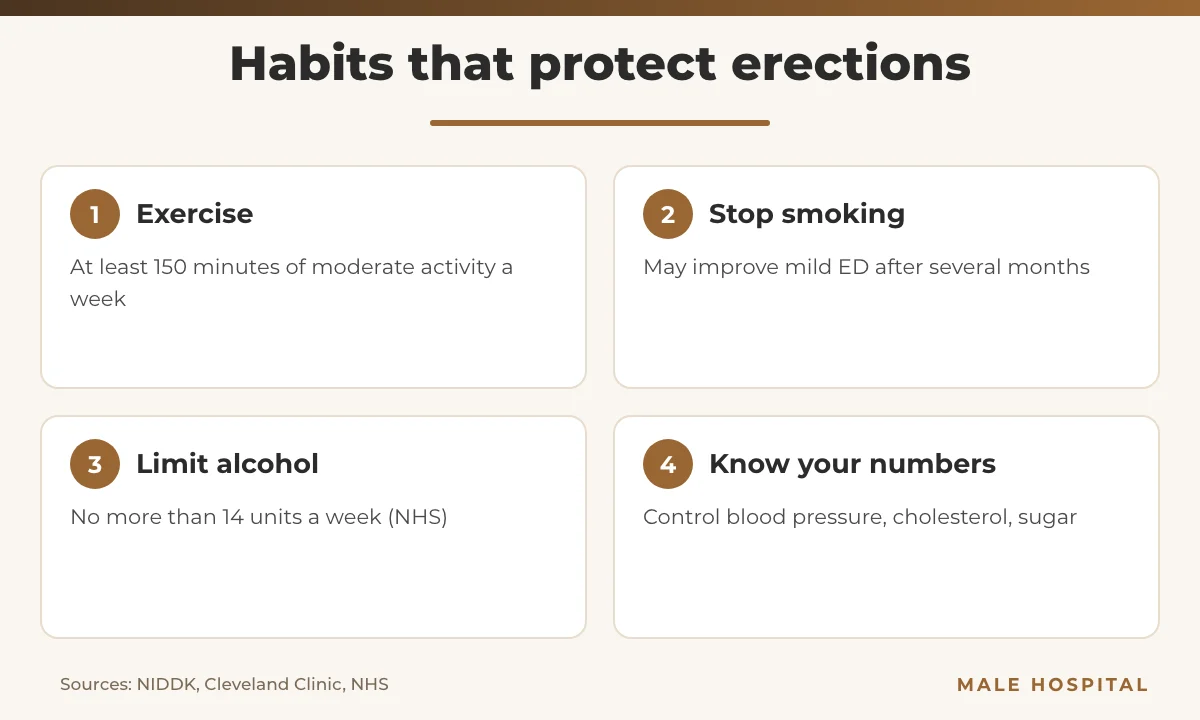
Not every case can be prevented, especially after surgery or nerve injury. But because so much ED is driven by blood vessel health, the habits that protect your heart also protect your erections. In controlled studies, regular exercise and weight loss improved erectile function.
- Move more: the NIH suggests at least 150 minutes of moderate activity a week. Cleveland Clinic notes that 45 minutes of vigorous cardio three times a week may help mild ED.
- Stop smoking: quitting may improve mild ED after several months.
- Keep alcohol moderate: the NHS advises no more than 14 units a week.
- Maintain a healthy weight and eat a diet low in saturated fat.
- Know your numbers: keep blood pressure, cholesterol and blood sugar under control.
- Sleep well and manage stress: relaxation techniques and counseling can help.
- Avoid recreational drugs.
- Review cycling habits: the NHS suggests cutting back if you cycle more than three hours a week.
Source: NIDDK — Treatment for ED; Cleveland Clinic — ED overview; NHS — Erection problems; EAU Guidelines — Management of ED
When to see a doctor
See a doctor if erection problems keep happening, even if they are mild. Persistent ED can point to a treatable condition, and Cleveland Clinic notes it is unlikely to go away on its own without lifestyle changes or treatment. Book an appointment sooner if:
- ED started suddenly or after starting a new medicine
- You also have chest pain, shortness of breath on exertion, or other heart symptoms
- You have diabetes, high blood pressure or high cholesterol
- You notice a curve, lump or pain in the penis
- You also have low desire, low energy or mood changes, which can suggest low testosterone or depression
- ED followed pelvic surgery, radiation or an injury
Seek emergency care for an erection lasting longer than four hours (priapism), which can permanently damage the penis, or for sudden loss of vision or hearing after taking an ED tablet.
Source: NHS — Erection problems; NIDDK — Treatment for ED; Cleveland Clinic — ED overview
If you would like a discreet, private assessment, you can arrange a confidential consultation with our urologist-andrologist Assoc. Prof. Dr. Zülfü Sertkaya by sending us a message on WhatsApp. Treatment costs depend on your assessment, and the first WhatsApp consultation is free.
FAQs about erectile dysfunction
Is ED a normal part of aging?
No. ED becomes more common as men get older, mainly because conditions such as diabetes, high blood pressure and artery disease build up over time. But many older men keep normal erections, and the NIH stresses that ED is not a natural part of aging. At any age, persistent erection problems deserve a medical check rather than acceptance.
Source: MedlinePlus — ED health topic
Can young men get erectile dysfunction?
Yes. In data summarized by the European Association of Urology, one in four men seeking help for ED was younger than 40, and almost half of those young men had severe ED. Psychological factors are more often involved in younger men, but physical causes, smoking, drugs and early vascular disease still need to be ruled out.
Source: EAU Guidelines — Epidemiology and prevalence of sexual dysfunction
How do I know if my ED is physical or psychological?
Clues that point to a psychological cause include a sudden onset, good spontaneous or self-stimulated erections, major life events and previous psychological problems. Most ED, however, has a physical component, and the two often overlap. A doctor can sort this out with a history, exam, blood tests and, when needed, a nocturnal erection test.
Source: Nature Reviews Disease Primers (PMC) — ED primer, Yafi et al. 2016; NIDDK — Diagnosis of ED
Can erectile dysfunction be cured?
It depends on the cause. When ED is linked to a medicine, stress, smoking or excess weight, fixing that factor can restore erections, and lifestyle changes can improve mild ED. When it stems from long-standing vascular disease or nerve damage, treatments such as tablets, injections or an implant manage the problem very effectively rather than reversing it.
Source: Cleveland Clinic — ED overview
Which blood tests are done for ED?
European guidelines recommend checking fasting blood sugar or HbA1c and a cholesterol profile if they have not been measured in the past year, together with an early-morning fasting total testosterone level. Depending on your symptoms, your doctor may add thyroid, kidney, liver or prostate tests. These help uncover diabetes, heart risk and hormone problems.
Source: EAU Guidelines — Management of ED
Does stress cause erectile dysfunction?
Stress, anxiety and depression can all cause or worsen ED, and occasional problems are commonly linked to stress or tiredness. Anxiety about performance can also turn a one-off episode into a repeating cycle. Counseling or sex therapy, sometimes alongside medication, can help break that cycle and reduce worry about sex.
Source: NHS — Erection problems; NIDDK — Treatment for ED
Is it safe to buy ED pills online?
Only through a regulated pharmacy after a medical assessment. Pills from unregulated websites may be counterfeit or contain inconsistent doses, and ED tablets can interact dangerously with other medicines, especially nitrates used for chest pain, which can cause a dangerously low blood pressure. The NIH advises talking with a health professional before ordering any ED medicine online.
Source: NHS — Erection problems; Nature Reviews Disease Primers (PMC) — ED primer, Yafi et al. 2016; NIDDK — Treatment for ED
Medically reviewed by Assoc. Prof. Dr. Zülfü Sertkaya, urologist and andrologist (FEBU), Istanbul. Last reviewed: October 2026.
This article is for general information and does not replace an individual consultation with a qualified doctor.
- NIDDK — Definition & Facts for Erectile Dysfunction
- NIDDK — Symptoms & Causes of Erectile Dysfunction
- NIDDK — Diagnosis of Erectile Dysfunction
- NIDDK — Treatment for Erectile Dysfunction
- MedlinePlus — Erectile Dysfunction
- NHS — Erection problems (erectile dysfunction)
- Cleveland Clinic — Erectile Dysfunction (ED)
- EAU — Sexual and Reproductive Health Guidelines — Management of erectile dysfunction
- EAU — Sexual and Reproductive Health Guidelines — Epidemiology and prevalence
- Nature Reviews Disease Primers (PMC) — Yafi et al. Erectile dysfunction (2016)
- PubMed — J Urol 1994 — Feldman et al. Impotence and its medical and psychosocial correlates: Massachusetts Male Aging Study
- PubMed — JAMA 2005 — Thompson et al. Erectile dysfunction and subsequent cardiovascular disease