Painful ejaculation is pain or discomfort felt during or just after ejaculation, anywhere from the tip of the penis to the testicles, perineum or lower abdomen. It is a symptom rather than a disease: the most common causes are inflammation or infection of the prostate and urinary tract, an enlarged prostate, blocked ejaculatory ducts, prostate surgery or radiation, and certain antidepressants. Treatment depends on the cause, so a urological check-up is the first step, and most causes can be treated. If you also have pelvic pain or urinary symptoms that last for months, read our full guide to prostatitis, the condition most often behind it.
Sources: Cleveland Clinic — Odynorgasmia: causes and treatment; EAU — Guidelines: Disorders of ejaculation
- Painful ejaculation (also called odynorgasmia or dysorgasmia) affects roughly 1 to 10 in every 100 men at some point, and it is far more common in men with chronic prostatitis.
- Prostate inflammation, sexually transmitted and urinary infections, an enlarged prostate, ejaculatory duct obstruction, prostate surgery or radiation, and some antidepressants are the main causes.
- Assessment usually includes a history, a physical and rectal exam, urine tests, STI testing, a PSA blood test and, when needed, ultrasound or MRI.
- The European Association of Urology (EAU) advises treating the underlying cause; when none is found, pelvic floor therapy, behavioral therapy and pain-modifying medicines are options.
- Men with ongoing ejaculatory pain in chronic prostatitis tend to have more severe symptoms, so it is worth raising early instead of waiting.
- What is painful ejaculation?
- How common is painful ejaculation?
- 10 common causes of painful ejaculation
- Symptoms and patterns that point to the cause
- How doctors diagnose painful ejaculation
- Painful ejaculation treatment by cause
- Self-care, sex and relationships
- When to see a doctor
- FAQs about painful ejaculation
What is painful ejaculation?
The EAU defines it as anything from mild discomfort to severe pain during or after ejaculation, felt in the penis, scrotum or perineum (the area between the scrotum and anus). Doctors also use the terms odynorgasmia, dysorgasmia, dysejaculation and orgasmalgia for the same symptom. It can happen with intercourse, masturbation or a wet dream, and some men also notice burning when they urinate after sex.
Painful ejaculation varies a lot from man to man. A literature review in Cureus described it as ranging from a dull ache to unbearable pain, lasting anywhere from a few seconds to two days. It may be felt in the urethra, testicles, rectum, bladder area or lower abdomen as well as the penis.
Sources: EAU — Guidelines: Disorders of ejaculation; Cureus (PMC) — Waqar et al. 2020 review
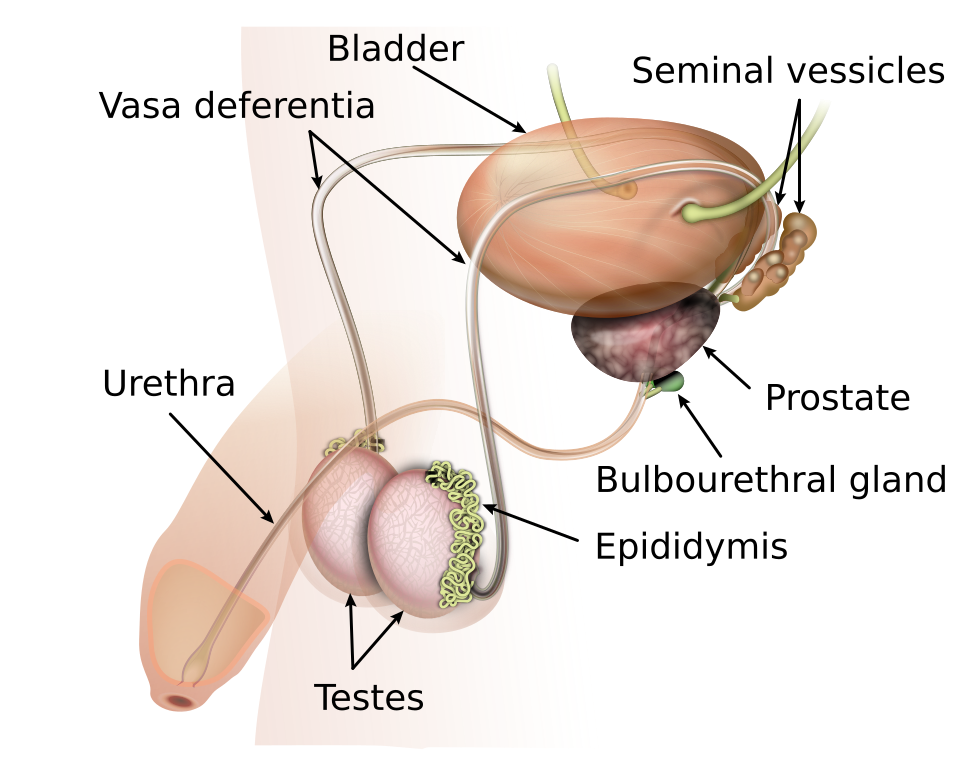
To understand why ejaculation can hurt, it helps to know the route semen takes. The prostate sits just below the bladder and in front of the rectum, wraps around the urethra and makes fluid that goes into semen. In men, the urethra carries both urine and semen out through the penis. Because the testicles, epididymis, seminal vesicles, ejaculatory ducts, prostate and urethra all lie along this route, inflammation, a blockage or nerve irritation at any point can make ejaculation painful.
Sources: NIDDK (NIH) — Prostatitis: Inflammation of the Prostate; Cureus (PMC) — Waqar et al. 2020 review
How common is painful ejaculation?
Painful ejaculation is more common than most men think, but it is under-reported because many men feel embarrassed and many doctors do not ask about it. Cleveland Clinic estimates that 1 to 10 out of every 100 men experience it at some point, and a BJU International review put the incidence of post-orgasmic pain at 1–9.7%.
Sources: Cleveland Clinic — Odynorgasmia: causes and treatment; BJU Int (PubMed) — Ilie et al. 2007 review
The figures are much higher in certain groups:
- Men with urinary symptoms: in a large survey of 12,815 men aged 50–80 with lower urinary tract symptoms, 6.7% reported pain on ejaculation, and other studies in this group report up to about 25%. The more severe the urinary symptoms, the more common the pain.
- Men with chronic prostatitis/chronic pelvic pain syndrome (CP/CPPS): Cleveland Clinic reports that 30 to 75 out of every 100 men with CP/CPPS have painful ejaculation.
- Men after radical prostatectomy: studies cited in the Cureus review reported painful orgasm in 9% and 33% of men after prostate cancer surgery.
Sources: Cureus (PMC) — Waqar et al. 2020 review; Cleveland Clinic — Odynorgasmia: causes and treatment
10 common causes of painful ejaculation
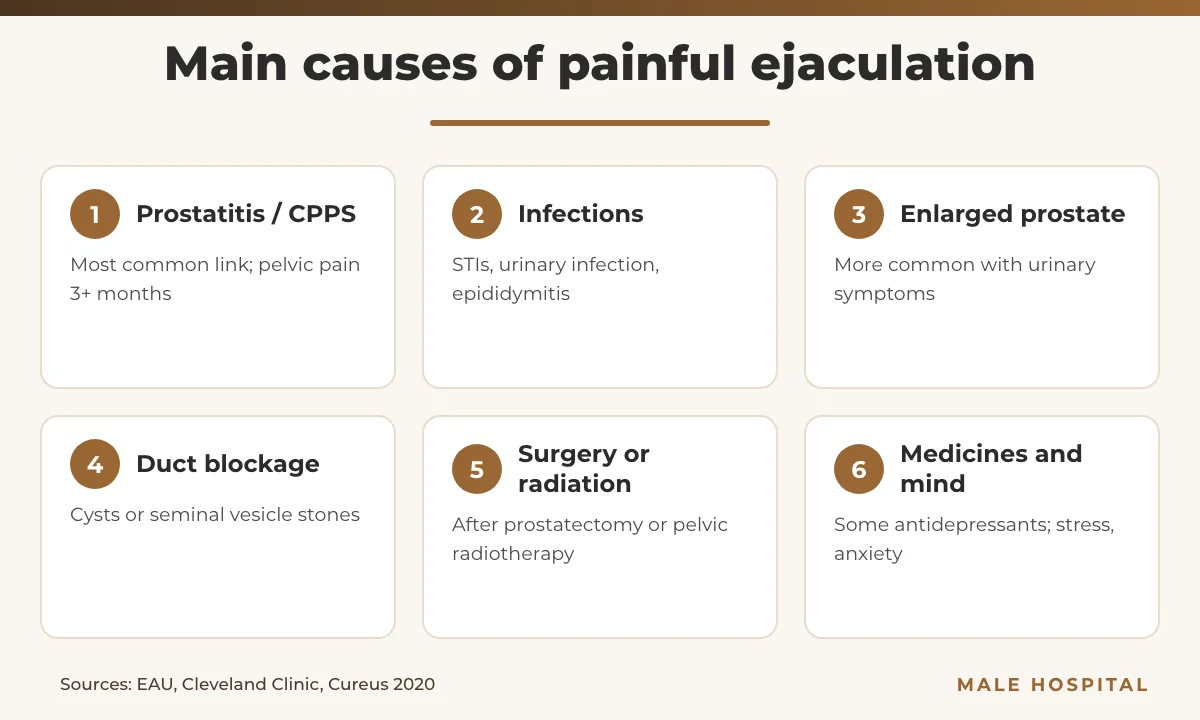
The EAU lists a wide range of conditions linked with ejaculatory pain, and notes that sometimes no cause is found (idiopathic). The table below groups the main causes reported by the EAU, Cleveland Clinic and published reviews.
| Cause | Typical clues | Usual treatment |
|---|---|---|
| 1. Prostatitis and CP/CPPS | Pelvic, perineal or penile pain for 3+ months; urinary symptoms | Antibiotics if bacterial; alpha-blockers, anti-inflammatories, pelvic floor therapy |
| 2. Sexually transmitted infections | Discharge, burning when urinating, new partner; may have no symptoms | Testing and antibiotics for you and your partner(s) |
| 3. Urinary tract infection | Burning, urgency, frequent urination | Urine culture and antibiotics |
| 4. Epididymitis or orchitis | Testicular pain and swelling | Antibiotics and anti-inflammatories |
| 5. Enlarged prostate (BPH) | Older age with lower urinary tract symptoms | Alpha-blocker such as tamsulosin; BPH treatment |
| 6. Ejaculatory duct obstruction or seminal vesicle stones | Blood in semen, infertility | Transurethral resection of the ejaculatory ducts or stone removal |
| 7. Prostate surgery or pelvic radiation | Pain began after treatment for prostate cancer or BPH | Time to heal; alpha-blockers in selected men |
| 8. Medications | Pain started after beginning an antidepressant | Doctor-guided switch or stop of the drug |
| 9. Pelvic floor or pudendal nerve problems | Perineal pain; pain linked to pelvic movement during sex | Pelvic floor physical therapy, nerve block, rarely nerve surgery |
| 10. Psychological factors | No pain with masturbation; stress, anxiety, depression | Psychotherapy or relationship counseling |
Sources: EAU — Guidelines: Disorders of ejaculation; Cleveland Clinic — Odynorgasmia: causes and treatment; Cureus (PMC) — Waqar et al. 2020 review
Prostatitis and chronic pelvic pain syndrome
Inflammation of the prostate is the cause most often linked with painful ejaculation. The US National Institute of Diabetes and Digestive and Kidney Diseases (NIDDK) lists pain during or after ejaculation as a common symptom of CP/CPPS, alongside pain for three months or more in the lower abdomen, penis, scrotum, lower back or perineum. NIDDK estimates that CP/CPPS affects 10 to 15 percent of men in the United States.
Painful ejaculation also signals a harder course. In a study of 486 men from the NIH Chronic Prostatitis Cohort, men who reported ejaculatory pain at every visit had higher symptom scores, worse mental and physical quality of life, and were less likely to improve over time than men without it. Notably, their urine, prostate fluid and semen tests showed no more infection or white blood cells than the others.
Sources: NIDDK (NIH) — Prostatitis: Inflammation of the Prostate; J Urol (PubMed) — Shoskes et al. 2004, NIH CP/CPPS cohort
Infections: STIs, urinary infections and epididymitis
Infection or inflammation anywhere along the ejaculatory pathway, including urethritis, prostatitis, epididymitis and orchitis, can make ejaculation hurt. Chlamydia, gonorrhea and trichomoniasis are well-known culprits. The US Centers for Disease Control and Prevention (CDC) notes that chlamydia often causes no symptoms at all, so a normal-looking penis does not rule it out. Testicular pain and swelling suggest epididymitis, which needs prompt treatment.
Sources: Cureus (PMC) — Waqar et al. 2020 review; CDC — About Chlamydia
Enlarged prostate and ejaculatory duct obstruction
Men with benign prostatic hyperplasia (BPH) are more likely to have painful ejaculation than men of the same age without it. A blockage of the ejaculatory ducts, from a cyst, scarring or stones in the seminal vesicles, can cause pain at ejaculation and often comes with infertility. Seminal vesicle stones frequently cause blood in semen as well as pain.
Sources: Cureus (PMC) — Waqar et al. 2020 review; Cleveland Clinic — Odynorgasmia: causes and treatment
After prostate surgery or radiation
Painful ejaculation can follow radical prostatectomy, prostate surgery for BPH or pelvic radiotherapy. After radical prostatectomy, it has been linked to damage near the bladder neck and nerves during surgery. Cleveland Clinic notes that pain after surgery or radiation may settle as the tissues heal. If erections are also affected, our guide to erectile dysfunction after prostatectomy covers the recovery options.
Sources: Cureus (PMC) — Waqar et al. 2020 review; Cleveland Clinic — Odynorgasmia: causes and treatment
Medications
Several antidepressants have been reported to cause painful ejaculation, including tricyclic antidepressants such as imipramine, desipramine and clomipramine, the SSRI fluoxetine and venlafaxine, as well as the muscle relaxant cyclobenzaprine. In the reported cases, the pain improved when the drug was stopped. Never stop an antidepressant on your own: talk to the prescriber about switching or adjusting it safely.
Sources: Cureus (PMC) — Waqar et al. 2020 review; Cleveland Clinic — Odynorgasmia: causes and treatment
Nerves, pelvic floor and the mind
Pudendal nerve irritation or injury, nerve damage from diabetes, spinal cord injury or multiple sclerosis, and pelvic floor dysfunction can all produce painful ejaculation. The EAU also lists past hernia repair, and the Cureus review describes cases where mesh after inguinal hernia repair scarred the vas deferens. Psychological causes are possible too, and the EAU notes they are more likely when there is no pain during masturbation. Rare reported causes include mercury toxicity and ciguatera fish poisoning.
Sources: EAU — Guidelines: Disorders of ejaculation; Cureus (PMC) — Waqar et al. 2020 review; Cleveland Clinic — Odynorgasmia: causes and treatment
Symptoms and patterns that point to the cause
Where and when the pain occurs gives your doctor useful clues. No single pattern proves a diagnosis, but these combinations are typical:
- Pain deep in the perineum or pelvis, lasting months, with urinary frequency or discomfort: suggests CP/CPPS or pelvic floor tension.
- Burning in the urethra, discharge, or a new sexual partner: suggests urethritis or an STI.
- Fever, chills and painful, urgent urination: suggests acute bacterial prostatitis, which needs same-day care.
- Pain at ejaculation with blood in semen or fertility problems: suggests ejaculatory duct obstruction or seminal vesicle stones.
- Testicular pain and swelling: suggests epididymitis or orchitis.
- Pain that started after surgery, radiation or a new medicine: points to that trigger.
- Pain with partnered sex but not with masturbation: raises the possibility of a psychological component.
Sources: NIDDK (NIH) — Prostatitis: Inflammation of the Prostate; Cureus (PMC) — Waqar et al. 2020 review; EAU — Guidelines: Disorders of ejaculation
How doctors diagnose painful ejaculation
Because painful ejaculation has many possible causes, the assessment is step by step. Expect a frank but confidential conversation about when the pain started, where it is felt, how long it lasts, whether it happens with masturbation, your medicines, sexual partners, urinary symptoms and mood.
- Physical examination of the penis, testicles and groin, and usually a digital rectal exam to feel the prostate.
- Urine tests: urinalysis and urine culture to look for infection.
- STI testing with urine or swab samples.
- Blood tests, including PSA (prostate-specific antigen).
- Imaging: transrectal ultrasound to look for ejaculatory duct obstruction, cysts or stones; MRI, CT or X-ray in selected cases.
- Cystoscopy or a urethrogram if a narrowing of the urethra (stricture) is suspected.
Sources: Cureus (PMC) — Waqar et al. 2020 review; Cleveland Clinic — Odynorgasmia: causes and treatment
Men with symptoms of CP/CPPS may also be asked to fill in the NIH Chronic Prostatitis Symptom Index (NIH-CPSI), the questionnaire used in the NIH cohort research, which helps measure symptom severity and track how the pain responds to treatment. A semen analysis, which measures the amount and quality of semen and sperm, can be useful when there are fertility concerns or a suspected duct blockage.
Sources: J Urol (PubMed) — Shoskes et al. 2004, NIH CP/CPPS cohort; NIDDK (NIH) — Prostatitis: Inflammation of the Prostate
Painful ejaculation treatment by cause
There are no dedicated AUA, EAU or NICE guidelines with graded recommendations for this symptom, and the evidence comes mostly from small studies and case reports. The EAU’s practical advice is to tailor treatment to the underlying cause whenever one is found.
Sources: EAU — Guidelines: Disorders of ejaculation; Cureus (PMC) — Waqar et al. 2020 review
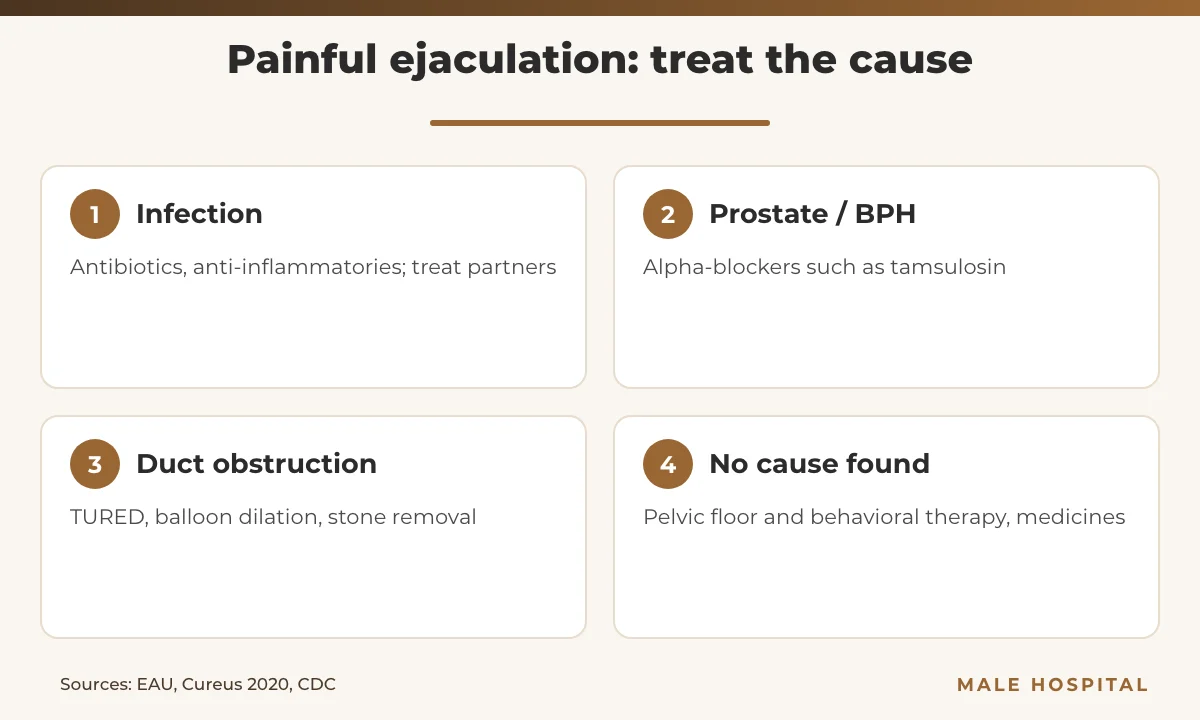
When a cause is found
- Infection: antibiotics chosen by the test result, often with anti-inflammatory painkillers. With an STI, partners need treatment too, and the CDC advises no sex until everyone has finished treatment.
- Prostatitis and CP/CPPS: a combination approach that may include alpha-blockers, anti-inflammatories, muscle relaxants, neuromodulators such as amitriptyline or pregabalin, physical therapy, relaxation techniques and acupuncture. NHS guidance adds counseling or cognitive behavioral therapy for long-lasting symptoms.
- Enlarged prostate or pain after prostatectomy: the alpha-blocker tamsulosin is commonly used; a small pilot study reported significant improvement after four weeks.
- Ejaculatory duct obstruction or seminal vesicle stones: transurethral resection of the ejaculatory ducts (TURED), balloon dilation or endoscopic stone removal.
- Medication-induced pain: a supervised change of dose or drug.
- Psychological factors: psychotherapy or relationship counseling.
Sources: EAU — Guidelines: Disorders of ejaculation; Cureus (PMC) — Waqar et al. 2020 review; NIDDK (NIH) — Prostatitis: Inflammation of the Prostate; NHS — Prostatitis; CDC — About Chlamydia
When no cause is found
When no cause can be identified (idiopathic pain), the EAU suggests behavioral therapy, muscle relaxants, antidepressants, anticonvulsants and/or opioids, and pelvic floor exercises. A BJU International review describes options ranging from self-care and a perineal protection program to alpha-blockers and the anticonvulsant topiramate, which helped in individual case reports. Cleveland Clinic also lists a pudendal nerve block for nerve-related pain.
Sources: EAU — Guidelines: Disorders of ejaculation; BJU Int (PubMed) — Ilie et al. 2007 review; Cleveland Clinic — Odynorgasmia: causes and treatment
Surgery as a last resort
If medical treatment fails, surgeons may consider transurethral resection of the prostate (TURP), TURED or release of the pudendal nerve (neurolysis). The EAU is clear that there is no strong evidence surgery improves the pain and that it must be used with caution, so it is reserved for carefully selected men with a clear structural cause.
Source: EAU — Guidelines: Disorders of ejaculation
Self-care, sex and relationships
Self-care cannot replace a diagnosis, but it can ease symptoms while treatment works. NHS advice for prostatitis includes painkillers such as paracetamol or ibuprofen and drinking plenty of fluids. NIDDK lists warm sitz baths, local heat, relaxation exercises and biofeedback for chronic pelvic pain.
Sources: NHS — Prostatitis; NIDDK (NIH) — Prostatitis: Inflammation of the Prostate
Pelvic floor muscles play a big part in ejaculation. When they are chronically tight, learning to relax them, often with a specialist physiotherapist, can reduce pain. Cleveland Clinic lists Kegel exercises for men as one option, and NIDDK lists physical therapy that includes Kegel exercises and myofascial release alongside relaxation exercises. A pelvic floor physiotherapist can tell you which approach suits your muscles.
Sources: Cleveland Clinic — Odynorgasmia: causes and treatment; NIDDK (NIH) — Prostatitis: Inflammation of the Prostate
Painful ejaculation often leads to fear of sex, avoidance and tension with a partner. In the NIH cohort, men with persistent ejaculatory pain had worse mental quality of life. Talking openly with your partner, and with a doctor or sex therapist, helps break that cycle. If you have an STI, wait until you and your partner have finished treatment before having sex again.
Sources: J Urol (PubMed) — Shoskes et al. 2004, NIH CP/CPPS cohort; CDC — About Chlamydia
When to see a doctor
See a doctor if ejaculation hurts repeatedly, if the pain is intense, or if it is affecting your quality of life or relationship. A urologist is the right specialist, and you may also be referred to a pelvic floor therapist or sex therapist. Seek urgent care if the pain comes with any of these red flags:
- Fever, chills, or painful, frequent and urgent urination.
- Being unable to urinate at all.
- Blood in the urine.
- Severe pain in the lower abdomen or urinary tract.
- Symptoms that have not improved, or have worsened, after 48 hours of antibiotics.
- Confusion, slurred speech, blotchy or bluish skin, or severe breathing difficulty, which can be signs of sepsis and need emergency care.
Sources: Cleveland Clinic — Odynorgasmia: causes and treatment; NIDDK (NIH) — Prostatitis: Inflammation of the Prostate; NHS — Prostatitis
You can get a confidential assessment of painful ejaculation with our urologist-andrologist, Assoc. Prof. Dr. Zülfü Sertkaya, in Istanbul; send a message on WhatsApp for a free initial consultation, and the cost of any tests or treatment is explained after the assessment.
FAQs about painful ejaculation
Is painful ejaculation serious?
It is usually not dangerous, but it is a signal that something needs attention, most often prostate or urinary tract inflammation. Some causes, such as acute bacterial prostatitis or an STI, need prompt antibiotics. Pain with fever, inability to urinate or blood in the urine needs urgent care. Persistent pain also tends to worsen quality of life, so it should not be ignored.
Sources: NIDDK (NIH) — Prostatitis: Inflammation of the Prostate; J Urol (PubMed) — Shoskes et al. 2004, NIH CP/CPPS cohort
Can painful ejaculation go away on its own?
Sometimes. Pain after prostate surgery or radiation may settle as tissues heal, and pain from a medicine often improves once the drug is changed. However, pain from an infection needs treatment, and men with persistent ejaculatory pain in chronic prostatitis were less likely to improve over time in an NIH cohort study. A check-up is the safest approach.
Sources: Cleveland Clinic — Odynorgasmia: causes and treatment; J Urol (PubMed) — Shoskes et al. 2004, NIH CP/CPPS cohort
Can an STI cause pain when ejaculating?
Yes. Chlamydia, gonorrhea and trichomoniasis are listed among the infections that can make ejaculation hurt, often with urethral burning or discharge. Chlamydia frequently causes no symptoms, so testing matters even if you feel otherwise well. Treatment is curative, and you and your partner(s) should avoid sex until everyone has finished treatment.
Sources: Cleveland Clinic — Odynorgasmia: causes and treatment; CDC — About Chlamydia
Is painful ejaculation a sign of prostate cancer?
Prostate cancer is on the list of possible causes, which is one reason a rectal exam and a PSA blood test are part of the check-up. Most men with this symptom, however, turn out to have other causes such as infection or inflammation of the urinary tract, an enlarged prostate or a duct blockage. Testing is the only way to know.
Sources: Cleveland Clinic — Odynorgasmia: causes and treatment; EAU — Guidelines: Disorders of ejaculation; Cureus (PMC) — Waqar et al. 2020 review
Can antidepressants cause painful ejaculation?
Yes. Case reports and reviews link ejaculatory pain with tricyclic antidepressants such as imipramine and clomipramine, as well as fluoxetine and venlafaxine. Cleveland Clinic lists SSRIs, TCAs and MAOIs as possible causes. The pain usually improved after the drug was stopped, but any change should be made with your prescribing doctor to avoid withdrawal symptoms or relapse.
Sources: Cureus (PMC) — Waqar et al. 2020 review; Cleveland Clinic — Odynorgasmia: causes and treatment
Does painful ejaculation affect fertility?
The pain itself does not reduce fertility, but some of its causes can. Ejaculatory duct obstruction often comes with infertility, and infections can affect the reproductive tract. If you are trying to conceive and also have pain at ejaculation, tell your doctor so that a semen analysis and imaging can be considered.
Source: Cureus (PMC) — Waqar et al. 2020 review
Which doctor treats painful ejaculation?
A urologist, ideally one with experience in andrology, is the right first specialist. They can examine the prostate, order urine, STI, PSA and imaging tests, and treat structural causes. Depending on the cause, they may also involve a pelvic floor physiotherapist, a sex therapist or a psychologist, because pain at orgasm often has more than one contributing factor.
Sources: Cleveland Clinic — Odynorgasmia: causes and treatment; EAU — Guidelines: Disorders of ejaculation
Medically reviewed by Assoc. Prof. Dr. Zülfü Sertkaya, urologist and andrologist (FEBU), Istanbul. Last reviewed: November 2026.
This article is for general information and does not replace an individual consultation with a qualified doctor.
- EAU — Sexual and Reproductive Health Guidelines — Disorders of ejaculation (Painful ejaculation)
- Cureus (PMC) — Waqar et al. 2020 — Painful Ejaculation: An Ignored Symptom
- Cleveland Clinic — Painful Ejaculation (Odynorgasmia): Causes & Treatment
- NHS — Prostatitis
- NIDDK (NIH) — Prostatitis: Inflammation of the Prostate
- J Urol (PubMed) — Shoskes et al. 2004 — Impact of post-ejaculatory pain in men with category III CP/CPPS
- BJU Int (PubMed) — Ilie et al. 2007 — Painful ejaculation
- CDC — About Chlamydia