Low libido in men means a lasting drop in sexual thoughts, fantasies and desire for sex compared with what is normal for you. It is common, affecting up to 1 in 5 men at some point, and it usually has a treatable cause: low testosterone, high prolactin, depression, stress, relationship strain, medicines or erection problems. Low testosterone is only one of these causes, so if you want the hormone side in depth, read our guide to low testosterone symptoms; this article covers the full picture of low sex drive.
Source: Cleveland Clinic — Low Libido (Low Sex Drive); EAU — Low Sexual Desire and Male Hypoactive Sexual Desire Disorder
- Low libido is common in men and often temporary; it becomes a medical problem when it persists and bothers you or your relationship.
- Causes include low testosterone, high prolactin, thyroid disease, depression, anxiety, relationship conflict, erectile dysfunction, alcohol and medicines such as antidepressants.
- European urology guidelines strongly recommend blood tests to rule out hormone disorders before treatment.
- Testosterone helps desire when testosterone is genuinely low; it is not a general libido booster for men with normal levels.
- Treatment works best when it targets the cause: switching a medicine, treating depression, couple or sex therapy, or treating an erection problem.
What is low libido in men?
Libido is another word for sex drive: how often you think about sex, have sexual fantasies and want sexual activity, alone or with a partner. It naturally varies from man to man and from month to month. A short dip during a stressful period, an illness or a busy time at work is normal and usually passes on its own.
Doctors become interested when the change lasts and causes distress. The DSM-5, the psychiatric classification used worldwide, describes male hypoactive sexual desire disorder (HSDD) as persistently or recurrently deficient sexual thoughts, fantasies and desire for sexual activity. The symptoms must have lasted at least six months and cause clinically significant distress. The clinician also considers your age and cultural context, because there is no single “normal” level of desire.
Source: University of Texas at Austin, Meston Lab — Hypoactive Sexual Desire Disorder; EAU — Low Sexual Desire and Male Hypoactive Sexual Desire Disorder
How common is it?
Exact figures depend on how the question is asked. Cleveland Clinic estimates that up to 1 in 5 men experience low libido at some point. In a German survey of 12,646 middle-aged men, 4.7% reported low sexual desire. When researchers count only frequent or persistent problems, the numbers fall: in a US sample of men aged 40 to 80, 3.3% reported a frequent lack of desire. Desire problems become more common with age; in one Swedish sample of men aged 66 to 74, 41% reported low desire.
Low sexual desire is less common in men than in women, yet the European Association of Urology (EAU) notes it is the most frequent complaint in couples’ therapy. In other words, it is a real and common issue, not a personal failing.
Source: EAU — Low Sexual Desire and Male Hypoactive Sexual Desire Disorder; University of Texas at Austin, Meston Lab — Hypoactive Sexual Desire Disorder
Signs of low sex drive
The main sign is simple: you are less interested in sex than you used to be. Men often notice it in several ways at once:
- Fewer sexual thoughts or fantasies during the day.
- Less interest in masturbation as well as partnered sex.
- Rarely or never starting sex, and feeling indifferent when a partner does.
- Feeling worried, guilty or upset about the change, or tension in the relationship because of it.
Some men also notice erection problems, low energy or a low mood. These extra symptoms are useful clues, because they point toward a hormonal or mental health cause rather than a purely situational one.
Source: Cleveland Clinic — Low Libido (Low Sex Drive)
Causes of low libido in men
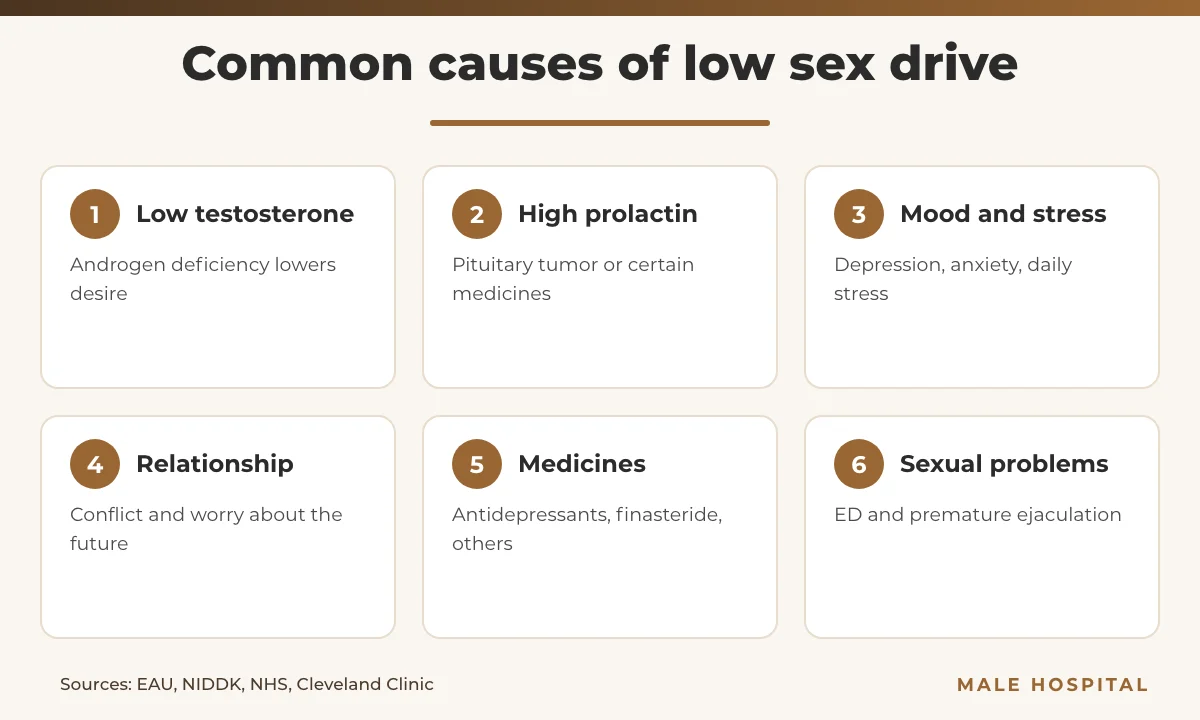
Low libido is rarely caused by one thing. The EAU describes a mix of psychological, relationship and biological factors, and the NHS stresses that treating the underlying cause is what helps sex drive return. The main groups are below.
Source: NHS — Low sex drive (loss of libido); EAU — Low Sexual Desire and Male Hypoactive Sexual Desire Disorder
Hormonal causes
Low testosterone (androgen deficiency) is the best-known hormonal cause. Testosterone seems essential for desire, but the link is not one-to-one: circulating levels do not directly track desire, especially in older men. That is why a man with a borderline result and a stressful life may have another, more important cause.
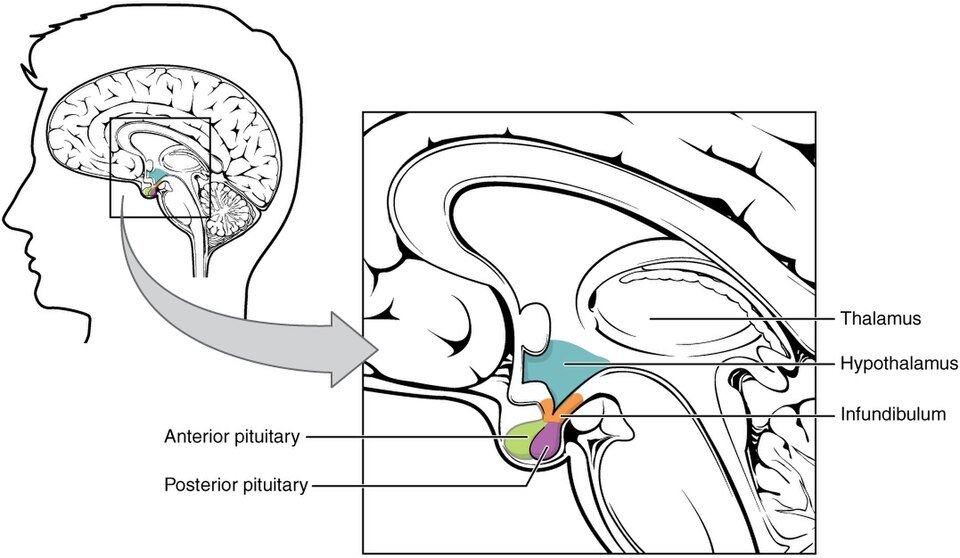
High prolactin (hyperprolactinaemia) is easy to miss. Prolactin is a pituitary hormone, and a benign pituitary tumor called a prolactinoma can make too much of it. In men this can cause loss of interest in sex, partly through low testosterone, and erectile dysfunction. Men often have no clear early signs, so diagnosis can be delayed. Some medicines also raise prolactin, including certain antipsychotics such as risperidone, some blood pressure medicines, some anti-nausea drugs and opioid painkillers.
Thyroid disease (an underactive or overactive thyroid) and poorly controlled diabetes are other endocrine causes that guidelines advise treating directly.
Source: NIDDK — Prolactinoma; EAU — Low Sexual Desire and Male Hypoactive Sexual Desire Disorder
Mental health and relationship causes
Depression is one of the strongest risk factors for low desire, and anxiety, anger and post-traumatic stress are also linked. Negative thoughts during sex predict lower desire, while sexual satisfaction is one of the best predictors of wanting sex with a partner. Relationship conflict, worries about the relationship’s future, financial problems and recent divorce all appear among the risk factors identified in large international surveys.
Work, family and daily stress, low self-esteem and past sexual trauma can play a part too. These causes are not “less real” than hormonal ones, and they often respond well to targeted therapy.
Source: EAU — Low Sexual Desire and Male Hypoactive Sexual Desire Disorder; Cleveland Clinic — Low Libido (Low Sex Drive)
Medical conditions
Long-term illness drains desire. The EAU lists coronary heart disease and heart failure, kidney failure, stroke, epilepsy, HIV infection and chronic prostatitis/pelvic pain among common causes. Cleveland Clinic adds cancer, chronic pain, high blood pressure and rheumatoid arthritis. Poor general health, vascular disease and smoking were also linked to low desire in a large global survey.
Source: EAU — Low Sexual Desire and Male Hypoactive Sexual Desire Disorder; Cleveland Clinic — Low Libido (Low Sex Drive)
Medicines, alcohol and drugs
Antidepressants are a frequent culprit. The NHS lists low sex drive, difficulty reaching orgasm and erection problems among their common side effects, and for some people these problems carry on after stopping. Antipsychotics, some blood pressure medicines and chemotherapy drugs can also lower desire. Finasteride, used for prostate enlargement and hair loss, lists decreased sexual desire as a possible side effect.
Drinking too much alcohol, recreational drug use and smoking can all lead to low libido. If you think a medicine is the cause, do not stop it on your own; ask your doctor about a safer alternative or dose.
Source: NHS — Side effects of antidepressants; MedlinePlus — Finasteride; NHS — Low sex drive (loss of libido)
Other sexual problems
Erectile dysfunction, premature ejaculation and delayed ejaculation can all reduce desire. When sex repeatedly feels like a test you might fail, the brain learns to avoid it. A German study found that men with premature ejaculation, erectile dysfunction or urinary symptoms were more likely to report low desire.
Source: Cleveland Clinic — Low Libido (Low Sex Drive); EAU — Low Sexual Desire and Male Hypoactive Sexual Desire Disorder
Low libido vs erectile dysfunction
Many men describe “losing interest” when the real problem is erections, and vice versa. The two often overlap, but they are different problems with different first steps. The ICD-10 classification treats low desire as a diagnosis only when lack of desire is the main problem, not a reaction to another problem such as erectile dysfunction.
| Feature | Low libido | Erectile dysfunction |
|---|---|---|
| Core problem | You do not want sex as much | You want sex but cannot get or keep an erection |
| Sexual thoughts and fantasies | Reduced or absent | Usually normal |
| Typical drivers | Hormones, depression, relationship, medicines | Blood vessels, nerves, diabetes, anxiety |
| Key tests | Testosterone, prolactin, thyroid hormones | Cardiovascular risk check, glucose, lipids, testosterone |
| Do erection pills help? | No, they do not raise desire | Often yes, with sexual stimulation |
If erections are the main issue, see our page on erectile dysfunction treatment. When anxiety about performance is driving both problems, our guide to psychological erectile dysfunction explains how the cycle works and how it is broken.
Source: EAU — Low Sexual Desire and Male Hypoactive Sexual Desire Disorder; NHS — Low sex drive (loss of libido)
How low libido in men is diagnosed
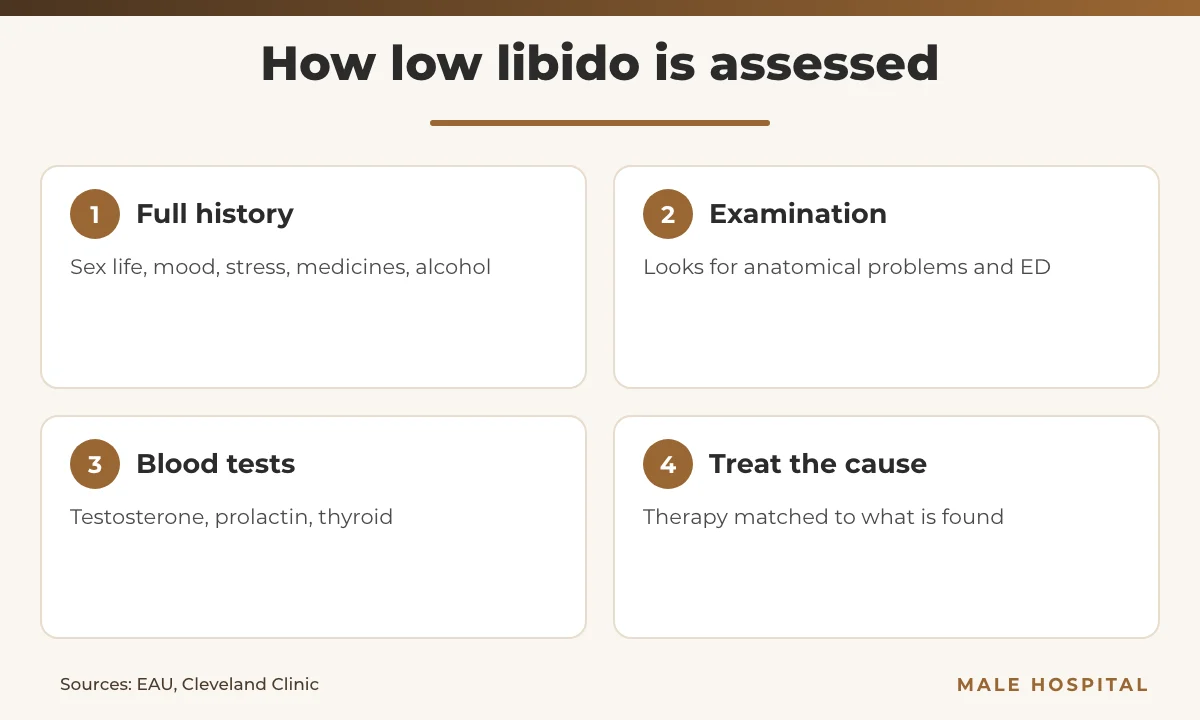
There is no single test for desire. Diagnosis is built from a careful conversation plus a few targeted checks, and the EAU sets out the steps clearly.
1. Medical and sexual history
Your doctor will ask when the change started, whether it is constant or only with a partner, how erections and ejaculation are, what medicines you take, how much you drink, and how your mood, sleep, stress and relationship are. They will also screen for depressive symptoms. Questionnaires such as the 14-item Sexual Desire Inventory can help separate desire for a partner from solitary desire, but they are optional.
2. Physical examination
The EAU advises a physical examination in the first assessment to look for anatomical problems that may be linked to low desire or other sexual dysfunctions, in particular erectile dysfunction.
3. Blood tests
Laboratory tests to rule out endocrine disorders are a strong recommendation in the EAU guideline. These usually include total testosterone, prolactin and thyroid hormones. If prolactin is high, a pituitary MRI is the preferred imaging test to look for a prolactinoma. Your doctor may also check blood sugar if diabetes is suspected.
Source: EAU — Low Sexual Desire and Male Hypoactive Sexual Desire Disorder; NIDDK — Prolactinoma; Cleveland Clinic — Low Libido (Low Sex Drive)
Treatment for low libido in men by cause
The EAU’s central message is that treatment should be tailored to the cause. A pill that does not match the cause rarely works, while fixing the cause often restores desire.
Low testosterone
When low desire comes with signs and symptoms of testosterone deficiency, testosterone therapy is a strong EAU recommendation, aiming for levels in the normal physiological range. In the Testosterone Trials, 470 men aged 65 or older with low libido and testosterone below 275 ng/dL received testosterone gel or placebo for one year. Testosterone improved 10 of 12 measures of sexual activity, and larger rises in hormone levels were linked to more desire and activity, but not to better erections.
Testosterone is not a general libido booster. Researchers have warned that it has been overprescribed to men whose levels are already normal. Read more about benefits, risks and monitoring in our guide to testosterone replacement therapy.
Source: PubMed — Testosterone Treatment and Sexual Function in Older Men With Low Testosterone Levels (J Clin Endocrinol Metab, 2016); EAU — Low Sexual Desire and Male Hypoactive Sexual Desire Disorder; University of Texas at Austin, Meston Lab — Hypoactive Sexual Desire Disorder
High prolactin
Prolactinomas are usually treated first with medicines called dopamine agonists. Cabergoline, taken once or twice a week, is preferred over bromocriptine because it works better and has fewer side effects. For most small prolactinomas these medicines bring prolactin back to normal and shrink the tumor in about 4 out of 5 patients. If a medicine is raising prolactin, levels usually return to normal 3 to 4 days after it is stopped under medical supervision.
Source: NIDDK — Prolactinoma
Depression and medicine side effects
Because antidepressants can themselves impair sexual function, the EAU advises choosing agents with fewer sexual side effects where possible and notes that psychotherapy can enhance drug treatment when depression is the cause. The NHS advises talking to your doctor about other options and never stopping an antidepressant suddenly. The same “review and modify” approach applies to other long-term medicines that lower desire.
Source: EAU — Low Sexual Desire and Male Hypoactive Sexual Desire Disorder; NHS — Side effects of antidepressants
Psychological, couple and sex therapy
Evidence for psychological treatment of low desire in men is still limited, and the EAU says so openly. Cognitive and behavioral strategies may help, and mindfulness is described as a strong candidate. Couple-based work on desire differences is recommended because it is less stigmatizing than focusing on one partner. The NHS suggests relationship counselling for relationship problems and cognitive behavioral therapy for depression.
Source: EAU — Low Sexual Desire and Male Hypoactive Sexual Desire Disorder; NHS — Low sex drive (loss of libido)
Treating linked sexual problems
When low libido follows erectile dysfunction or premature ejaculation, treating that problem first often lets desire recover. The NHS lists medicines that help with erections as a treatment option when a sexual problem is behind low sex drive.
Source: NHS — Low sex drive (loss of libido)
What you can do yourself
Self-help does not replace a medical check when desire has been low for months, but it supports any treatment and is sometimes enough when stress is the main driver. Cleveland Clinic and the NHS point to these steps:
- Talk openly with your partner. Naming the problem reduces pressure and misunderstanding on both sides.
- Manage stress. Regular exercise, journaling, meditation and time for yourself all help.
- Cut back on alcohol and stop smoking. Both are linked to low libido.
- Find a healthy level of activity. Both too much and too little exercise can affect libido.
- Keep long-term conditions under control. Good management of diabetes, heart disease and blood pressure supports sexual health.
- Review your medicines with a doctor rather than stopping anything on your own.
Be cautious with “libido booster” supplements sold online. None of the guidelines cited here recommend them, and they cannot fix a hormonal, psychological or medication cause.
Source: Cleveland Clinic — Low Libido (Low Sex Drive); NHS — Low sex drive (loss of libido)
When to see a doctor
See a doctor if low libido worries you, affects your well-being or relationship, or does not improve after a few months, and sooner if any of the following apply:
- You also have erection problems or ejaculation problems.
- You have new headaches or changes in your vision; a large prolactin-producing pituitary tumor can press on the nerves to the eyes.
- You feel persistently low, hopeless or anxious. If you ever have thoughts of harming yourself, seek urgent help.
- The change started after a new medicine, such as an antidepressant, a blood pressure drug or finasteride.
- You have diabetes, heart disease, kidney disease or another long-term condition.
Source: NHS — Low sex drive (loss of libido); NIDDK — Prolactinoma
If you would like a discreet assessment, our urologist-andrologist Assoc. Prof. Dr. Zülfü Sertkaya can review your symptoms, hormone results and medicines; send us a message on WhatsApp for a free, confidential consultation. If erections are part of the problem, you can also read about our erectile dysfunction treatment options.
FAQs about low libido in men
What is the most common cause of low libido in men?
There is no single most common cause for every man. Stress, depression, relationship problems, erection difficulties, medicines and low testosterone all feature strongly. Large surveys link low desire to older age, poor general health, depression and relationship worries. That is why doctors take a full history and do blood tests rather than assuming the cause is hormonal.
Source: EAU — Low Sexual Desire and Male Hypoactive Sexual Desire Disorder
Is low sex drive always caused by low testosterone?
No. Testosterone matters for desire, but blood levels do not directly track desire, especially in older men. Many men with low libido have normal testosterone and a different cause, such as depression, high prolactin, a medicine side effect or relationship strain. Testing tells you which group you are in, and testosterone treatment only helps when levels are genuinely low.
Source: EAU — Low Sexual Desire and Male Hypoactive Sexual Desire Disorder
Which blood tests check for low libido?
The usual tests are total testosterone, prolactin and thyroid hormones, which cover the main hormonal causes. Your doctor may add blood sugar or other tests depending on your symptoms. If prolactin is high, an MRI of the pituitary gland is the preferred next step to look for a benign tumor called a prolactinoma.
Source: NIDDK — Prolactinoma; EAU — Low Sexual Desire and Male Hypoactive Sexual Desire Disorder
Can antidepressants lower sex drive?
Yes. The NHS lists low sex drive, difficulty reaching orgasm and erection problems among common antidepressant side effects, and for some people they continue after stopping. Do not stop your medicine abruptly. Ask your doctor whether a different antidepressant, a dose change or added psychotherapy could protect your sexual function while keeping your mood stable.
Source: NHS — Side effects of antidepressants
Do Viagra or Cialis increase libido?
No. These medicines improve blood flow for erections in response to sexual stimulation; they do not create desire. They can help indirectly when fear of erection failure is suppressing interest in sex. If you have no desire at all, the cause needs to be found separately, through history, examination and hormone tests.
Source: NHS — Low sex drive (loss of libido); EAU — Low Sexual Desire and Male Hypoactive Sexual Desire Disorder
Does libido naturally decrease with age?
Desire problems do become more common with age, and men aged 60 to 80 have a higher risk of low desire in large surveys. However, age is rarely the whole story. Health problems, medicines, low testosterone and relationship factors often accumulate with age and are treatable, so a drop in desire should not simply be accepted as “getting older”.
Source: EAU — Low Sexual Desire and Male Hypoactive Sexual Desire Disorder; University of Texas at Austin, Meston Lab — Hypoactive Sexual Desire Disorder
Can low libido in men be cured?
Often, yes, when a clear cause is found and treated. Normalizing testosterone or prolactin, switching a problem medicine, treating depression or an erection problem, and couple or sex therapy can each restore desire. Results vary, and evidence for psychological treatments is still limited, so a realistic plan with follow-up works better than any quick fix.
Source: EAU — Low Sexual Desire and Male Hypoactive Sexual Desire Disorder; Cleveland Clinic — Low Libido (Low Sex Drive)
Can stress really kill your sex drive?
Yes. Work, family and daily stress are well-recognized causes of low libido, and anxiety is linked to reduced desire. Stress-related low desire often improves when the pressure eases or is managed with exercise, relaxation and open conversation with a partner. If it lasts for months or comes with low mood, speak to a doctor.
Source: Cleveland Clinic — Low Libido (Low Sex Drive)
Medically reviewed by Assoc. Prof. Dr. Zülfü Sertkaya, urologist and andrologist (FEBU), Istanbul. Last reviewed: November 2026.
This article is for general information and does not replace an individual consultation with a qualified doctor.
- EAU — Low Sexual Desire and Male Hypoactive Sexual Desire Disorder
- Cleveland Clinic — Low Libido (Low Sex Drive)
- NHS — Low sex drive (loss of libido)
- NHS — Side effects of antidepressants
- NIDDK — Prolactinoma
- MedlinePlus — Finasteride
- PubMed — Testosterone Treatment and Sexual Function in Older Men With Low Testosterone Levels (J Clin Endocrinol Metab, 2016)
- University of Texas at Austin, Meston Lab — Hypoactive Sexual Desire Disorder