Weak erection means your penis gets only partly hard, or gets hard but softens before or during sex. One soft night now and then is common and usually linked to stress, tiredness or alcohol. If it keeps happening, it is a form of erectile dysfunction (ED), and it is worth a check-up because the cause is often treatable and can point to problems with blood vessels, hormones or mood.
Sources: NHS — Erection problems (erectile dysfunction); EAU Guidelines — Management of erectile dysfunction
- A weak erection can mean partial firmness, an erection that is hard but not hard enough for penetration, or one that fades during sex.
- Doctors grade firmness with the Erection Hardness Score (EHS): only grade 4 is completely hard and fully rigid.
- An occasional weak erection is normal. Repeated softness that bothers you deserves a medical review.
- Firm morning erections and a sudden, situational start point toward stress or anxiety; gradual loss of firmness and no morning erections point toward a physical cause.
- A persistent weak erection can appear before heart disease, so a check of blood pressure, blood sugar and cholesterol is part of a good assessment.
- What is a weak erection?
- How hard is hard enough? The Erection Hardness Score
- Occasional weak erection or erectile dysfunction?
- Common causes of a weak erection
- Losing an erection during sex
- Physical or psychological? Clues from your own pattern
- Why softer erections can be an early heart warning
- What helps a weak erection
- When to see a doctor
- FAQs about weak erection
What is a weak erection?
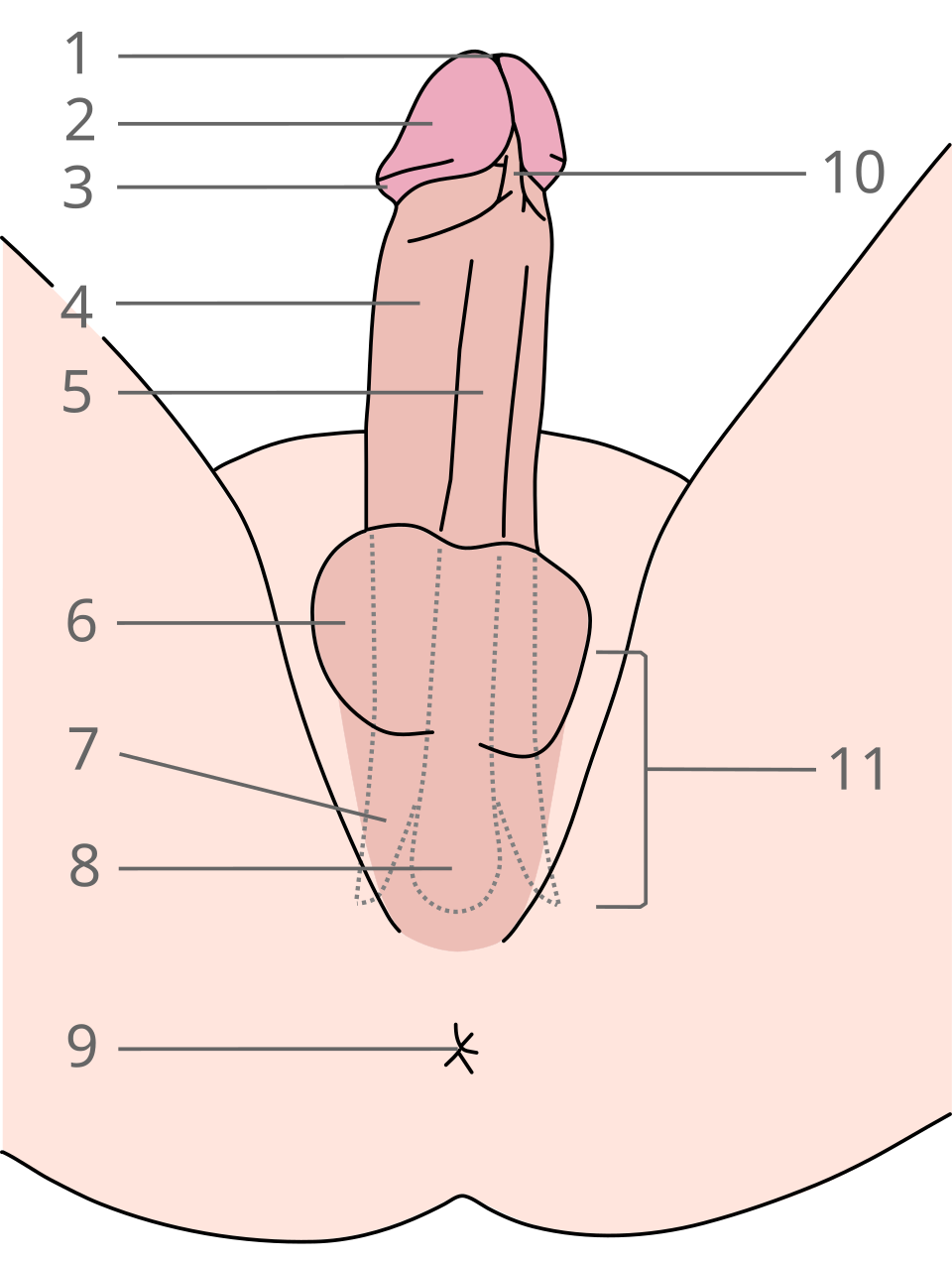
Many men do not lose erections completely. Instead, they notice the penis swells but stays bendable, needs constant stimulation to stay up, or softens at the moment of penetration or a change of position. Doctors do not use “weak erection” as a separate diagnosis. They see it as one of the ways erectile dysfunction shows itself.
The U.S. National Institute of Diabetes and Digestive and Kidney Diseases (NIDDK) describes three common patterns: getting an erection sometimes but not every time you want sex, getting an erection that does not last long enough for sex, and not being able to get an erection at all. Partial or fading firmness usually fits the first two. Cleveland Clinic lists the same picture: being able to get an erection before intercourse but not keeping it during intercourse.
Sources: NIDDK — Symptoms & Causes of Erectile Dysfunction; Cleveland Clinic — Erectile Dysfunction
An erection is a blood-flow event. When you are aroused, nerves and the lining of blood vessels release nitric oxide, the smooth muscle in the penis relaxes, the arteries widen and the spongy erectile tissue fills with blood. Anything that reduces this inflow, lets blood escape too early, blocks the nerve signals or dampens arousal can leave a weak erection that is only half-firm. Prevalence, diagnosis and the full range of treatments are covered in the main ED guide linked above; this page focuses on the symptom itself.
Source: MSD Manual Professional — Erectile Dysfunction
How hard is hard enough? The Erection Hardness Score
“Weak” is subjective, so urologists use a simple one-question tool called the Erection Hardness Score (EHS). You rate a typical erection during sexual stimulation on four levels. The score was validated in a 307-man study from a sildenafil trial, which found it reliable, able to separate normal from impaired erectile function and highly responsive to treatment. The European Association of Urology (EAU) guideline also notes its use for assessing penile rigidity in practice and research.
Sources: PubMed — Mulhall et al., Validation of the Erection Hardness Score (J Sex Med 2007); EAU Guidelines — Management of erectile dysfunction
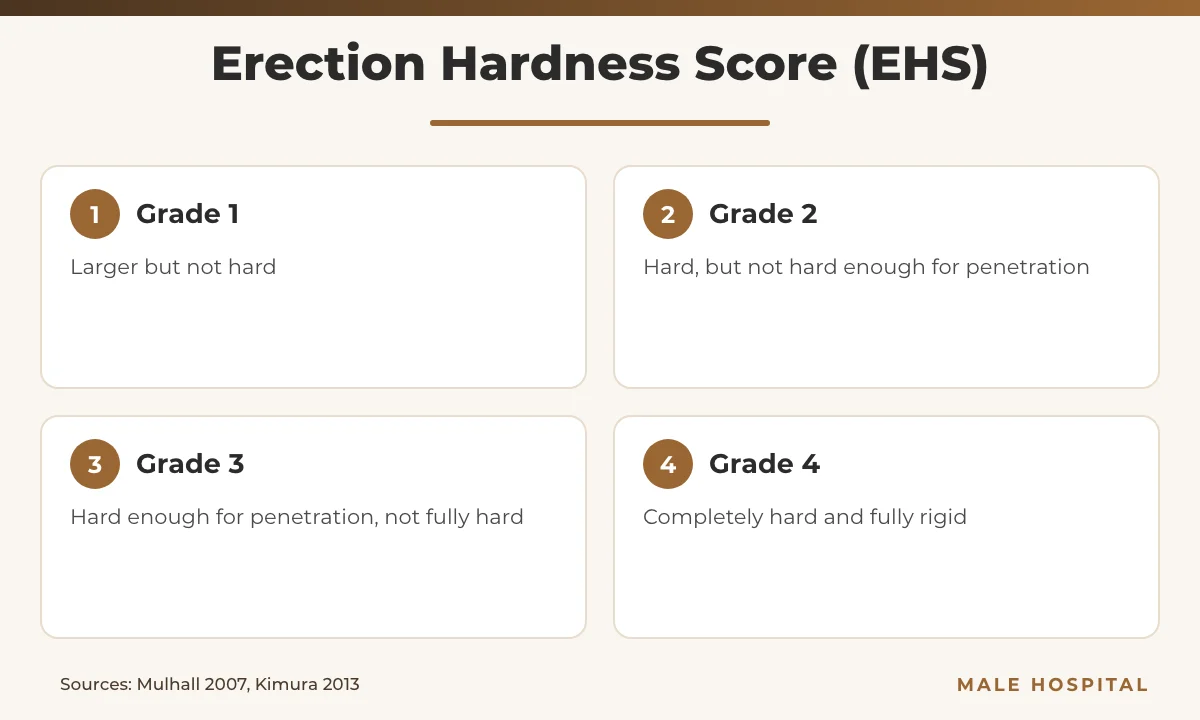
| EHS grade | What the erection is like | What it usually means |
|---|---|---|
| 1 | Penis is larger but not hard | Sex with penetration is not possible |
| 2 | Hard, but not hard enough for penetration | Clearly reduced firmness; linked to moderate to severe ED in survey data |
| 3 | Hard enough for penetration but not completely hard | Sex is possible but firmness is reduced; very common |
| 4 | Completely hard and fully rigid | Full rigidity |
Source: PMC — Kimura et al., Erection Hardness Score web survey (Sex Med 2013)
Grade 3 is far more common than most men think. In a Japanese web survey of 6,528 men who were not using ED tablets (average age about 39), 35.9% rated themselves EHS 3 and 54.2% scored 3 or lower. Only 18.3% scored 2 or lower, the range the authors linked to moderate to severe ED. Because the sample was online and younger than the general population, the figures are not a national average, but they show that a slightly less rigid erection is a common experience rather than a rare failure.
The same survey found a strong link between higher hardness and sexual confidence. That matters, because worry about firmness can itself cause the next weak erection.
Source: PMC — Kimura et al., Erection Hardness Score web survey (Sex Med 2013)
Occasional weak erection or erectile dysfunction?
The NHS says most men occasionally fail to get or keep an erection, usually because of stress, tiredness or drinking too much, and that this is nothing to worry about. A single weak erection after a long day or a few drinks does not mean you have ED.
The EAU defines erectile dysfunction as a persistent inability to attain and maintain an erection sufficient for satisfactory sexual performance. The key word is persistent. If you have a weak erection most of the time, have been getting softer over months, or are causing distress for you or your partner, the pattern counts as ED and should be assessed, even if you can still sometimes have sex.
Sources: NHS — Erection problems (erectile dysfunction); EAU Guidelines — Management of erectile dysfunction
ED is also common with age. Cleveland Clinic reports that it affects over 50% of men between 40 and 70, and notes the true number may be higher because many men are too embarrassed to seek help. If you would like to rate your own symptoms first, our erectile dysfunction test guide explains the IIEF-5 questionnaire and what doctors check.
Source: Cleveland Clinic — Erectile Dysfunction
Common causes of a weak erection
Most weak erections have more than one contributor. The EAU lists age, diabetes, high cholesterol, high blood pressure, cardiovascular disease, obesity, metabolic syndrome, smoking, lack of exercise and drug use among the main risk factors, together with depression and chronic kidney disease. The NIDDK adds nerve disorders such as multiple sclerosis, low testosterone, thyroid imbalance, and prostate or penile problems.
Sources: EAU Guidelines — Management of erectile dysfunction; NIDDK — Symptoms & Causes of Erectile Dysfunction
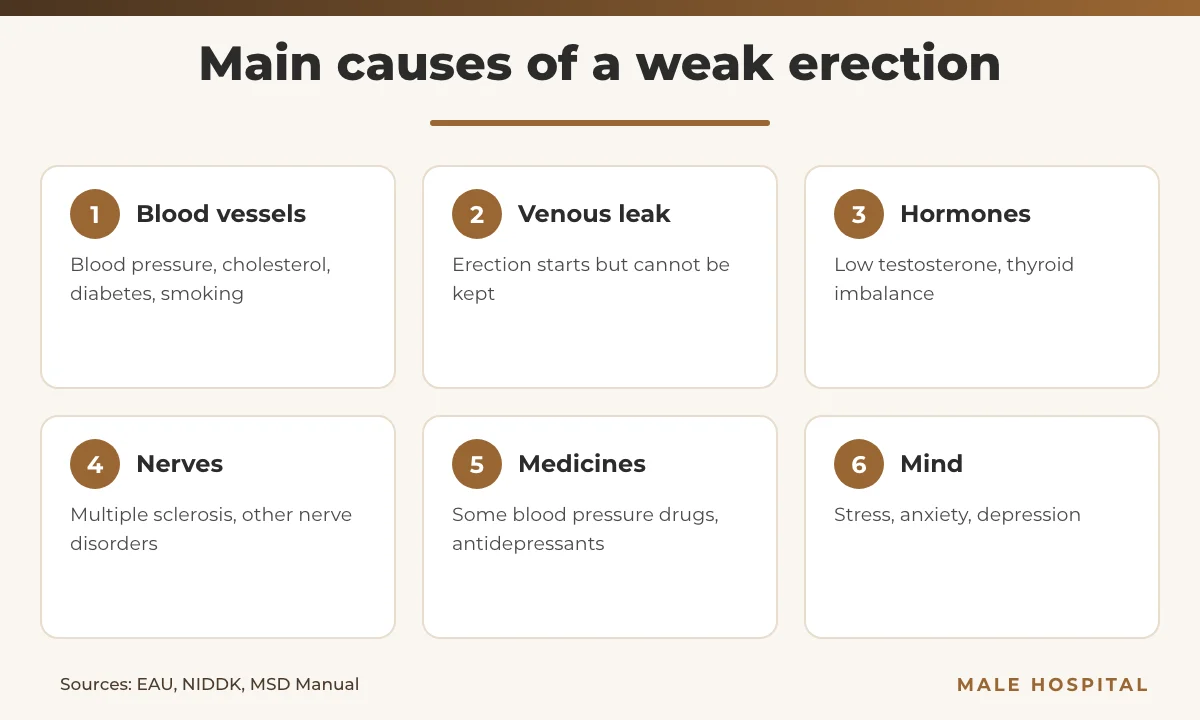
| Cause group | Examples | Typical clue |
|---|---|---|
| Blood vessels | High blood pressure, high cholesterol, diabetes, smoking, heart disease | Gradual loss of firmness; fewer morning erections |
| Venous leak | Veno-occlusive dysfunction | Erection starts but cannot be kept |
| Hormones | Low testosterone, thyroid imbalance | Low sex drive, tiredness |
| Nerves | Multiple sclerosis and other nerve disorders | Reduced sensation; other nerve symptoms |
| Medicines and substances | Some blood pressure drugs, antidepressants, opioids, alcohol, recreational drugs | Started after a new drug or heavy drinking |
| Mind and relationship | Stress, performance worry, depression, relationship problems | Sudden start; situational; morning erections normal |
Sources: MSD Manual Professional — Erectile Dysfunction; NIDDK — Symptoms & Causes of Erectile Dysfunction
Medicines that can weaken erections
The NIDDK notes that ED can be a side effect of many common prescription and over-the-counter medicines. The MSD Manual lists blood pressure drugs such as beta-blockers and diuretics, antidepressants including SSRIs, benzodiazepines, opioids, some hormonal prostate cancer treatments, 5-alpha-reductase inhibitors, and anticholinergic drugs, including many antihistamines. Never stop a prescribed medicine on your own: ask your doctor whether there is an alternative.
Sources: NIDDK — Symptoms & Causes of Erectile Dysfunction; MSD Manual Professional — Erectile Dysfunction
Alcohol, smoking and weight
Alcohol can cause temporary erection problems, and heavy drinking, smoking, recreational drugs and lack of physical activity can all contribute to ED. The NHS advises keeping alcohol to 14 units a week or less. Our article on alcohol and erectile dysfunction covers the short- and long-term effects in more detail.
Sources: MSD Manual Professional — Erectile Dysfunction; NHS — Erection problems (erectile dysfunction)
Losing an erection during sex
Some men get a good erection at the start, then lose it at penetration, during a condom change or after a few minutes. This pattern has a few typical explanations:
- Performance worry: Cleveland Clinic notes that erection problems can occur when you feel nervous, anxious, frustrated or tired. Watching your own erection and fearing it will fade can trigger exactly that.
- Venous leak (veno-occlusive dysfunction): blood escapes from the erectile tissue too quickly, so a man can get an erection but cannot maintain it.
- Reduced arterial inflow: narrowed arteries may supply enough blood to start an erection but not enough to keep it fully rigid.
- Alcohol and tiredness: both can blunt arousal and cause a weak erection on a given night.
Sources: Cleveland Clinic — Erectile Dysfunction; MSD Manual Professional — Erectile Dysfunction
If softening during sex is your main problem and morning erections are also weak, ask about vascular testing. Our guide to venous leak erectile dysfunction explains how it is diagnosed and treated.
Physical or psychological? Clues from your own pattern
Your history of a weak erection gives useful clues before any test is done. The EAU guideline asks doctors to document the rigidity and duration of both sexually stimulated and morning erections, because the comparison helps separate causes.
According to the MSD Manual, a psychological cause is more likely when the problem starts suddenly in a young, otherwise healthy man, especially after a specific emotional event, when it happens only in certain situations or with certain partners, and when night-time and morning erections are preserved. A physical (organic) cause is more likely when morning and night-time erections are also absent. The NHS makes a similar point: depending on the cause, you may still get an erection at other times, such as when you wake up.
Sources: EAU Guidelines — Management of erectile dysfunction; MSD Manual Professional — Erectile Dysfunction; NHS — Erection problems (erectile dysfunction)
These clues are not proof. The MSD Manual notes that over 90% of acquired (secondary) ED has an organic cause, and many men have both: a physical cause that softens erections, followed by anxiety that makes each attempt harder. If stress or anxiety seems to be the main driver for you, our page on psychological erectile dysfunction covers the therapy options in detail.
Source: MSD Manual Professional — Erectile Dysfunction
Why softer erections can be an early heart warning
The penis depends on healthy blood vessels, and so does the heart. The EAU guideline states that ED should be considered a precursor of cardiovascular disease, with more severe and longer-lasting ED carrying higher risk. The MSD Manual advises that new ED of vascular origin may be an early sign of heart disease and should prompt a cardiovascular check.
A large U.S. study followed 9,457 men aged 55 or older in the placebo group of the Prostate Cancer Prevention Trial. Men who developed ED during follow-up had a 25% higher risk of later cardiovascular events after adjustment for other risk factors, and the authors judged the link to be in the same range as current smoking or a family history of heart attack.
Sources: EAU Guidelines — Management of erectile dysfunction; MSD Manual Professional — Erectile Dysfunction; PubMed — Thompson et al., Erectile dysfunction and subsequent cardiovascular disease (JAMA 2005)
A weak erection does not prove heart disease, but a persistent, gradually worsening one is a good reason to check blood pressure, blood sugar, cholesterol and weight.
What helps a weak erection
Treatment of a weak erection depends on the cause, and the overall options are the same as for any form of ED. They are summarised here only briefly; see our erectile dysfunction treatment page for full detail.
Lifestyle steps first
The EAU reports that regular exercise and lowering body weight can improve erectile function, and recommends starting lifestyle changes before or alongside treatment. The NHS suggests keeping a healthy weight, stopping smoking, eating a healthy diet, exercising every day, managing stress, limiting alcohol, and cutting back on cycling if you ride more than three hours a week.
Sources: EAU Guidelines — Management of erectile dysfunction; NHS — Erection problems (erectile dysfunction)
Medical treatment
For persistent symptoms, the EAU recommends PDE5 inhibitor tablets such as sildenafil or tadalafil as first-line treatment. These drugs slow the breakdown of cGMP, the messenger that keeps the penile smooth muscle relaxed, so blood stays in the erectile tissue longer. The NHS advises taking sildenafil about one hour before sex, no more than once a day, and warns that it is not usually prescribed with nitrate heart medicines; poppers also raise the risk of serious side effects.
Sources: EAU Guidelines — Management of erectile dysfunction; MSD Manual Professional — Erectile Dysfunction; NHS — Sildenafil (Viagra)
The American Urological Association (AUA) guideline recommends shared decision-making: men should be told about every treatment that is safe for them, including more invasive ones, and choose with their doctor based on benefits and burdens. Psychological therapy can help when stress, anxiety or relationship issues play a part.
Sources: PubMed — Burnett et al., Erectile Dysfunction: AUA Guideline (J Urol 2018); NHS — Erection problems (erectile dysfunction)
When to see a doctor
Book an appointment with a urologist or your family doctor if a weak erection keeps happening, is getting worse, or is affecting your confidence or relationship. Seek a review sooner if you also have:
- High blood pressure, diabetes, high cholesterol, heart disease or a strong family history of early heart attack.
- Low sex drive, tiredness or shrinking testicles, which can point to a hormone problem.
- Reduced feeling in the genital or perineal area, which can point to a nerve problem.
- Erection changes that began after starting a new medicine.
- Depression, anxiety or stress that is affecting your daily life.
Sources: NHS — Erection problems (erectile dysfunction); MSD Manual Professional — Erectile Dysfunction; NIDDK — Symptoms & Causes of Erectile Dysfunction
Get emergency care for chest pain, and go to the nearest emergency department if you are taking ED medicine and have a painful erection that lasts more than two to four hours. This is called priapism and needs urgent treatment to protect erectile tissue.
Sources: Cleveland Clinic — Erectile Dysfunction; MSD Manual Professional — Erectile Dysfunction
If you would like a confidential assessment of a weak erection, our urologist-andrologist can review your symptoms, check for underlying causes and explain the options that suit you. You can start with a free, private consultation on WhatsApp.
FAQs about weak erection
Is a weak erection normal?
An occasional soft erection is normal. The NHS says most men sometimes fail to get or keep an erection, usually because of stress, tiredness or alcohol. It becomes a medical issue when the softness keeps happening or worries you. In that case it counts as erectile dysfunction, which is common and usually treatable once the cause is found.
Source: NHS — Erection problems (erectile dysfunction)
Can a young man have a weak erection?
Yes. In young, otherwise healthy men, a sudden weak erection tied to stress, a new partner or a specific situation often has a psychological cause, especially if morning erections are normal. Physical causes such as diabetes, medicines, drug use or hormone problems still need to be ruled out, so a check-up is sensible if it persists.
Sources: MSD Manual Professional — Erectile Dysfunction; NIDDK — Symptoms & Causes of Erectile Dysfunction
Does a weak morning erection mean something is wrong?
Not on its own. But if morning and night-time erections have become consistently weak or absent along with softer erections during sex, a physical cause such as reduced blood flow becomes more likely. Your doctor will ask about both kinds of erection when assessing you.
Sources: MSD Manual Professional — Erectile Dysfunction; EAU Guidelines — Management of erectile dysfunction
Can anxiety cause a weak erection?
Yes. Anxiety, depression, stress and low self-esteem can cause or worsen erection problems. Worry about whether an erection will last can itself cause a weak erection. The NHS notes that counselling and therapy can help when erection problems are linked to emotional or mental health problems.
Sources: NIDDK — Symptoms & Causes of Erectile Dysfunction; NHS — Erection problems (erectile dysfunction)
Can a weak erection be reversed?
Often, yes. When the cause of a weak erection is lifestyle-related, regular exercise and weight loss can improve erectile function, and stopping smoking and cutting alcohol help too. Cleveland Clinic describes the outlook for ED as good: even when a cause cannot be cured, treatments can usually restore erections firm enough for sex.
Sources: EAU Guidelines — Management of erectile dysfunction; Cleveland Clinic — Erectile Dysfunction
Do erection pills fix a weak erection?
PDE5 inhibitor tablets such as sildenafil and tadalafil are the guideline first-line treatment and help many men get firmer, longer-lasting erections. They are not usually prescribed with nitrate heart medicines. They also do not treat the underlying cause, so a medical check is still recommended.
Sources: EAU Guidelines — Management of erectile dysfunction; NHS — Sildenafil (Viagra)
Is a weak erection linked to heart disease?
It can be. Erectile problems and heart disease share risk factors such as smoking, diabetes, high blood pressure and high cholesterol. Guidelines treat ED as a possible early warning of cardiovascular disease, and a large U.S. study found that men who developed ED had a higher risk of later heart events. A check of your heart risk is therefore part of the work-up.
Sources: EAU Guidelines — Management of erectile dysfunction; PubMed — Thompson et al., Erectile dysfunction and subsequent cardiovascular disease (JAMA 2005)
Medically reviewed by Assoc. Prof. Dr. Zülfü Sertkaya, urologist and andrologist (FEBU), Istanbul. Last reviewed: November 2026.
This article is for general information and does not replace an individual consultation with a qualified doctor.
- EAU — Sexual and Reproductive Health Guidelines — Management of erectile dysfunction
- NHS — Erection problems (erectile dysfunction)
- NIDDK — Symptoms & Causes of Erectile Dysfunction
- Cleveland Clinic — Erectile Dysfunction
- MSD Manual Professional — Erectile Dysfunction
- PMC — Sex Med 2013 — Kimura et al. A web-based survey of Erection Hardness Score and its relationship to aging, sexual behavior, confidence and risk factors in Japan
- PubMed — J Sex Med 2007 — Mulhall et al. Validation of the erection hardness score
- PubMed — JAMA 2005 — Thompson et al. Erectile dysfunction and subsequent cardiovascular disease
- PubMed — J Urol 2018 — Burnett et al. Erectile Dysfunction: AUA Guideline
- NHS — Sildenafil (Viagra)